Australia Boosts Philippine Defense, Complementing U.S. Partnership
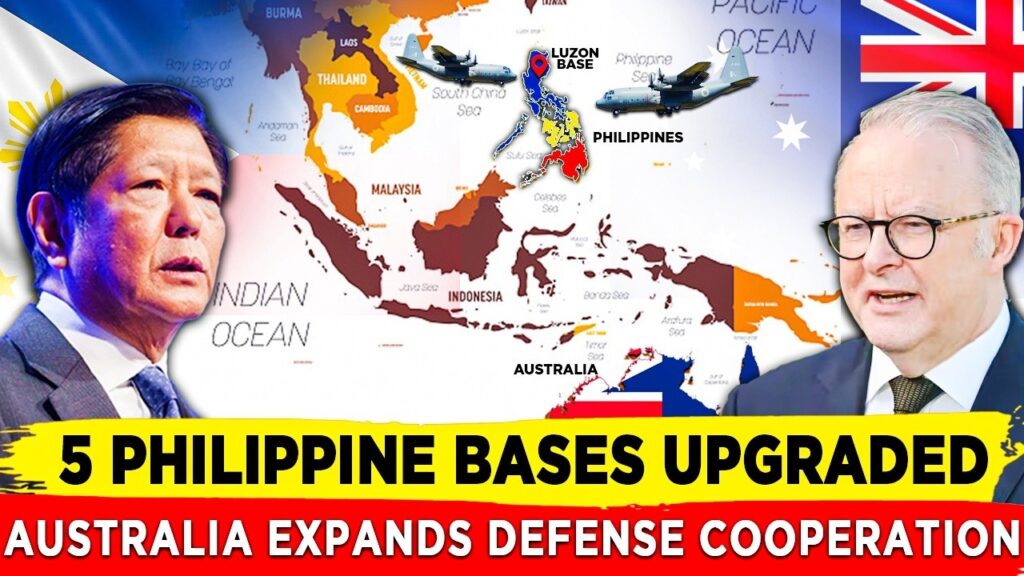
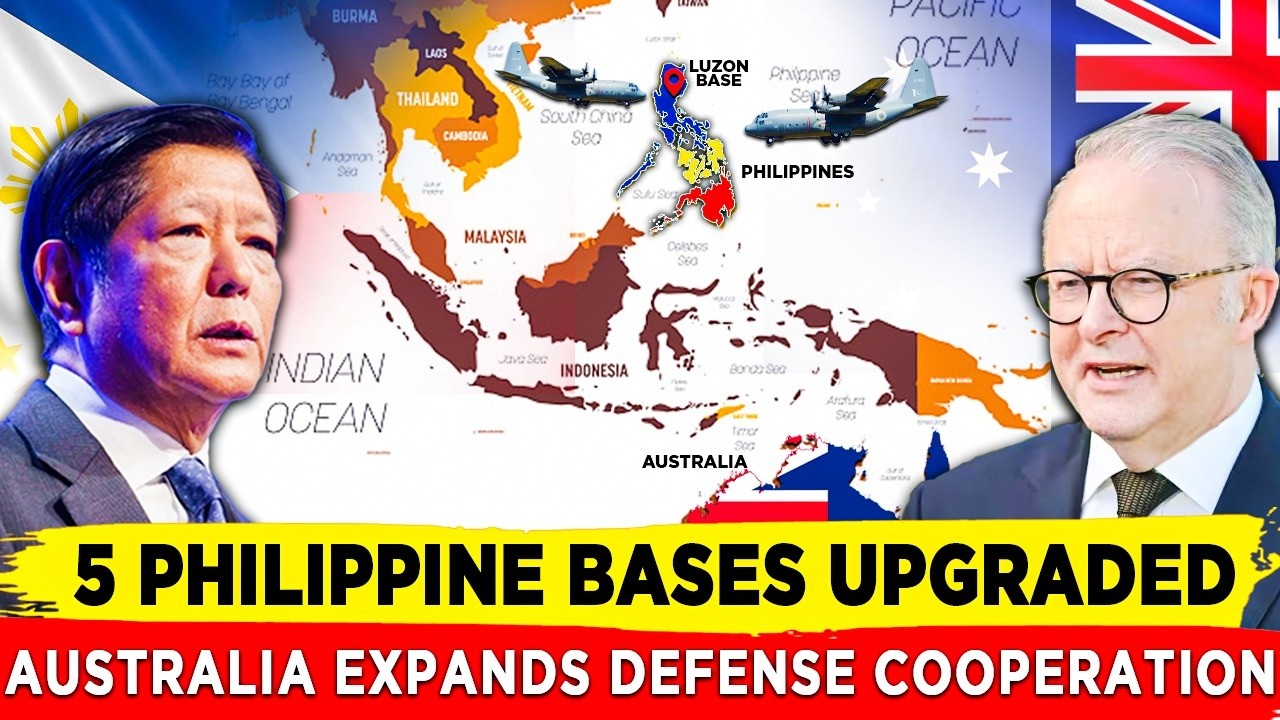
What if the most important military move in the South China Sea this year didn’t come from Washington but from Canberra? That’s the quiet headline sliding under the radar right now. In early 2026, as tensions simmer from Taiwan’s southern approaches down to the West Philippine Sea, Australia stepped forward with a move that looks technical on paper but hits hard in reality: eight new defence infrastructure projects across five Philippine bases on Luzon. No flashy press conference. No chest-thumping. Just concrete, runways, sensors, and logistics, the unglamorous stuff that actually decides outcomes when things get serious.
Here’s why that matters. Think back to the last few years: U.S. forces expanding EDCA sites, joint patrols increasing, exercises getting sharper and closer to contested waters. Now layer Australia into that picture, not as a sidekick, but as a deliberate force multiplier. Canberra isn’t duplicating the U.S. presence; it’s filling gaps. Training where Manila needs it. Logistics where distances bite. Sensing where early warning buys time. It’s the kind of coordination that doesn’t scream alliance politics, but quietly reshapes the map.

And there’s a very human side to this shift. For decades, the Philippines has been told, sometimes politely, sometimes not, to “do more” for its own defence while sitting between giants. Under President Ferdinand Marcos Jr., that old playbook is getting rewritten. This isn’t about choosing Australia over China, or even leaning blindly on the United States. It’s about building a web of partners so tight that coercion becomes expensive, slow, and risky. When Australian-funded facilities start working alongside U.S. EDCA upgrades and recurring drills like Exercise Alon, deterrence stops being a slogan and starts feeling real.
In geopolitics, presence beats promises every time. And right now, Australia isn’t just talking about a “free and open Indo-Pacific.” It’s pouring concrete in Luzon and that should make everyone in the region sit up and pay attention.
Strategic context — why Canberra acts now?
Australia isn’t moving now by accident. Timing is the whole story here and the timing is screaming urgency. Over the past year, the map around the Philippines has started to feel uncomfortably crowded. PLA Navy task groups pushing deeper into the Philippine Sea. More Chinese aircraft probing airspace around Taiwan, sometimes daily, sometimes in clusters that feel like rehearsal rather than routine. None of this is new in isolation but taken together, it has changed how risk is calculated in Canberra and Manila. The question is no longer if pressure increases, but how fast and how close it gets. And once you see it that way, hardening forward logistics and sensing stops being “preparation” and starts being basic insurance.
Australia, in particular, is reading the terrain with cold clarity. Distance has always been its shield, but distance also creates vulnerability if partners up north can’t hold, detect, or sustain operations early. Luzon sits right at that fault line. It’s close enough to matter for Taiwan contingencies, and central enough to shape the South China Sea without firing a shot. Strengthening Philippine bases isn’t about parking Australian flags overseas; it’s about making sure allied aircraft can refuel, ships can turn around, and sensors can see trouble before it snowballs.
Then there’s the political opening and this part is just as important as the PLA’s movements. Under President Ferdinand Marcos Jr., Manila has quietly done what previous administrations hesitated to do: say yes, clearly and legally, to expanded partner access. The 2023 announcement of four additional EDCA sites didn’t just widen the U.S.–Philippine alliance; it created space for others to plug in without breaking sovereignty red lines. For Australia, that was the green light. The law was there. The geography was there. The will was finally there too.
Put it together and the logic clicks. Rising military pressure creates the need. EDCA creates the access. Australia supplies the connective tissue, logistics, training, sensing, that turns separate alliances into a functioning network. It’s not dramatic. It’s not loud. But in this region, the smartest moves rarely are.
Concrete Australian commitments — facts & figures
This is where the story stops being abstract and starts feeling real. Not strategy papers. Not speeches. Actual work, on actual bases, in places that matter. Australia has committed to eight defence infrastructure projects across five Philippine military bases on Luzon. Construction, upgrades, long-term maintenance, the unsexy backbone of military power. According to press reporting, work is expected to start around 2026. What stands out is what wasn’t loudly advertised: not every site name was splashed across headlines. That’s deliberate. When you’re dealing with forward logistics and sensing, discretion isn’t secrecy, it’s professionalism.
And let’s be honest for a second. Eight projects might not sound earth-shattering to the casual reader. But in military terms, this is serious density. Luzon isn’t just another island; it’s the hinge point between the South China Sea and the Philippine Sea. Every upgraded runway, hardened facility, or maintained depot there quietly shortens response times and stretches endurance. This is the kind of investment that only makes sense if you expect to use it or at least need others to believe you can.https://indopacificreport.com/5-major-issues-haunting-the-south-china-sea-in-2026/
The money side tells its own story. As of January–February 2026, public reporting suggests final costs were still being locked in. That uncertainty isn’t a red flag; it’s a reflection of how Australia is trying to move faster than its own bureaucracy traditionally allows. Canberra’s new Defence Delivery Agency, part of a broader defence reform push, is meant to cut delays and push projects through at operational speed. The trade-off? Yes, procurement risks rise when timelines shrink. Cost overruns, coordination friction, political heat, all of that comes with the territory.
But here’s the key takeaway. Australia isn’t waiting for perfect accounting before acting. It’s prioritising presence over polish, delivery over delay. In a region where windows close quickly and deterrence erodes quietly, that choice says more than any budget line ever could.
How Australia’s work complements the U.S. EDCA posture — stats & mechanisms?
Here’s the part most headlines miss and honestly, it’s the cleverest bit of the whole arrangement. Australia isn’t trying to out-America the Americans. It’s doing something far smarter: building around the U.S. EDCA posture so that every dollar Washington spends actually works harder.
Start with the baseline. The United States had already put serious money on the table. Roughly US$82 million went into the first wave of EDCA projects, followed by a US$128 million commitment announced in April 2024 to expand and deepen work across EDCA sites. That funding wave mattered because it wasn’t symbolic, it translated into access, storage, airfield improvements, and rotational operating space. Then came the big shift in 2023: four additional EDCA sites approved under the Marcos administration, Naval Base Camilo Osias, Camp Melchor Dela Cruz, Balabac Island, and Lal-lo Airport. Suddenly, EDCA wasn’t just about presence; it was about geography.
Now zoom out. U.S. forces rotate. They come in cycles. They rely on speed, readiness, and the ability to plug in and move. That’s exactly where Australia slides into the picture. Canberra’s projects are aimed at logistics backbones, training infrastructure, and sustainment nodes, the quiet enablers that let rotational forces stay effective without turning Philippine bases into permanent foreign installations. No duplication. No political overreach. Just reinforcement.
China Is Watching the 9th U.S.–Philippines Patrol Very Closely!
Think of it like this: EDCA gives the U.S. the keys to enter the room. Australia makes sure the lights are on, the floor holds, and the exits are clear. Fuel stored closer. Maintenance smoother. Training more interoperable. When U.S. aircraft or maritime patrols rotate through, they’re stepping into an ecosystem that’s already been reinforced by an ally that knows how to work behind the scenes.
That division of labor matters politically too. Australia provides capacity without triggering the optics of expanded U.S. basing. For Manila, that’s gold. Sovereignty stays intact. Partnerships deepen. And deterrence quietly thickens. This is alliance-building the old-school way, incremental, practical, and very hard for any adversary to roll back once the concrete sets.
Operational effects — what the investments change
This is where the spreadsheets turn into muscle memory. Where infrastructure quietly changes what forces can actually do on a bad day. Start with surge and sustainment, the stuff that decides whether an operation lasts hours or weeks. Upgraded fuel storage, repair bays, and logistics space mean maritime patrol aircraft don’t have to fly long arcs just to refuel or get patched up. Sortie turn-time drops. Crews cycle faster. And when you’re talking about northern Luzon, that matters a lot. From there, response times into the Luzon Strait and Taiwan approaches shrink in ways that don’t show up on maps but absolutely show up in planning rooms. Less transit means more time on station. More time on station means higher sortie density. And higher sortie density is what pressure looks like without firing anything.
We already saw hints of this future in Exercise Alon 2025. Around 3,600 personnel took part, alongside serious hardware, a guided-missile destroyer, F/A-18 fighters, and C-130 transport aircraft. The headline wasn’t the numbers, though. It was what worked smoothly. Cross-deck operations. Maintenance handoffs. Amphibious sustainment that didn’t bog down in friction. Exercises don’t prove perfection, but they do expose weak links and Alon showed that many of those links are getting stronger.
Then there’s the quiet game-changer: maritime domain awareness. Infrastructure upgrades aren’t just about concrete and fuel; they’re about hosting radars, communications relays, and data fusion nodes. When those systems are tied together, you get a shared picture, not three countries watching the same sea separately, but one fused operational view. For trilateral tasking between the U.S., Philippines, and Australia, that’s everything. You see earlier. You track longer. You cue assets faster. And suddenly, gray-zone activity becomes harder to hide in plain sight.
Put it all together and the effect is cumulative. Faster response. Longer endurance. Cleaner interoperability. Better awareness. None of it makes headlines on its own. But together, it quietly shifts the balance from reactive to ready and in this region, readiness is the difference between being tested and being deterred.
Case studies
Sometimes the clearest way to understand strategy is to watch it being stress-tested in the real world. Not in theory. Not in white papers. But in exercises, agreements, and early construction plans where things either work or don’t.
Exercise Alon 2025 is a good place to start because it stripped away the talking points. Around 3,600 personnel took part, with amphibious landings, live-fire elements, and a mix of serious assets: an Australian destroyer, fighter aircraft, transport planes, and U.S. forces plugged in as partners and observers. On the surface, it looked like a standard alliance drill. Underneath, it was something else, a rehearsal for expeditionary sustainment under pressure. Fuel had to move. Parts had to be shared. Maintenance had to be done quickly, sometimes cross-deck, sometimes improvisational. And that’s where the real lesson emerged. The biggest friction points weren’t tactics; they were intermediate-level maintenance and fuel handling. Exactly the kind of gaps that don’t get fixed by better training alone, they get fixed by better infrastructure.
https://youtu.be/KfbPCDbqexg?si=e8tjr_U1SxAWMQsD
The EDCA expansion tells the same story from a policy angle. In 2023, Manila approved four additional EDCA sites, deliberately stretching access north toward Luzon and south toward Palawan. The United States followed with money, an earlier US$82 million tranche and later reporting on an additional US$128 million commitment but the real breakthrough wasn’t the cash. It was the framework. EDCA doesn’t create permanent bases. It creates rotational access, legal clarity, and predictability. That matters not just for patrols and deterrence, but for humanitarian assistance and disaster relief, where speed and staging locations save lives. The lesson here is blunt: law plus funding plus access equals usable capacity. Without all three, you just have promises.
How the Philippine Army’s 10th Infantry ‘Agila’ Division Is Rewriting AFP Strategy
Then there’s the most fragile case study of all, the one still being built. Australia’s eight projects across five Luzon bases, expected to begin around 2026, sit at the early-stage end of the spectrum. They’re described as logistics hubs, training facilities, and interoperability enablers, the connective tissue between EDCA access and real operations. Costs are still being finalised, and that brings risks. Procurement delays. Timelines slipping. Local political friction once construction actually starts. None of this is unusual. In fact, it’s almost a rite of passage for forward infrastructure projects.
But here’s the takeaway across all three cases. Exercises reveal the cracks. Policy opens the door. Infrastructure fills the space in between. When those layers align, even imperfectly, capability stops being theoretical. It becomes something crews can rely on when the pressure isn’t simulated anymore. And that’s the difference between an alliance that looks strong on paper and one that actually holds when tested.
Representative voices — how leaders are framing it
What’s striking is how carefully everyone is choosing their words and how much those words reveal. President Ferdinand Marcos Jr. has been almost deliberate to the point of repetition. When he said that “EDCA sites won’t be used for offensive action,” back in March–April 2024, it wasn’t just reassurance for Beijing. It was for Filipinos at home. The message was simple: access does not equal surrender, and preparation does not mean provocation. In a country with a long memory of foreign bases, that distinction still matters emotionally, not just legally.
From Canberra, Defence Minister Richard Marles has been more blunt, almost refreshingly so. In a December 2025 briefing, he confirmed the ADF was actively “tracking” PLA task groups operating in the Philippine Sea. No euphemisms. No hedging. He paired that admission with an explanation of why Australia is reforming how it delivers defence projects: speed now matters more than bureaucratic comfort. That line, tracking plus reform, is Canberra’s quiet justification for showing up in Luzon with tools, not theories.https://youtu.be/YXsK1GHJdzQ?si=25Nin6f7bP108R6x
And then there’s the U.S. framing, which stays characteristically institutional. INDOPACOM, announcing EDCA’s expansion, emphasized that the new sites “strengthen interoperability” and enable “more seamless” joint responses. It sounds bloodless, but that’s the point. The U.S. wants EDCA to feel normal, procedural, almost boring — because normalized access is harder to roll back than dramatic deployments.
Risk assessment — the parts that could still go sideways
Let’s not sugarcoat it. The biggest risk isn’t China. It’s time and money. Budget and schedule slippage has a high likelihood and medium impact. Australia’s Defence Delivery Agency exists precisely because Canberra knows its own record here. Faster delivery is the goal, but procurement shortcuts always come with friction. Delays wouldn’t kill the strategy but they would blunt its momentum.
The second risk is more political, and more personal. Domestic backlash in host provinces sits at a medium likelihood with medium–high impact. History across Southeast Asia is pretty clear: even defensive infrastructure can face resistance when local communities feel sidelined. Governors, mayors, civil society groups, they don’t block projects out of ideology alone. They block them when they don’t see benefits. And delays born from local pushback can stretch for years.
The most dramatic risk is also the least likely. Escalation dynamics sit at low–medium likelihood but high impact. Beijing’s critical messaging could intensify diplomatic pressure on Manila. Militarily, improved allied logistics complicate PLA planning, which is the deterrent logic, but in a crisis, those same nodes could become symbolic flashpoints. Deterrence and danger live uncomfortably close together.
What should be done next — in plain terms
First, chase rapid wins. Fuel storage, expeditionary runway repair kits, and secure communications should be front-loaded. These aren’t glamorous, but they immediately boost patrol endurance and disaster-response capacity. You feel the payoff fast. Second, don’t cheap out on local engagement. If communities around these bases see port upgrades that help fishing fleets, disaster kits staged for typhoon season, and real jobs tied to construction and maintenance, resistance drops. A small provincial outreach cell could save months, even years, of delay.
https://youtu.be/KfbPCDbqexg?si=FiZ3YAOo7r38T42Z
Third, formalize coordination. A trilateral Manila–Canberra–Washington planning cell sounds bureaucratic, but it prevents worse bureaucracy later. Shared schedules, common SOPs, and clear access rules reduce duplication and confusion when it actually matters. Fourth, lock in maritime domain awareness integration. New infrastructure should feed directly into shared MDA systems, Philippine Coast Guard sensors, AFP feeds, allied data fusion. Steel without data is wasted potential.
What to watch — if you’re tracking this seriously
Week to week, keep an eye on Australian Defence and DFAT announcements, especially procurement notices and tender documents. That’s where intent turns into obligation. Monthly, track EDCA implementation updates from INDOPACOM and Philippine Presidential Communications; timelines slipping or accelerating tell you a lot about political will. After major drills like Alon and Balikatan, after-action reports matter more than press releases, fuel throughput, sortie rates, sustainment metrics are the real indicators. And always, quietly, watch Beijing’s diplomatic tone and PLA tasking patterns in the Philippine Sea. Signaling changes often show up there first.
Annex — the numbers that anchor the story
Australia: 8 projects across 5 Luzon bases, starting around 2026, with costs still publicly undefined. Exercise Alon 2025: ~3,600 personnel, major surface combatant and air assets. U.S. EDCA funding: ~US$82 million initial investment, plus a reported US$128 million additional commitment. EDCA 2023 new sites: Naval Base Camilo Osias (Cagayan), Camp Melchor Dela Cruz (Isabela), Balabac Island (Palawan), Lal-lo Airport (Cagayan). Put bluntly, this isn’t about one country showing up for another. It’s about alliances growing roots, legally, physically, and politically. Once that happens, the map doesn’t just look different. It behaves differently.https://youtu.be/b2u-Ud4CCGQ?si=HgtN8Vf59Umr_cqJ