AFP Commissions Two New Naval Vessels Amid Maritime Security Push
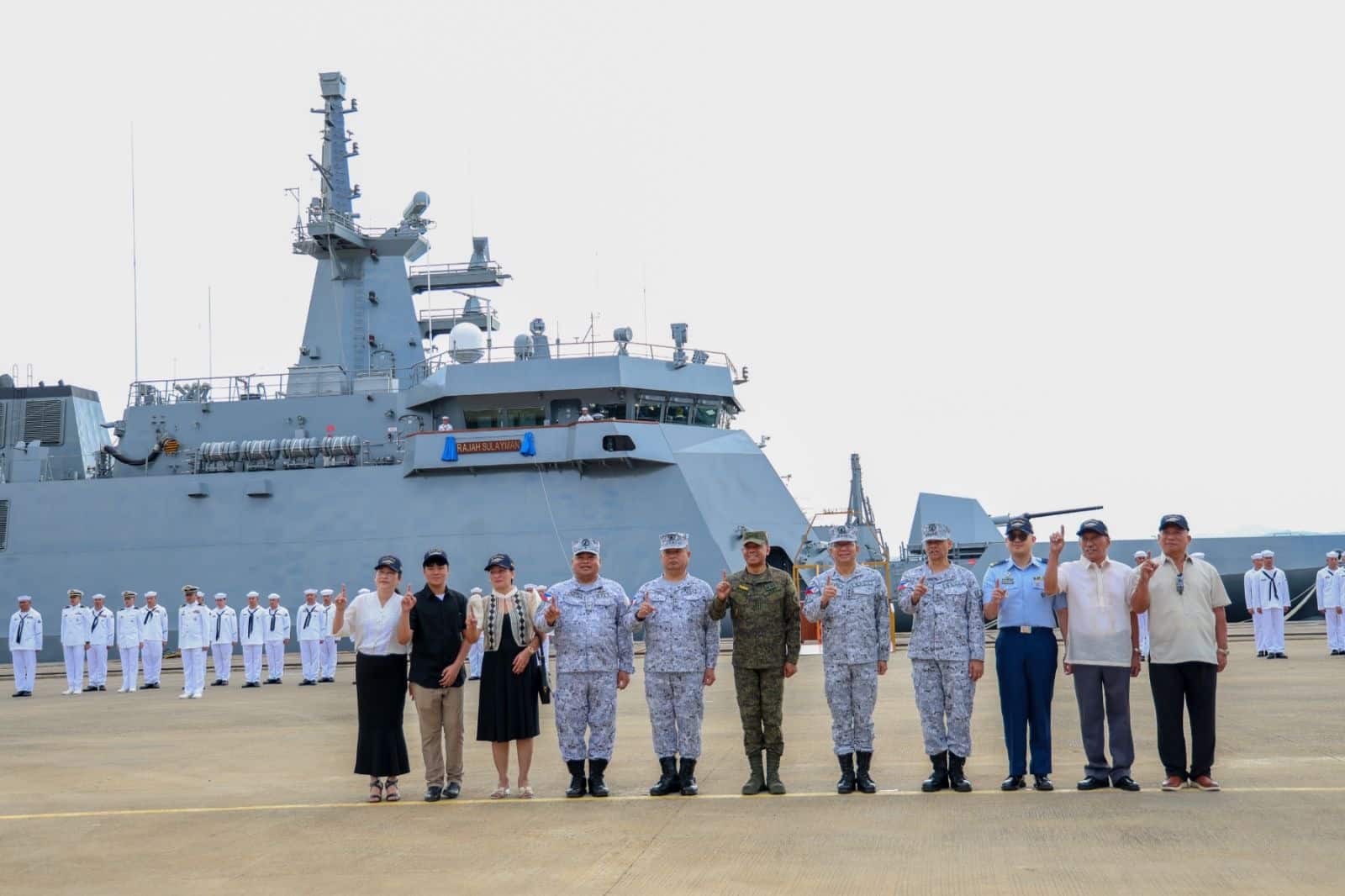
The latest news out of Subic didn’t come with fireworks or fighter jet flyovers. It came with something quieter and honestly, more serious. On February 24, 2026, at Naval Operating Base Subic in Zambales, the Armed Forces of the Philippines commissioned two new naval vessels. But here’s the real question no one wants to ask out loud: Are we watching routine modernization or the steady tightening of a maritime frontline?
Because when AFP Chief Gen. Romeo S. Brawner Jr. stood before the formation and declared, “Modernization is not a signal of aggression. It is a statement of responsibility. A credible defense posture deters conflict,” it didn’t feel like ceremonial language. It felt like a message, carefully worded, deliberately timed.
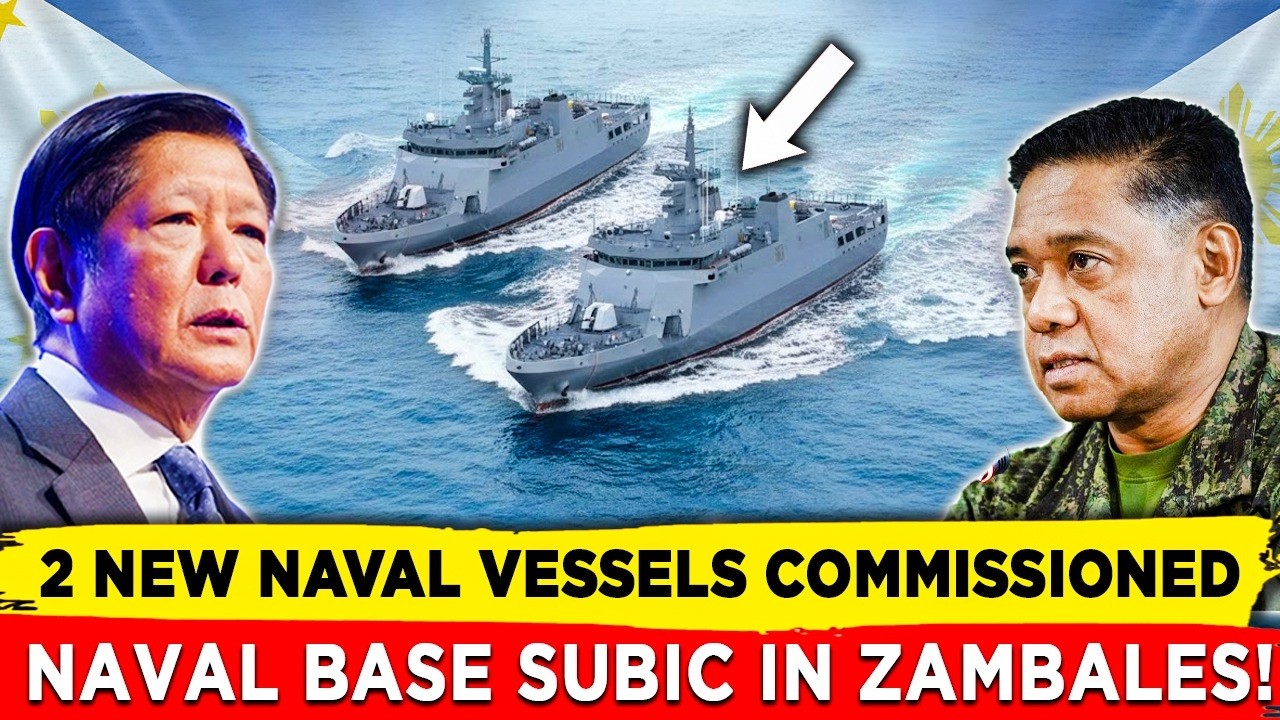
And timing matters. The two ships, BRP Rajah Sulayman (PS-20) and BRP Audrey Bañares (PG-910) are not just additions to the fleet. They are symbols. Steel and hull numbers, yes. But also signal markers in a region where every movement at sea is watched, measured, and often challenged. Vice Adm. Jose Ma. Ambrosio Ezpeleta, the Philippine Navy’s Flag Officer in Command, stood alongside Brawner as the commissioning took place. No dramatic speeches. No chest-thumping. Just calm, steady emphasis on preparedness. “Preparedness prevents miscalculation. Capability preserves peace.”
That line stayed with me. Because in contested waters, especially across the West Philippine Sea, miscalculation is the real danger. Not grand invasions. Not cinematic war. But a radar lock held too long. A ship maneuvered too close. A commander misreading intent. Deterrence theory talks about “capability signaling.” It sounds academic. Cold. Strategic.
But strip away the jargon and it’s simple: If you are visibly capable, the other side thinks twice. And that’s what this commissioning felt like. Not loud. Not provocative. Just, firm. Think about it this way. Imagine living in a neighborhood where tensions have been simmering for years. You don’t threaten anyone. You don’t shout. But you fix your gates, install lights, and make sure people know you’re alert. That’s not aggression. That’s maturity.
Subic has seen history before, from American naval dominance to post-base uncertainty. And now, in 2026, it becomes the backdrop for something different: a Philippines that is steadily, almost quietly, reinforcing its maritime spine. There’s something powerful about that kind of restraint.

No dramatic escalation. No reckless rhetoric. Just capability. And maybe that’s the point. Because in today’s Indo-Pacific, strength isn’t always about who fires first. It’s about who is ready, so no one has to. The commissioning of BRP Rajah Sulayman and BRP Audrey Bañares may look procedural on paper. But zoom out, and it’s part of a larger story: a country recalibrating its defense posture, aware that gray-zone pressure is constant, aware that alliances matter, but also aware that sovereignty ultimately rests on what you can defend yourself.
This wasn’t just a ceremony. It was a quiet statement that the Philippines intends to stay, steady, prepared, and very much present, in waters that have become one of the most sensitive strategic theaters on the planet. And honestly? That’s the kind of signal that changes calculations.
The Offshore Patrol Vessel: BRP Rajah Sulayman (PS-20)
When the Philippine Navy officially brought the BRP Rajah Sulayman (PS-20) into service, it wasn’t just another hull added to the roster. It felt like a marker, the beginning of something bigger, more structural. This ship is the first of six offshore patrol vessels ordered from HD Hyundai Heavy Industries, part of a ₱30-billion modernization package that signals long-term intent, not short-term optics.
She was launched in Ulsan on June 11, 2025, a detail that matters, because that’s Independence Day in the Philippines. Maybe coincidence, maybe quiet symbolism. By January 17, 2026, she had arrived on Philippine shores, and the delivery pipeline was steady: two vessels per year through 2028. That pace tells you this isn’t a one-off acquisition. It’s fleet architecture in motion.https://indopacificreport.com/philippines-commissions-its-latest-frigate-brp-diego-silang-ffg-07/
Technically, the Rajah Sulayman sits in the 2,000 to 2,500-ton range, substantial enough to maintain presence without being escalatory. She can stay at sea for more than 20 days, which in operational terms means endurance. Persistence. The ability to show up and not immediately disappear. There’s a helicopter deck, modern radar suites, and combat systems designed for maritime domain awareness. Not flashy destroyer-level firepower, but that’s not the point. Offshore patrol vessels are about visibility, surveillance, and control of space. They are built for EEZ patrol, anti-smuggling operations, and what defense planners now call grey-zone deterrence, operating below the threshold of open conflict but firmly asserting jurisdiction.
And here’s where the scale hits you. The Philippines has a coastline stretching roughly 36,000 kilometers, one of the longest in the world. Its Exclusive Economic Zone covers about 2.2 million square kilometers. That’s vast. Almost overwhelming when you picture it. You can’t defend that kind of maritime geography with symbolism alone. You need ships that can stay out there. Ships that don’t just visit contested waters but remain in them.
In the West Philippine Sea, presence is policy. If you’re not there, someone else will be. An offshore patrol vessel like Rajah Sulayman enhances persistent presence operations, not to provoke, but to normalize lawful patrols. There’s a quiet confidence in that approach. It’s less about dramatic confrontation and more about consistency. Showing the flag. Recording activity. Being calm, professional, and unmovable.
Then there’s the name. Rajah Sulayman was a pre-Hispanic ruler who resisted Spanish forces during the Battle of Manila in 1570. Naming a modern naval asset after him isn’t accidental. It connects centuries of resistance to today’s maritime posture. The message isn’t loud, but it’s clear: sovereignty is not new to this archipelago. It has always been defended, sometimes with bolos and wooden forts, now with steel hulls and radar arrays.https://www.youtube.com/watch?v=A40FNkeA9Pk
There’s something grounding about that continuity. The Rajah Sulayman doesn’t represent aggression. It represents memory. It represents a state saying, we know our history, and we intend to remain in control of our waters. And in a region where miscalculation is the real danger, steady capability might be the most powerful signal of all.
The Fast Attack Interdiction Craft: BRP Audrey Bañares (PG-910)
If the offshore patrol vessel is about endurance and presence, the BRP Audrey Bañares (PG-910) is something else entirely. It’s speed. Edge. Reflex. Commissioned as the ninth and final fast attack interdiction craft under a ₱10-billion program signed back in February 2021, this vessel closes a chapter in one sense but opens a sharper one in another. The supplier, Israel Shipyards Ltd., built these boats under what the Philippine Navy calls the Acero-class. And that name fits. Acero. Steel.
These gunboats are derived from the Shaldag Mk V platform, compact, aggressive, purpose-built for contested littorals where things can escalate in seconds. They move at over 40 knots. That’s not just fast. That’s blink-and-you-miss-it fast. In tight coastal waters or near congested shoals, speed is tactical leverage.
Unlike larger patrol vessels that dominate through persistence, the Audrey Bañares projects control through maneuverability. It’s designed for littoral combat, rapid interception, swarm deterrence, and coastal defense. In practical terms, that means it can chase down suspicious contacts, respond quickly to harassment, and operate in shallow, cluttered environments where bigger ships would hesitate.
US to Deploy Advanced Missiles in Philippines Amid South China Sea Tensions
And let’s be honest, that matters in the Philippine context. Much of the country’s maritime friction doesn’t happen in deep blue water. It happens close to reefs, near coastlines, in narrow approaches. It happens where fishing boats, coast guard ships, militia vessels, and naval units all share uneasy proximity. In that kind of environment, response time is everything.https://www.youtube.com/watch?v=_T03Lq8kiLA
Audrey Bañares also represents generational change. It’s part of the effort to phase out older medium patrol craft that, frankly, were overdue for replacement. The upgrades aren’t cosmetic. Improved fire-control systems. Remote weapon stations. Night-fighting capability. These are serious enhancements. They reduce crew exposure, improve targeting accuracy, and extend operational windows beyond daylight. That last part is important. Modern maritime security doesn’t clock out at sunset. But beyond the steel and specs, the name carries weight.
The vessel honors a Navy commando killed during the 2013 Zamboanga clashes with the Moro National Liberation Front. That period was chaotic, painful, and very much internal, counterinsurgency, urban fighting, territorial control within the state itself. By naming a fast attack craft after Audrey Bañares, the Navy stitches that legacy into today’s maritime security evolution.

It’s almost poetic in a way. A memory rooted in domestic conflict now sails outward, toward coastal defense and grey-zone contingencies. The threats have evolved. The geography has shifted from city streets to contested waters. But the underlying principle is the same: protect sovereignty, protect citizens, respond fast when things turn unstable.
There’s something raw about that continuity. The BRP Audrey Bañares isn’t a massive warship meant to intimidate from afar. It’s lean, quick, and built for moments that demand decisive action. In a maritime environment where ambiguity is common and seconds matter, that kind of platform isn’t just useful. It’s necessary.
Modernization in Numbers
Step back from the ceremonies and the ship names for a second. Look at the numbers. Because the numbers tell a story that speeches sometimes soften. The Armed Forces of the Philippines modernization program didn’t start yesterday. It was launched in 2012, and for a while, progress felt slow, almost hesitant. But now we’re in Horizon 3, covering 2023 to 2028, and the pace is visibly different. The 2026 defense budget is projected to land somewhere in the ₱280 to ₱300+ billion range, depending on final appropriations. That’s not a small change. And more importantly, a significant portion of that trajectory is leaning toward maritime capability.
That shift makes sense. Geography dictates strategy. An archipelago doesn’t get to ignore its navy. Since 2016, the Philippine Navy’s fleet composition has changed in ways that would’ve seemed ambitious a decade ago. Two guided-missile frigates are already in service including the BRP Jose Rizal (FF-150) and its sister ship, the BRP Antonio Luna (FF-151). Two corvettes are on the way. Strategic sealift vessels have expanded logistical reach. Nine fast attack interdiction crafts are now operational. Six offshore patrol vessels are in the pipeline. Individually, each acquisition seems incremental. Collectively, they represent structural change. But here’s where realism kicks in.
Philippines Eyes Submarines from Korea Amid Rising Sea Tensions
The South China Sea is not an empty theater. The People’s Liberation Army Navy has expanded at a historic pace. China now operates more than 350 ships, the largest navy in the world by hull count. That figure alone reframes the scale of the challenge. By comparison, the Philippine Navy fields roughly 90 vessels, and that number includes auxiliaries and support craft. So yes, modernization narrows the vulnerability gap. It strengthens presence. It increases deterrence credibility.
But it does not erase asymmetry. And maybe that’s the honest takeaway. This isn’t about matching ship for ship. It’s about reducing strategic fragility. It’s about ensuring that the Philippines is no longer operating from a position of visible weakness in its own maritime domain. Modernization, in this context, is less about parity and more about resilience. It’s about making sure that any actor calculating risk in the West Philippine Sea has to factor in a Navy that can persist, respond, and document. A Navy that isn’t massive but isn’t negligible either.https://www.youtube.com/watch?v=eVEsMNWDS2s
That distinction matters. Because in deterrence dynamics, absolute strength is one variable. Perceived resolve, operational readiness, and sustained presence are others. The Philippines may remain smaller in fleet size, but it is no longer static. And in maritime strategy, movement changes the equation.
Geopolitical Significance
Zoom out, and these ships aren’t just hardware. They sit right at the center of a very tense map. The West Philippine Sea has been heating up in ways that feel incremental but relentless. Confrontations with the China Coast Guard are no longer rare incidents, they’re patterns. Water cannons. Aggressive shadowing. Maritime militia vessels swarming in gray hull clusters that blur the line between civilian and paramilitary presence. None of it crosses into outright war. But all of it applies pressure.
US and Philippines Boost Presence in the Bashi Channel Amid Rising Tensions
That’s where platforms like the BRP Rajah Sulayman (PS-20) matter. Offshore patrol vessels aren’t designed to win fleet battles; they’re built to stay. To patrol. To record. To make sure that Philippine presence in its own Exclusive Economic Zone is routine, not reactive. Persistence is policy in contested waters.
Then you have the BRP Audrey Bañares (PG-910), fast, agile, able to respond quickly when harassment escalates. In gray-zone scenarios, seconds count. A quick-response craft doesn’t change the balance of power, but it changes the tempo. And tempo shapes outcomes. What’s interesting, though, is how carefully this is being framed.https://www.youtube.com/watch?v=VnjuZAyfNlQ
AFP Chief Gen. Romeo Brawner’s messaging leans hard into defensive modernization. Stability-oriented signaling. Avoiding aggressive rhetoric. The tone is deliberate: this is about responsibility, not provocation. That distinction isn’t semantic, it’s strategic. In deterrence theory, you want to signal capability without cornering the other side into escalation. Show readiness. Avoid theatrics.
It’s a tightrope. Then there’s the alliance layer. The U.S.–Philippines Enhanced Defense Cooperation Agreement, Enhanced Defense Cooperation Agreement has expanded, increasing rotational access to strategic sites. Joint patrols have become more visible. Not symbolic sail-pasts, but coordinated operations.
At the same time, the supplier landscape tells its own story. South Korea, through firms like HD Hyundai Heavy Industries, is now a central pillar of Philippine naval modernization. Israel, via Israel Shipyards Ltd., has deepened defense-industrial cooperation through the Acero-class program. This diversification matters. It reduces overreliance and spreads strategic partnerships across multiple defense ecosystems.
And that’s the broader geopolitical signal. The Philippines isn’t militarizing recklessly. It’s recalibrating. Quietly building layered capabilities, endurance through OPVs, speed through FAICs, alliance reinforcement through EDCA, supplier diversification through Seoul and Haifa. Does this eliminate asymmetry with China? No. Not even close. But it complicates coercion. And in today’s maritime chessboard, complicating the other side’s calculus might be the most realistic form of deterrence available.
Strategic Implications Going Forward
Where this really starts to matter is not in the ceremony photos but in what happens quietly, day after day, after the ships sail. First, maritime domain awareness. That phrase sounds technical, almost sterile. But it simply means this: knowing what is happening in your waters before it becomes a crisis. The addition of vessels like the BRP Rajah Sulayman (PS-20) strengthens surveillance integration across agencies. Coordination with the Philippine Coast Guard becomes smoother. Air assets can relay and validate sightings faster. Shore-based radar systems feed into a more responsive operational picture.
It’s layered awareness. Sea, air, shore, talking to each other instead of operating in silos. And in gray-zone environments, early awareness is half the battle. You cannot respond to what you do not see. Then comes grey-zone preparedness.https://www.youtube.com/watch?v=MqawLKWnvm4
The BRP Audrey Bañares (PG-910) and its sister fast attack interdiction crafts are tailored for exactly the kinds of scenarios that have become common in the West Philippine Sea. Swarm tactics. Close-quarter maneuvering. Intimidation calibrated just below armed conflict. In those moments, speed and agility matter more than tonnage.
A fast craft can intercept quickly. It can position assertively without escalating to missile-level signaling. It gives commanders options and in crisis management, options are everything. Escalation control depends on having proportional responses available. Not every situation calls for a frigate. Sometimes you need something smaller, faster, precise.
There’s also a quieter layer to all this, the industrial and diplomatic messaging. South Korea, through firms like HD Hyundai Heavy Industries, is no longer just a commercial partner but a strategic defense supplier. Israel, via Israel Shipyards Ltd., has embedded itself in the Navy’s modernization architecture. This diversification signals that Philippine procurement is no longer exclusively U.S.-centric. The alliance with Washington remains foundational, especially under the Enhanced Defense Cooperation Agreement, but Manila is broadening its defense-industrial base.
That matters geopolitically. It distributes risk. It widens diplomatic space. It signals autonomy within alignment. Looking ahead, modernization will not erase asymmetry. The regional balance remains structurally unequal. But capability accumulation shifts the cost calculus. It makes coercive actions more complicated, more visible, more diplomatically expensive. And maybe that’s the real point. Because in an era of contested seas, hulls in the water are policy made visible.
https://youtu.be/o-uRUDPyRdU?si=e5rwz1AlPpK4V_fu