Philippines’ Two-Front Strategy at Palawan and Scarborough Shoal — China is watching
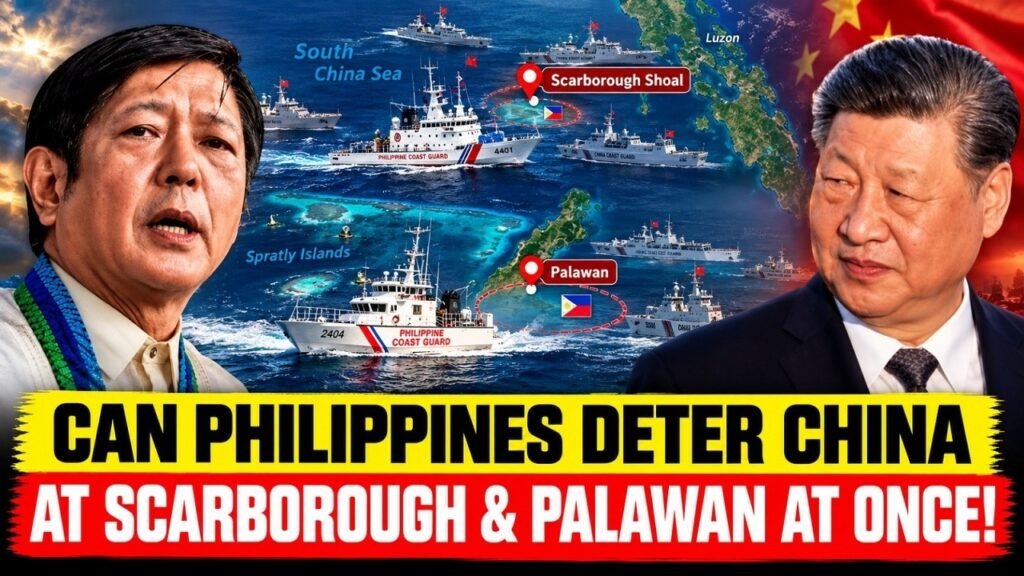
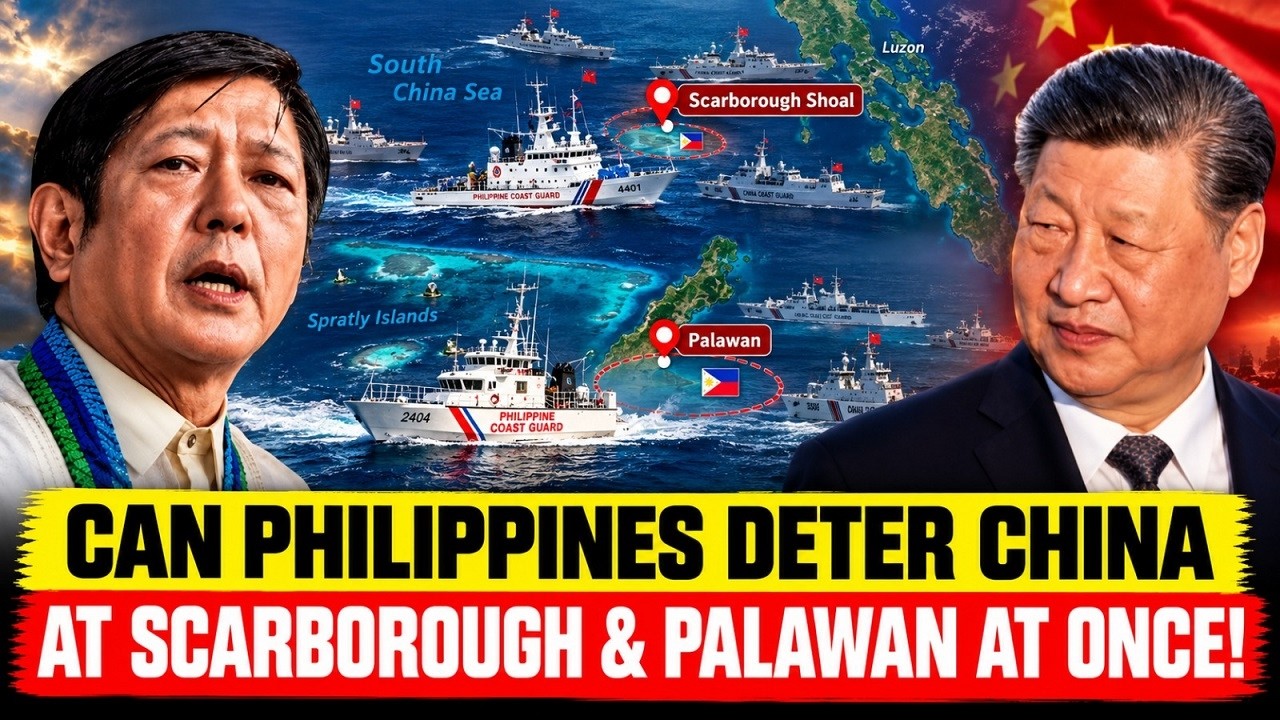
The Philippines faces a growing challenge in protecting its maritime interests across the South China Sea. As tensions continue around Scarborough Shoal and the Spratly Islands, Philippine defense planners must consider how to maintain a reliable presence in multiple locations without exhausting their available ships, personnel, surveillance systems, and logistical resources. The central question is whether the country can respond to pressure near Scarborough Shoal while continuing to support its positions around Palawan and the western Philippine maritime region. According to the reporting referenced in this analysis, at least six dangerous encounters between Chinese and Philippine forces had been reported since the beginning of October. The incidents involved disputed areas including Scarborough Shoal, Second Thomas Shoal
The geographical distance between these locations makes the challenge more complicated. Scarborough Shoal lies west of Luzon and requires persistent maritime monitoring, while Palawan serves as an important support area for Philippine operations toward the Spratly Islands. Both areas require ships, trained crews, fuel, maintenance, intelligence, and reliable communication. A vessel assigned to one mission cannot automatically provide the same level of coverage somewhere else. China’s larger maritime and military capabilities also influence this situation. Beijing has more resources available to deploy and rotate vessels across contested waters, while the Philippines must carefully manage its comparatively limited operational capacity. The issue is therefore not simply whether the Philippines possesses modern military equipment. It is whether its forces can remain operational over an extended period while responding to pressure in different parts of the South China Sea.
Why Scarborough Shoal and Palawan Matter to Philippine Security
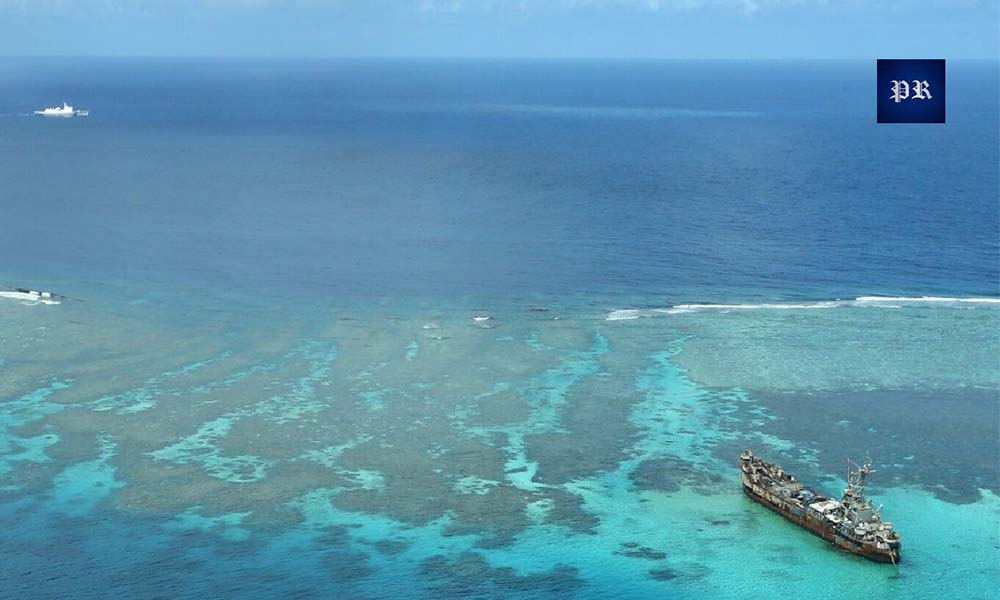
Scarborough Shoal, known in the Philippines as Bajo de Masinloc, is an important fishing area located approximately 120 nautical miles west of Luzon. Its strategic importance extends beyond geography because it is connected to fishing access, maritime rights, national sovereignty claims, and the Philippines’ ability to maintain a presence in surrounding waters. Repeated encounters involving Chinese and Philippine vessels have made the shoal a prominent point of tension in the wider South China Sea dispute. For Manila, maintaining a presence around Scarborough Shoal requires more than sending a patrol vessel into the area occasionally. Philippine authorities need to monitor vessel movements, identify potentially dangerous encounters, communicate with fishermen, document incidents, and coordinate responses between relevant agencies. If Chinese coast guard or maritime militia vessels increase their activity, Philippine personnel may need to spend additional time and resources monitoring the situation.
Palawan presents a different but equally important challenge. Its geographical position makes it a key support area for Philippine activities toward the Kalayaan Island Group and the Spratly Islands. Maintaining these operations requires functioning ports, reliable supply routes, fuel, repairs, trained personnel, and vessels capable of operating over long distances. Even a capable patrol ship becomes less useful if it must remain unavailable for extended periods because of maintenance requirements or shortages of essential supplies. These different responsibilities create a difficult resource-allocation problem. Sending more vessels toward Scarborough Shoal could reduce the number available for patrols and resupply operations around Palawan. Prioritizing the western operating area could leave Manila with fewer immediate options if another confrontation develops near Luzon. The challenge is to maintain sufficient coverage across both areas without allowing a single incident to disrupt the wider maritime defense system.
Scarborough Shoal: A Test of Philippine Maritime Readiness
Recent reported activity around Scarborough Shoal demonstrates why this area requires sustained attention from Philippine authorities. In September 2026, the Philippine Coast Guard reported Chinese vessels operating in the area while Philippine authorities provided assistance to Filipino fishermen. The reported presence included a Chinese navy warship, three China Coast Guard vessels, and three Chinese maritime militia vessels. This combination illustrates the complexity of maritime competition in the South China Sea. The pressure around a disputed feature does not necessarily come from naval warships alone. Coast guard vessels can challenge or monitor activities, while maritime militia vessels and surveillance platforms can add further operational complexity. Philippine authorities must assess the movements .
China Says It Can Easily Defeat the Philippines — Is Manila Ready For War?
On September 27, 2026, Chinese forces also showcased drones and boarding drills around Scarborough Shoal. Reporting referenced in this article described a WZ-7 Soaring Dragon surveillance drone in imagery released from the exercises, alongside other aircraft and naval platforms. Such developments highlight the growing importance of surveillance and coordination in maritime operations. They do not establish that an armed confrontation is inevitable, but they demonstrate the range of capabilities that may be involved in a contested maritime environment. For the Philippines, repeated encounters create practical demands even when no shots are fired. Vessels must remain at sea for extended periods, crews require rest, equipment needs maintenance, and authorities must continue collecting and evaluating information. Each additional deployment consumes fuel, time, and operational capacity that may otherwise be needed elsewhere. This is why Scarborough Shoal should be understood as a test of sustained maritime readiness rather than simply a contest between individual ships. Manila needs the ability to monitor the area consistently, respond proportionately to dangerous encounters, protect lawful Philippine activities, and preserve enough resources to support operations in other parts of the country’s maritime territory.
Can Palawan Support the Philippines’ Western Maritime Operations?
Palawan is central to the Philippines’ efforts to maintain its presence around the Spratly Islands. However, geographical importance alone does not guarantee operational effectiveness. Maritime forces need infrastructure that allows vessels to refuel, receive supplies, undergo repairs, and return to sea without unnecessary delays. Without these supporting services, even a growing fleet can struggle to maintain regular patrols across distant operating areas. One relevant development is the Philippine Coast Guard’s vessel-support project at Buliluyan Port in Bataraza, southern Palawan. According to the information provided for this analysis, the project entered its development phase following a September 3, 2026, kick-off meeting involving the Philippine Coast Guard, the Philippine Ports Authority, the United Nations Office on Drugs and Crime, and the US Department of State’s Bureau of International Narcotics and Law Enforcement Affairs. The project is intended to improve vessel-support infrastructure for maritime patrols, surveillance, and rapid-response operations in southern Palawan. Its planned stages include design, procurement, construction, testing, and eventual handover. These activities are important because the effectiveness of a maritime force depends not only on the number of vessels it owns but also on how quickly those vessels can return to operational service after completing a mission.
The status of the project must be understood carefully. A development initiative is not the same as a completed and fully functioning facility. Until the necessary infrastructure is finished and demonstrated to be operational, its expected benefits should not be treated as results already achieved. Its future value will depend on the facilities delivered, the support services available, and the extent to which they improve vessel availability. The same principle applies to proposed military deployments and additional defense investments. Announcements about personnel or equipment do not automatically solve shortages in maintenance, surveillance, fuel, and transport. For the Philippines, the more important measure is whether its infrastructure can support consistent operations across the western maritime region while other units respond to incidents elsewhere.
China’s Military Advantage and the Philippines’ Operational Limitations
China possesses substantially greater military and industrial resources than the Philippines, including a larger navy, a more extensive air force, and a broad range of surveillance and support capabilities. This imbalance gives Beijing more options for deploying vessels, rotating personnel, and maintaining activity across several maritime locations. Nevertheless, overall fleet size alone does not determine how effectively a country can manage a specific operational challenge. A more practical assessment examines how many vessels are available for deployment, how quickly they can reach a particular location, how long they can remain on station, and whether they can receive maintenance and supplies when required. A ship that is undergoing repairs cannot perform a patrol, regardless of its technical capabilities. Similarly, a vessel that has completed a demanding deployment may need time for maintenance and crew recovery before returning to sea.
The Philippine Coast Guard and Philippine Navy also have different responsibilities. The Coast Guard plays a major role in maritime law enforcement, patrols, and civilian maritime protection, while the Navy provides military capabilities for national defense. The Philippine Air Force contributes air surveillance and other operational support. When incidents involve multiple types of Chinese vessels or aircraft, effective coordination between these services becomes increasingly important. Communication and decision-making can be just as important as the equipment itself. If one agency detects an emerging incident but relevant information reaches other units too slowly, the response may become less effective. Clear responsibilities, reliable communication systems, regular training, and coordinated planning can help the Philippines use its available resources more efficiently. The Philippines does not need to match China ship for ship to improve its maritime position. Instead, it needs enough available vessels, surveillance coverage, maintenance capacity, and logistical support to reduce operational gaps. The key question is whether Manila can sustain its presence when repeated incidents demand attention from the same limited pool of ships, crews, and supporting assets.
What Happens If Scarborough Shoal
A simultaneous demand for reinforcements around Scarborough Shoal and Palawan provides a useful way to examine the Philippines’ operational readiness. Consider a hypothetical situation in which Chinese vessels increase their presence near Scarborough while Philippine forces must continue patrols and resupply missions around the Spratly Islands. Manila would need to determine what is happening in both areas, identify the vessels involved, assess the level of risk, and decide where additional resources are required. The first challenge would be surveillance. Philippine authorities need reliable information about maritime activity in both operating areas. If surveillance aircraft, drones, or other monitoring assets concentrate on Scarborough Shoal, the western operating area could receive less attention. If those assets focus on Palawan and the Spratlys, decision-makers may have less immediate information about developments near Luzon.
The second challenge would involve vessel availability. A Philippine Coast Guard ship already assigned to Scarborough Shoal might not be able to reach Palawan quickly enough to support a separate mission. Moving it could reduce coverage in the original area, while keeping it in place would require another available vessel to respond elsewhere. The decision would depend on the seriousness of each incident, the distance involved, and the capabilities of other units. Maintenance and logistics would add another layer of difficulty. Ships require fuel, supplies, equipment checks, and repairs. Crews also need appropriate rest and rotation. If the same vessels are repeatedly assigned to demanding missions without sufficient support, maintenance requirements may reduce the number of ships available for future deployments.
Decision-makers would then face the challenge of balancing immediate risks against longer-term operational requirements. Concentrating resources in one location could leave another area with less support. Dividing forces between two locations could reduce the concentration of available capabilities in each. An overly aggressive response could increase escalation risks, while a delayed or insufficient response could create additional operational difficulties. These scenarios are not predictions that China will deliberately initiate a coordinated two-front confrontation. They are planning exercises that help identify weaknesses before a crisis develops. Their main lesson is that the Philippines needs sufficient reserves, reliable surveillance, functioning support facilities, and clear decision-making procedures to manage simultaneous demands without unnecessarily weakening its overall maritime presence.
How Surveillance and Distributed Defense Could Help the Philippines
Improved maritime surveillance could help the Philippines make better use of its available forces. Radar systems, patrol aircraft, drones, satellite imagery, and information shared by international partners can provide a more complete picture of activities around Scarborough Shoal, Palawan, and the Spratly Islands. Better information allows commanders to distinguish between routine activity and developments that may require a more immediate response. Surveillance also helps reduce the need to send a vessel simply to establish what is happening at a particular location. If monitoring systems can identify vessels and track their movements, Philippine authorities may be able to direct ships toward the areas where their presence is most necessary. This can improve the allocation of limited resources, although surveillance cannot replace the physical presence required for certain maritime missions.
Information-sharing between the Philippine Coast Guard, Navy, Air Force, and relevant civilian agencies is equally important. Data collected by one service must reach the personnel responsible for evaluating the situation and making decisions. Clear communication procedures can help reduce delays and ensure that different units operate with a consistent understanding of developments at sea. However, surveillance has important limitations. Detecting a vessel does not automatically provide the means to intercept it, escort another ship, or maintain a position around a distant outpost. Effective maritime operations still depend on available vessels, trained crews, fuel, logistics, and appropriate procedures for responding to dangerous encounters. Distributed defense offers another way to improve flexibility. Instead of depending too heavily on a small number of vessels or facilities, the Philippines can develop a more connected network of surveillance capabilities, support infrastructure, operational reserves, and transport arrangements. The objective is to reduce the risk that an incident in one area forces Manila to weaken its presence somewhere else.
Can the United States, Japan, and Other Partners Strengthen Philippine Defense?
The Philippines has established defense and security partnerships that can support its efforts to improve maritime awareness, training, logistics, and operational coordination. Cooperation with the United States is particularly important, while Japan and other regional partners also contribute to broader security cooperation. These relationships can help the Philippines strengthen its ability to monitor maritime developments and prepare for complex operating conditions. Joint military exercises, including Balikatan, provide opportunities for participating forces to practice communication, logistics, and combined operations. Activities involving Palawan and other strategically important areas can help personnel understand the challenges of operating across an archipelago and supporting forces over long distances. Such exercises may also reveal weaknesses that require attention before they become more serious problems.
Japan and other partners can contribute through training, defense equipment, maritime-awareness initiatives, and information-sharing arrangements. These forms of cooperation can improve the Philippines’ ability to understand developments across the region. However, the practical value of each initiative depends on implementation. An exercise demonstrates that forces have practiced together, but it does not guarantee that every capability will be immediately available during a real crisis. The US–Philippines Mutual Defense Treaty also provides an important framework for the alliance. The two governments have reaffirmed that armed attacks on Philippine or US armed forces, aircraft, and public vessels, including coast guard vessels, in the South China Sea fall within the treaty’s commitments. The precise response to a particular incident depends on its circumstances, and the treaty should not be interpreted as requiring an identical military response to every maritime encounter.
What the Philippines Needs to Prioritize Now
The first priority is improving vessel availability. Acquiring additional ships is useful only if they can be maintained, supplied, and deployed when required. The Philippines needs maintenance planning and crew rotation arrangements that reflect the demands of sustained operations around Scarborough Shoal, Palawan, and the Spratly Islands. The ability to keep existing vessels operational can be as important as expanding the fleet. The second priority is stronger maritime surveillance. Manila needs a reliable understanding of activity across its key maritime areas so that commanders can allocate resources according to the situation. Better monitoring, timely information-sharing, and coordination between services can help authorities respond more efficiently without deploying vessels unnecessarily. The third priority is logistical support. Ports, fuel supplies, maintenance facilities, communications, and personnel support determine how effectively maritime forces can operate over extended periods. The Buliluyan Port project is relevant because improvements to vessel-support infrastructure could help reduce delays and improve operational availability. Its success should be assessed through completed facilities and measurable improvements rather than announcements alone.
The fourth priority is maintaining realistic operational reserves. A two-front challenge becomes more manageable when sufficient vessels, crews, and supporting assets remain available for unexpected developments. Reserves provide flexibility when a ship needs repairs or an incident requires an immediate response. Their value depends on whether they are properly maintained, trained, supplied, and ready for use. The fifth priority is coordination between military and civilian agencies. The Coast Guard, Navy, Air Force, and relevant government institutions need clear responsibilities and reliable procedures for sharing information, responding to incidents, and managing escalation. Joint exercises and cooperation with international partners can help strengthen these arrangements. Finally, the Philippines needs to evaluate defense modernization through measurable operational results. How quickly can a damaged vessel return to service? Can patrols continue while another area faces increased pressure? How reliably can supplies reach distant positions? How quickly does information reach the people responsible for making decisions? These questions provide a more meaningful assessment of readiness than the number of new platforms announced or acquired.
International Law and the South China Sea Dispute
International law remains an important part of the Philippines’ approach to protecting its maritime interests. The 2016 South China Sea arbitration award rejected key aspects of China’s expansive maritime claims under the United Nations Convention on the Law of the Sea and addressed issues involving maritime entitlements and traditional fishing rights at Scarborough Shoal. The award did not determine sovereignty over every disputed island or resolve every maritime boundary in the region. China rejects the ruling, while the Philippines continues to rely on it in defending its maritime rights. This distinction matters because the legal issues in the South China Sea involve different questions, including maritime entitlements, sovereignty, fishing rights, and the interpretation of international law.
For the Philippines, documenting maritime incidents, issuing diplomatic protests, and sharing credible evidence can support its legal and diplomatic position. These measures also help the international community understand developments at sea and assess competing claims. Consistent documentation can be particularly important when encounters involve fishing communities, coast guard vessels, or other civilian maritime activities. The dispute also has direct consequences for Filipino fishermen whose livelihoods depend on access to traditional fishing grounds. Around Scarborough Shoal, maritime access affects fishing activities and local economic security. Around Palawan and the Spratly Islands, the ability to support Philippine personnel and maintain maritime operations remains important to the country’s wider interests.
Final Assessment
The Philippines is pursuing measures that could improve its ability to maintain a presence across its maritime territory. The development of vessel-support infrastructure at Buliluyan Port is one example of efforts to strengthen logistical capacity in southern Palawan. Defense cooperation with the United States, Japan, and other partners also provides opportunities to improve training, surveillance, and coordination. However, these developments do not yet establish that the Philippines can sustain every demand of a prolonged two-front maritime crisis without significant pressure on its resources. The Buliluyan project remains a development initiative, and the full benefits of new infrastructure or defense cooperation depend on implementation. The practical test is whether these efforts lead to more available vessels, faster maintenance, stronger surveillance, and more reliable support for operations across both areas.
One possible outcome is that improvements in surveillance, logistics, and reserves allow the Philippines to maintain a meaningful presence around Scarborough Shoal and Palawan while responding to incidents as they arise. Another possibility is that Philippine forces continue operating in both areas but experience recurring delays, maintenance pressures, and gaps in patrol coverage. A more difficult situation could emerge if sustained demands exceed the available capacity to maintain patrols, resupply distant positions, and respond effectively to multiple incidents. The available information supports a cautious conclusion: the Philippines is addressing important parts of its operational requirements, but its ability to sustain a prolonged, simultaneous two-front challenge cannot be established simply by pointing to planned infrastructure projects, defense partnerships, or individual military assets. This is not a prediction of defeat. It is a recognition that possessing military equipment and maintaining a consistently effective maritime presence are two different challenges.
About Indo-Pacific Report
For more geopolitical analysis, strategy coverage, and Indo-Pacific security reporting, visit Indo-Pacific Report:
Website
Facebook
YouTube
Philippines’ Two-Front Strategy at Palawan and Scarborough Shoal — China is watching