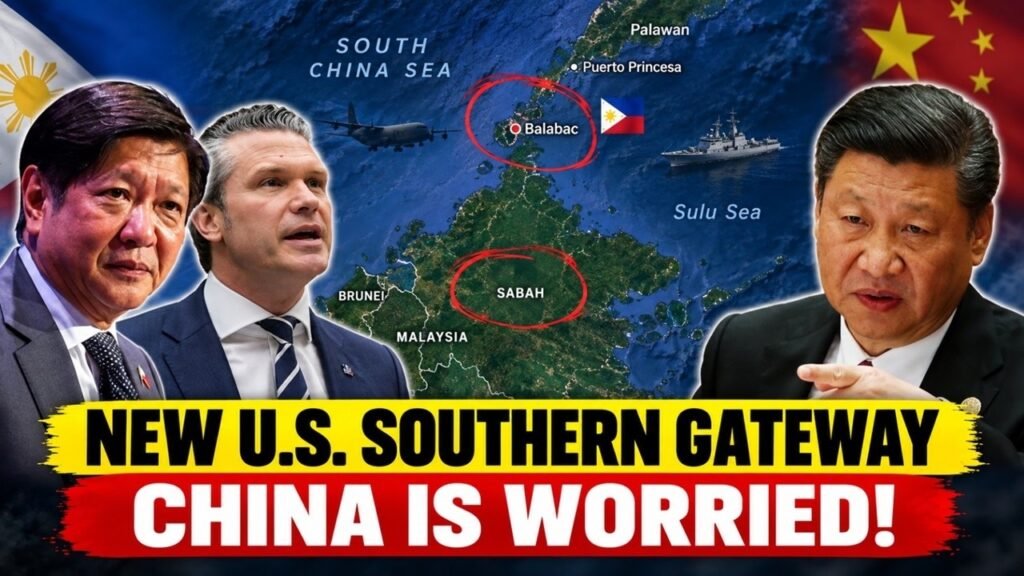
Why Balabac Is Becoming America’s New Military Gateway to the South China Sea?
The Philippines is quietly transforming Thitu Island, also known as Pag-asa Island, into a more accessible and sustainable position in the South China Sea. A new sheltered harbour, an extended runway and improvements to essential infrastructure are changing the way Manila can support its presence on one of its most remote and strategically important islands. The development is significant because Thitu is not simply an isolated Philippine outpost. It is home to civilians, local government functions, military personnel and Coast Guard operations, while also sitting close to one of China’s major artificial-island facilities in the Spratly Islands.
Recent satellite imagery and the developments described in the source material indicate that the changes on Thitu are moving beyond the planning stage. The harbour is taking shape, construction has been taking place around the runway and additional facilities are improving the island’s ability to support people and operations for longer periods. Rather than attempting to build another massive artificial island, Manila appears to be focusing on a more practical objective: making an existing Philippine-controlled position easier to reach, supply, operate and sustain.
Why Thitu Island Matters in the South China Sea
Thitu Island occupies an important geographical position in the Spratly Islands. Known in the Philippines as Pag-asa Island, it is the largest Philippine-controlled feature in the island group and has a permanent civilian population. The island is located roughly 500 kilometres west of Palawan and serves as the seat of the local government of the municipality of Kalayaan. Its location places it directly inside one of Asia’s most contested maritime environments.
The importance of Thitu is closely connected to geography. The island is far from the Philippine mainland, which means that almost everything required to support the population and government presence has to travel a considerable distance by sea or air. Food, fuel, construction materials, equipment, personnel and other supplies cannot simply be moved by road as they would be at a mainland facility. The long maritime distance also means that weather and sea conditions can have an immediate effect on access.
This logistical challenge is one of the main reasons infrastructure development on Thitu matters. A remote island can have strategic importance on a map, but maintaining a permanent presence there requires much more than simply occupying the territory. The island must have reliable transportation, communications, electricity, water, maintenance facilities and access to essential supplies. By improving these systems, the Philippines is addressing the practical difficulties created by Thitu’s isolation.
The location becomes even more significant because China’s Subi Reef is situated only roughly two dozen kilometres away. Subi Reef is a much larger Chinese-built artificial-island facility with extensive infrastructure and a military-grade runway. The close proximity means that Philippine development on Thitu is taking place directly alongside one of China’s major positions in the Spratlys. This does not make the two facilities equal in size or capability, but it makes the improvement of Philippine access to Thitu strategically relevant.
The New Thitu Harbour Changes the Logistics Equation
One of the most important developments on Thitu is the construction of a sheltered harbour. According to the source material, the project has been developed in phases since around 2022, while recent satellite imagery reviewed by Janes shows a largely enclosed harbour basin on the northwestern side of the island. The latest imagery suggests that the facility is operational or approaching operational status.
At first glance, a harbour may appear to be a conventional infrastructure project, but its importance becomes clearer when the island’s remote location is considered. Previously, maritime access to Thitu was more exposed, while the island’s shallow approaches and surrounding conditions could make the movement of vessels more difficult, particularly during poor weather. A sheltered harbour can provide vessels with a more protected location for loading, unloading and supporting the island.
The practical value of the harbour lies in logistics. Fuel, food, construction materials, machinery and other heavy equipment can be moved by sea more efficiently than by air. A protected maritime facility can therefore make regular resupply easier and potentially reduce some of the disruption caused by weather and difficult sea conditions. For a remote civilian community, these improvements can affect everyday life as well as government and security operations.
The harbour can also support future maintenance and development. Infrastructure on a remote island requires continuous repair and replacement. Buildings deteriorate, equipment needs servicing, power systems require maintenance and construction projects require new materials. A more reliable maritime access point makes it easier to keep those systems functioning.
This is why the harbour should be understood as part of a wider sustainment system rather than simply a place where ships can dock. Its significance comes from helping Manila maintain a continuous presence on Thitu. The ability to remain on an island over months and years depends heavily on the reliability of the supply chain supporting it.
Thitu’s Runway Is Getting Longer
The second major development is taking place at Thitu’s Rancudo Airfield. The runway has historically been approximately 1.3 kilometres long, while construction that began in 2025 is extending it toward approximately 1.5 kilometres. Satellite imagery described in the source material shows reclamation and construction activity at the eastern end of the runway.
The Philippine government has also allocated substantial funding for Pag-asa Island airport development. The FY2025 budget included ₱1.65 billion for the project, while Philippine Air Force officials announced in April that new basing-support facilities and runway improvements had been completed to improve the reliability and continuity of air operations.
The importance of a longer runway should be understood carefully. A runway extension does not automatically mean that Thitu is becoming a major fighter base or a facility comparable to China’s much larger artificial-island bases. Such a conclusion would go beyond what the infrastructure itself demonstrates.
Instead, the runway can provide greater operational flexibility. A more capable airfield can make it easier to move personnel, transport equipment, deliver emergency supplies and conduct surveillance-related activities. Better airfield infrastructure can also improve the reliability of flights to and from an island where access is already difficult because of distance.
For the Philippines, this means that Thitu can become less dependent on maritime transportation alone. The island can potentially be supported through two major access routes: sea and air. That flexibility is particularly important in a remote environment where weather, mechanical problems or other logistical difficulties can disrupt one method of transportation.
Why the Harbour and Runway Matter Together
The harbour and runway become more significant when they are considered as part of the same infrastructure system. The harbour improves maritime access while the runway improves air access. Together, they can make Thitu easier to supply and support than it was when access depended on more limited infrastructure.
This creates a more flexible logistics network. Heavy materials, fuel and larger equipment can be transported by sea, while personnel, urgent supplies and selected equipment can move by air. Having both options reduces the island’s dependence on a single transportation method.
The same logic applies to emergencies. If an urgent situation requires personnel or supplies to reach Thitu quickly, improved air infrastructure can provide an additional option. If larger quantities of material need to be delivered, the harbour can provide a more suitable route. Neither facility removes the challenges of operating in a remote location, but together they can reduce some of the consequences of that distance. The wider infrastructure on the island also matters. Power, water, communications, maintenance facilities and other support systems determine whether a remote outpost can function continuously. The more these systems improve, the less dependent the island becomes on short-term or improvised solutions.
This is the central strategic idea behind the development. Manila is not simply adding individual structures. It is gradually improving the island’s ability to operate as a functioning and sustainable Philippine position. Better harbour access supports logistics, the runway supports air movement and improved utilities support the people and institutions that depend on the island.
Why the US Is Spending $75 Million on Runways Beyond Guam in the Philippines
Pag-asa Is More Than a Military Outpost
An important part of the Thitu story is the island’s civilian population. Pag-asa is not simply a military installation. It has Philippine civilian residents, local government functions, community facilities and economic activity connected with the surrounding maritime environment.
That gives the infrastructure projects a dual purpose. Improvements that help government and security personnel can also improve conditions for civilians. A better harbour can support fishermen and other maritime activities. Improved electricity and water systems can make daily life more reliable. Better communications can strengthen the island’s connection with the Philippine mainland.
The presence of civilians also gives the island a different character from an exclusively military facility. The Philippine government is supporting a functioning community in a geographically remote part of the country. Infrastructure therefore has significance beyond defence and security.
The Coast Guard’s role adds another dimension. The Philippines opened a Coast Guard command on Thitu in April, according to the source material. Such a presence can contribute to maritime monitoring, law enforcement, search and rescue and other activities associated with maintaining a government presence in surrounding waters.
The Philippine Air Force has also described its infrastructure improvements as supporting more reliable and continuous air operations. Taken together, these developments show that Manila is strengthening several different functions on the island rather than focusing exclusively on one military capability.
China’s Subi Reef Is Only a Short Distance Away
The strategic environment around Thitu becomes clearer when the island is viewed alongside Subi Reef. The two locations are separated by only roughly two dozen kilometres, placing Philippine and Chinese infrastructure in very close geographic proximity.
Subi Reef is significantly larger and more heavily developed. China has built a major artificial-island complex there, including a military-grade runway and extensive supporting infrastructure. The scale of Subi Reef means that the Philippines is not attempting to reproduce the same model on Thitu.
The Philippine approach is more limited in physical scale but focused on improving the usefulness of an existing island. Instead of creating a massive artificial landmass, Manila is upgrading an established Philippine-controlled position that already has a civilian population, an airfield and government facilities.
This distinction is important when assessing the significance of the construction. Thitu should not be described as equivalent to Subi Reef. The two locations have different sizes, infrastructure levels and capabilities. The significance of the Philippine project comes from the improvement in Manila’s own ability to access and sustain Thitu.
At the same time, geography means the developments cannot be separated from the wider strategic environment. Every improvement to a Philippine-controlled position near a major Chinese facility changes the practical conditions in which both countries operate in the Spratlys.
The Lesson From Second Thomas Shoal
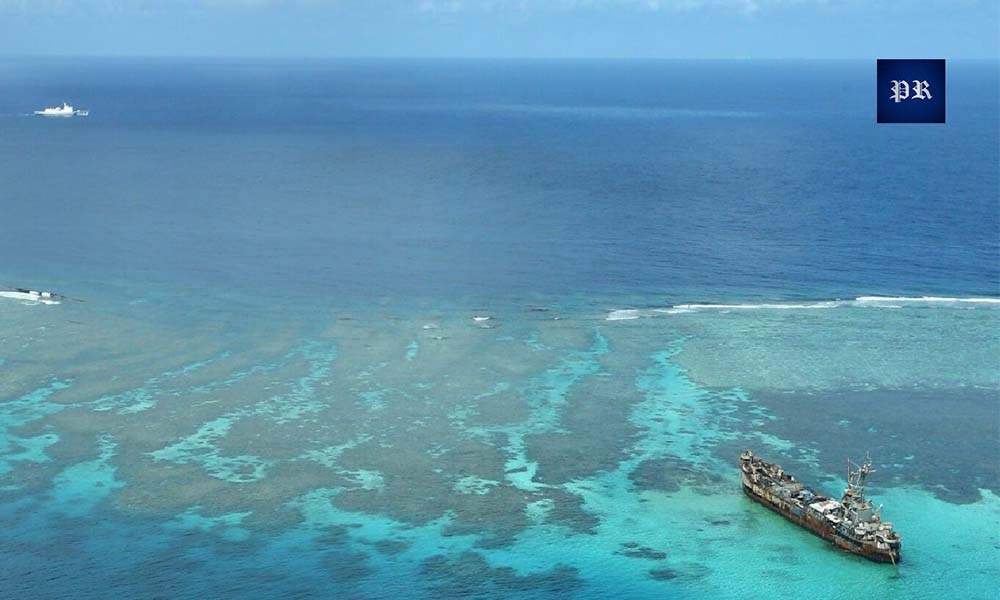
Second Thomas Shoal provides another important example of the logistical challenges involved in maintaining a Philippine presence in the South China Sea. The Philippine position there has required repeated resupply missions, and those missions have encountered Chinese vessels during some operations.
The broader lesson is that maintaining a remote position requires a continuous logistics chain. Personnel need food and water. Equipment requires maintenance. Buildings need repairs. Fuel and other supplies must be delivered regularly. When an outpost is far from the mainland, every part of that process becomes more complicated.
The experience at Second Thomas Shoal therefore provides useful context for understanding why infrastructure at Thitu matters. A government can establish a presence on a remote feature, but keeping that presence functional over a long period requires dependable support systems. The harbour and runway at Thitu address this problem in different ways. The harbour can improve maritime resupply, while the runway can improve air access. Combined with utilities and other facilities, these projects can reduce some of the everyday logistical difficulties associated with maintaining a remote Philippine position. This does not by itself establish an intention to prepare for war. The infrastructure has several possible practical functions, including civilian support, transportation, search and rescue, surveillance and government administration. Its strategic significance comes from the fact that all of these functions become easier when the island is better connected.
Thitu Is Part of a Wider Philippine Strategy
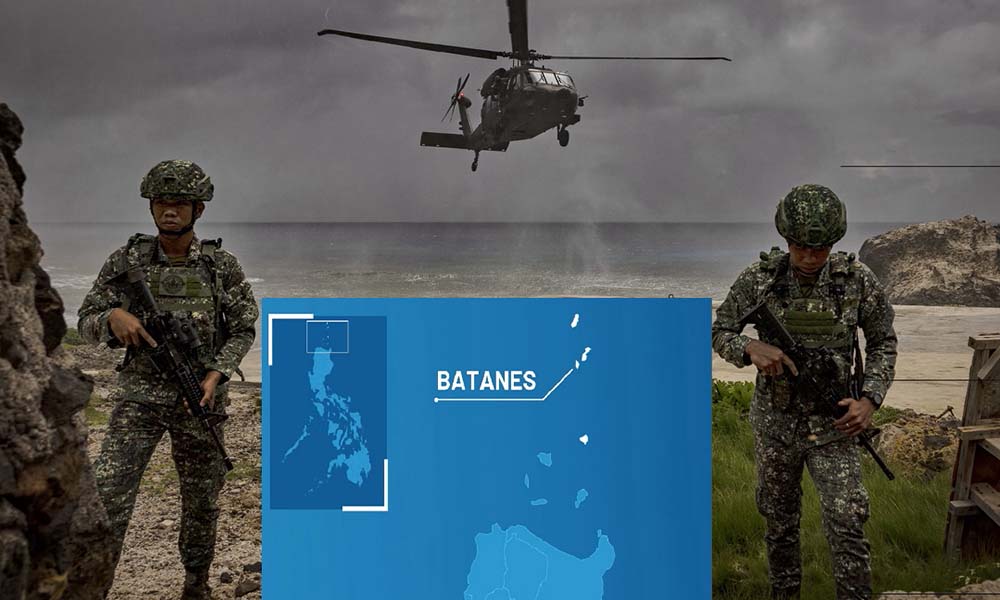
The development of Thitu should also be viewed within the wider improvement of Philippine infrastructure in western maritime areas. The source material describes a broader pattern involving airfield improvements, ports, Coast Guard facilities, surveillance capabilities, fisheries infrastructure and other support systems.
In February, President Ferdinand Marcos Jr. ordered an assessment of additional port and airfield infrastructure in the Kalayaan Island Group. The April opening of the Coast Guard command on Thitu and the Philippine Air Force’s reported completion of support facilities also point toward a broader effort to improve the continuity of Philippine operations.
The importance of this approach lies in persistence. A military exercise eventually ends, and a temporary deployment eventually leaves, but infrastructure can remain in place for years. A harbour, runway, communications system, power facility or Coast Guard station can provide support repeatedly rather than only during a single operation.
That creates more options for Manila. The infrastructure can support civilians, government personnel, Coast Guard activities, aviation operations, emergency response and maritime monitoring. The same physical improvements can therefore contribute to several different forms of Philippine presence.
This also explains why infrastructure development can have strategic consequences even when individual projects appear modest. A single building or runway extension may not transform the regional balance, but a network of connected facilities can gradually change how easily a country can operate in a remote area. The scale of the project should be kept in perspective. Thitu remains a relatively small island and does not suddenly become equivalent to China’s much larger artificial-island bases because of a harbour or runway extension. A longer runway does not automatically transform the military balance in the South China Sea. A sheltered harbour does not eliminate the risks associated with operating in contested waters. Infrastructure cannot by itself resolve the competing territorial and maritime claims that exist across the Spratly Islands. The development also does not mean that Thitu has become immune to logistical pressure. The island remains geographically remote and dependent on transportation links with the Philippine mainland. Weather, maritime conditions and the wider security environment can still affect operations. What has changed is more specific. Manila is making the island easier to access, easier to supply and better equipped to support civilians and government personnel. The Coast Guard presence adds another institutional capability, while improvements to the airfield provide greater flexibility for aviation operations.
The significance is therefore better understood in terms of sustainability rather than sudden military transformation. The Philippines is strengthening its ability to maintain a continuous presence on an island that was already under its administration.
The Real Strategic Change Is the Meaning of Distance
The most important way to understand the Thitu project is through the problem of distance. The island remains roughly 500 kilometres from Palawan and continues to sit in a contested maritime environment. Its geographical isolation has not disappeared. What is changing is the practical effect of that isolation. A remote island with limited transportation infrastructure is difficult to support. A remote island with a sheltered harbour, improved runway, better utilities, stronger communications and established government facilities is easier to sustain. This distinction is important because strategic infrastructure is often about persistence rather than size. A country does not necessarily need to build the largest facility to improve its position. Making an existing position more reliable can itself have long-term consequences. For Thitu, that means the ability to bring supplies, move personnel, support residents, conduct search and rescue, monitor surrounding waters and maintain government functions can all become more practical. The island’s physical geography remains the same, but its usability can improve.
That is ultimately why the harbour and runway developments deserve attention. The story is not simply about concrete, construction or a longer airstrip. It is about reducing the logistical disadvantages that have historically made it difficult to sustain a Philippine presence so far from the mainland.
What Happens Next on Thitu Island?
The future significance of Thitu will depend on how these infrastructure improvements are completed and used. Further development of the harbour, runway, utilities, Coast Guard facilities and civilian services could determine how effectively the island functions as a permanent Philippine-administered community.
The most important developments to watch will therefore not necessarily be the largest construction projects. Changes in regular maritime access, air operations, civilian services, communications, search-and-rescue capability and maintenance infrastructure can provide a clearer picture of how sustainable the island’s presence has become.
The continuing development of Thitu also shows how infrastructure can become an important part of the wider South China Sea story. Competition in the region is not only about ships and military facilities. It also involves ports, runways, communications systems, civilian communities, Coast Guard stations and the ability of governments to maintain a presence over long periods.
For the Philippines, Pag-asa remains a remote island in the middle of the South China Sea. But better infrastructure can make that distance less restrictive. The country is not matching China’s much larger artificial-island facilities in scale. Instead, it is improving one of its own positions so that it can be supplied, maintained and used more consistently.
The result is a gradual but important change in the island’s practical role. Thitu remains small, remote and strategically sensitive, but the Philippines is working to ensure that isolation is no longer its biggest logistical weakness.
About Indo-Pacific Report
For more geopolitical analysis, strategy coverage, and Indo-Pacific security reporting, visit Indo-Pacific Report:
Website
Facebook
YouTube
Why Balabac Is Becoming America’s New Military Gateway to the South China Sea?