Why the US Is Spending $75 Million on Runways Beyond Guam in the Philippines
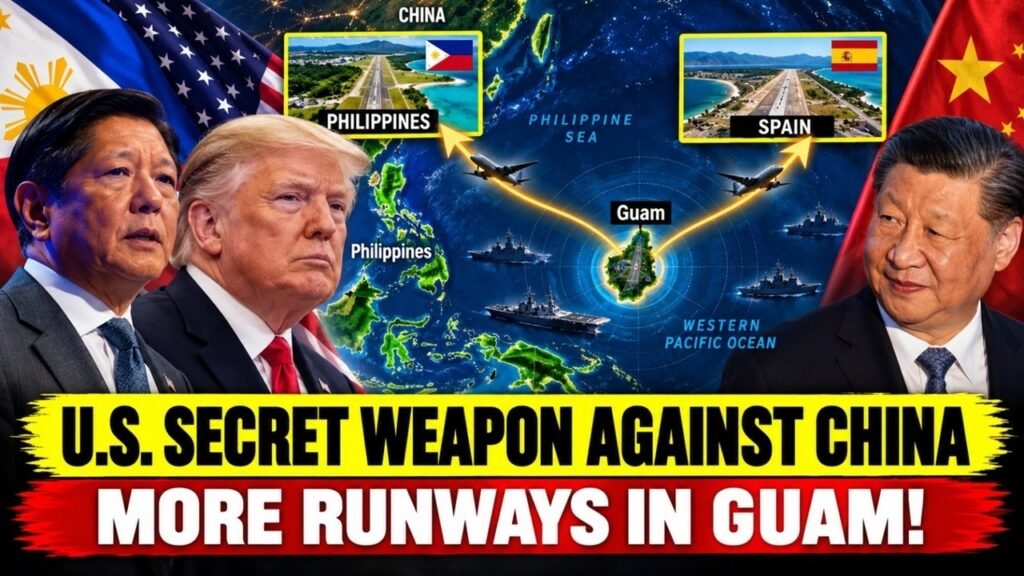
The United States is quietly changing the way it plans to operate airpower across the Western Pacific, and the reason goes far beyond simply repairing or upgrading runways. The roughly $75 million being directed toward Pacific runway and related infrastructure projects reflects a much larger strategic concern: what happens to American airpower if one of its major military bases is attacked and temporarily becomes unusable? Guam has long been one of the most important American military locations in the Western Pacific because it provides the United States with a powerful and relatively independent base from which bombers, tankers, transport aircraft, surveillance platforms and other military assets can operate across the region. But Guam also has an obvious weakness.
It is a fixed and highly visible location, and any major opponent knows where it is. In a conflict involving long-range missiles, the United States cannot assume that aircraft operating from Guam will always have an undisturbed runway, fuel supply, maintenance facility or communications network. An attack does not necessarily have to destroy every aircraft on the island to create a serious military problem. If enough runway space is damaged, if aircraft parking areas are disrupted, if fuel infrastructure is hit or if maintenance and communications facilities are temporarily knocked out, aircraft that are otherwise ready for combat may suddenly have nowhere to operate from. This is why Washington is increasingly interested in developing a wider network of usable airfields across the Pacific. The goal is not to replace Guam or turn every small airfield into another massive American military base. Instead, the United States wants to make sure that if one location is damaged, aircraft and their supporting personnel have other places where they can move, refuel, receive maintenance, reposition or continue operations. The strategic thinking is simple: American airpower should not depend entirely on one location surviving a missile attack.
Guam Is America’s Pacific Airpower Hub
Guam remains enormously important to American military strategy because of its location, infrastructure and capacity. The island allows the United States to maintain a major military presence in the Western Pacific without relying entirely on facilities located in another country, while its distance from the Asian mainland historically provided significant strategic depth. Andersen Air Force Base in particular can support long-range bombers, tankers and other aircraft that require substantial infrastructure, while the broader military presence on Guam provides logistics, communications, maintenance and support capabilities that smaller airfields cannot easily reproduce. This makes Guam one of the most valuable American military positions in the Pacific, but its strength is also connected to its vulnerability. Because so much capability can be concentrated on one island, Guam becomes a logical target for any opponent attempting to reduce American military power in the region. An adversary does not necessarily need to destroy every American aircraft to achieve an operational effect. It could instead attempt to damage the infrastructure that allows those aircraft to operate. A runway that cannot safely support aircraft can be almost as important as an aircraft destroyed on the ground. Fuel storage, aircraft shelters, maintenance facilities, communications systems, ammunition storage and transportation networks are all part of the same military ecosystem. If enough of these systems are disrupted at the same time, American aircraft may survive but their ability to generate sustained combat missions could fall sharply. This is why the United States is increasingly thinking about resilience in terms of a network rather than a single base. Guam can remain the heavyweight of American airpower in the Western Pacific while other locations provide alternatives if Guam is damaged or temporarily unavailable. The objective is not to make Guam unnecessary. The objective is to ensure that an attack on Guam does not automatically mean the disappearance of American airpower from the region.
The Shift From One Major Base to a Distributed Air Network
The traditional American model of airpower has often depended on large military bases where aircraft, personnel, fuel, weapons, maintenance equipment and command infrastructure can all be concentrated in one location. This approach is highly efficient when the base is secure because large installations can support many aircraft and personnel while providing everything required for sustained operations. The problem is that the Pacific is becoming a much more contested environment, particularly as China develops long-range missile capabilities capable of threatening American military facilities across the Western Pacific. Instead of assuming that one large base can remain operational throughout a major conflict, American planners are increasingly interested in having aircraft operate from multiple locations. This concept is closely associated with the U.S. Air Force’s Agile Combat Employment approach, which emphasizes the ability to move aircraft, personnel and support equipment between different operating locations. Under this model, aircraft do not necessarily remain concentrated at one permanent base. They can move between locations depending on the threat, mission and availability of infrastructure. Small teams can accompany aircraft, fuel and maintenance equipment can be distributed, and temporary operating locations can be used when required. This creates a more complicated problem for an opponent because there is no longer one single location that represents the entire air operation. An enemy may know where Guam is, but if aircraft can also operate from Philippine facilities, Saipan and other allied or partner locations, then attacking one major base does not automatically remove the entire force from the fight. Some locations may only be capable of supporting certain aircraft, while others may only be useful for short-term operations, refueling or emergency recovery. That is still valuable because the purpose of dispersion is not to make every airfield as powerful as Guam. The purpose is to create enough alternatives that one successful attack cannot produce a strategic shutdown.
Why the Philippines Has Become So Important to U.S. Pacific Strategy
The Philippines has become increasingly important to American military planning because of its geography. The country occupies a critical position between the South China Sea and the Philippine Sea and sits along the broader first-island-chain geography that is central to military planning in the Indo-Pacific. From the American perspective, Philippine facilities provide something that Guam cannot provide on its own: forward access much closer to potential flashpoints. This does not mean that the United States is simply building new American bases across the Philippines. Philippine territory remains under Philippine sovereignty, and American military access is governed by agreements and cooperation between the two countries. The Enhanced Defense Cooperation Agreement, or EDCA, provides a framework for improving selected Philippine military facilities and strengthening interoperability between American and Philippine forces. The strategic value of this arrangement becomes clearer when looking at airfields such as Cesar Basa Air Base. The Philippine Air Force completed rehabilitation of the runway in 2023, while the United States has supported additional infrastructure improvements involving areas such as the aircraft apron, shoulders and taxiway. These details may sound like ordinary construction work, but they have significant military implications because a runway is only useful when aircraft can actually move around it efficiently and receive the support they require. Aircraft need parking areas, taxiways, fuel, maintenance, communications, security, spare parts and logistics. Improving those supporting systems can make an airfield more useful as a node in a wider network. The Philippines also provides geographic advantages that cannot be reproduced from Guam. Aircraft operating from Philippine locations can potentially be closer to important areas of the South China Sea and surrounding regions, giving American and allied forces more flexibility during exercises or a crisis. The United States does not need to permanently station large numbers of aircraft at every Philippine facility for those locations to have strategic value. The important point is that they exist as additional options under the alliance framework.
Why Basa Air Base Matters in the Emerging Pacific Air Network
Cesar Basa Air Base is a useful example of how Washington’s approach to Pacific infrastructure is changing. The objective is not necessarily to turn Basa into another Andersen Air Force Base, because the two facilities serve very different strategic purposes and operate under different political arrangements. Instead, Basa can become one part of a distributed system in which American and Philippine forces have greater flexibility to operate together. The rehabilitation of the runway and improvements to the aircraft apron, shoulders and taxiway can increase the usefulness of the facility for aircraft operations, but the broader importance lies in how the facility connects with other locations. If aircraft can move from one airfield to another, receive support at different locations and operate from different parts of the region, then an adversary has a much harder task identifying where American aircraft will be at any particular moment. This becomes especially important in a missile-heavy environment because predictability can create vulnerability. A major fixed base is easy to identify and therefore easy to plan against, while a network of possible operating locations creates uncertainty. The Philippines is also strategically important because it places additional operating options much closer to the first island chain and potential areas of confrontation. During exercises, American aircraft have already operated alongside Philippine forces, providing practical experience with interoperability and logistics. However, it is important not to exaggerate what infrastructure improvements mean. Building or upgrading a facility does not automatically give the United States unlimited access or ownership. Philippine sovereignty remains central, and the use of these locations depends on agreements, political decisions and operational circumstances. That makes the Philippine network different from an American overseas base structure. It is better understood as an alliance-based network in which the United States and the Philippines combine geography, infrastructure, military capabilities and cooperation to create more options in a crisis.
Why Saipan Matters Even Though It Is Not Another Guam
Saipan provides another example of how the United States can use smaller or civilian-oriented locations to increase the resilience of Pacific air operations. Located roughly 1,500 miles east of Guam, Saipan is part of the Northern Mariana Islands and has an airport that is primarily civilian rather than a major American military installation. Yet U.S. military aircraft have operated from the island, including C-130 aircraft, while a KC-46A Pegasus participated in an endurance exercise involving Saipan in 2022. These activities demonstrate an important principle behind the emerging American strategy: a location does not have to become another giant military base to have strategic value. If an airport can support certain aircraft, provide a place for temporary operations, allow aircraft to reposition or offer additional depth away from a threatened area, it can contribute to the overall network. Saipan’s geographic position east of Guam gives American planners another direction in which aircraft and support assets can potentially move. This matters because dispersal is not simply about moving aircraft away from a missile attack. It is about creating multiple directions and multiple possibilities. If Guam becomes temporarily unavailable, aircraft may need somewhere to go. If a tanker needs to reposition, another airfield can provide an option. If aircraft need to be moved away from a developing threat, another location can provide additional space. Saipan does not have to replace Guam and is not designed to do so. Its value comes from providing another piece of the puzzle. In a major conflict, even a relatively modest airfield can become strategically important if it provides commanders with an option they did not have before.
America Is BACK at Subic Bay — What the U.S. Is Building in the Philippines
Tankers Are the Hidden Connection
Tankers are one of the most important but often overlooked parts of American airpower because they allow other aircraft to operate over enormous distances. Fighters, bombers, surveillance aircraft and other platforms have limited fuel capacity, but tanker aircraft can refuel them in the air and extend their range and endurance. This means that the location of tanker operations can directly affect where other American aircraft can operate. In a distributed Pacific network, a fighter could operate from one airfield while a tanker operates from another, with maintenance support potentially coming through a third location and additional aircraft or supplies moving through a fourth. The important element is no longer one individual airfield but the relationship between multiple locations. This is why runway improvements can have consequences far beyond the aircraft that physically use those runways. A runway can become a node, a tanker can connect different nodes, logistics facilities can provide supplies, and communications systems can connect commanders and aircraft across the network. The result is a military structure that depends more on movement and flexibility than on permanent concentration. Aircraft can move, support teams can move, fuel can move and missions can be transferred between different locations depending on the threat. This makes the system more difficult to attack because an adversary cannot assume that an aircraft will still be sitting in the same place tomorrow. It also means that the United States can potentially use smaller facilities for specific purposes without requiring each location to have the full infrastructure of a major military base. The more effectively these locations can be connected, the more useful each individual runway becomes.
China’s Missile Capabilities Are Changing
The growing missile capabilities of China are one of the major reasons the United States is placing greater emphasis on dispersed air operations. Systems such as the DF-26 have contributed to an environment in which major American military facilities across the Western Pacific can be threatened at long ranges. The important issue is not simply whether a missile can hit an American base. The bigger question is what happens to the military system after the attack. American air operations require far more than aircraft. They require usable runways, fuel, weapons, maintenance, spare parts, communications, personnel, transportation and command infrastructure. If an adversary can disrupt several of these elements at once, it may reduce American combat power without destroying every aircraft. This is why modern military planning increasingly focuses on resilience and the ability to continue operating after infrastructure has been damaged. If most of the American capability is concentrated at Guam, then Guam becomes an especially important target. If the same capability is distributed across Guam, the Philippines, Saipan and other locations, an attacker has to deal with a much more complicated problem. It must identify where aircraft are located, where support teams are operating, where fuel is stored and where aircraft may move next. Dispersal does not eliminate the missile threat because every airfield remains vulnerable. Instead, it changes the amount of effort required to produce a decisive effect. The attacker may still be able to damage individual locations, but shutting down the entire network becomes more difficult because there are more locations and more connections to disrupt.
One of the biggest misunderstandings about Pacific runway investments is the idea that constructing or improving a runway automatically creates a fully operational military base. In reality, a runway is only one part of a much larger system. Aircraft need fuel, maintenance personnel, spare parts, weapons, communications, security, transportation, parking areas, taxiways and air traffic support. They also need protection and the ability to recover quickly if infrastructure is damaged. A runway that is technically available but lacks fuel or maintenance support may have limited value during a sustained military operation. This is why infrastructure projects involving aprons, taxiways, shoulders and supporting facilities can be strategically important even when they do not attract as much public attention as aircraft or weapons systems. The United States is effectively trying to build the infrastructure necessary for aircraft to remain mobile. There is also an important political dimension, especially in the Philippines. American funding and construction assistance do not mean the United States owns the facilities or has unrestricted authority to use them. Philippine sovereignty remains fundamental, and American access depends on bilateral agreements and political decisions. This means the emerging Pacific air network should be viewed as an alliance network rather than a collection of new American bases. The United States contributes aircraft, technology, logistics and financial support, while partner countries provide geography, facilities and access. The strength of the system comes from connecting those capabilities together. From China’s perspective, this can create a much more complicated targeting problem because there are potentially more locations to monitor and more possibilities for American aircraft to move between them.
What the $75 Million Really Means for American Airpower
The roughly $75 million associated with two Pacific runway and infrastructure projects may look relatively small when compared with the enormous defense budgets of the United States and China, but the strategic importance of these projects cannot be measured only by their price tag. The real purpose is to change the way American airpower operates in the Pacific. Washington is trying to reduce its dependence on a small number of large and predictable military installations by creating more locations from which aircraft can operate when required. Guam will remain the heavyweight because it provides infrastructure and capacity that smaller airfields cannot match, but Philippine facilities can provide forward access while Saipan can contribute additional depth. Tankers can connect these locations and allow aircraft to operate over greater distances, while other allied and partner facilities can potentially add further options. None of these individual locations solves the vulnerability problem by itself. The strategic benefit comes from redundancy. If one location is attacked, another may still be available. If one runway is damaged, aircraft may be able to reposition. If one fuel facility is disrupted, another location may provide support. If aircraft cannot remain at a major base, they can potentially move elsewhere. This means the true value of the investment is not simply the amount of concrete being poured or the number of aircraft that can use a particular runway. The value is the additional flexibility it gives American commanders in a highly contested environment.
The most important way to understand the entire strategy is to imagine what American commanders would face after a major missile attack on Guam. The first question would not simply be whether Guam survived or how much physical damage occurred. The more important question would be whether American airpower could continue operating while Guam was damaged or temporarily unavailable. Could aircraft move to another airfield? Could tankers still launch and support fighters? Could fuel, spare parts and maintenance teams reach dispersed aircraft? Could commanders maintain communications with units operating from multiple locations? Could damaged runways be repaired quickly? Could aircraft keep moving so that their locations did not become predictable? If enough of these questions could be answered positively, then an attack on Guam could cause significant disruption without achieving the larger objective of shutting down American air operations across the Western Pacific. This distinction between damage and strategic paralysis is extremely important. No amount of runway construction can make American forces invulnerable to missile attacks, but a distributed network can make it harder for an attacker to turn one successful strike into a complete operational victory. Guam may be damaged, but American aircraft could potentially continue flying from other locations. A tanker operating from another airfield could continue supporting missions. Transport aircraft could move personnel and equipment. Maintenance teams could shift to different facilities. In other words, the military system could absorb the loss of one major node without completely collapsing.
The Future of U.S. Airpower in the Pacific Will Be More Distributed
The broader direction of American military planning in the Pacific is therefore increasingly focused on mobility, dispersion and redundancy. This does not mean large bases such as Guam are becoming obsolete. Quite the opposite: Guam will remain one of the most important American military locations in the Western Pacific because of its enormous infrastructure, capacity and strategic position. But the future model is less likely to depend on Guam operating as an isolated center of American power. Instead, Guam will increasingly function as one major part of a wider network that includes Philippine facilities, Saipan and other allied and partner locations. Some locations may support fighters, others tankers or transport aircraft, while some may be used temporarily for recovery, refueling, maintenance or logistics. The important point is that each usable location creates another option. In a contested environment, options can be more valuable than concentration. A large base can provide tremendous capacity, but a network can provide resilience. The United States is therefore preparing for a Pacific battlefield in which aircraft may need to move constantly, support personnel may need to operate from different locations and logistics may have to function even after major infrastructure has been damaged. The goal is not to make American airpower impossible to attack. The goal is to make it harder to switch off.
The Real Reason Washington Is Building More Airfield Options Beyond Guam
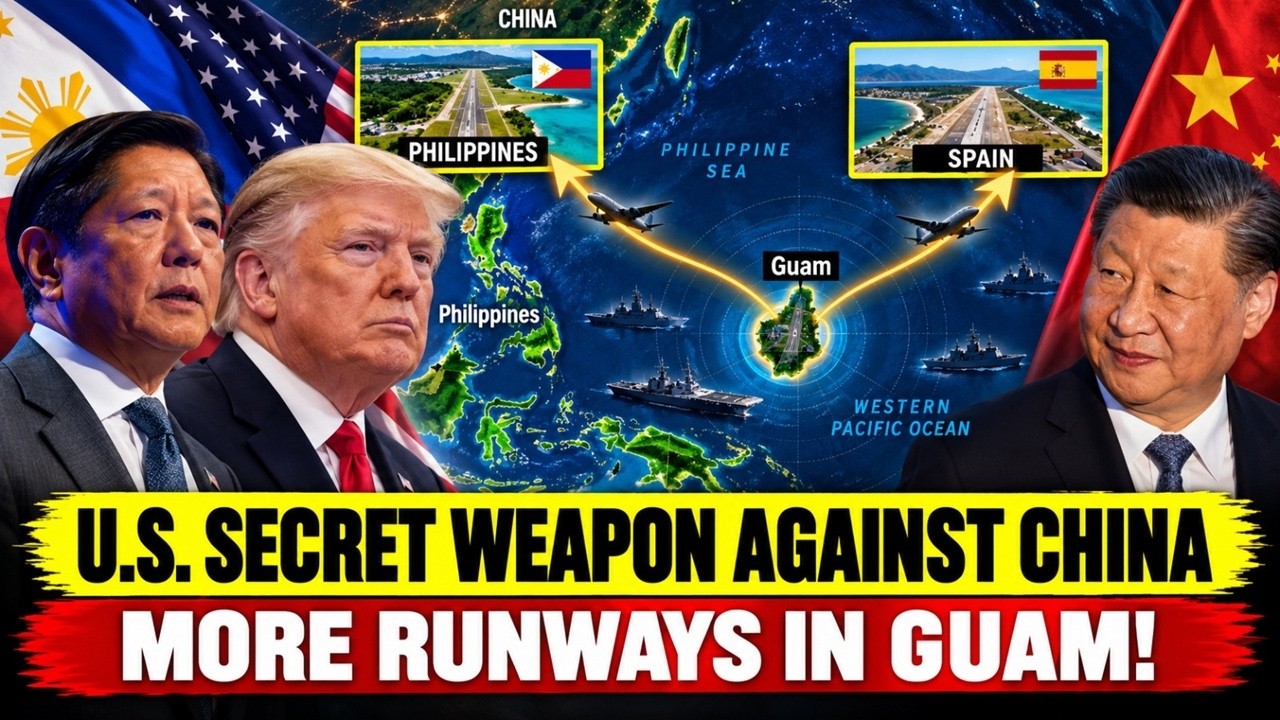
The real story behind these Pacific runway investments is not simply that the United States is spending millions of dollars on construction. The deeper story is that Washington is preparing for a military environment in which fixed bases face greater risks from long-range precision weapons. Guam will remain critical, but American planners clearly do not want the entire Pacific air campaign to depend on Guam remaining untouched. By developing additional infrastructure in places such as the Philippines and maintaining operational experience with locations such as Saipan, the United States is creating more places where aircraft can land, refuel, reposition and receive support. These locations do not need to be as powerful as Guam. They only need to provide enough additional capacity to keep the system functioning when one part of it is damaged. That is the essence of resilience. The United States is effectively trying to build an airpower network that can absorb disruption instead of collapsing because one major base has been hit. If Guam is attacked, the success of the American strategy will ultimately depend on whether aircraft can continue moving, whether tankers can continue supporting them, whether logistics can reach them and whether commanders can maintain control over a dispersed force. If those capabilities remain available, then the first missile strike may damage American infrastructure without eliminating American airpower. That is why the runway investments matter. The concrete may look ordinary, but strategically it represents something much larger: another option, another operating location and another way to keep American airpower in the fight after the first missiles have already fallen.
About Indo-Pacific Report
For more geopolitical analysis, strategy coverage, and Indo-Pacific security reporting, visit Indo-Pacific Report:
Website
Facebook
YouTube