225 Chinese Ships Swarm Philippines Near Scarborough Shoal — What Is China Planning?
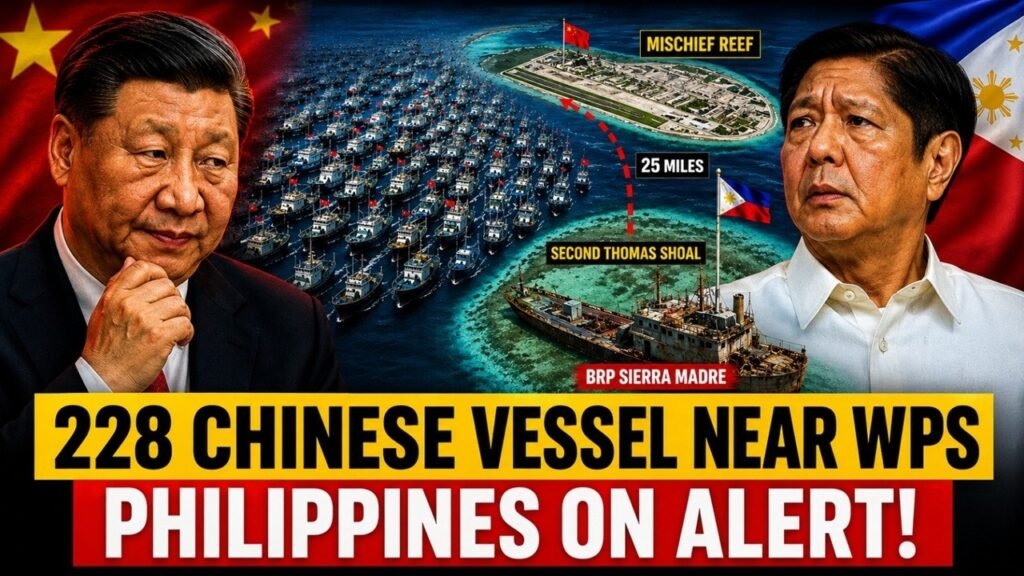
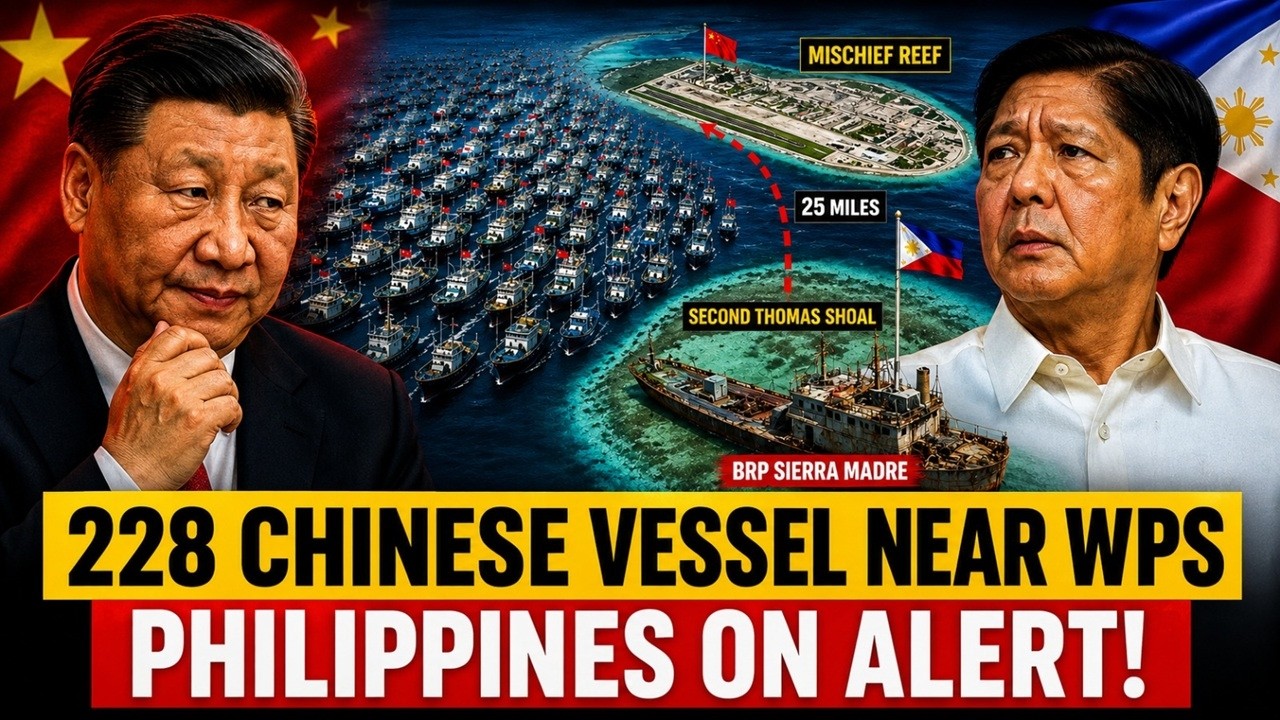
More than 200 Chinese vessels were reported around Mischief Reef, with the reported number reaching 228 vessels by July 3. The speed of the increase is what makes the development noteworthy. Fewer than 40 vessels were observed around the reef in mid-May, the number reportedly rose to around 80 by May 27, passed 150 in early June, and then reached 228. Even allowing for normal changes in fishing and maritime activity, that is a substantial change in the picture around one of China’s most strategically important positions in the Spratly Islands.
The number itself, however, should not be treated as proof of a Chinese military operation. Fishing fleets can gather in large numbers, commercial traffic can change according to seasonal conditions, and vessels may remain in an area for different reasons. The more important issue is the combination of scale, location and duration. Mischief Reef is not an isolated fishing ground. China has maintained control of the feature for decades and has developed it into a major artificial island with military and surveillance infrastructure.
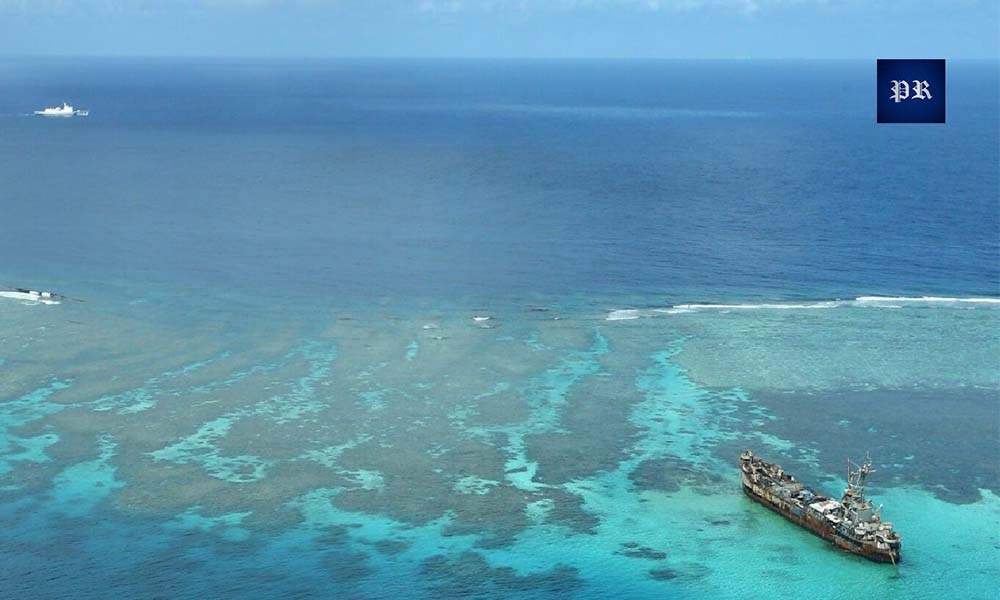
The location becomes even more significant because Mischief Reef is approximately 25 miles from Second Thomas Shoal, where the Philippines maintains the BRP Sierra Madre. That means a major concentration of Chinese vessels is occurring relatively close to a Philippine-held military outpost that already sits at the center of repeated China-Philippines confrontations. There is no evidence from the reported vessel count alone that China is preparing an imminent attack, but the proximity creates a strategic situation Manila cannot afford to ignore.
Why Mischief Reef Matters
Mischief Reef became a major point of contention after China established structures there in the 1990s. Over the following decades, China’s presence expanded significantly. The most dramatic transformation came during the large-scale land reclamation campaign of the 2010s, when China converted several disputed reefs and features in the Spratlys into artificial islands. Mischief Reef became one of the most developed of these positions. The transformation changed the military geography of the South China Sea. What had once been a low-lying reef became a substantial artificial island capable of supporting large-scale infrastructure.
The site now has a runway of roughly 1.9 miles, along with radar, communications and other facilities. Such infrastructure gives China the ability to maintain a much more persistent presence in the surrounding waters than would have been possible from an undeveloped reef.The strategic value of Mischief Reef therefore goes beyond the physical size of the island. It provides China with a fixed position from which surveillance, logistics and maritime operations can be supported. When large numbers of vessels gather nearby, they are operating next to an established Chinese strategic facility rather than in an area where Beijing has no permanent infrastructure. That is one reason the current concentration has attracted so much attention.
The Sierra Madre
The BRP Sierra Madre is old, damaged and far from a conventional modern naval base, but its strategic value is much greater than its physical condition suggests. The grounded vessel provides the Philippines with a permanent military presence at Second Thomas Shoal. As long as Philippine personnel remain aboard and Manila can continue supplying them, the outpost represents an active Philippine position in a highly contested part of the Spratlys. The problem is that the Sierra Madre cannot operate independently. It depends on regular resupply missions from the Philippines. Those missions carry basic necessities and other supplies required to keep the personnel stationed there. That makes access just as important as the physical presence of the vessel itself. If Philippine ships cannot reliably reach the outpost, maintaining the position becomes increasingly difficult.
The Vessel Buildup
The reported growth from fewer than 40 vessels to 228 is significant because it occurred over a relatively short period. A maritime presence of that size can affect the operating environment simply through numbers. More vessels mean more traffic, more potential interactions and greater opportunities for surveillance. If the vessels remain in the area for an extended period, the concentration could become part of the normal maritime picture. There are also reports that more than 20 vessels were observed anchored together in formations described as “raft-like.”
That observation has attracted attention because vessels tied or clustered together in an organized manner can look different from fishing boats operating independently. Analysts, including Japanese security specialists cited in reporting about the activity, have questioned whether at least some of the behavior could indicate coordination. That does not mean every vessel in the area should be classified as maritime militia or a state-controlled force. Such a conclusion would require stronger evidence about the vessels, their ownership, communications, movements and activities. The responsible approach is to treat the formations as a reason for closer monitoring rather than definitive proof of a military operation.
Gray-Zone Pressure
The South China Sea is a classic environment for what security analysts call gray-zone competition. The term describes actions that create pressure or change the situation without crossing clearly into conventional armed conflict. Instead of sending a large naval force to seize a position, a country can use patrols, civilian vessels, maritime militia, coast guard ships and persistent surveillance to gradually influence the behavior of another country.
China Warns as U.S.-Philippines Cooperation Expands in Palawan
China has a broad maritime presence that includes fishing fleets, vessels associated with maritime militia activity, the China Coast Guard and the People’s Liberation Army Navy. These different layers give Beijing several options. A fishing vessel does not create the same political reaction as a warship, while a Coast Guard vessel can conduct operations under a law-enforcement narrative rather than presenting itself as a conventional military force.
This approach creates a difficult problem for the Philippines. If a Chinese naval destroyer directly confronted a Philippine resupply vessel, the military character of the incident would be obvious. If hundreds of fishing vessels gradually increase their presence, however, the situation becomes much harder to define. Yet the practical effect can still be significant: the sea becomes more crowded, Philippine vessels face more encounters and Manila has to devote more resources to maintaining access.
The Battle for Access
The most important strategic question may therefore be whether China can influence who can freely operate in the waters around Second Thomas Shoal. A country can maintain a legal claim and even retain a physical outpost while gradually losing freedom of movement around it. Maritime power is not only about holding territory; it is also about the ability to reach, supply, patrol and reinforce that territory.
Imagine a situation in which large numbers of Chinese vessels remain around Mischief Reef and gradually become more active farther toward Second Thomas Shoal. Philippine resupply missions could encounter greater numbers of ships. Manila might then send additional escorts to protect those missions. China could respond by increasing its own Coast Guard presence. The result would be a cycle of escalation in which neither side formally declares war but both sides steadily increase their presence.
Such a situation would be particularly difficult because every individual encounter might appear manageable. One blocking maneuver may not change the strategic balance. One collision may be investigated and resolved. One water-cannon incident may lead to diplomatic protests. But repeated incidents can gradually alter the operating environment. The danger is that the cumulative effect becomes more important than any single confrontation.
What China Can Do From Mischief Reef
Mischief Reef gives China a permanent position from which it can support a broad range of maritime activities. Its runway, radar systems, communications facilities and other infrastructure increase Beijing’s ability to monitor and respond to developments across the surrounding Spratly Islands. Fixed infrastructure also reduces the logistical burden of maintaining vessels and aircraft in the region. This matters because maritime presence is more sustainable when it has a nearby support structure.
Vessels operating around a remote reef would otherwise depend heavily on distant bases. A developed artificial island can provide a much closer operational hub, allowing China to maintain surveillance and maritime activity for longer periods. The existence of this infrastructure does not prove that the 228 vessels are being directed by the Chinese military. But it changes the strategic context. The vessels are gathering around a location that has already been transformed into one of China’s major South China Sea positions. That makes their movements more important to monitor than the same number of vessels gathering around an isolated, undeveloped maritime feature.
Manila’s Dilemma
The Philippines has no easy response. Increasing its own maritime presence could strengthen deterrence and provide greater protection for resupply missions, but it could also increase the number of encounters with Chinese vessels. Every additional ship operating in a crowded maritime environment creates more opportunities for misunderstanding, collision or confrontation.
At the same time, reducing Philippine activity could carry its own risks. If Manila conducts fewer resupply missions or reduces the number of vessels protecting them, Beijing could potentially gain greater freedom of movement. Even without a formal change in territorial control, the practical balance at sea could begin shifting. This is why Philippine strategy increasingly involves more than simply deciding how many ships to send. Manila has to consider diplomacy, maritime surveillance, coast guard capabilities, military modernization, alliance coordination and crisis communication at the same time. The objective is to preserve access to the Sierra Madre while avoiding an incident that could rapidly escalate beyond the immediate dispute.
The U.S. and Japan Factor
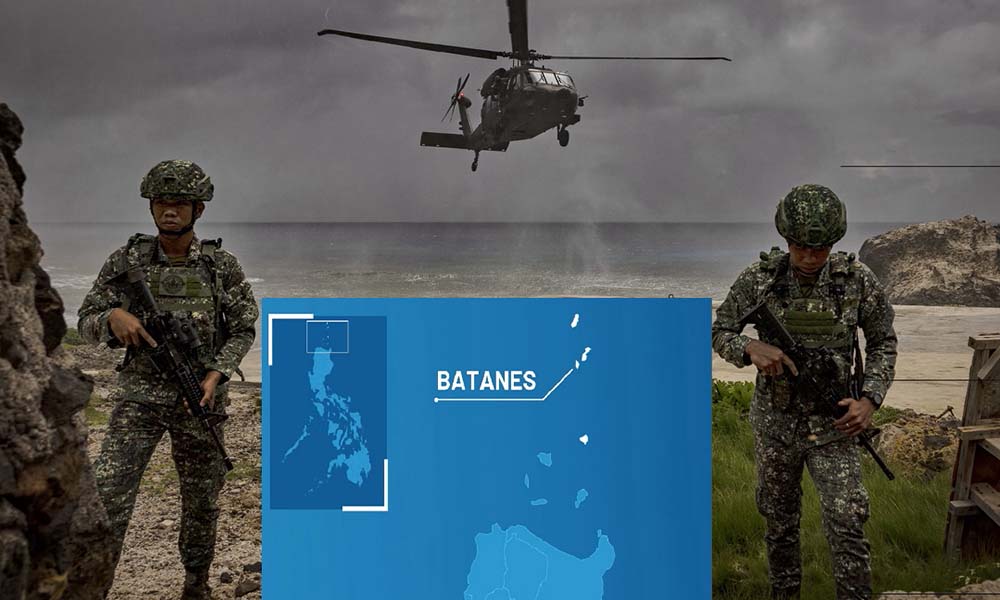
The Second Thomas Shoal dispute also matters because the Philippines is not operating alone. The United States and the Philippines are treaty allies, and Washington has repeatedly emphasized its commitments under the Mutual Defense Treaty. That makes a serious armed confrontation involving Philippine forces potentially much more consequential than a dispute between two countries without a formal alliance relationship. Japan has also expanded its security cooperation with the Philippines in recent years.
Manila and Tokyo have strengthened defense ties, conducted more exercises and increased cooperation on maritime security. Other regional partners are also paying greater attention to developments in the South China Sea because freedom of navigation and the security of sea lanes are central to the wider Indo-Pacific order. For China, this creates another strategic calculation. Pressure on the Philippines may achieve short-term objectives, but an overly aggressive approach could deepen Philippine cooperation with the United States, Japan and other partners. Manila therefore has an incentive to strengthen deterrence without allowing the situation to become so confrontational that a local maritime incident triggers a much larger regional crisis.
Three Possible Outcomes
One possibility is that the current concentration around Mischief Reef proves temporary. Fishing fleets may disperse, vessel numbers may return to more normal levels, and the immediate concern could decrease. The wider dispute would remain, but the current buildup would not necessarily represent a lasting change in the maritime balance.A second possibility is that China maintains a large and persistent presence. This would be more strategically significant. If hundreds of vessels remain around Mischief Reef and increasing numbers of Coast Guard or other state-linked vessels begin operating closer to Second Thomas Shoal, Philippine resupply missions could face greater pressure.
The result could be a gradual change in the operating environment without any conventional military attack. The most serious possibility would be an eventual attempt to establish direct Chinese control over Second Thomas Shoal. That would represent a major escalation and could trigger a much broader international crisis. However, the current vessel concentration does not provide sufficient evidence to conclude that such an operation is imminent. It is better understood as a scenario that policymakers need to consider rather than a confirmed Chinese plan.
What to Watch Next
The next stage of this story will be determined less by a single vessel count and more by what happens to the pattern. If the number of vessels around Mischief Reef falls quickly, the buildup may have been temporary. If large numbers remain for weeks or months, the situation becomes more strategically significant. Another important indicator will be movement. Analysts should watch whether vessels remain concentrated around Mischief Reef or begin appearing more frequently in the waters surrounding Second Thomas Shoal.
The presence of additional China Coast Guard vessels would also be significant because Coast Guard activity would suggest a different level of state involvement than ordinary commercial or fishing traffic. Finally, Philippine resupply missions will provide one of the clearest indicators of whether the maritime environment is changing. If Manila can continue conducting regular missions with relatively limited interference, the current buildup may have less practical impact than the headline number suggests. If missions increasingly require larger escorts, face repeated obstruction or become substantially more dangerous, the strategic significance of the Chinese concentration would become much clearer.
Why 25 Matters More Than 228
The headline figure is 228, but the more revealing number may be 25. That is approximately how many miles separate Mischief Reef from Second Thomas Shoal. One location has become a major Chinese strategic position. The other is home to one of the Philippines’ most vulnerable military outposts. That geographical relationship creates the central concern. China does not necessarily have to attack the Sierra Madre to put pressure on Manila. A sustained maritime presence can create congestion, surveillance and uncertainty. Repeated encounters can increase the cost of Philippine operations. Over time, the pressure can affect how frequently and how confidently Manila operates in the area.
This is the essence of the gray-zone challenge. There may be no single moment when everyone agrees that control has changed. Instead, the environment gradually evolves. More ships appear, patrols become more frequent, resupply missions become harder and the stronger maritime power gains greater freedom of movement. If that pattern develops around Second Thomas Shoal, the implications could extend well beyond one Philippine outpost.
Conclusion
The significance of the 228 Chinese vessels around Mischief Reef is not that 228 ships automatically mean war. They do not. The significance lies in the combination of scale, location, infrastructure and proximity to Second Thomas Shoal. China already has a permanent strategic position at Mischief Reef. The Philippines maintains the BRP Sierra Madre approximately 25 miles away. Between these two positions lies a maritime environment where Chinese and Philippine vessels have repeatedly confronted one another. Any sustained increase in Chinese maritime activity therefore deserves close attention.
The most important question is what happens next. If the vessels disperse, the immediate concern may fade. If they remain and Chinese activity increasingly affects the waters around Second Thomas Shoal, Manila could face a more difficult operating environment. That would be a classic gray-zone challenge: pressure without a formal declaration of war, gradual changes rather than one dramatic attack, and competition over access rather than simply possession. For the Philippines, the challenge is to protect its outpost without allowing every maritime encounter to become a step toward a larger conflict. For China, the calculation is whether sustained pressure can expand its practical influence without triggering a regional response. And for the wider Indo-Pacific, the question is whether the South China Sea will continue moving toward a maritime environment where the strongest presence increasingly determines who can operate freely.
About Indo-Pacific Report
For more geopolitical analysis, strategy coverage, and Indo-Pacific security reporting, visit Indo-Pacific Report:
Website
Facebook
YouTube
225 Chinese Ships Swarm Philippines Near Scarborough Shoal — What Is China Planning?