Will the Philippines EVER Abandon Sierra Madre From Scarborough Shoal? | AFP Draws Line
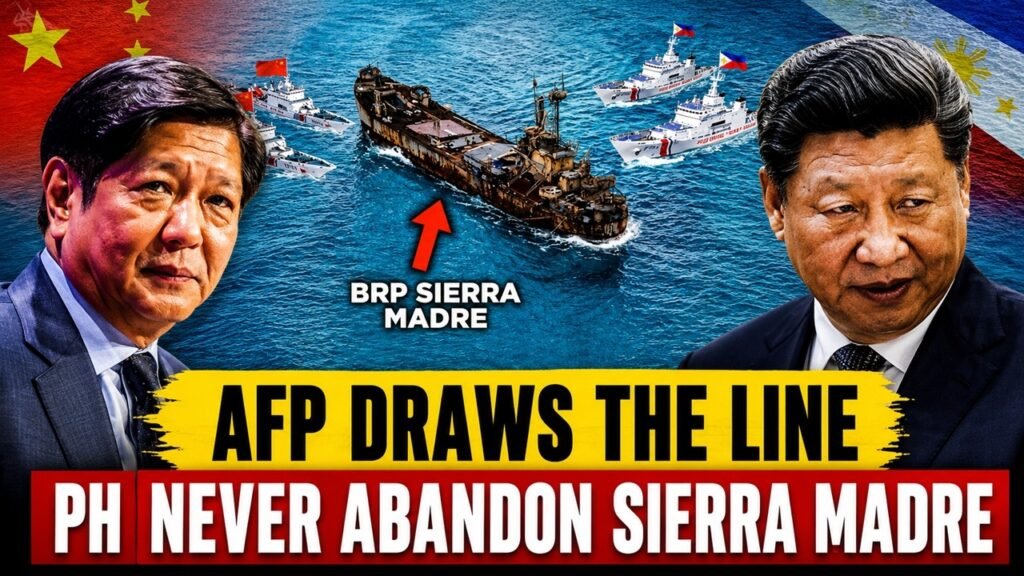
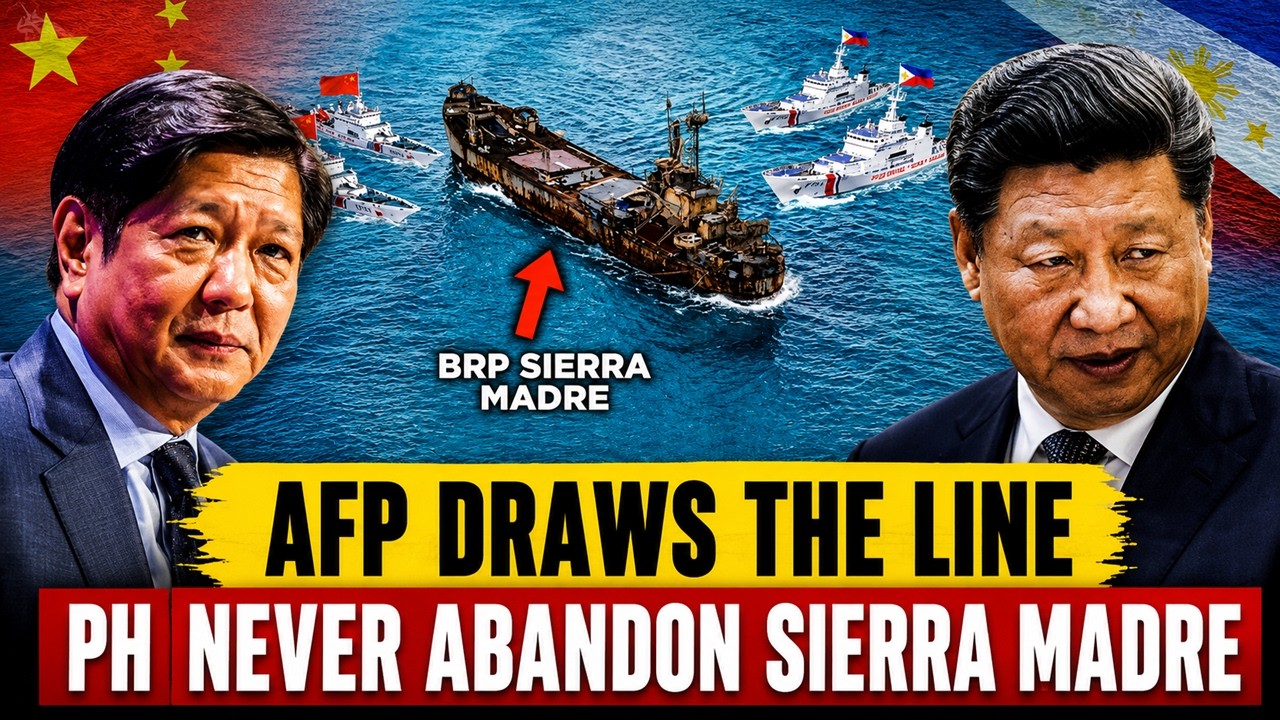
The Philippines has drawn a firm line over the BRP Sierra Madre at Ayungin Shoal, also known as Second Thomas Shoal. On August 23, 2026, the Armed Forces of the Philippines rejected China’s claim that Manila had agreed to remove the grounded Philippine Navy vessel. The AFP said there is no binding agreement requiring the Philippines to withdraw the Sierra Madre and made clear that Philippine personnel stationed at the outpost will continue to receive support.
The statement is significant because the Sierra Madre is much more than an aging military vessel. It serves as a Philippine outpost at one of the most sensitive locations in the South China Sea. Its continued presence allows Manila to maintain personnel at Ayungin Shoal and conduct regular rotation and resupply missions. The dispute therefore involves questions of maritime access, military presence, international law and the wider strategic competition between China and the Philippines.
At the center of the disagreement is a simple but important question: did the Philippines ever agree to remove the Sierra Madre? Manila says no. China continues to argue that the Philippines previously committed to withdrawing the vessel. The disagreement has now become another major test of how far Beijing can pressure Manila and how firmly the Philippines can maintain its position in the West Philippine Sea.
Why the BRP Sierra Madre and Ayungin Shoal Matter
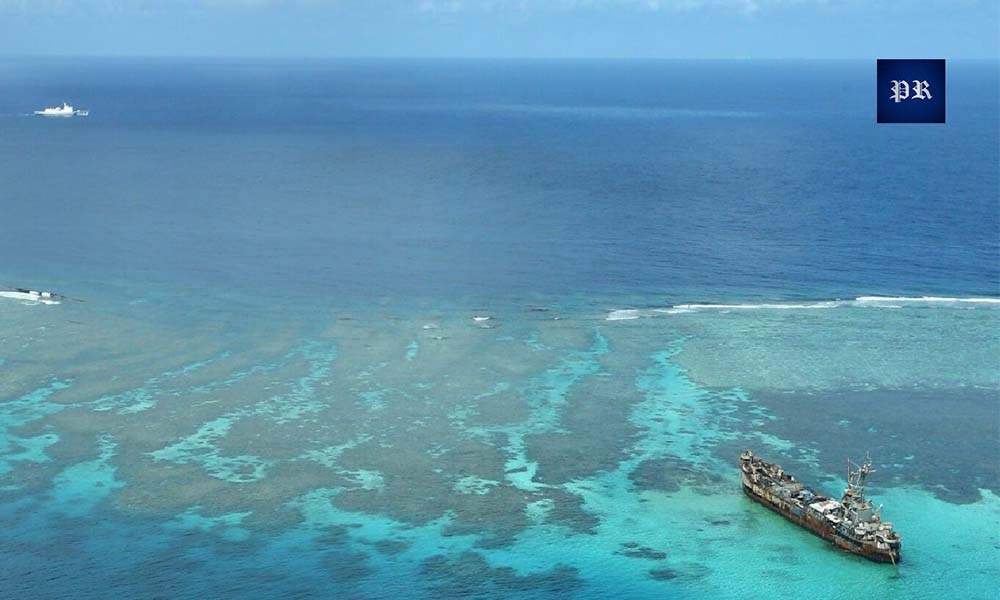
The BRP Sierra Madre is a grounded Philippine Navy vessel positioned at Ayungin Shoal in the Spratly Islands. The ship has been used as a Philippine military outpost, with personnel stationed there and supported through regular rotation and resupply missions. Although the vessel is old and in deteriorating condition, its strategic importance is far greater than its physical appearance suggests.
Ayungin Shoal is important because of its location and its connection to the broader South China Sea dispute. A permanent Philippine presence gives Manila a physical foothold in an area claimed by China and other regional states. Removing that presence would therefore have consequences beyond the fate of one ship. It could change the practical balance around the shoal and create a political and strategic precedent for future disputes. For the Philippines, maintaining the Sierra Madre is also about demonstrating that its personnel can continue operating at Ayungin without having to obtain permission from Beijing. This is why every resupply mission has become strategically important. A successful mission demonstrates that Manila can sustain its presence, while an increasingly difficult mission could indicate that China’s maritime pressure is restricting Philippine freedom of action.
China Warns as U.S.-Philippines Cooperation Expands in Palawan
China’s Removal Demand and the Philippines’ Response
China has repeatedly called for the Philippines to remove the Sierra Madre, arguing that the vessel should not remain at Ayungin. Beijing has also claimed that Manila previously made a commitment to tow the ship away. Philippine officials have consistently rejected that interpretation, saying that there is no binding agreement requiring the removal of the vessel.
The latest AFP statement reinforces that position. Manila’s argument is that the Philippines has never surrendered its right to maintain personnel at the outpost or to conduct missions necessary to support them. From the Philippine perspective, accepting China’s interpretation could create a dangerous precedent in which Beijing’s demands gradually become the basis for determining what Manila can or cannot do around Ayungin. The disagreement therefore goes beyond the question of whether the ship should remain. It is about whether China can establish practical control over Philippine operations without formally taking possession of the shoal. If Philippine vessels eventually need Chinese approval before approaching the Sierra Madre, Manila could face a significant strategic loss even if the vessel itself remains in place.
What the 2024 RORE Arrangement Actually Changed
In July 2024, the Philippines and China reached a provisional arrangement concerning Philippine rotation and resupply, commonly referred to as RORE, missions to the Sierra Madre. The arrangement was created after a series of dangerous confrontations during previous resupply operations. Its purpose was to reduce the possibility of miscalculation, improve communication and create a more predictable process for Philippine missions.
The Philippine government has emphasized that the arrangement was not a surrender agreement. Manila has said that it did not give China jurisdiction over Ayungin, did not recognize Chinese sovereignty over the shoal and did not agree to remove the Sierra Madre. The Philippine position is that the arrangement was a practical mechanism for managing potentially dangerous encounters while allowing Philippine personnel and supplies to reach the outpost. This distinction is crucial. A mechanism designed to reduce confrontation is not automatically an agreement to abandon a military position. Manila’s current argument is that China is attempting to interpret the 2024 arrangement more broadly than the Philippines intended. Beijing, however, continues to push for the Sierra Madre’s removal, creating a dispute over both the vessel and the meaning of the earlier arrangement.
15 Incident-Free Missions Show the Arrangement Had Practical Value
The Philippine Department of Foreign Affairs has said that the provisional arrangement facilitated 15 incident-free RORE missions after it was introduced. That figure is important because it demonstrates that communication and coordination can reduce the immediate risk of confrontation even when the underlying sovereignty dispute remains unresolved.
Before the arrangement, Philippine resupply missions had frequently become tense encounters involving Chinese Coast Guard and other maritime forces. Water-cannon incidents, blocking maneuvers and dangerous close encounters created the possibility of injuries or collisions. The July 2024 mechanism therefore addressed a real operational problem: how to keep Philippine personnel supplied without turning every mission into a major confrontation. However, 15 incident-free missions do not mean the dispute has been solved. The underlying disagreement over sovereignty, maritime rights and the presence of the Sierra Madre remains. The return of serious confrontations in 2026 demonstrates that the arrangement can reduce risk but cannot eliminate the strategic competition between Manila and Beijing.
The 2016 Arbitration Award and the Legal Dimension
The Sierra Madre dispute cannot be fully understood without considering the 2016 South China Sea arbitration. The tribunal ruling remains a major component of the Philippine legal position, while China rejects the award. The case was decided under the United Nations Convention on the Law of the Sea, or UNCLOS, and addressed several important questions concerning maritime claims in the South China Sea.
The Philippines continues to point to the ruling when explaining its position around Ayungin and other maritime areas. Among the tribunal’s findings were conclusions concerning China’s claimed historic rights and the maritime status of features in the Spratly Islands. Philippine officials argue that the ruling supports their position that China’s expansive claims cannot override the maritime rights established under UNCLOS. China’s rejection of the arbitration means that the legal disagreement remains unresolved politically. This creates a situation in which Manila and Beijing are not simply arguing about what should happen next; they are operating from fundamentally different interpretations of the legal and strategic status of the South China Sea.
From the 2024 Confrontations to the 2026 Crisis
The Sierra Madre has already been the scene of serious confrontations. In 2024, several encounters between Philippine and Chinese vessels attracted international attention. One of the most serious incidents occurred in June, when Philippine personnel were injured during a confrontation involving Chinese maritime forces. Manila described the incident as a serious attack on its resupply mission, while China presented a different account.
Those events helped create pressure for the July 2024 provisional arrangement. The logic was straightforward: repeated confrontations were increasing the risk of a much larger crisis, so both sides needed a practical method for preventing incidents from escalating. Yet tensions returned in 2026. A July confrontation near Second Thomas Shoal produced competing accusations from Manila and Beijing, including Philippine claims that a sailor was injured and a Philippine Navy vessel was damaged. The renewed confrontation showed that the underlying problem had not disappeared. The mechanism could manage some missions, but it could not resolve the fundamental disagreement over who has the right to operate around Ayungin.
Why Manila Rejects the Idea of Chinese Permission
One of the most important aspects of the Philippine position is its insistence that RORE missions do not require Chinese permission. Manila can coordinate with Beijing to reduce the risk of confrontation, but Philippine officials do not want that coordination to become a system in which China decides whether Philippine vessels are allowed to approach the Sierra Madre.
The difference between notification and permission is strategically significant. If Manila simply informs Beijing about a planned operation, China may object but does not become the authority approving the mission. If Manila must obtain Chinese approval before every operation, Beijing gains a powerful form of practical control over the Philippine outpost. This explains why Philippine officials have repeatedly emphasized that the 2024 arrangement does not transfer jurisdiction to China. Manila wants to preserve the ability to supply and rotate personnel independently while using communication channels to prevent dangerous encounters.
Why China Wants the Sierra Madre Gone
China’s demand for the removal of the Sierra Madre is connected to its broader claim over the waters and features around the Spratly Islands. From Beijing’s perspective, the Philippine military presence at Ayungin represents an unacceptable challenge to China’s position around what it calls Ren’ai Jiao.
For Manila, however, removing the vessel would create a different strategic problem. The Sierra Madre is currently the physical location of a continuing Philippine presence. If it were removed without a replacement, the Philippines could face a much more difficult task maintaining personnel at the shoal. The political symbolism would also be significant. China could present a Philippine withdrawal as evidence that sustained pressure had forced Manila to accept Beijing’s position. That is one reason the Philippine government appears determined to prevent the dispute from being reduced to a simple question of towing away an old vessel.
Three Possible Scenarios for Ayungin Shoal
The first possibility is continued managed competition. Under this scenario, the RORE mechanism remains operational, Philippine missions continue and both sides use communication channels to prevent dangerous incidents. China would continue rejecting the Philippine presence, but neither side would deliberately push the confrontation into a major crisis. The second possibility is increasing Chinese maritime pressure. Beijing could increase Coast Guard deployments, conduct more aggressive interceptions or attempt to make Philippine resupply operations increasingly difficult. Manila could respond with additional escorts, surveillance and diplomatic pressure. This scenario would increase the risk of collisions, injuries and miscalculation.
The third possibility is Philippine strategic hardening. Instead of reacting only when confrontations occur, Manila could invest more heavily in logistics, surveillance, communications, maritime awareness and personnel protection. The goal would be to make the Philippine presence at Ayungin more sustainable and less vulnerable to disruption.
What the Next RORE Mission Could Mean
The next Philippine rotation and resupply mission could become another important test of the 2024 arrangement. If Philippine vessels reach the Sierra Madre without a serious incident, Manila will have another example of its ability to maintain the outpost while managing tensions with China.If Chinese forces attempt to obstruct the mission more aggressively, however, the political consequences could be much greater. Another injury or serious collision could generate pressure on the Philippine government to increase military protection for future missions and could draw stronger involvement from Manila’s security partners.
Final Analysis: The Sierra Madre Is a Test of Philippine Strategic Resolve
The latest AFP statement makes Manila’s position clear: the Philippines says there is no binding agreement requiring the removal of the BRP Sierra Madre and intends to continue supporting its personnel at Ayungin Shoal. China continues to demand the vessel’s removal and maintains its own sovereignty claim over the feature.
The 2024 RORE arrangement has demonstrated that practical communication can reduce the immediate risk of confrontation, with the Philippine government reporting 15 incident-free missions under the mechanism. But the return of serious tensions in 2026 shows that operational agreements cannot by themselves resolve the underlying strategic dispute.
Ultimately, the Sierra Madre is not really about an old ship. It is about access, presence and the ability of the Philippines to operate around Ayungin without accepting Chinese permission as a condition of that operation. The next phase of the dispute will therefore be determined not only by diplomatic statements, but by what happens on the water during future Philippine resupply missions.
About Indo-Pacific Report
For more geopolitical analysis, strategy coverage, and Indo-Pacific security reporting, visit Indo-Pacific Report:
Website
Facebook
YouTube
Will the Philippines EVER Abandon Sierra Madre From Scarborough Shoal? | AFP Draws Line