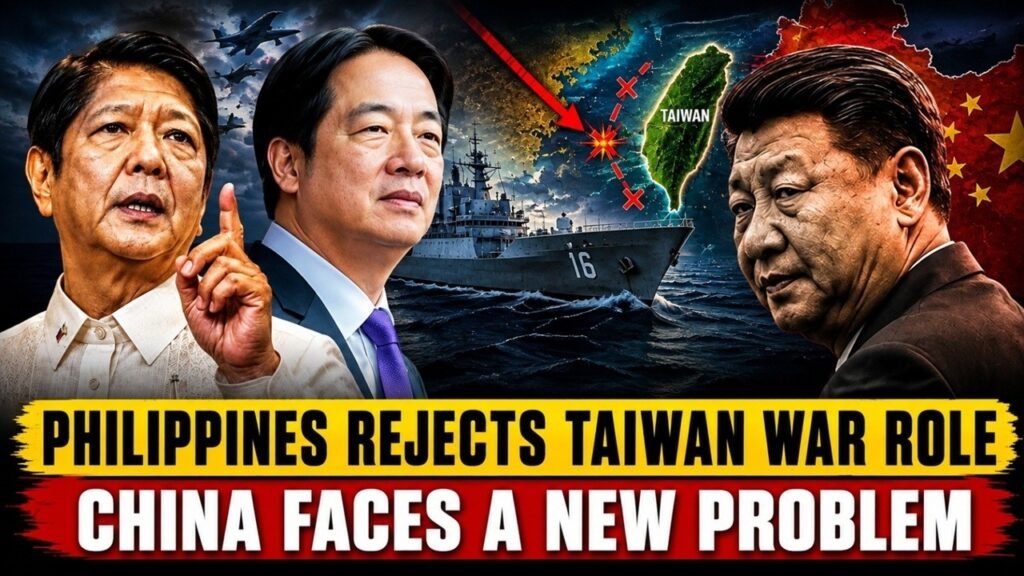
China Faces a New Problem — Marcos Jr Blocks Taiwan Attack Route From Philippines
The latest statement from Manila has placed a critical question at the center of the South China Sea dispute: can China decide when Philippine vessels are allowed to reach the BRP Sierra Madre? On August 14, Philippine President Ferdinand Marcos Jr. pushed back against any interpretation that the provisional arrangement between Manila and Beijing gives China authority over Philippine resupply missions at Second Thomas Shoal. According to Manila’s stated position, the arrangement does not weaken Philippine sovereign rights, territorial claims, or its position under international law.
For the Philippines, therefore, the issue is much bigger than a single resupply mission. Manila has to maintain its personnel and physical presence at Second Thomas Shoal while also trying to prevent confrontations with Chinese maritime forces. The challenge is finding a balance between communication and independence. The Philippines wants to reduce the risk of an incident without creating a situation in which China gains the ability to determine whether Philippine vessels can reach the Sierra Madre.
This is why Marcos’ latest position matters. His message is essentially that communication with China does not mean accepting Chinese control. Manila can cooperate on avoiding confrontation while continuing to defend its own legal and strategic position. The question now is whether that distinction will remain intact as the notification arrangement becomes part of the routine surrounding future Sierra Madre missions.
Why the Philippines Needed the Arrangement
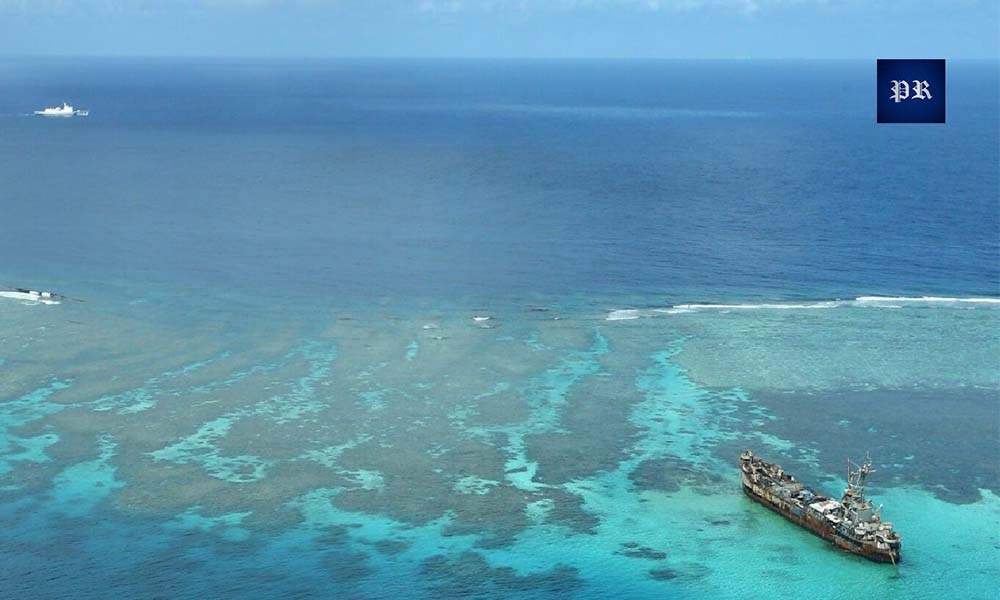
To understand why the Philippines and China needed a provisional arrangement in the first place, it is necessary to look at the situation around the BRP Sierra Madre. The vessel has been deliberately grounded at Second Thomas Shoal since 1999 and now functions as a Philippine military outpost. Although the ship itself is old and damaged, its importance comes from its location and the Philippine military presence it represents.
The Philippine personnel stationed on the Sierra Madre cannot remain there without regular support. They need food, drinking water, equipment, maintenance supplies and other basic necessities. This means Philippine vessels have to make regular journeys toward Second Thomas Shoal. The problem is that Chinese maritime forces also operate in the area, creating the possibility of close encounters whenever a Philippine resupply mission takes place.
Taiwan Just Changed Its Scarborough Shoal Claim — China Won’t Like This
The arrangement should therefore be understood as a crisis-management mechanism rather than a settlement. It does not resolve the competing claims between Manila and Beijing. It does not settle the wider South China Sea dispute. Most importantly, according to Manila’s stated position, it does not amount to recognition of Chinese sovereignty over the area.The basic purpose is more limited: reduce the possibility that every Philippine resupply mission turns into another dangerous confrontation.
Why the BRP Sierra Madre Matters
The BRP Sierra Madre may look like nothing more than an aging military vessel, but its strategic importance is far greater than the condition of the ship itself. The vessel represents a continuing Philippine physical presence at Second Thomas Shoal, and that presence has become an important part of Manila’s position in the South China Sea. Every Philippine resupply mission therefore carries significance beyond delivering supplies. When a Philippine vessel reaches the Sierra Madre, it demonstrates that can continue supporting its personnel at the outpost. This makes the mission both a logistical operation and a test of Philippine freedom of action in a highly contested maritime environment.
The situation can be understood through a simple sequence. Philippine personnel remain stationed on the Sierra Madre and require regular supplies. A Philippine vessel travels toward the shoal. Chinese vessels monitor the movement. The two sides communicate and maneuver around each other. If the encounter remains controlled, the Philippine mission can proceed. But if tensions rise, a relatively small operation can quickly become a diplomatic or security crisis between two countries.
That is why the Sierra Madre has become more than an old ship. Its significance comes from the presence it represents. For Manila, maintaining the outpost means maintaining a physical position at Second Thomas Shoal. For Beijing, Philippine activity around the shoal is strategically significant because China does not want Manila to strengthen or normalize its presence there. As a result, each resupply mission becomes a test of whether the Philippines can maintain its position while avoiding a confrontation that could expand beyond the immediate area.
The Legal Issue Behind the Dispute
The dispute surrounding the BRP Sierra Madre is not simply a military or political confrontation. It also involves international law, particularly the United Nations Convention on the Law of the Sea, or UNCLOS. The Philippines has repeatedly connected its position in the South China Sea to UNCLOS and the 2016 arbitral ruling concerning the maritime dispute. The tribunal rejected the legal basis for China’s expansive historic-rights claims beyond the maritime entitlements recognized under UNCLOS. China rejected that ruling, while Manila continues to regard it as an important legal foundation for its position.
This legal background explains why President Ferdinand Marcos Jr. has been careful to distinguish between an operational arrangement and a change in the Philippines’ legal position. Manila argues that communicating with China before a resupply mission does not mean accepting Chinese authority over Philippine operations. In practical terms, the Philippines can notify Beijing that one of its vessels is approaching the Sierra Madre while continuing to maintain that such notification does not give China jurisdiction over the mission.
This distinction is important because the same arrangement can potentially be interpreted differently by the two sides. Manila may regard it as a temporary mechanism designed to prevent dangerous encounters, while Beijing may attach greater political or operational significance to the information it receives. That is why the language surrounding the arrangement matters. If both sides continue to treat it as a communication and deconfliction mechanism, its purpose remains limited. If either side begins treating it as evidence of authority over the other side’s movements, the political meaning could change significantly.
For the Philippines, the central challenge is therefore to maintain its legal position while using practical communication to reduce tensions at sea. The arrangement can determine how the two countries manage encounters, but it does not by itself resolve the underlying dispute over maritime rights. The legal disagreement between Manila and Beijing remains separate from the practical question of how Philippine vessels communicate their movements around Second Thomas Shoal.
When Does Notification Become Permission?
The most sensitive question surrounding the arrangement is where notification ends and permission begins. Manila says the Philippines informs China about its movements but does not ask Beijing for permission to carry out a resupply mission. That distinction is at the heart of the Philippine government’s explanation of the arrangement, and maintaining it is important to Manila’s broader position.A notification system can be relatively straightforward. Philippine authorities can inform Chinese authorities that a vessel is approaching Second Thomas Shoal, allowing both sides to understand what is happening and potentially reducing the possibility of a sudden confrontation. In that form, notification is primarily a communication tool. It does not necessarily give the receiving country the power to approve, reject or control the movement.
What Manila Wants — and What Beijing Wants
The Philippines and China have different strategic objectives even though both have an interest in preventing dangerous confrontations around Second Thomas Shoal. For Manila, the immediate priority is predictability. Philippine personnel stationed on the Sierra Madre need regular supplies, and Philippine authorities want those missions to take place without collisions, injuries or incidents that could quickly escalate into a wider diplomatic or security crisis.
From the Philippine perspective, communication with China can help reduce uncertainty. If both sides know that a resupply mission is taking place, there may be less possibility of a sudden encounter or misunderstanding between vessels. A functioning notification mechanism could therefore provide a practical way to manage a dangerous situation without requiring either country to abandon its broader position on the South China Sea dispute. China’s strategic interests are different. Beijing can gain greater visibility into Philippine activity around Second Thomas Shoal through the notification process. Knowing when Philippine vessels are approaching and understanding the nature of their movements can provide China with additional information about activity in an area that Beijing considers strategically important.
The July Clash Shows the Arrangement’s Limits
The provisional arrangement was designed to reduce the possibility of dangerous encounters, but events on July 20 showed that an agreement between Manila and Beijing cannot automatically eliminate the tensions surrounding Second Thomas Shoal. Philippine and Chinese personnel clashed near the shoal, with the Philippines saying that a Filipino sailor was injured and accusing Chinese personnel of attacking him. China presented a different account and accused Philippine personnel of provoking the confrontation. The disagreement then moved beyond the water, with both sides taking diplomatic action against each other.
The incident is important because it demonstrates the difference between managing a dispute and resolving a dispute. A notification mechanism can create communication channels and establish procedures for movements, but it cannot remove the underlying disagreement between the Philippines and China. The two countries continue to hold different positions over maritime rights, access and the strategic significance of Second Thomas Shoal. This means that even when an arrangement is functioning, there can still be moments when tensions rise. A communication mechanism can reduce the possibility of misunderstanding, but it cannot guarantee that every encounter will remain peaceful. The behavior of individual personnel, the movement of vessels and the reactions of both governments can still influence what happens during an operation.
The July incident therefore provides an important warning for the future. If another confrontation occurs despite the notification arrangement, Manila and Beijing will have to determine whether the existing communication system is strong enough to prevent a single incident from escalating. The success of the arrangement should not be judged only by whether an agreement exists on paper. It should also be judged by whether it actually helps both sides manage difficult encounters at sea.
For Manila, the incident reinforces another important point: a crisis-management arrangement should not be presented as a solution to the wider South China Sea dispute. Its purpose is narrower. It can potentially make encounters safer and more predictable, but the fundamental strategic competition remains.
Marcos’ Broader Strategy Toward China
The Sierra Madre issue is also part of a much wider Philippine strategy toward China. It would be too simplistic to describe President Ferdinand Marcos Jr.’s China policy as either completely friendly or completely confrontational. Manila is simultaneously strengthening its security relationships with the United States and other partners while maintaining diplomatic engagement with Beijing.
This creates a complicated balancing act for the Philippine government. On one side, Manila wants to defend its maritime rights and maintain its presence in areas it considers important to its national interests. On the other side, it has an interest in keeping diplomatic channels open with China because the two countries remain geographically close and have interests that extend beyond the South China Sea dispute.
The approach can be understood as a form of compartmentalization. Security competition can continue in one area while diplomatic engagement continues in another. Legal disagreements can remain unresolved while the two governments still attempt to communicate. Economic cooperation may also be explored even when the countries disagree over maritime issues.
The supplied material points to this broader approach through Marcos’ August 14 comments about possible joint oil and gas exploration with China. The fact that discussions over potential economic cooperation can continue while the two countries remain divided over the South China Sea illustrates how Manila is attempting to separate areas of disagreement from areas where cooperation may still be possible.
What to Watch in the Next Sierra Madre Missions
The next resupply missions will probably provide the clearest indication of whether the Philippines-China notification arrangement is actually working. Statements from officials are important, but what happens at sea will ultimately show whether the mechanism is reducing tensions or creating new forms of operational dependence. The first thing to watch is whether Philippine resupply missions become smoother and more predictable. If Philippine vessels can reach the Sierra Madre with fewer confrontations, while both sides maintain communication throughout the operation, Manila will have a strong argument that the arrangement is serving its intended purpose.
The second issue is whether China begins requesting additional information or imposing new conditions. Questions about routes, timing, vessels, personnel or other details could become significant if they move beyond basic communication. A request for information would not automatically mean that Philippine sovereignty has been compromised, but a growing list of conditions could indicate that China’s operational influence is increasing. The language used by both governments will also matter. If Manila continues describing the process as notification and Beijing uses similar language, the arrangement may remain focused on deconfliction. If either side begins describing it in terms that suggest approval, authorization or control, the political interpretation could change.
Another important indicator will be the behavior of Philippine vessels themselves. If they continue carrying out missions without seeking Chinese approval, Manila can maintain that the distinction between notification and permission remains intact. If Philippine operations become dependent on Chinese consent, the strategic implications would be much more serious.
The next missions should therefore be watched through several connected questions: Are Philippine vessels able to reach the Sierra Madre? Are encounters with Chinese forces becoming less dangerous? Is the communication process remaining limited to notification? Are new conditions being introduced? And are Philippine officials continuing to insist that China does not have permission to determine whether Philippine vessels can carry out their missions?
About Indo-Pacific Report
For more geopolitical analysis, strategy coverage, and Indo-Pacific security reporting, visit Indo-Pacific Report:
Website
Facebook
YouTube
China Faces a New Problem — Marcos Jr Blocks Taiwan Attack Route From Philippines