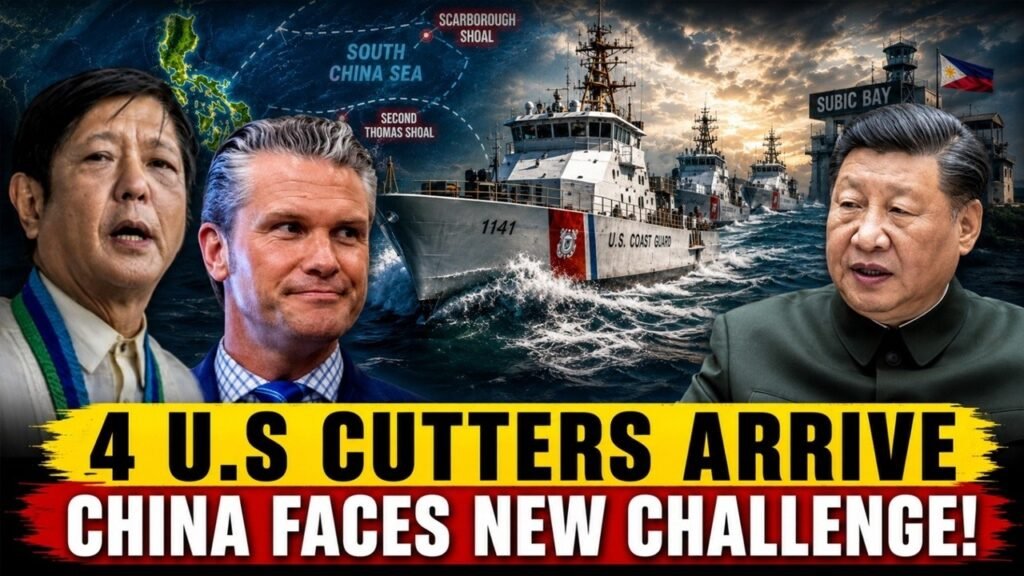
U.S. Sends 4 Coast Guard Cutters to the Philippines — China Faces a New Challenge
The United States is increasing its maritime security presence in the Philippines with the rotational deployment of four U.S. Coast Guard Fast Response Cutters to work alongside the Philippine Coast Guard and patrol the country’s exclusive economic zone (EEZ). At first glance, four patrol vessels may not appear significant enough to change the strategic balance in the South China Sea. But the importance of this deployment goes beyond the number of ships involved. It reflects a broader shift in the way Washington and Manila are approaching maritime security, alliance cooperation and the growing competition in the Indo-Pacific.
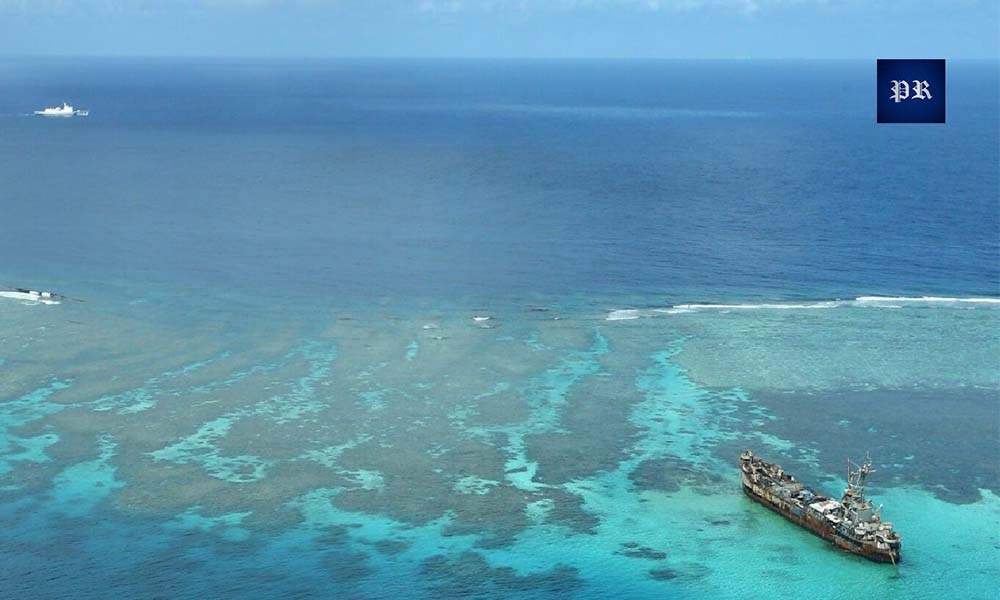
The South China Sea is increasingly becoming a frontline for gray-zone competition, where confrontations involve coast guard vessels, water cannons, dangerous maneuvers, blocking tactics and maritime pressure rather than conventional military conflict. The Philippines has already experienced serious confrontations with Chinese forces around areas including Scarborough Shoal and Second Thomas Shoal.
That is why the arrival of U.S. Coast Guard cutters matters. The deployment is not simply about adding four American vessels to the region. It is part of a larger effort to strengthen Philippine maritime capabilities while maintaining a visible U.S. presence in the Western Pacific.
What Is Being Deployed to the Philippines?
The announcement was made by U.S. Under Secretary of War for Policy Elbridge Colby during a forum in Manila. The immediate measure involves four U.S. Coast Guard Fast Response Cutters rotating through the Philippines and operating alongside the Philippine Coast Guard inside the country’s EEZ. These vessels are Sentinel-class Fast Response Cutters measuring approximately 46.9 meters in length. They are designed primarily for maritime security missions, including law enforcement, fisheries enforcement, search and rescue operations and vessel inspections.
The Philippine deployment is also part of a broader U.S. Coast Guard presence in the Western Pacific. Six Fast Response Cutters have been reassigned to the region as an Expeditionary Cutter Squadron, with operations involving Singapore and the Philippines and rotations through Subic Bay. The six cutters identified in the source material are Robert Goldman, Glen Harris, Charles Moulthrope, John Scheuerman, Clarence Sutphin Jr. and Emlen Tunnell.
Australia Is Quietly Building a New Defense Alliance with the Philippines
The significance of this arrangement is that the U.S. Coast Guard is developing a more persistent operational presence in an area where maritime competition is increasingly taking place below the threshold of conventional warfare. The cutters are also not simply arriving for ceremonial visits. Emlen Tunnell conducted a live-fire exercise in the South China Sea before joining Philippine Coast Guard and Navy vessels for maritime drills. Other cutters have also participated in exercises involving regional partners. This makes the deployment part of a wider pattern of maritime cooperation rather than an isolated four-ship operation.
Why Coast Guard Cooperation Matters in the South China Sea
The most important reason for the deployment is the changing nature of competition in the South China Sea. Many confrontations in the region do not involve traditional naval warfare. Instead, they take place in what analysts commonly describe as the gray zone. Ships may block another vessel, shadow it, use water cannons, conduct dangerous maneuvers or attempt to prevent access to a particular area without openly starting a military conflict.
This environment makes coast guard forces particularly important. The Philippine Coast Guard is often at the center of these encounters because maritime disputes increasingly involve law-enforcement and maritime-security vessels rather than only military ships. By operating alongside the Philippine Coast Guard, U.S. cutters can provide additional patrol capacity, improve interoperability and strengthen coordination between the two countries. However, it is important not to exaggerate what these vessels can accomplish.
A Sentinel-class Fast Response Cutter is a capable patrol vessel, but it is not designed to establish sea control against a major naval force. Four cutters cannot fundamentally change the military balance in the South China Sea. Their value is more practical. They can contribute to persistent maritime presence, improve coordination, strengthen routine patrol operations and make it easier for U.S. and Philippine personnel to operate together. In a gray-zone environment, those capabilities can be strategically important.
The Philippines as a “Model Ally”
Another important part of Washington’s message is the description of the Philippines as a “model ally.” The phrase reflects a broader U.S. approach toward its alliances in the Indo-Pacific. Washington increasingly wants partners to develop stronger national capabilities while the United States provides additional support, technology, training, infrastructure and operational cooperation.
The underlying principle is greater responsibility rather than permanent dependence. The U.S.-Philippines alliance is therefore evolving beyond traditional military exercises. Cooperation now includes EDCA sites, resilient infrastructure, advanced training, maritime security and greater interoperability between the two countries’ forces. This approach is particularly significant for the Philippines because Manila is attempting to modernize both its armed forces and coast guard while facing increasing maritime pressure. The two countries are also marking 75 years of their Mutual Defense Treaty, making the current expansion of cooperation an important moment in the history of the alliance. The message from Washington is increasingly clear: the United States is prepared to support capable partners, but it also expects those partners to invest in their own security.
Is the United States Leaving the Indo-Pacific?
The cutter deployment also comes amid a broader debate about whether the United States is reducing its commitment to Asia. Colby rejected the idea that Washington is leaving the Indo-Pacific and instead described the approach as disciplined strategic prioritization.The distinction is important. The United States may seek to concentrate resources on the areas it considers most strategically important, but that does not necessarily mean abandoning the region.
Instead, Washington appears to be placing greater emphasis on forward capability, stronger allies, resilient infrastructure and deterrence along the First Island Chain. The deployment of Coast Guard cutters provides one tangible example of this approach. Four cutters do not represent a major military buildup. But they do represent actual ships, actual personnel and actual cooperation with a regional partner. The larger question is whether this pattern will continue through additional infrastructure, training, exercises and operational deployments. If it does, the cutter deployment could become one visible part of a broader American strategy for maintaining influence in the Indo-Pacific without relying entirely on large-scale permanent deployments.
What Does “Deterrence by Denial” Mean?
At the heart of the broader strategy is the concept of deterrence by denial. The basic idea is straightforward. Instead of relying primarily on the threat of punishment after an attack, a country attempts to build enough military capability, infrastructure, resilience and allied coordination to make aggression difficult to succeed in the first place.
This approach places considerable importance on capable partners. The United States cannot build a credible regional deterrence network by itself. It needs countries such as the Philippines to develop stronger national capabilities and to work effectively with other partners. That is where the four cutters fit into the larger picture. The United States provides additional capability. The Philippines provides its own maritime forces and infrastructure. Both sides improve their ability to operate together. Individually, the cutters have limited strategic impact. But as part of a wider network of capable partners, their contribution becomes more significant. The objective is not necessarily to dominate the South China Sea. It is to make coercion more difficult and ensure that no single power can easily impose its will on the region.
Why Washington Wants a Regional Balance
Another central theme of the U.S. approach is the belief that no single power should dominate the Indo-Pacific. Colby’s message emphasized partnership, sovereignty and shared responsibility rather than presenting the strategy solely as confrontation with China. This distinction matters in Southeast Asia. Many countries in the region have deep economic, diplomatic and security relationships with both Washington and Beijing. They generally do not want to be forced into choosing one side. For that reason, the U.S. strategy of strengthening individual countries and maintaining open defense relationships can be more attractive than demanding formal alignment. A stronger Philippines does not need to dominate the region. Its strategic value comes from making it harder for any single power to dominate the region. That is also why the U.S. Coast Guard deployment has significance beyond the four ships themselves.
What the Deployment Means for the Philippines
For Manila, the deployment has a direct connection to the maritime pressure it faces.nThe Philippines has experienced confrontations involving Chinese maritime forces near contested areas, including incidents involving water cannons near Scarborough Shoal and confrontations around Second Thomas Shoal. This is precisely the type of environment in which additional coast guard cooperation can be useful. The U.S. cutters can help increase maritime presence and create more opportunities for Philippine and American forces to train and operate together. But the Philippines should not expect four cutters to solve its broader security challenges.
The vessels are patrol platforms rather than major naval combatants. Their role is better understood as supporting maritime security, law enforcement, patrol operations and interoperability. Their real value lies in helping Manila stay present at sea. More patrols mean greater visibility. Better coordination can mean faster responses. Greater interoperability can make joint operations more effective. In a gray-zone environment, those factors can make coercive tactics more difficult to execute.
There is also an important sovereignty dimension. The deployment involves U.S. Coast Guard vessels working alongside Philippine maritime forces rather than replacing them. This supports the broader idea that the Philippines should remain responsible for its own maritime security while benefiting from U.S. assistance and partnership.
Why Indonesia, Thailand and Cambodia Also Matter
The Philippines is not the only country receiving increased U.S. attention. The broader regional engagement also includes Indonesia, Thailand and Cambodia, highlighting Washington’s attempt to strengthen relationships across Southeast Asia. Indonesia is strategically important because of its size, geography and position near major maritime routes. Thailand is a longstanding U.S. security partner with decades of military cooperation, exercises and established interoperability.
Cambodia presents a more complicated strategic situation because of its deep ties with Beijing. Yet Washington continues to engage with Cambodia’s defense establishment, and the country is preparing to resume the Angkor Sentinel exercise with the United States in 2027.
This broader engagement suggests that Washington is not simply asking Southeast Asian countries to choose between the United States and China. Instead, the strategy appears focused on maintaining defense relationships, expanding practical cooperation and preventing the regional security architecture from becoming dominated by any single power.The Philippines may be presented as a model, but the bigger test is whether the same partnership approach can work across Southeast Asia.
What Four U.S. Coast Guard Cutters Can and Cannot Change
The most important distinction is between maritime presence and sea control. Four Fast Response Cutters cannot overturn the naval balance in the South China Sea. They cannot independently prevent a major military power from operating in the region. What they can do is strengthen day-to-day maritime operations. They can support patrols, improve coordination and provide additional opportunities for joint operations between U.S. and Philippine personnel. That matters because gray-zone competition is often a contest of persistence. The side that can remain present, respond quickly, document incidents and coordinate effectively with partners may have an advantage in managing prolonged pressure.
The Real Test for the U.S.-Philippines Alliance
The four cutters are ultimately only one part of a much larger strategy. That strategy involves a stronger Philippines, greater U.S. support, shared responsibility, stronger infrastructure and increased regional coordination. The deployment is therefore significant, but it should be viewed realistically. The hardware is real. The cooperation is real. The expanded U.S.-Philippines security relationship is real. But four patrol cutters cannot fundamentally transform the strategic balance in the South China Sea. The real test will come during a serious crisis. Can the United States and the Philippines respond quickly? Can their forces communicate effectively? Can the Philippines maintain its maritime presence under pressure? Can Washington provide meaningful support while Manila continues to strengthen its own capabilities?
Those questions will ultimately determine whether the “model ally” concept works. The success of the alliance will not be measured by a speech or a single deployment. It will be measured by what happens when pressure is highest. If the United States can provide additional capability while the Philippines continues building its own capacity, the two countries could develop a stronger alliance based on partnership rather than permanent dependence. And that may be the real significance of four U.S. Coast Guard cutters in the Philippines: not that four ships can change the South China Sea, but that they may represent the beginning of a different way of building security in the Indo-Pacific.
About Indo-Pacific Report
For more geopolitical analysis, strategy coverage, and Indo-Pacific security reporting, visit Indo-Pacific Report:
Website
Facebook
YouTube
U.S. Sends 4 Coast Guard Cutters to the Philippines — China Faces a New Challenge