U.S. to Fund Philippines Coast Guard Base Expansion Near South China Sea
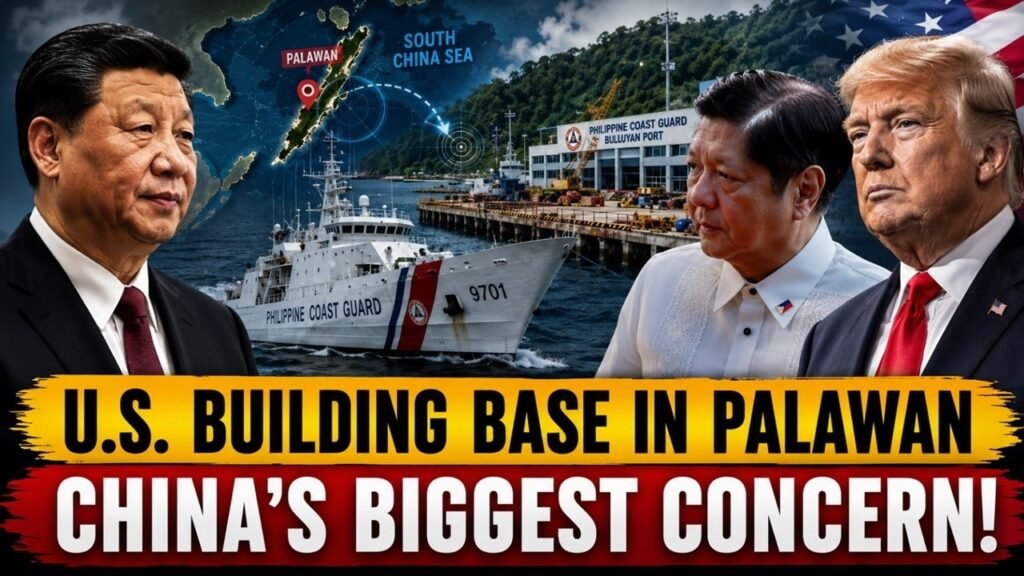
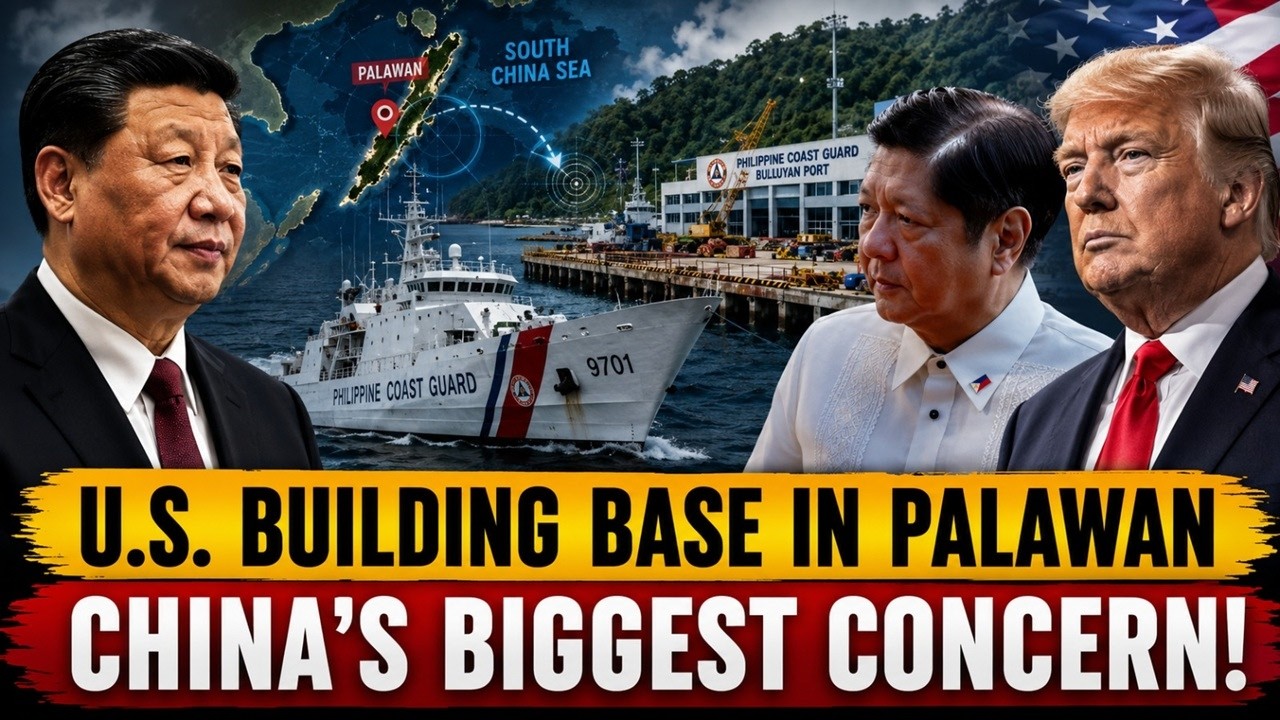
The United States has announced a strategic investment that could significantly influence the future of the South China Sea. Washington will invest up to $9 million to expand a Philippine Coast Guard logistics facility in Buliluyan, Palawan, while also increasing Foreign Military Financing (FMF) for the Philippines to $100 million by Fiscal Year 2026.
At first glance, the announcement appears to be a routine infrastructure project. However, the reality is far more significant. This initiative is not simply about constructing a new pier—it is about strengthening the Philippines’ ability to maintain a continuous maritime presence in one of the world’s most disputed waterways.
The US Announcement That Deserves More Attention
When the news first emerged, many observers viewed it as another routine defense cooperation announcement. There were no military confrontations, emergency diplomatic meetings, or major naval deployments dominating headlines. Instead, Washington quietly announced plans to help the Philippine Coast Guard expand its logistics and maintenance facilities in Buliluyan, southern Palawan.
According to the U.S. State Department, the project will receive up to $9 million in funding to improve maritime law enforcement capabilities and strengthen the Philippines’ operational capacity in the South China Sea.
Although the investment may appear modest compared to large-scale defense projects, military experts understand that maritime power is measured by much more than the number of ships a country possesses. A navy or coast guard remains effective only when its vessels can stay operational through continuous maintenance, refueling, and logistical support. This is where the Buliluyan project becomes strategically important.
At the same time, Washington announced another major development that attracted comparatively little public attention. U.S. Foreign Military Financing (FMF) for the Philippines will increase to $100 million, marking a significant rise in long-term security assistance.
Unlike emergency military aid, FMF focuses on strengthening an ally’s defense capabilities over many years. It enables partner nations to modernize their armed forces, purchase advanced equipment, improve operational readiness, and enhance long-term defense cooperation.
Taken together, these announcements reveal a broader strategic vision. One initiative strengthens the infrastructure needed to support maritime operations, while the other ensures the Philippine forces operating from that infrastructure become stronger and more capable. Rather than simply financing a pier, Washington is investing in the Philippines’ long-term maritime endurance.
Why Palawan Is the Center of the Strategy
Understanding the significance of this investment requires looking at the geography of the region.
Palawan is the Philippines’ westernmost province and serves as the country’s primary gateway to the South China Sea. Nearly every Philippine Coast Guard patrol, fisheries protection mission, humanitarian operation, and resupply mission to disputed maritime features begins from this strategically located island.
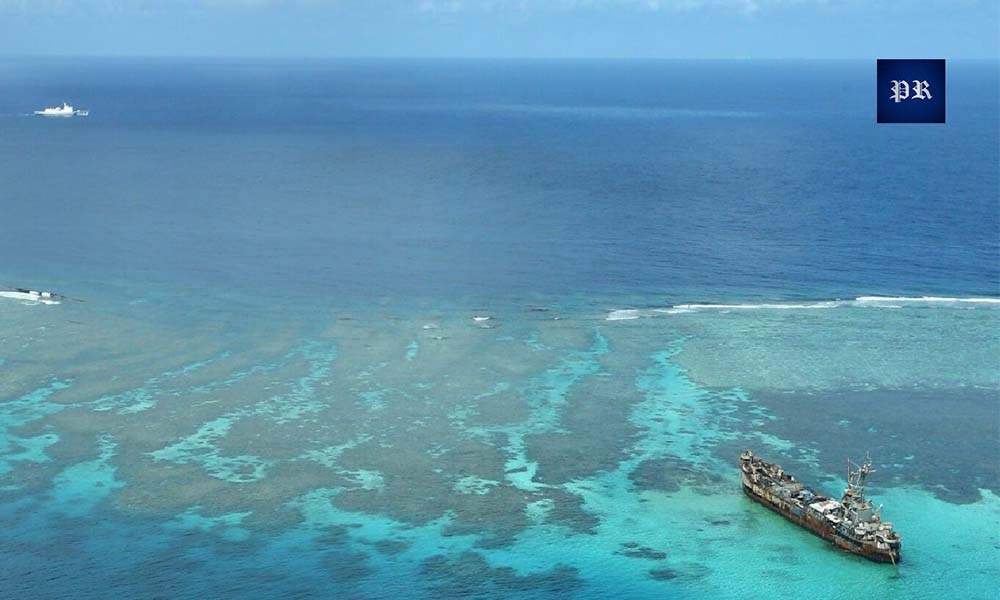
Its location places it closer to contested areas such as the Spratly Islands, Second Thomas Shoal, and several other disputed maritime features than almost any other part of the Philippines. Because of this geographical advantage, Palawan has become the operational heart of the country’s maritime activities.
Despite its strategic importance, operating from Palawan has not always been easy. Many Coast Guard vessels have relied on civilian ports that lack the infrastructure necessary to support sustained security operations. Maintenance facilities have remained limited, fuel storage capacity has often been insufficient, and vessels have frequently been forced to return long distances simply for repairs or resupply. These logistical limitations have reduced the amount of time Philippine patrol vessels could remain in contested waters.

Why Buliluyan Port Matters
Buliluyan Port may not enjoy the international recognition of Manila or Subic Bay, but from a strategic perspective, it occupies one of the most valuable locations in the Philippines.
Located in southern Palawan, the port provides significantly faster access to operational areas in the South China Sea than many larger ports situated farther north. The planned expansion is expected to transform Buliluyan into an intermediate logistics hub capable of supporting Philippine Coast Guard operations much closer to disputed maritime zones.
The upgraded facility will allow Coast Guard vessels to receive fuel, maintenance, spare parts, supplies, and logistical support without undertaking lengthy return voyages to distant home ports. As a result, patrol ships will spend considerably less time traveling for repairs and considerably more time conducting maritime security missions.
Although these improvements may seem technical, logistics often determine success in maritime operations. Military planners have long argued that battles at sea are not won solely through advanced weapons or larger fleets. Instead, success depends on the ability to sustain ships, crews, and equipment over extended periods.
A patrol vessel that must travel several hundred kilometers back to its home port every time it requires fuel or maintenance inevitably loses valuable operational time. In contrast, another vessel with access to nearby logistics facilities can complete the same maintenance tasks and return to patrol within hours. Over weeks and months, that difference translates into greater maritime presence, faster operational response, stronger deterrence, and improved surveillance capabilities across contested waters.
In modern maritime competition, persistence has become just as important as firepower.
China Has Already Demonstrated the Importance of Logistics
China has spent years building one of the world’s most sophisticated maritime support networks across the South China Sea.
While international attention has largely focused on military airfields, missile systems, and radar installations constructed on artificial islands, another equally significant development has taken place behind the scenes. Beijing has also invested heavily in deep-water harbors, fuel depots, maintenance facilities, warehouses, and logistics centers that enable Chinese Coast Guard and maritime forces to operate continuously without returning to mainland China.
Ukraine’s Drone War Is Coming to the Philippines | What Happens Next?
Recognizing the importance of logistics in modern maritime competition, both the Philippines and the United States are now working to strengthen similar support infrastructure. The Buliluyan project represents an important step toward reducing the logistical gap and improving the Philippines’ ability to sustain long-term operations in the South China Sea.
Logistics Are Becoming the Foundation of Philippine Maritime Security
The Philippines is currently undertaking one of the most ambitious maritime modernization programs in its history.
Over the coming years, the Philippine Coast Guard is expected to receive up to 45 new patrol vessels from France and Japan, dramatically expanding its ability to monitor and protect the country’s vast maritime territory.
However, simply acquiring new ships does not automatically improve national security. Every vessel requires a reliable network of fuel supplies, maintenance facilities, spare parts, trained personnel, operational planning, and logistical support. Without this supporting infrastructure, even the most advanced patrol vessels would spend much of their time docked rather than conducting operations at sea.
For this reason, the new logistics hub at Buliluyan is not being built solely for today’s Philippine Coast Guard. Instead, it is designed to support the much larger fleet expected to operate over the next decade. Washington’s investment reflects long-term strategic planning aimed at ensuring that future patrol vessels remain operational whenever they are needed most.
Why This Matters Beyond the Philippines
The South China Sea remains one of the world’s most strategically significant maritime regions, carrying more than $3 trillion worth of global trade every year. As maritime tensions continue to increase, maintaining stability throughout these waters has become increasingly important for regional and international security.
Unlike traditional naval warships, Coast Guard vessels play a crucial role in enforcing maritime law, protecting fisheries, conducting search and rescue operations, delivering humanitarian assistance, safeguarding marine resources, and ensuring the safety of civilian maritime traffic. Strengthening these capabilities enables the Philippines to defend its maritime rights while reducing the risk of unnecessary military escalation.
This explains why Washington has chosen to prioritize support for the Philippine Coast Guard alongside broader defense cooperation. Building stronger maritime law enforcement capabilities provides Manila with greater flexibility in responding to challenges while reinforcing stability throughout the Indo-Pacific.
About Indo-Pacific Report
For more geopolitical analysis, strategy coverage, and Indo-Pacific security reporting, visit Indo-Pacific Report:
Website
Facebook
YouTube
U.S. to Fund Philippines Coast Guard Base Expansion Near South China Sea