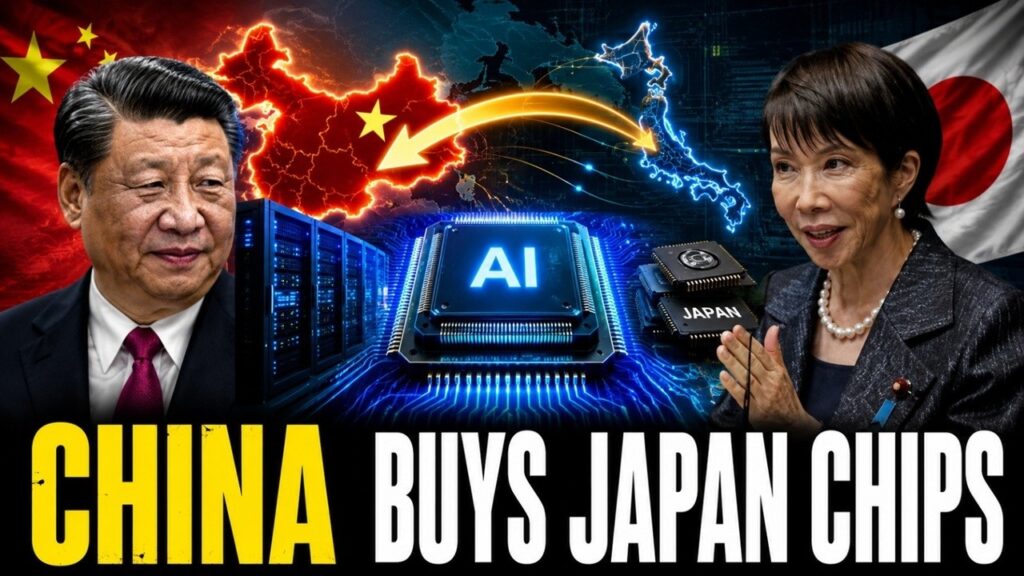
Japan’s Chip Exports to China Are Surging Despite Rising Tensions
Japan’s semiconductor exports to China jumped nearly 48% in 2025 as artificial intelligence demand fueled a rebound in trade between Asia’s two largest economies. Despite geopolitical tensions and technology restrictions, economic ties remain stronger than many expected. At a time when geopolitical tensions between China and Japan remain elevated, economic data is telling a very different story.
Trade between Asia’s two largest economies is rebounding after several difficult years. New figures show that Japanese semiconductor exports to China surged by nearly 48 percent in 2025, while total bilateral trade grew by more than 6 percent, ending a three-year decline.
The recovery highlights an important reality in today’s global economy: politics and business do not always move in the same direction.
Despite ongoing disputes over security, technology, and regional influence, China and Japan remain deeply connected through manufacturing, supply chains, and high-tech industries. Much of the recent growth can be traced to one of the most powerful forces shaping the global economy today—artificial intelligence.
Japanese Semiconductor Exports See Massive Growth
The strongest growth came from semiconductor-related exports.
According to recent trade data, Japan’s chip exports to China climbed nearly 48 percent in 2025, reaching approximately $28.7 billion. Industry analysts attribute much of this increase to rapidly expanding demand from artificial intelligence applications and advanced computing infrastructure.
AI technologies require enormous amounts of processing power and data storage. Building these systems depends on a steady supply of memory chips, processors, electronic components, sensors, and specialized hardware.
As technology companies around the world race to expand AI capabilities, demand for semiconductor components has risen dramatically.
For Japanese manufacturers, this trend has created significant export opportunities. For Chinese technology firms, access to high-quality semiconductor components remains essential for supporting growth in AI, cloud computing, and advanced industrial applications.
The result is a trade relationship that continues to generate substantial business despite growing political uncertainty.
Artificial Intelligence Is Reshaping Global Trade Flows
The AI revolution is not only transforming technology—it is also reshaping international commerce.
Chinese companies continue investing heavily in artificial intelligence, data centers, automation, and next-generation manufacturing technologies. At the same time, global demand for advanced computing infrastructure is accelerating across industries ranging from finance and healthcare to logistics and defense.
This growing appetite for AI-related hardware is driving demand throughout the semiconductor supply chain.
Industry experts point to products such as NAND memory chips, multilayer ceramic capacitors, and other advanced electronic components as particularly strong growth areas. These components play critical roles in servers, data centers, smartphones, AI processors, and industrial equipment.
The result is a new wave of trade activity that is helping fuel economic growth across East Asia.
In many ways, artificial intelligence is becoming one of the most important drivers of international technology trade.
Bilateral Trade Returns to Growth After Three Years of Decline
The semiconductor boom is only part of the story.
Overall trade between China and Japan reached more than $343 billion in 2025, representing a 6.2 percent increase compared with the previous year. More importantly, the growth ended three consecutive years of declining trade volumes.
China Deploys Carrier Fleet as Japan Joins Balikatan 2026 — The Indo-Pacific’s New Flashpoint
For both countries, this rebound carries significant economic importance.
China remains one of Japan’s largest export destinations, purchasing machinery, industrial equipment, automotive components, electronic parts, and advanced manufacturing technologies.
At the same time, Japan continues to play a crucial role in supplying Chinese industries with high-quality components and specialized technologies that are difficult to replace.
The renewed growth demonstrates that deep economic interdependence remains intact despite ongoing political disagreements.
While governments may compete strategically, businesses on both sides continue finding strong incentives to trade.
Japanese Companies Face Intensifying Competition in China
The positive trade figures do not mean that Japanese companies have an easy path ahead.
Many businesses operating in China report increasing pressure from rapidly improving domestic competitors.
Recent surveys indicate that nearly three-quarters of Japanese companies active in the Chinese market now view Chinese firms as their primary competitors. This marks a significant shift from previous decades when foreign companies often enjoyed substantial technological advantages.
Chinese manufacturers have made major advances in sectors such as electric vehicles, battery production, consumer electronics, renewable energy technologies, and industrial automation.
As local competitors become more sophisticated, Japanese firms are being forced to adapt.
Many companies have responded by reducing costs, lowering prices, improving efficiency, and accelerating innovation efforts to maintain their market positions.
This competitive environment is creating new challenges even as trade volumes continue to grow.

Export Controls Continue to Shape the Technology Relationship
While semiconductor exports have expanded significantly, not every technology sector is experiencing the same success.
Exports of advanced semiconductor manufacturing equipment from Japan to China have declined, largely due to tightening export controls.
Japan, alongside the United States and several allied countries, has implemented restrictions on the sale of certain advanced chipmaking technologies to China. These measures are intended to limit access to cutting-edge semiconductor production capabilities that could have military or strategic applications.
As a result, the technology relationship between China and Japan has become increasingly complex.
Some sectors continue to benefit from strong demand and commercial growth, while others face stricter regulatory oversight and government intervention.
This creates a situation where economic cooperation and strategic competition coexist simultaneously.
Why the China-Japan Trade Recovery Matters
The broader lesson from the latest trade data is that economic relationships often prove more resilient than political relationships.
China and Japan continue to disagree on a wide range of issues, including regional security, technology policy, territorial disputes in the East China Sea, and broader geopolitical competition in the Indo-Pacific.
Yet businesses in both countries remain deeply integrated through supply chains, manufacturing networks, investment flows, and technological cooperation.
The semiconductor industry illustrates this reality particularly well.
Despite export restrictions, technology competition, and strategic concerns, demand for advanced electronic components continues driving commercial activity between the two economies.
For global markets, this is an important reminder that complete economic decoupling remains difficult, especially in highly specialized industries where supply chains have developed over decades.
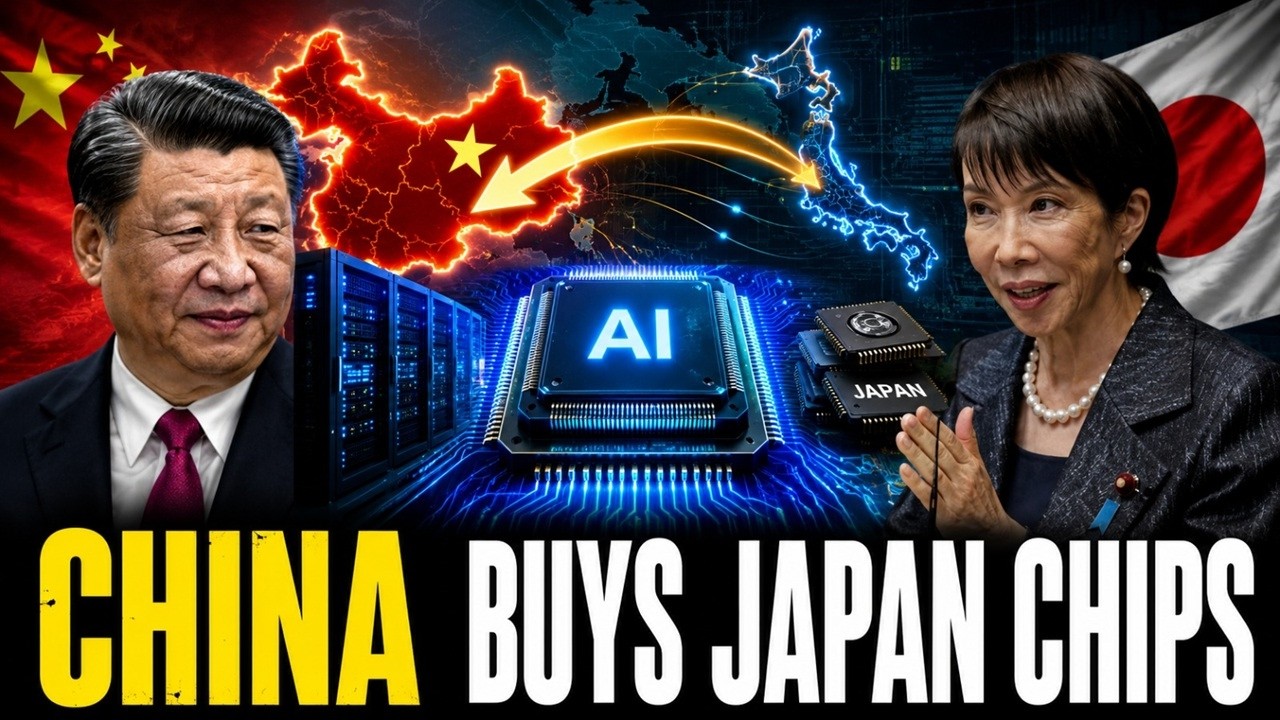
Technology Continues to Outpace Politics
The sharp rise in Japanese semiconductor exports to China highlights a reality that many policymakers continue to grapple with.
Economic interdependence remains a powerful force.
Artificial intelligence is generating unprecedented demand for chips, data infrastructure, and advanced electronic components. That demand is helping revive trade between China and Japan even as geopolitical tensions remain unresolved.
Challenges certainly remain. Competition is intensifying. Export controls continue to expand. Strategic distrust has not disappeared.
Yet for now, the business relationship appears stronger than many expected.
As the global AI race accelerates, semiconductors are becoming one of the most important engines of international trade, linking economies together even when political relationships become increasingly complicated.
For China and Japan, the latest trade figures suggest that technology, innovation, and market demand are still proving capable of overcoming many of the barriers created by geopolitics.
Follow Indo-Pacific Report
For in-depth analysis of Indo-Pacific economics, semiconductor competition, artificial intelligence, technology policy, and geopolitical developments, visit: