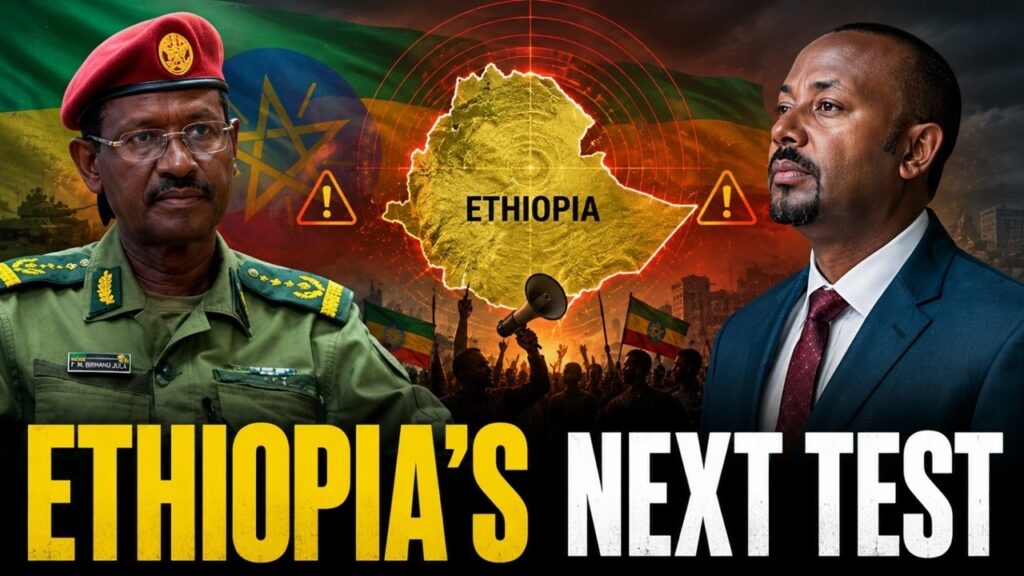
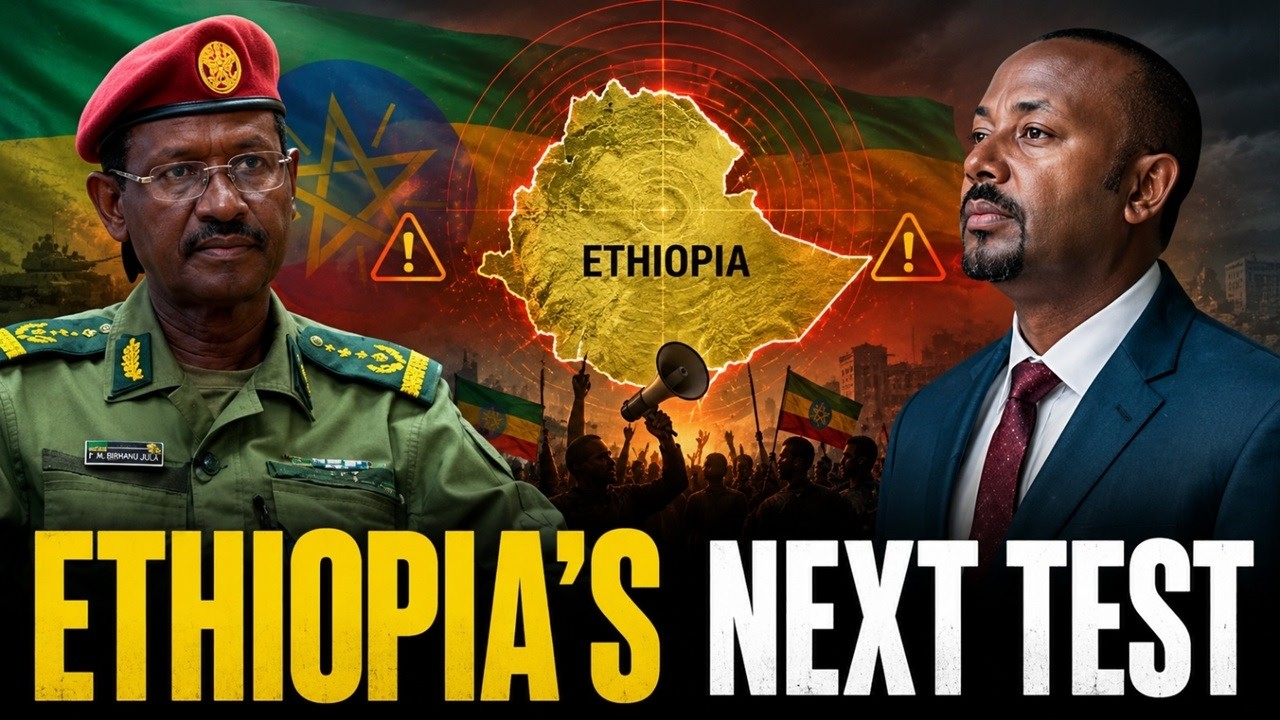
Ethiopia Faces New Political Test as Military Chief Speaks Out
Ethiopia is once again facing growing political and security tensions.
Field Marshal Birhanu Jula, Chief of Staff of the Ethiopian National Defense Force, has issued a strong warning regarding the emerging TSIMDO alliance, a political and military alignment that has attracted increasing attention across the country.
His comments come at a sensitive time for Ethiopia, as the government faces security challenges, political disputes, and concerns about national stability.
The warning has sparked debate about Ethiopia’s future and raised questions about the country’s political direction.
WHAT IS THE TSIMDO ALLIANCE?
The TSIMDO alliance is being discussed as a coalition involving political and armed actors opposed to the current federal government.
Supporters describe it as an effort to address political grievances and create a new political framework.
Critics, however, argue that the alliance could increase instability and deepen existing divisions.
The alliance has gained attention because it appears to bring together groups that have previously operated separately.
This has made it a major topic in Ethiopia’s political debate.
BIRHANU JULA’S MESSAGE
Field Marshal Birhanu Jula delivered a clear message.
He warned that any attempt to undermine Ethiopia’s constitutional order or threaten national unity would face a response from the country’s security institutions.
His remarks focused on preserving stability and protecting the Ethiopian state.
The military chief also stressed that Ethiopia’s armed forces remain committed to defending the country’s sovereignty and territorial integrity.
For government supporters, the statement was a demonstration of resolve.
For critics, it reflected growing concerns within the federal leadership about the evolving political landscape.
WHY THE WARNING MATTERS
This warning is important because it comes during a period of multiple challenges for Ethiopia.
The country continues to face security concerns in several regions.
Political disagreements remain unresolved in some parts of the country.
At the same time, economic pressures and humanitarian challenges continue to affect millions of Ethiopians.
Against this backdrop, any new political alliance immediately attracts national attention.
The government’s response suggests that officials view the situation seriously.
ETHIOPIA’S COMPLEX SECURITY LANDSCAPE
To understand the significance of the warning, it is necessary to look at the broader picture.
Over the past several years, Ethiopia has experienced conflicts involving multiple actors.
The country has faced tensions in the Tigray region, security challenges in the Amhara region, and ongoing concerns involving armed groups in other parts of the country.
Although some conflicts have eased, many underlying political disputes remain unresolved.
As a result, Ethiopian authorities remain highly sensitive to developments that could affect national security.
Trump’s Iran Deal Is Dividing Republicans and Could Reshape the Entire Middle East
REGIONAL CONCERNS ARE ALSO GROWING
The developments come as Ethiopia faces a complicated regional environment.
Relations with neighboring countries have experienced periods of tension over issues including security, borders, and access to the Red Sea.
Government officials have repeatedly argued that regional stability remains essential for Ethiopia’s long-term security and development.
This broader regional context helps explain why Ethiopian leaders closely monitor new political and military alignments inside the country.
DIFFERENT SIDES SEE THE SITUATION DIFFERENTLY
Supporters of the federal government argue that strong warnings are necessary to prevent instability and protect the country from fragmentation.
Meanwhile, opposition voices argue that Ethiopia’s long-term stability requires political dialogue, reconciliation, and peaceful solutions to national disputes.
This difference in perspective is at the center of Ethiopia’s current political debate.
The challenge facing the country is how to balance security concerns with demands for political reform.
WHAT HAPPENS NEXT?
Several possible scenarios could emerge.
The first possibility is increased political dialogue between different actors.
A second possibility is a period of heightened political confrontation as competing groups seek to expand their influence.
A third possibility is that government pressure leads to a restructuring or weakening of emerging alliances.
At this stage, it remains unclear which direction events will take.
What is clear is that Ethiopia has entered another important political moment.