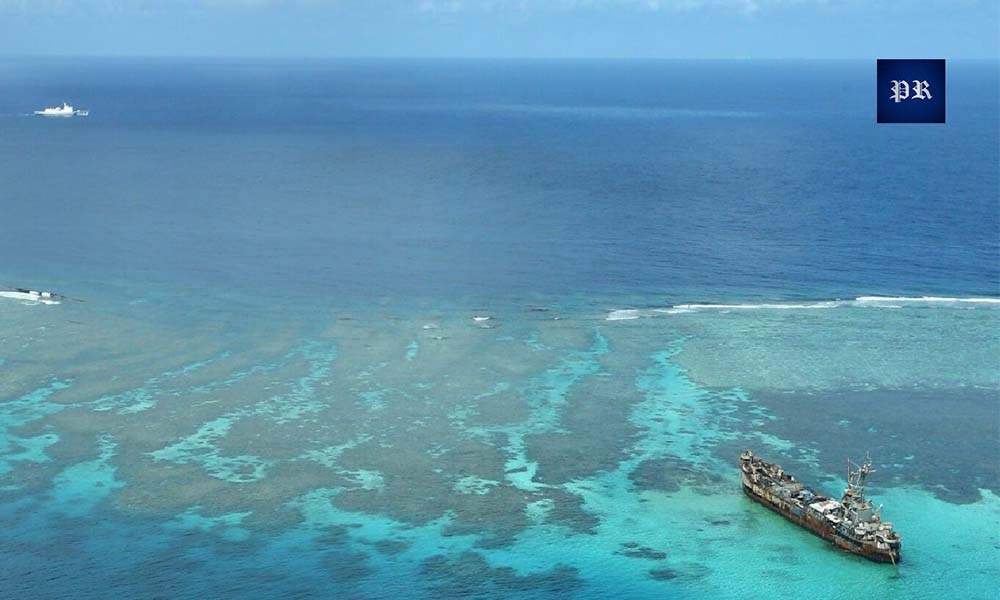
Philippines Is Building Asia’s Next Manufacturing Hub in Luzon Near South China Sea
The Luzon Economic Corridor is transforming the Philippines into a major manufacturing, logistics, and technology hub. Discover why Japan, the United States, and global investors are betting on Luzon’s future. For decades, discussions about Asian manufacturing usually focused on China, Japan, South Korea, or more recently Vietnam. The Philippines rarely appeared at the center of those conversations. Today, that is beginning to change.
A growing network of infrastructure projects, industrial zones, ports, airports, digital investments, and international partnerships is reshaping the economic future of Luzon, the Philippines’ largest and most economically important island. At the heart of this transformation is the Luzon Economic Corridor, a strategic initiative connecting Subic, Clark, Manila, and Batangas into a single integrated economic ecosystem.
Support from Japan, the United States, and other international partners has elevated the project from a domestic infrastructure plan into a major Indo-Pacific economic initiative. The goal is ambitious: position the Philippines as a competitive destination for advanced manufacturing, semiconductor supply chains, logistics, artificial intelligence infrastructure, and international investment. The question is no longer whether the Philippines occupies a strategic location. It always has. The real question is whether it can finally turn that geography into long-term economic power.
Why Global Supply Chains Are Changing
The modern global economy experienced a major shock during the COVID-19 pandemic. Factories closed, shipping routes were disrupted, and companies discovered how vulnerable highly concentrated supply chains had become.
For years, efficiency was the priority. Companies built factories where costs were lowest and concentrated production in a small number of locations. China became the world’s manufacturing powerhouse under this model.
However, the pandemic, rising geopolitical tensions, semiconductor shortages, and growing concerns about supply chain security encouraged governments and corporations to rethink their strategies.
https://indopacificreport.com/japan-just-broke-an-80-year-rule-the-reason-the-philippines/
New concepts emerged
One is known as “China Plus One,” where companies maintain operations in China while expanding production into other countries. Another is called “friend-shoring,” where critical industries are relocated to trusted partners and allies.
Both strategies create opportunities for countries capable of offering stability, infrastructure, connectivity, skilled workers, and access to global markets.
This is where the Philippines enters the conversation.
The Luzon Economic Corridor Explained
The Luzon Economic Corridor links four of the Philippines’ most important economic centers:
• Subic Bay
• Clark
• Metro Manila
• Batangas
Individually, each location already plays a significant role in the Philippine economy.
Subic offers one of Asia’s finest deep-water ports. Clark provides a rapidly growing airport, industrial space, and development opportunities. Manila remains the country’s economic and commercial center. Batangas serves as a major logistics and shipping gateway.
The corridor’s purpose is to connect these locations through transportation, logistics, energy, digital infrastructure, industrial parks, and advanced manufacturing facilities.
Rather than functioning as separate economic zones, the vision is to create one integrated production and logistics network capable of competing for global investment.
Why Geography Gives the Philippines an Advantage
One reason international investors are paying attention is geography.
The Philippines sits near some of the most important maritime trade routes in the world. Major shipping lanes connecting Northeast Asia, Southeast Asia, Australia, and North America pass through nearby waters.
Japan Just Broke an 80-Year Rule. The Reason? The Philippines.
Every year, trillions of dollars worth of trade move through the broader Indo-Pacific region.
This location creates opportunities for manufacturing, logistics, warehousing, transshipment, and technology industries.
Successful economies often transform geographic advantages into economic advantages. Singapore is one of the best examples. Despite limited natural resources, Singapore became a global logistics and financial hub by maximizing its location.
The Philippines hopes to achieve something similar on a larger scale through the Luzon Economic Corridor.
Why Japan Is Investing Heavily
Japan has emerged as one of the strongest supporters of Philippine economic development.
This support is not simply about aid or development assistance. It reflects strategic and economic interests.
Japanese companies want resilient supply chains. They want alternative production centers that can complement existing manufacturing networks. They want reliable trade routes and stable economic partners.
The Philippines offers all three.
For Japan, investing in Luzon strengthens regional supply chains while creating new opportunities for Japanese companies operating across Southeast Asia.
Infrastructure financing, industrial cooperation, technology partnerships, workforce development, and logistics improvements all support Japan’s broader goal of building a more resilient Indo-Pacific economy.
In many ways, the Luzon Economic Corridor has become one of Japan’s most significant economic initiatives in Southeast Asia.
The American Dimension
The United States also sees strategic value in Philippine economic development.
For decades, Washington’s relationship with Manila focused primarily on security cooperation. Today, economic resilience is becoming equally important.
Modern competition is no longer defined solely by military strength. Infrastructure, technology, supply chains, advanced manufacturing, semiconductors, and digital connectivity increasingly influence national power.
The United States supports efforts that strengthen supply chain security while creating opportunities for trusted economic partnerships.
The Luzon Economic Corridor aligns closely with these objectives.
For Washington, helping develop industrial capacity, logistics networks, and technology infrastructure in the Philippines supports both economic and strategic goals.
Semiconductors and Advanced Manufacturing
One of the most important opportunities involves semiconductors.
Semiconductor chips power modern economies. They are essential for smartphones, vehicles, telecommunications networks, artificial intelligence systems, medical devices, industrial equipment, and defense technologies.
Governments worldwide are seeking ways to diversify semiconductor supply chains.
The Philippines already has experience in electronics manufacturing and semiconductor-related industries. The Luzon Economic Corridor aims to build upon this foundation.
Industrial zones in Clark and surrounding areas are expected to attract higher-value manufacturing activities, technology companies, and investment related to advanced electronics.
Success in this sector could significantly increase the Philippines’ role within global technology supply chains.
Beyond Manufacturing: Building an Economic Ecosystem
The corridor is not only about factories.
Its success depends on the creation of an entire economic ecosystem.
support exports.
Airports support trade and logistics.
Industrial parks attract investment.
Data centers strengthen digital infrastructure.
Energy projects provide reliable power.
Transportation networks improve connectivity.
Telecommunications systems support modern business operations.
Each component strengthens the others.
This integrated approach is what makes the project different from a traditional infrastructure initiative.
Rather than building isolated facilities, the objective is to create a competitive environment capable of attracting long-term private-sector investment.
Challenges the Philippines Must Overcome
Despite the opportunities, significant challenges remain.
Infrastructure improvements require sustained investment and effective implementation.
Energy costs remain a concern for many industries.
Regulatory efficiency must continue improving to attract international investors.
Workforce development will be critical as advanced industries demand increasingly specialized skills.
Competition is also intense.
Countries such as Vietnam, Indonesia, Malaysia, and Thailand are actively pursuing many of the same investment opportunities.
The Philippines cannot rely on geography alone. Success will depend on execution.
Can projects be completed on time?
Can investors maintain confidence?
Can industrial growth be sustained over decades rather than years?
These questions will ultimately determine whether the corridor achieves its full potential.
What Success Could Look Like
If the Luzon Economic Corridor succeeds, its impact could extend far beyond infrastructure.
The Philippines could emerge as a major manufacturing and logistics center in Southeast Asia.
New industries could create higher-paying jobs.
Supply chain diversification could attract long-term foreign investment.
Technology sectors could expand rapidly.
Regional development could accelerate.
Most importantly, the country could strengthen its position within the rapidly evolving Indo-Pacific economy.
The Bigger Picture
The story of the Luzon Economic Corridor is about more than roads, ports, railways, or industrial parks.
It is about how geography, economics, technology, and geopolitics increasingly intersect.
As companies search for resilient supply chains and governments seek trusted economic partners, the Philippines finds itself in a unique position.
The investments now flowing into Luzon reflect confidence in the country’s long-term potential.
Whether that potential becomes reality will depend on execution, consistency, and the ability to transform strategic location into sustainable economic growth.

Conclusion
The Philippines stands at an important moment in its economic development.
The Luzon Economic Corridor represents one of the most ambitious efforts in modern Philippine history to convert geographic advantage into economic opportunity.
Backed by support from Japan, the United States, and other international partners, the initiative aims to attract manufacturing, technology, logistics, and infrastructure investment at a time when global supply chains are being redesigned.
The opportunity is significant, but success is not guaranteed.
What happens over the next decade will determine whether the Philippines becomes a major manufacturing hub in Asia or simply another promising project that never reaches its full potential.
For now, one thing is clear: the world is paying attention to Luzon.
About IndoPacific Report
For in-depth coverage of geopolitics, economics, defense, infrastructure, and the Indo-Pacific region, visit IndoPacific Report regularly.