IRAN FIRES MISSILES AS REGIONAL TENSIONS SURGE
The Middle East is facing another dangerous escalation.
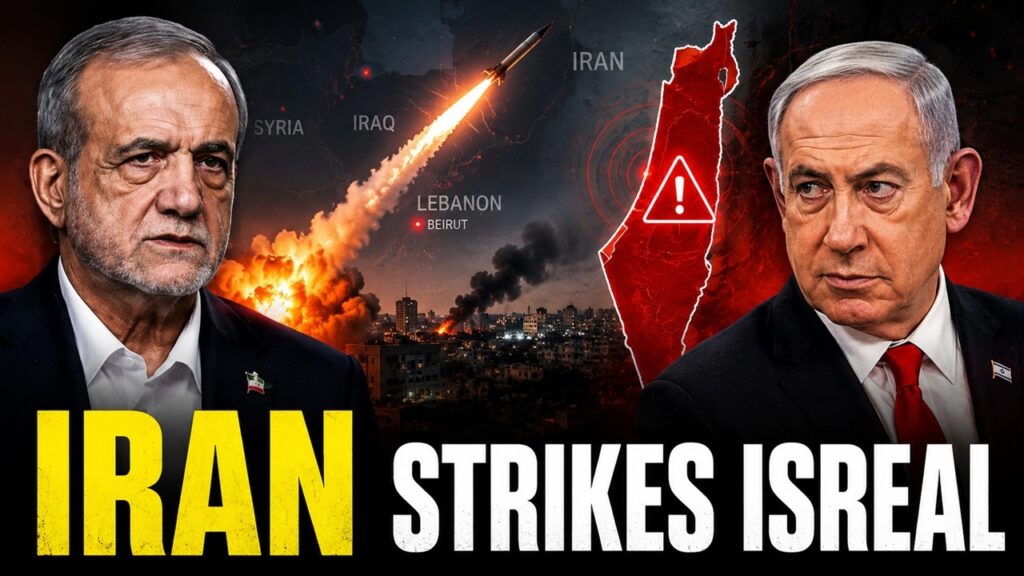
Just as diplomatic efforts were trying to prevent a wider conflict, Iran launched missile attacks toward Israel for the first time since the fragile April ceasefire. The attack came after Israeli airstrikes targeted Beirut, including areas linked to Hezbollah, Iran’s closest regional ally.
The latest developments show that the conflict is no longer limited to one front. Events in Lebanon, Israel, Iran, and even the Persian Gulf are becoming increasingly connected.
ISRAEL STRIKES BEIRUT
The latest crisis began when Israel carried out airstrikes in southern Beirut.
Israeli officials said the strikes were a response to Hezbollah attacks targeting northern Israel. According to reports, the attacks hit areas that Israel described as Hezbollah military infrastructure. The strikes also came despite warnings from several international actors who feared that an attack on Beirut could trigger a wider regional response.
The attacks intensified pressure on an already fragile situation in Lebanon, where violence has continued despite repeated attempts to establish ceasefires.
IRAN RESPONDS WITH MISSILE ATTACKS
Iran reacted quickly.
Iranian forces launched several waves of missiles toward Israel. Israeli air defense systems intercepted the missiles, and Israeli authorities reported no major damage from the attack. However, the political message from Tehran was clear.
Iran stated that the strikes were a response to Israeli actions in Lebanon and warned that further attacks could follow if Israel continued its military operations. Iranian officials also warned that any additional escalation could trigger a much stronger response.
This marked the first direct Iranian missile attack on Israel since the ceasefire reached in April.
ISRAEL PREPARES ITS NEXT MOVE
Following the missile launches, Israeli officials signaled that a response is being considered.
Israeli military leaders held emergency consultations while security forces remained on high alert. Israeli officials stated that they are prepared for additional attacks and are reviewing military options. Reports also suggest that Israel is considering a powerful response if the situation continues to escalate.
For now, both sides appear to be calculating their next steps carefully.
THE UNITED STATES CALLS FOR RESTRAINT
The United States is trying to prevent the crisis from spiraling further.
President Donald Trump publicly urged Iran to return to negotiations and called on Israel to avoid a major retaliation. Trump warned that the latest attacks could damage ongoing diplomatic efforts aimed at ending the conflict and reducing regional tensions.
Washington is attempting to keep diplomatic channels open while also supporting regional security partners.
AIRSPACE CLOSURES SIGNAL GROWING CONCERNS
The regional impact was immediate.
Authorities in Iraq and Syria temporarily restricted air traffic after the missile exchanges. The closures reflected growing fears that the conflict could expand beyond its current boundaries if additional military actions take place.
Whenever countries begin closing airspace, it is usually a sign that governments are preparing for potential further escalation.
Trump’s Iran Deal Is Dividing Republicans and Could Reshape the Entire Middle East
PAKISTAN PUSHES FOR DIPLOMACY
As military tensions rise, diplomatic efforts continue.
Pakistan has been actively encouraging all sides to return to negotiations and work toward ending the conflict. Islamabad has emerged as an important intermediary in recent diplomatic contacts involving Iran and other regional actors.
Many governments fear that a prolonged conflict could destabilize the entire Middle East and create new economic and security challenges far beyond the region.
WHY THIS MOMENT MATTERS
This crisis is about more than a single missile exchange.
The conflict has now reached its 100th day. What began as one confrontation has evolved into a wider regional struggle involving Iran, Israel, Hezbollah, Lebanon, the United States, and several neighboring countries.
Each new strike increases the risk of miscalculation. Each retaliation raises the possibility of a larger conflict.
The key question now is whether diplomacy can regain momentum before another round of military action takes place.