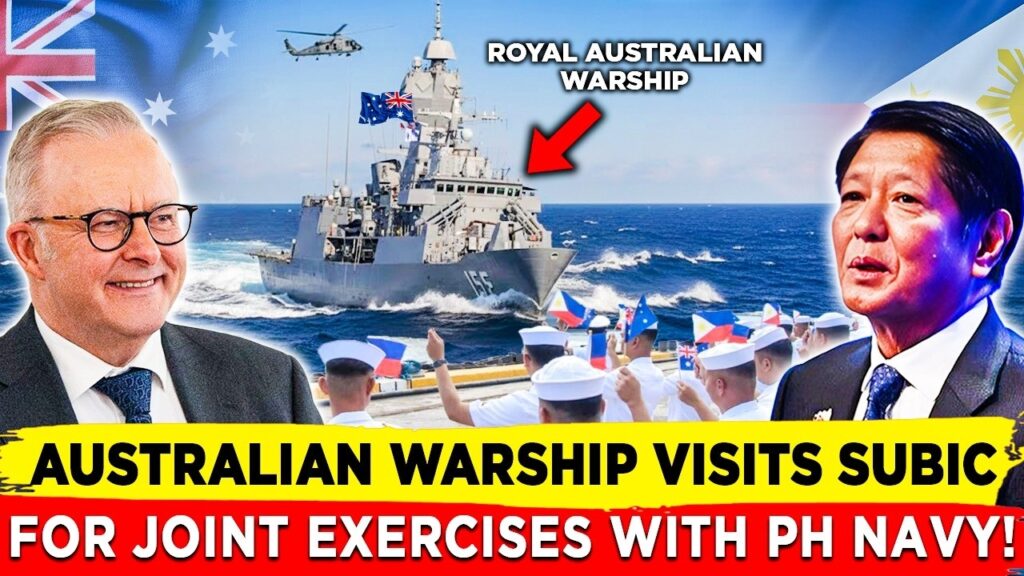
Royal Australian Navy Warship Visits Subic for Joint Maritime Exercises with Philippine Navy
“The South China Sea is not just water. It is a strategy. It is sovereignty. It is the future.” That line has been echoing quietly in defense circles for months now. And this week, it suddenly felt real. Because from 13–16 February 2026, a warship from the Royal Australian Navy sailed into Subic Bay. Not for a courtesy call. Not for optics. But for four days of coordinated maritime drills with the Philippine Navy.
Let me ask you something. When was the last time a simple port visit felt like a geopolitical statement? This one did. Subic isn’t just a harbor. It carries memory. It carries history. Once the beating heart of American naval power in Asia, then a symbol of post-Cold War retreat, and now, quietly, it’s becoming something else again. A node. A meeting point. A signal.
And here comes an Australian warship docking there, against the backdrop of rising tension in the South China Sea. Coincidence? Not really. The timing matters. The location matters. The message absolutely matters. Because right now, the South China Sea is tense. Patrols are increasing. Maritime confrontations are more frequent. Coast guards are bumping hulls. Statements are sharper. No one says “crisis,” but everyone feels the pressure building.
So when Australia and the Philippines train together, it’s not just about navigation drills or communications checks. It’s about alignment. It’s about interoperability, the kind that isn’t built overnight. You don’t improvise trust between navies when things go wrong. You build it in ports like Subic. You rehearse it in calm seas so you don’t hesitate in rough ones.
And let’s be honest. Australia isn’t a claimant in the South China Sea disputes. It doesn’t have reefs or shoals at stake. But it does have skin in the game: trade routes, regional stability, alliance credibility. Freedom of navigation isn’t abstract for Canberra. It’s economic oxygen. For Manila, it’s even more existential.
This visit strengthens bilateral naval cooperation. That’s the official phrasing. But underneath the diplomatic language, what you’re really seeing is deterrence being layered, slowly, deliberately. Four days of joint activities. Shared operational planning. Maritime domain awareness coordination. Professional exchanges between officers. These things don’t make headlines like standoffs do. They don’t trend. But they shift balance.
And here’s something people often miss: deterrence isn’t loud. It’s cumulative. It’s routine. It’s predictable partnerships that signal, quietly, “You won’t be alone out here.” Subic Bay has seen empires come and go. It has seen withdrawal. Now it’s seeing a return, not in the old Cold War style, but in something more networked. More distributed. More coalition-driven.
That’s the real story. Australia and the Philippines conducting joint maritime exercises isn’t dramatic on paper. But in today’s strategic climate? It’s meaningful. Because every port visit now feels like positioning. Every exercise feels like preparation. And every alliance interaction carries weight. The question isn’t whether this was just another naval engagement. The question is: how many more of these signals will we see in 2026? And what happens if they stop?
Background
If you really want to understand why this visit matters, you have to look at the players involved. And trust me, these aren’t small actors drifting through the region. They’re seasoned. Calculated. Quietly serious. First, the Royal Australian Navy.
Australia doesn’t just “show up” in the Indo-Pacific. It stays. Consistently. Deliberately. The RAN has built a reputation for near-continuous presence in Southeast Asian waters, maritime patrols, joint exercises, humanitarian missions, freedom-of-navigation operations. Not flashy. Not dramatic. Just steady. And steady is powerful.https://www.youtube.com/watch?v=_oek6-e6EJY
The visiting vessel this time, HMAS Toowoomba, isn’t some symbolic patrol craft. It’s an Anzac-class long-range frigate, built for multi-role operations. Surveillance. Interdiction. Escort duties. Blue-water capable. Designed to operate far from home for long periods. When a ship like that docks in Subic, it’s not tourism. It’s intentional.
Australia’s approach to the region has always been grounded in international law. Freedom of navigation isn’t just rhetoric for Canberra, it’s policy. And with so much of Australia’s trade moving through these sea lanes, stability here is national interest, not charity.
Then there’s the Philippine Navy. If you’ve been watching Manila closely, you’ll know this navy is not the same force it was a decade ago. Modernization is no longer a talking point, it’s happening. New platforms. Improved surveillance systems. Expanded maritime domain awareness. More joint drills. More presence in its Exclusive Economic Zone. There’s a quiet confidence growing.
The Philippines understands something deeply practical: sovereignty at sea requires capability. And capability requires partnerships. Which brings us to Subic Bay. Subic isn’t just a harbor on a map. It’s layered with history. Once one of the largest U.S. naval bases outside America, then dormant, now strategically revived. Today, it serves as a logistics node, a training ground, and frankly, a geopolitical signal. Ships that dock there aren’t just refueling. They’re aligning.
Historically, Australia and the Philippines haven’t been strangers in uniform either. They’ve conducted multiple Maritime Cooperative Activities, sometimes alongside partners like the United States Navy and the Royal Canadian Navy. These exercises matter because they normalize coordination. They build muscle memory between crews. They reduce friction in real-world contingencies.
And that’s the thing people often overlook. Interoperability isn’t built during a crisis. It’s built over coffee in wardrooms. Over long planning sessions. Over repetitive drills where mistakes get corrected quietly, before they become strategic disasters. When HMAS Toowoomba sails alongside Philippine vessels, what’s really happening is this: procedures are being aligned. Communications tested. Trust reinforced.
It’s technical, yes. But it’s also human. You’ve got sailors swapping stories on the pier. Officers comparing operational notes. Young naval personnel realizing that regional security isn’t some abstract theory, it’s teamwork. Real people. Real ships. Real seas.
And in a region where maritime tensions can escalate fast, that kind of familiarity might be the difference between calm coordination and dangerous miscalculation. So when we talk about background, we’re not just listing facts.
We’re looking at two navies that understand something fundamental: the Indo-Pacific is entering a more competitive era. And in competitive eras, relationships matter. Subic Bay isn’t just hosting a ship. It’s hosting a signal. And signals, especially at sea, travel far.
Details of the Visit
There’s something cinematic about a gray warship easing into port at sunrise. No music. No drama. Just steel against water and the quiet choreography of sailors lining the deck. When HMAS Toowoomba pulled into Rivera Wharf in Subic, it wasn’t loud, but it was deliberate.
Philippine Navy personnel stood ready. Arrival honors were rendered. Flags steady in the breeze. The kind of ceremony that looks simple from the outside, but carries weight if you understand naval tradition. These rituals matter. They’re about respect, hierarchy, professionalism, the old-school code of the sea that still governs modern fleets.
The Australian delegation was led by Commander Alicia Harrison, who later conducted courtesy calls with senior Philippine naval leadership, including Rear Admiral Joe Anthony C. Orbe of the Philippine Navy. And yes, “courtesy call” sounds diplomatic and mild. But those meetings? That’s where alignment happens. That’s where the tone gets set. That’s where intentions are clarified without microphones in the room.
Over the next four days, it wasn’t just handshakes and photos. There were dockside engagements, planning sessions, operational coordination meetings, conversations that probably ran longer than scheduled. Officers comparing notes. Talking procedures. Identifying friction points. Fixing them before they ever matter at sea.https://indopacificreport.com/philippine-navys-top-warships-join-balikatan-2026-to-boost-regional-security/
Then came the joint drills. Operational maneuvers. Tactical coordination. Rehearsals that test how quickly two different navies can think and move as one. Because interoperability isn’t about looking good in formation. It’s about timing. Communication discipline. Trust under pressure.
Workshops were also conducted on practical skills, replenishment at sea, seaworthiness procedures, the unglamorous but critical mechanics of keeping ships operational far from home ports. It’s technical stuff. Logistics. Seamanship fundamentals. But honestly? That’s where navies win or lose endurance battles. If you can’t refuel, resupply, and sustain, you can’t deter.
What stood out to me, though, was the media outreach and public tours aboard the ship. That transparency piece matters. Allowing civilians and press to step aboard a foreign warship signals confidence. It says: we’re not hiding. We’re cooperating under international norms. This is partnership, not provocation. And that balance is delicate right now in the South China Sea. So while it may look like a routine port visit on paper, the details tell a bigger story. Ceremony. Strategy. Skill-building. Public messaging. Four days. But layered with meaning. At sea, nothing is accidental. And in Subic this week, every move felt intentional.
Joint Exercises & Training Activities
Here’s where it gets real. Port visits are polite. Ceremonial. Controlled. But once ships start moving together at sea? That’s where intent becomes measurable. The joint exercises between the Royal Australian Navy and the Philippine Navy weren’t symbolic run-throughs. They were technical. Focused. Purpose-driven. First came the operational coordination drills.
Communication exercises might sound basic but in naval operations, comms discipline is everything. Radio clarity. Signal timing. Standardized phraseology. One misunderstood instruction at sea can escalate fast. So they tested it. Repeatedly. Tactical maneuvers followed, ships adjusting course, speed, and formation in synchronized patterns. It’s choreography, yes. But it’s also a stress test of decision-making under dynamic conditions. Then there were the Subject Matter Expert Exchanges, the SMEEs.
This is where professionals get granular. Procedures like replenishment at sea were discussed and rehearsed. And let’s be honest, that’s not glamorous. No dramatic headlines. But it’s mission-critical. A navy that can’t refuel or resupply while underway loses operational endurance. Sustained presence, especially in contested waters, depends on that capability. Endurance equals deterrence. It’s that simple.
The objectives were clear. Test joint response capabilities against regional maritime threats. Improve coordination in search and rescue operations. Strengthen interoperability in maritime interdiction scenarios. In other words: prepare for the real-world contingencies nobody wants but everyone plans for.
South Korea to Boost Philippine Navy with 12 Warships by 2029 – Regional Security Shift
Search and rescue alone demands precision. Different ships. Different crews. Different doctrines. If distress calls happen in busy sea lanes, seconds matter. Familiarity between navies can mean the difference between confusion and coordinated action. And maritime interdiction? That’s even more sensitive. Boarding operations, compliance enforcement, escalation control. You can’t improvise trust in those moments. What struck me most is how these activities serve as building blocks. They’re not isolated drills. They’re stepping stones.
The Philippine Navy is preparing to participate in larger multinational frameworks like Exercise Kakadu, one of the region’s significant naval exercises hosted by Australia. You don’t just show up to something like that cold. You build compatibility first. You test systems. You iron out procedural differences. That’s exactly what this week in Subic was about. Quiet preparation.
Not dramatic. Not theatrical. Just two navies investing in readiness the traditional way, through repetition, professionalism, and shared standards. And honestly? In a region where tensions can spike overnight, that kind of preparation feels less like routine training and more like insurance.
Strategic Significance
Let’s zoom out for a second. Because this isn’t just about one ship. Or four days. Or even Subic. It’s about the bigger chessboard. The South China Sea right now isn’t calm water, it’s strategic pressure. Every patrol, every shadowing incident, every radio warning adds to this slow, steady tension. No one wants open conflict. But everyone is preparing for uncertainty.
So when the Royal Australian Navy docks in Subic and conducts coordinated activities with the Philippine Navy, it feeds into something larger: deterrence through presence. And deterrence doesn’t always roar. Sometimes it just shows up. Repeatedly.
The language policymakers use is “rules-based international order.” It sounds abstract. But in practical terms, it means ships should be able to sail lawfully without coercion. Trade routes should remain open. Maritime disputes shouldn’t be settled by force.
Freedom of navigation isn’t a slogan in this region. It’s survival. For the Philippines, it’s about protecting sovereign rights in its Exclusive Economic Zone. For Australia, it’s about ensuring sea lanes that carry energy, food, and trade remain stable. And stability doesn’t maintain itself. That’s where defense diplomacy comes in.
This visit reinforces long-standing defense ties between Canberra and Manila. It signals that these two countries aren’t operating in isolation. They’re part of a wider network in the Indo-Pacific, one that values coordination over unilateral action. It also quietly demonstrates commitment to multilateralism. Not bloc politics. Not chest-thumping. But structured cooperation under international norms. That matters.
Because in a competitive maritime environment, partnerships reduce miscalculation. They add predictability. They create habits of communication. There’s also a practical layer people often overlook. Operational benefits. When two navies train together, they don’t just exchange handshakes, they exchange expertise. Best practices in navigation. Lessons learned in maintenance. Technological integration insights. Even small procedural tweaks can increase efficiency and safety.
And it’s not all about hard security. The Indo-Pacific is disaster-prone. Typhoons. Earthquakes. Humanitarian crises. The same interoperability that supports deterrence also enables faster humanitarian response. Ships that can coordinate in tactical drills can also coordinate in delivering relief supplies or evacuating civilians.
That dual-use readiness is powerful. Personally, what stands out to me is how measured this approach feels. Not dramatic. Not reckless. Just steady cooperation layered over time. In geopolitics, consistency builds credibility. And credibility builds deterrence. This Subic visit may not dominate global headlines. But regionally? It reinforces a pattern. Presence. Partnership. Preparation. And in 2026, that pattern is becoming impossible to ignore.
Statements from Officials
There’s always that one line in a naval visit that captures the whole mood. This time, it came from Commander Alicia Harrison of the Royal Australian Navy: “Routine transits and engagements like this demonstrate Australia’s commitment to a peaceful, stable, and prosperous Indo-Pacific.”
“Routine.” That word stood out to me. Because in today’s South China Sea environment, nothing feels routine anymore. And maybe that’s exactly the point. By calling it routine, Australia is normalizing presence. Normalizing cooperation. Normalizing the idea that regional security partnerships are steady, not reactive.
On the Philippine side, officials from the Philippine Navy expressed appreciation for Australia’s continued engagement and highlighted the practical value of collaborative training. And that part matters. This isn’t symbolic diplomacy, it’s skills development. It’s a readiness enhancement. It’s operational depth. You could sense something in the tone: confidence. Not dependency. Partnership.
Impact & Key Takeaways
First, bilateral trust deepened. You don’t build operational rapport through press releases. You build it through shared drills, shared planning rooms, shared sea time. This visit strengthened that connective tissue between the two navies. It made coordination smoother. More instinctive.
Second, deterrence was quietly reinforced. No aggressive rhetoric. No dramatic shows of force. Just two professional navies operating together in a way that signals: open seas matter. International maritime law matters. Collective presence matters. That signal travels far beyond Subic.
Third, operational readiness improved. The workshops, the tactical maneuvers, the procedural exchanges, they aligned doctrine and reduced friction. In a joint response scenario, familiarity can shave off hesitation. And hesitation at sea can be costly.
Fourth, the regional message. For ASEAN neighbors and Indo-Pacific partners, this cooperation projects steadiness. It tells smaller states that maritime security doesn’t have to be a solo effort. There’s a network forming. Quietly. Methodically.
Australia Boosts Philippine Defense, Complementing U.S. Partnership
Conclusion
When the Australian warship departed Subic Bay, it left more than just an empty berth. It strengthened interoperability. It reaffirmed a defense partnership built on consistency rather than crisis. It contributed, in its own measured way, to regional stability during a tense maritime chapter.
And both countries have made it clear: this isn’t a one-off. Collaborative exercises will continue. Operational ties will expand. Maritime security standards will be upheld. Here’s the reality. The Indo-Pacific isn’t entering a calmer era. It’s entering a more competitive one. And in competitive eras, habits of cooperation become strategic assets.
Four days in Subic might not look historic on paper. But sometimes, history moves in disciplined formations, not dramatic explosions. And if 2026 continues on this trajectory, we’re going to see more of these formations shaping the region’s future.
https://youtu.be/DAofwVh8yAs?si=LijvV3ftoBm2Ip50