Japan’s Coastal Radar Transfer to the Philippines: Strategic Implications for Indo-Pacific Security
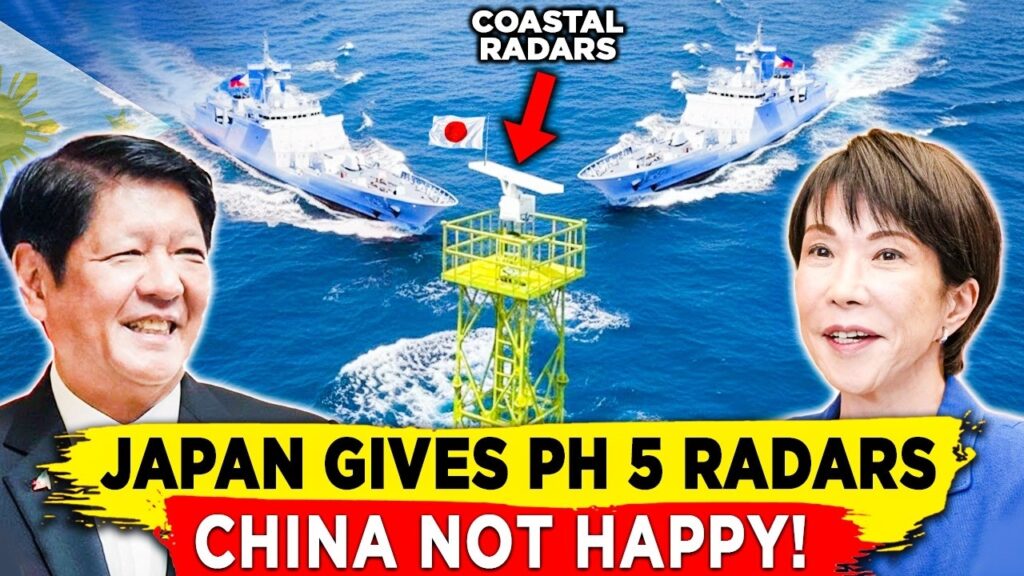
“We will not stand alone.” That was the quiet but unmistakable message behind Tokyo’s latest move. This week, Japan formally transferred five coastal radar systems to the Philippines under its Official Security Assistance framework, a move that, on paper, costs about JP¥600 million. Roughly $4 million. Not massive money in defense terms. Not flashy fighter jets. Not missile batteries. Just radars.
But here’s the real question and it’s the one that should make everyone sit up: Why would something as “ordinary” as coastal radar suddenly matter so much in the Indo-Pacific? Because in today’s South China Sea, what you see determines whether you survive. And Manila knows that better than most.
For years, Filipino fishermen have described spotting unfamiliar vessels near disputed shoals, gray hulls on the horizon, coast guard ships shadowing supply boats, maritime militia moving in swarms. You can’t defend what you cannot track. You can’t protest what you cannot document. Maritime disputes don’t begin with missiles. They begin with blips on a screen. That’s what makes this transfer so strategically loaded.
Japan isn’t just handing over equipment. It’s helping the Philippines see farther, earlier, and more clearly in waters that have become increasingly tense, especially in the West Philippine Sea, where standoffs, water cannon incidents, and close-quarter maneuvers are no longer rare events but routine pressure tactics.
And here’s something even more interesting: the Philippines is the only country to receive Japanese Official Security Assistance for three consecutive years since 2023. That’s not a coincidence. That’s alignment.
Tokyo is signaling consistency. Manila is signaling trust. And together, they’re signaling something else to the region: middle powers are no longer passive observers in great-power competition. It may sound dramatic, but it’s true, in modern maritime competition, radar is power. It feeds maritime domain awareness. It strengthens ISR networks. It creates an information advantage. And information advantage is deterrence’s quiet backbone.
There’s something almost poetic about this. Japan, a country once constitutionally constrained in defense posture, now actively supports Southeast Asian maritime security. The Philippines, once cautious about provoking larger powers, now leaning into layered partnerships. History moves in strange arcs.
And let’s be honest, this isn’t just about five radar systems. It’s about whether smaller coastal states can maintain sovereignty in contested waters without being forced into submission or dependence. It’s about whether alliances can adapt fast enough to shifting power balances. It’s about whether deterrence can remain below the threshold of open conflict.
The systems themselves will enhance Manila’s maritime domain awareness and intelligence-gathering capabilities. That means better tracking of vessels, better documentation of incidents, better integration with naval and coast guard units, and ultimately better coordination with allies. Quiet capability building. No theatrics. Just steady reinforcement. But strategically? It strengthens Manila–Tokyo defense alignment at a moment when the South China Sea is no longer a peripheral issue. It’s central to Indo-Pacific security architecture.
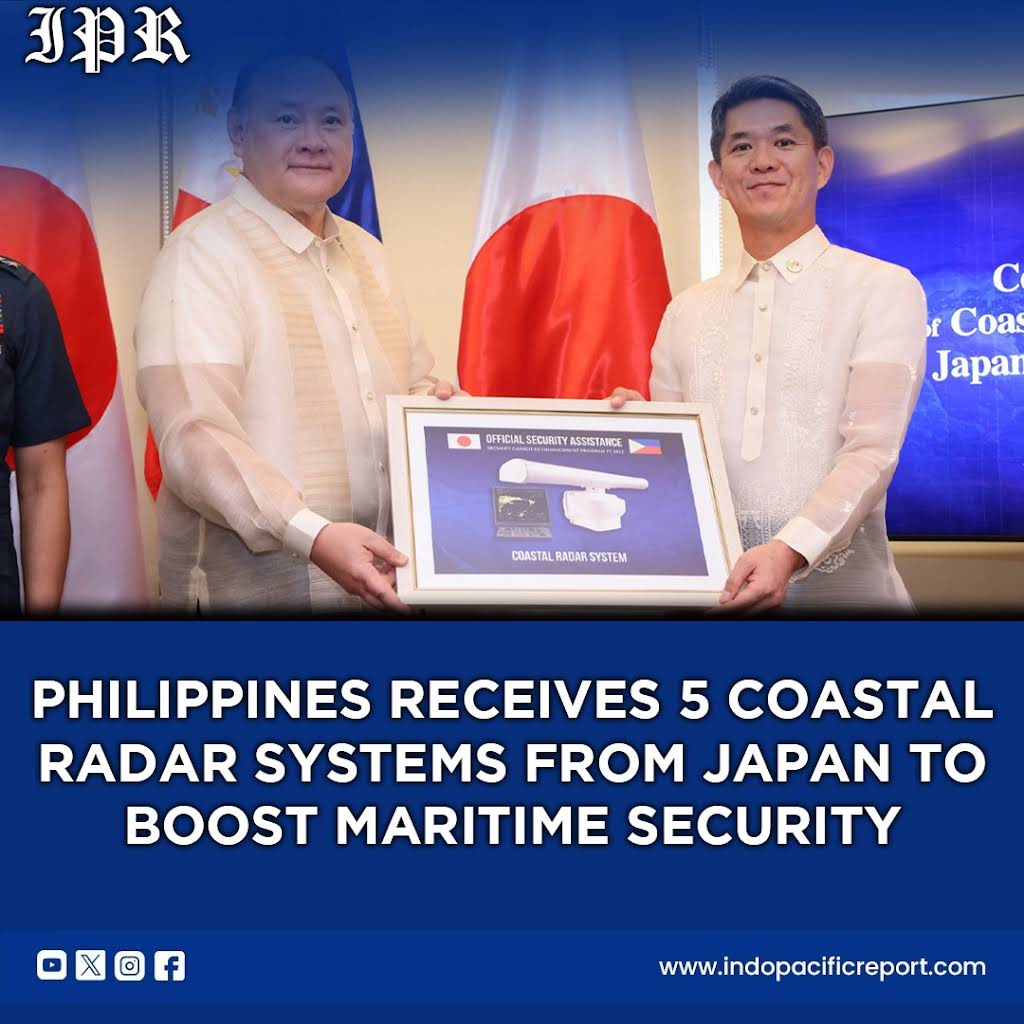
Sometimes power doesn’t arrive with headlines about aircraft carriers. Sometimes it arrives in shipping crates, labeled “coastal surveillance system.” And if you’re watching the Indo-Pacific closely, you know, that’s the kind of development that changes the balance slowly, quietly and maybe permanently.
Strategic Context: Why This Matters Now
Let’s be real for a moment. This radar transfer did not happen in calm waters. It happened in the middle of a region that feels increasingly pressured, watched, and tested. The South China Sea carries more than $3 trillion in global trade every year. That number gets repeated a lot, but pause and think about it. Energy shipments, container traffic, food supply chains, the movement of electronics and critical components, all of it flowing through waters that are now heavily contested. When tension rises there, it’s not just a regional issue. It ripples outward.
From 2024 to 2026, the Philippines has reported a steady increase in encounters with Chinese maritime militia and coast guard vessels. Not occasional sightings. Not symbolic patrols. Regular friction. The Philippine Coast Guard has documented dozens of coercive incidents annually, particularly around Second Thomas Shoal, Scarborough Shoal, and Ayungin Shoal. These places are no longer distant legal disputes argued in conference rooms. They’ve become live operational flashpoints. Water cannons. Blocking maneuvers. Shadowing tactics. Close-range standoffs that stop just short of escalation.
And here’s the thing, most of these confrontations start quietly. A vessel appears on the horizon. Another follows. Then more. If you can’t track them early, if you can’t record patterns, if you can’t prove presence, you’re already reacting instead of shaping events. That’s why maritime domain awareness matters so much right now. It’s not dramatic. It’s fundamental. At the same time, Manila has been expanding its broader security posture. Under the Armed Forces of the Philippines Modernization Program, particularly Horizon 3, the country is pursuing a multi-billion-dollar procurement plan that stretches into 2028. The defense budget has moved upward from roughly ₱240 billion in 2023, with a steady climb through 2024 and 2025. It’s not an overnight transformation, but it signals intent. A shift from minimal deterrence toward layered capability.
The Enhanced Defense Cooperation Agreement with the United States has also expanded to nine locations. That matters strategically. It spreads logistical access, increases interoperability, and complicates adversarial planning. Add to that the growing trilateral coordination between the United States, Japan, and the Philippines, joint exercises, coast guard cooperation, shared signaling, and you start to see a network taking shape rather than isolated bilateral ties.https://indopacificreport.com/philippines-set-to-receive-historic-1-5b-in-u-s-military-assistance/
In that context, Japan’s coastal radar transfer is not random assistance. It fits directly into this wider deterrence architecture. It strengthens surveillance coverage. It enhances ISR integration. It supports a posture built on visibility, documentation, and response readiness. Quiet capabilities that reduce surprise and increase confidence.
And honestly, this is the point where things feel different. The Philippines is no longer operating from a position of hoping tensions cool down on their own. It’s building capacity. Carefully. Incrementally. With partners who are clearly committing for the long term.
The radar systems are small in scale compared to warships or missile batteries. But strategically? They plug into a bigger shift, one where awareness becomes leverage, and leverage becomes stability.
Technical and Operational Significance of the Radar Systems
Let’s talk about what these radar systems actually do, because sometimes we throw around terms like “maritime domain awareness” and forget there’s very practical muscle behind them. At the most basic level, coastal radar systems detect surface vessels at long range. They pick up movement far beyond what the naked eye can see. A fishing boat. A coast guard cutter. A gray-hulled ship loitering just a little too long near a shoal. And once detected, those vessels can be tracked in real time. Speed, heading, pattern of movement, all of it becomes data instead of guesswork.
That alone changes the equation. But modern coastal radar isn’t operating in isolation. It integrates into command-and-control systems. It feeds maritime surveillance networks. It plugs into broader ISR architecture, intelligence, surveillance, and reconnaissance. In other words, it becomes part of a larger nervous system. One radar site lights up, and the information can flow to naval units, coast guard vessels, air force ISR aircraft, and command centers almost instantly.
And here’s where it really matters in the South China Sea context. These systems provide early warning against unauthorized incursions, gray-zone operations, and maritime militia presence. Gray-zone tactics rely on ambiguity. They rely on plausible deniability. They rely on appearing suddenly, swarming an area, then fading back. Radar makes that harder. It creates records. Patterns. Evidence.
It’s not a loud deterrent. It’s a quiet exposure. Operationally, the five systems expand coverage over critical chokepoints and disputed waters. That means fewer blind spots. And in maritime competition, blind spots are vulnerabilities. If you can close those gaps, you’re already reducing the risk of surprise.
They also strengthen coordination across Philippine services. The Navy can respond with greater precision. The Coast Guard can deploy based on verified tracks rather than reports. Air Force ISR assets can be directed more efficiently. Instead of fragmented awareness, you start building a shared operational picture. That shared picture is what modern maritime security depends on.
And this isn’t only about confrontation. These systems also support humanitarian assistance and disaster response. The Philippines sits in one of the world’s most disaster-prone regions. Typhoons, maritime accidents, search-and-rescue operations, radar coverage can save lives. It improves anti-smuggling and anti-piracy monitoring too. Maritime security is layered. It’s not just about rival states. It’s about everything moving across those waters.

So when we say this is layered defense, that’s not a slogan. It’s literal. Hardware connected to networks. Networks feeding decisions. Decisions shaping deterrence. The radar systems are nodes in a broader surveillance web that is becoming denser, more integrated, and more resilient. And honestly, that’s the quiet revolution here. Not escalation. Not dramatic weapons platforms. Just the steady construction of a network that makes it harder to intimidate, harder to surprise, and harder to operate in the shadows.
Japan’s Official Security Assistance (OSA): A Strategic Shift
If you really want to understand why these radars matter, you have to look at Tokyo, not just Manila. Because Japan is not the same Japan it was ten years ago. In 2022, Tokyo released a new National Security Strategy that felt like a line in the sand. It wasn’t subtle. It committed to doubling defense spending to 2% of GDP by 2027, a huge shift for a country that for decades informally capped defense expenditures around 1%. That may sound technical, but in Japanese political culture, it was seismic. It signaled that the era of minimalist security posture was ending.
At the same time, Japan expanded flexibility in defense exports. That’s important. For years, Tokyo maintained extremely tight restrictions on exporting defense equipment. The new posture loosened those constraints, allowing Japan to support partners more directly. Not just through diplomacy. Not just through coast guard cooperation. But through tangible security assistance.https://www.youtube.com/watch?v=KfbPCDbqexg
And then came the Official Security Assistance framework in 2023. OSA wasn’t just another aid program. It was designed specifically to provide defense equipment to like-minded states, countries that share concerns about regional stability and rule-based maritime order. It marked Japan stepping into a more active security role without abandoning its constitutional constraints. Careful. Calculated. But undeniably proactive.
The Philippines became the first and most consistent recipient. That’s not random. It reflects strategic alignment and, frankly, a high degree of trust. Tokyo does not distribute security assistance casually. The fact that Manila has received OSA support for three consecutive years sends a signal, both about the depth of the relationship and about Japan’s assessment of where the frontline pressures are in the Indo-Pacific.
This is where the broader transition becomes clear. Japan is moving from what many once described as passive pacifism, largely reactive, alliance-dependent, toward proactive deterrence. It is still cautious. It is still disciplined. But it is no longer standing at the sidelines of regional security dynamics.
How the Philippines Is Building a Missile Wall Against China
And there’s something almost historic about this shift. A country that once defined itself primarily by post-war restraint is now actively shaping the balance of power through partnerships. Not with dramatic shows of force, but through infrastructure, surveillance systems, capacity building.
It’s subtle, but it’s strategic. The radar transfer to the Philippines is one small piece of that transformation. Yet it captures the essence of Japan’s new approach: strengthen partners, build networks, reinforce deterrence early, so crises never escalate to the point where hard power must be used. That’s not abandonment of pacifism. It’s an adaptation. And in today’s Indo-Pacific, adaptation is survival.
Bilateral Defense Ties: Manila–Tokyo Deepening Alignment
Something bigger is happening between Manila and Tokyo, and it’s not loud, but it’s unmistakable.
For years, Japan and the Philippines had friendly ties. Development aid. Coast guard vessels. Diplomatic warmth. But what we’re seeing now feels different. It feels strategic. Intentional. Almost urgent.

Take the Reciprocal Access Agreement (RAA). Negotiations have been advancing steadily. If finalized, this would allow troops from both countries to train and operate on each other’s soil with fewer bureaucratic hurdles. That’s not symbolic cooperation. That’s operational access. It signals trust at a very serious level. Countries don’t open that door unless they see long-term alignment.
Then there’s the steady increase in joint exercises between the Japan Maritime Self-Defense Force and the Philippine Navy. These aren’t photo-op port calls. They involve interoperability drills, coordinated maneuvers, and communications integration. The kind of repetition that builds muscle memory. And when you add regular trilateral exercises with the United States into the mix, you start to see something structured taking shape, not just partnerships, but a network. And let’s be honest about why this is happening.
Both Japan and the Philippines face maritime pressure from China. Different geography, same strategic anxiety. Japan deals with tensions in the East China Sea. The Philippines confronts daily friction in the West Philippine Sea. The waters are different, but the pattern feels familiar, gray-zone tactics, coast guard presence, maritime militia activity, constant testing of boundaries.https://www.youtube.com/watch?v=3mjgH4UM1Hc
Both countries also depend heavily on secure sea lines of communication. Their economies are maritime at their core. Energy imports. Trade flows. Industrial supply chains. If those sea lanes become unstable, everything else shakes with them.
And both governments publicly anchor their strategy in the idea of a Free and Open Indo-Pacific. It’s a phrase that sometimes gets overused, but at its heart, it’s simple: rules-based order, freedom of navigation, and resistance to coercion. For Tokyo and Manila, that’s not an abstract ideology. It’s a practical necessity.
From Japan’s perspective, the Philippines sits on the frontline of the South China Sea contest. Geographically exposed. Politically vocal. Strategically pivotal. Supporting Manila isn’t charity. It’s forward defense. It’s about reinforcing a partner whose stability directly affects regional balance.
What stands out to me is how natural this convergence feels now. A decade ago, this level of defense intimacy would have seemed unlikely. Today, it feels almost inevitable. The pressures of geography and power politics have a way of clarifying priorities.
Manila and Tokyo aren’t forming an alliance in name. But functionally? The alignment is deepening. Quietly. Consistently. And in this region, consistency speaks louder than rhetoric.
Regional Power Dynamics
Let’s not pretend Beijing didn’t notice this. When Japan transfers defense equipment to the Philippines, especially surveillance systems tied to contested waters, it sends a message. Calm on the surface, sharp underneath. It says Japan is willing to materially support Southeast Asian maritime resilience. Not just through statements. Not just through diplomatic concern. But through hardware that changes operational realities.
It also quietly tells China that gray-zone tactics will not go unmonitored. Maritime militia vessels thrive in ambiguity. Coast guard pressure campaigns rely on shaping narratives. But when surveillance improves, ambiguity shrinks. Patterns get recorded. Incidents get documented. And documentation limits plausible deniability.
Japan–Philippines Security Shift: The Possible Transfer of Type-03 Air Defense System
And maybe most importantly, this move shows that Indo-Pacific coalition building is accelerating. Not in the form of a single NATO-style bloc. But through overlapping partnerships. Bilateral here. Trilateral there. Layer upon layer.
For ASEAN, this matters. Other Southeast Asian states are watching closely. Vietnam, Indonesia, Malaysia, all maritime actors, all navigating complex relationships with China, all facing varying degrees of pressure in their own waters. If Japan’s OSA framework proves effective in strengthening Philippine maritime awareness, it’s not unrealistic to expect others to explore similar arrangements.
That could gradually reshape Southeast Asia’s security architecture. Not into an anti-China alliance system, but into a more networked, capacity-driven framework. Japan, in that sense, is emerging as something it hasn’t historically been in the region: a stabilizing defense partner. Reliable. Economically powerful. Now increasingly security-active.
Economic and Trade Dimensions
And here’s where it gets even more interesting. The Philippines and Japan aren’t just defense partners. Their trade volume exceeds $20 billion annually. Japan is consistently one of Manila’s top investors. A major infrastructure partner. A leading provider of official development assistance. Railways, ports, bridges, industrial zones, Japan has been embedded in Philippine economic development for years.
Security cooperation, in that context, doesn’t feel disconnected. It feels complementary.
Stable sea lanes protect trade. Maritime awareness protects energy imports. Deterrence protects investor confidence. Economic interdependence without security reinforcement leaves vulnerability. But when defense alignment supports economic resilience, the relationship becomes more durable.https://www.youtube.com/watch?v=83tErAXyq10
Honestly, this is what mature strategic partnerships look like. Not just ships and radars. But trade, infrastructure, supply chains, and security are woven together.
Future Outlook
Looking ahead, this radar transfer may only be the beginning of deeper integration. One likely development is expanded network integration with U.S. systems. If Philippine coastal radars can feed into broader allied surveillance architecture, the operational picture becomes even more comprehensive. Air surveillance upgrades could follow. Maritime patrol aircraft cooperation is possible. Drone-based ISR expansion would not be surprising, especially given cost-efficiency and persistent monitoring advantages.
And then there’s the Reciprocal Access Agreement. If fully signed and implemented, it would formalize operational access and further institutionalize defense ties between Manila and Tokyo. That would mark another structural shift.
Long term, the Philippines appears to be evolving from a reactive posture, responding incident by incident, toward layered deterrence. Surveillance. Partnerships. Access agreements. Modernization programs. It’s not about provoking conflict. It’s about reducing vulnerability.
Japan, meanwhile, is cementing its role as a regional security pillar. Not replacing the United States. Not competing for dominance. But reinforcing the architecture in a way that spreads risk and increases redundancy.
Step by step, the Indo-Pacific security system is becoming more multilateral and more interoperable. Less dependent on a single axis. More networked.
Conclusion
The transfer of five coastal radar systems is not symbolic. It is structural. It strengthens Philippine maritime domain awareness. It deepens Japan–Philippines strategic alignment. And it reinforces the broader Indo-Pacific deterrence architecture.
We are in an era where gray-zone tactics dominate and maritime coercion is routine. In that environment, visibility equals leverage. And leverage equals deterrence. This move is about surveillance, yes. But it’s also about sovereignty. About resilience. About shaping regional order before crises spiral beyond control. Sometimes power shifts don’t begin with dramatic confrontations. Sometimes they begin with clearer screens, earlier warnings, and fewer blind spots.https://youtu.be/lgyJA351Pis?si=TWEweXgP6m64GZUr