The Quiet Expansion — U.S. Army Rotational Force in the Philippines and the Militarization of the First Island Chain
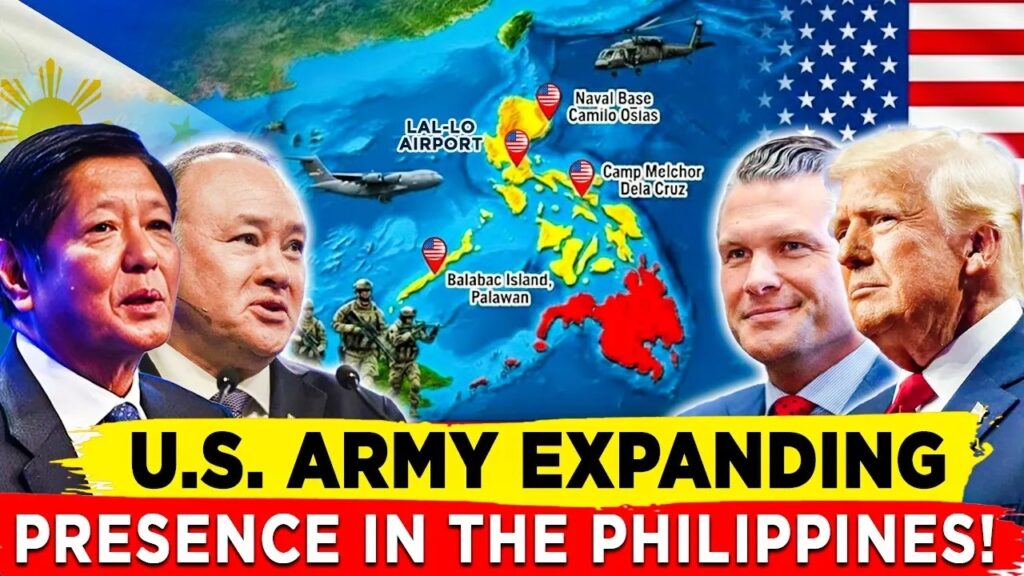
Nothing rolled in with fanfare. No dramatic base openings. No headline-grabbing troop numbers. Just a short confirmation, almost easy to miss: the U.S. Army now maintains a rotational force in the Philippines. Quiet. Technical. Bureaucratic-sounding. And strategically massive. Because this isn’t just another exercise cycle. It’s a shift in posture. For years, U.S. land power in the Philippines came and went with drills, Balikatan, joint training, temporary deployments that packed up and left. What’s emerging now is different. Institutionalized rotation. Persistent presence without permanent basing. Army units flowing in and out, but never really leaving the chessboard. Low visibility, high consequence.
 That matters because land forces change the equation. Naval and air power signal reach. Army forces signal intent, staying power, and denial. They’re about holding terrain, controlling chokepoints, and shaping escalation thresholds. In the context of the First Island Chain, that’s not a footnote, it’s architecture. This quiet expansion effectively weaves U.S. ground forces into the Philippines’ defense landscape, not as guests, but as a recurring feature. It blurs the line between “exercise” and “posture.” Between presence and permanence. And it does so without triggering the political backlash that large, fixed bases once did.
The timing isn’t accidental. China’s military pressure on Taiwan is intensifying. The South China Sea is more militarized than ever. The First Island Chain, once a conceptual line on a map, is now being physically reinforced, node by node. The Philippines sits at the hinge of that chain. And land power at the hinge changes how deterrence works.
So the real question isn’t whether this is escalation. It’s whether this marks the moment deterrence in Southeast Asia stopped being episodic and started becoming structural. How quiet the U.S. Army rotation reshapes the balance between China, Taiwan, and the South China Sea? And what does it mean when the First Island Chain stops being theory and starts being staffed?
What Is the Army Rotational Force–Philippines?
The Army Rotational Force–Philippines (ARF-P) is deliberately low-profile, but that doesn’t make it insignificant. Unlike traditional deployments with parades, press briefings, or unit roll calls, this rotation is framed as a lean, headquarters-level element with supporting forces flowing in and out. On paper it looks modest; in practice, it establishes a persistent footprint that quietly changes deterrence calculus.
Command falls under a lieutenant colonel–led headquarters, signaling that this is a standing leadership node rather than a temporary task force. That level of command is small enough to remain discreet, but senior enough to ensure continuity across rotations. ARF-P is embedded within Task Force–Philippines, which allows knowledge, coordination, and operational memory to persist even as personnel rotate. It’s a structural presence disguised as a temporary deployment.https://indopacificreport.com/why-the-philippines-is-considered-the-weakest-link-in-the-u-s-first-island-chain-policy/
The force also complements the Marine Rotational Force–Southeast Asia rather than duplicating it. Where the Marines focus on expeditionary and littoral operations, the Army brings logistical depth, command-and-control capability, and operational sustainment. This combination strengthens the U.S.-Philippine partnership while keeping the footprint light, a smart mix of presence, capability, and ambiguity.
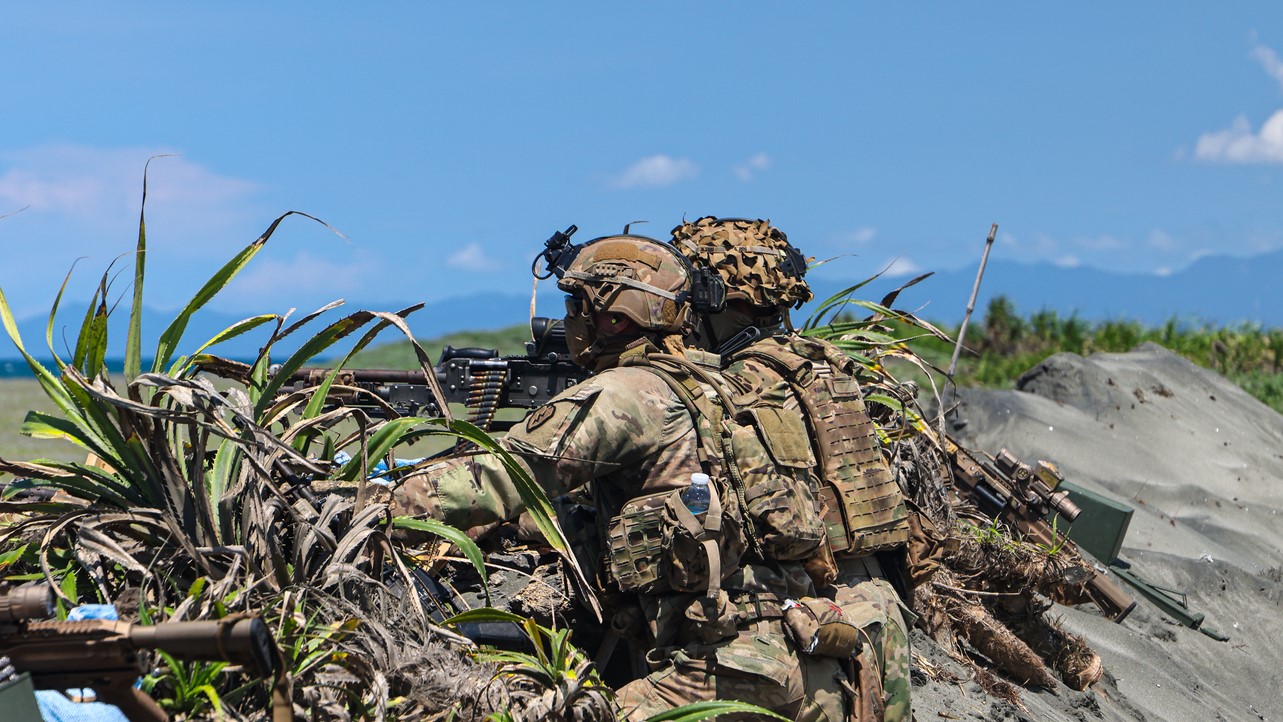
The opacity of ARF-P isn’t an oversight; it’s deliberate. By withholding details on size, equipment, or mission profile, the U.S. leverages uncertainty as a strategic tool. Observers and potential adversaries must assume the force could scale, support contingency operations, or coordinate rapidly with other U.S. rotational elements. In essence, “rotational” becomes permanent-in-practice, a quiet signal that U.S. land power is now a recurring feature in the Philippines without provoking overt political friction.
Task Force–Philippines: Institutional Backbone of the Deployment
Task Force–Philippines was officially announced in October 2025 as the organizational spine supporting rotational deployments like ARF-P. Its creation wasn’t about a flashy troop buildup, it was about structure, planning, and readiness. The task force exists to improve joint operational planning, enable rapid crisis response, and synchronize U.S.–Philippine ground operations across a range of contingencies.
Strategically, this is a quiet but profound shift. Where alliance coordination used to be episodic and ad hoc, Task Force–Philippines institutionalizes it, creating a standing mechanism for planning, communication, and operational integration. It embeds U.S. land warfare expertise directly into Philippine defense architecture, enhancing interoperability and allowing both nations to respond faster to regional contingencies.
Philippines Accuses China of Piracy in the South China Sea: Incident Analysis and Strategic Implications
The move also sends a subtle but clear signal: the U.S. is committed to the Philippines long-term, yet without the political complications of permanent base expansion. By establishing a rotational force within a permanent planning structure, the task force reinforces deterrence, strengthens bilateral ties, and quietly militarizes the First Island Chain without headlines.
Geographic Logic: Why the Philippines Matters
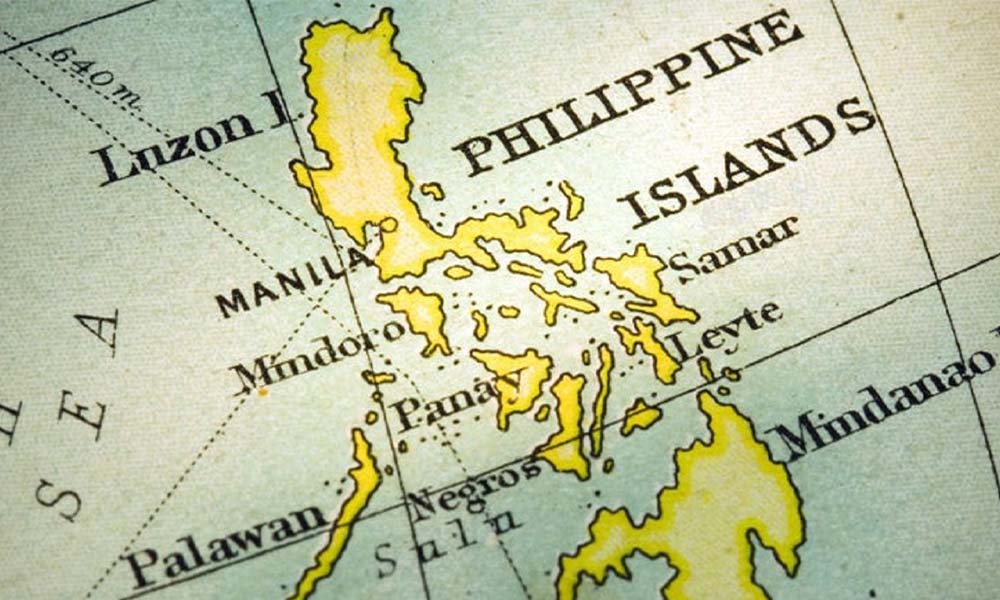
The strategic weight of the Philippines isn’t abstract, it’s geography made manifest. Situated along the First Island Chain, the archipelago serves as both a forward shield for Taiwan and a southern anchor for maritime denial in the South China Sea. Think of it like Okinawa or Guam: a mix of natural terrain, proximity to contested waters, and lines of communication that make it indispensable for projecting influence and shaping regional calculations.
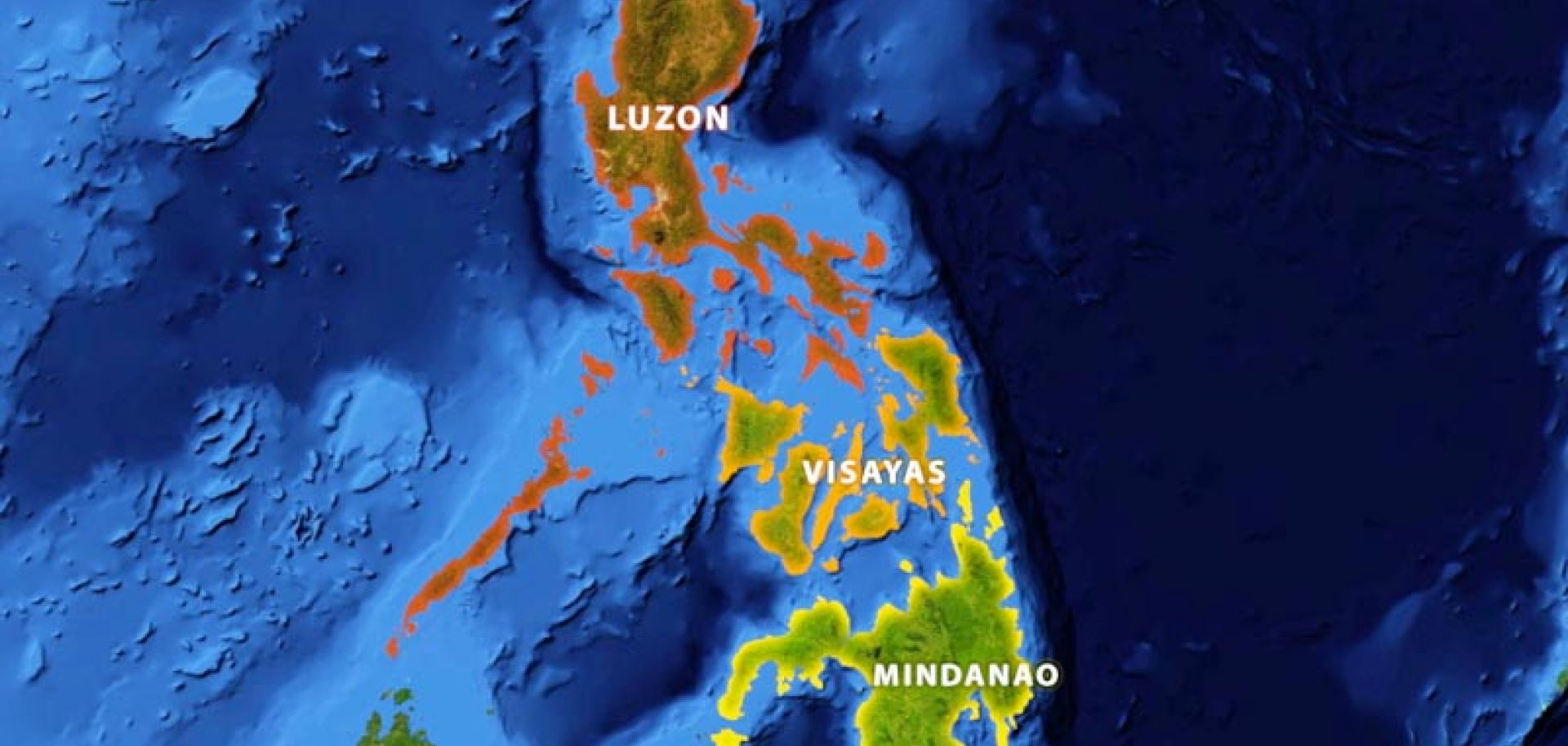
Breaking it down further, certain areas carry outsized importance. Northern Luzon sits directly in the path of any Taiwan contingency spillover, providing early staging, observation, and coordination points. Palawan anchors the southern edge of the South China Sea, a hotspot for territorial disputes and maritime pressure points. Meanwhile, Mindanao offers ISR potential, a legacy of counter-insurgency infrastructure, and the possibility of drone basing, a flexible, persistent surveillance platform that extends reach across the region.
In short, the Philippines isn’t just another host nation. It’s a strategic hinge in the First Island Chain, one that shapes deterrence, maritime access, and rapid-response options for the U.S., while subtly constraining potential adversaries. Geography doesn’t change, and that’s why presence here carries disproportionate weight.
Expansion of U.S. Army Capabilities in the Archipelago
Since 2022, the U.S. has quietly layered advanced Army systems into the Philippines, reshaping what “rotational presence” actually means. Mobile precision fires like HIMARS bring rapid, long-range strike capability. Patriot air and missile defense adds a protective umbrella against aerial threats. Mid-range strike options, including Typhon systems with Tomahawk capability, extend deterrence far beyond the shoreline. On the intelligence side, Grey Eagle/MQ-9 ISR platforms provide persistent surveillance, mapping potential hotspots in real time.
This isn’t just about harware. It reflects a doctrinal shift: U.S. Army deployments here are moving from counter-terrorism assistance to state-on-state deterrence. Land forces are now integrated into maritime conflict planning, functioning as a key node in regional defense networks rather than a supporting afterthought. The Army, once secondary to Navy and Air Force operations in the Indo-Pacific, is now a central actor, capable of shaping deterrence, controlling key terrain, and providing options that extend the First Island Chain’s strategic depth.
Presence, capability, and integration together mean that the Philippines is no longer just a training ground, it’s a forward-operating platform for multi-domain deterrence, quietly signaling U.S. resolve while maintaining a low-profile footprint.
Signaling Beijing: Deterrence vs. Escalation
The presence of U.S. Army rotational forces in the Philippines hasn’t gone unnoticed in Beijing. Official statements frame these deployments as destabilizing, painting a narrative that U.S. land power is creeping closer to Taiwan and expanding influence in the South China Sea. Analysts note the linkage between rotational deployments and broader Chinese concerns over maritime security and regional balance. Each missile battery, ISR drone, or HIMARS launcher may seem small individually, but together they create a strategic picture that complicates Chinese calculations.
The effect is deliberate. By quietly embedding capable Army units, the U.S. raises the cost of coercion against Manila and forces the PLA to account for scenarios they previously treated as low priority. Operational planning becomes more complex, and the risk of miscalculation rises in any crisis. This is the essence of rotational presence: low-profile deployment with high strategic leverage, signaling deterrence without overt provocation.
Manila’s Strategic Calculus
For the Philippines, the calculus is clear but delicate. Ongoing South China Sea confrontations, the potential spillover from any Taiwan crisis, and the need to protect its Exclusive Economic Zone demand credible deterrence. Rotational U.S. land forces give Manila more than reassurance, they provide a practical ability to project defense and secure key terrain, without fully ceding sovereignty.
Domestically, the Armed Forces of the Philippines are making moves of their own. The activation of the first land-based missile battalion reflects growing recognition of integrated territorial defense. Simultaneously, joint exercises and interoperability programs with U.S. forces are institutionalizing skills, command protocols, and rapid-response capabilities. Manila’s challenge is balancing the benefits of this partnership with sovereignty sensitivities, ensuring that the U.S. presence strengthens rather than politicizes domestic security.
Risks and Constraints
Even quiet deployments carry risks. Fixed missile batteries are vulnerable to preemptive strikes or sabotage, and rotational units must navigate sustainment, logistics, and command-and-control complexities in crisis scenarios. Missteps in coordination or timing could have outsized consequences in a densely militarized maritime theater.
Political dynamics add another layer. Public perception of foreign troops on Philippine soil can stir backlash, and ASEAN neighbors may view these moves as militarization of the region, complicating diplomatic balance. Finally, the sheer proximity of forces to sensitive zones in the South China Sea increases the risk of accidental escalation with China if miscommunication occurs. These constraints underline the delicate dance of deterrence: capability must be credible, yet visible restraint is essential.
Strategic Implications
These developments are reshaping the Indo-Pacific security architecture. The U.S. Army’s quiet rotational presence normalizes land power in maritime Asia, moving it from a theoretical option to an operational reality. For the Philippines, this positions the archipelago as a central node in regional deterrence, transforming it from a peripheral ally to a frontline stakeholder. Rotational forces emerge as the preferred model for forward presence: flexible, scalable, and politically manageable, while providing tangible deterrence against coercive actors.
Long-term, these deployments ripple across contingency planning for Taiwan and other flashpoints. Even modest formations, quietly deployed, can create strategic effects far larger than their size suggests, shaping adversary calculations, protecting alliance credibility, and embedding the Philippines at the center of U.S. Indo-Pacific strategy.
Conclusion: Quiet Moves, Structural Consequences
The Army Rotational Force–Philippines signals more than a temporary deployment, it marks enduring U.S. intent. The focus has shifted from symbolic exercises to operational readiness, with forces capable of responding to crises, supporting allies, and deterring aggression. For Manila, the message is clear: the Philippines is no longer a backwater ally. It sits on the frontline of a regional balance-of-power struggle, hosting capabilities that quietly amplify deterrence without provoking overt conflict.
In the end, the strategic takeaway is striking: small formations, discreetly rotated, can have outsized consequences. Presence, integration, and capability combine to create a force multiplier effect, proving that in modern geopolitics, the quietest moves often leave the deepest imprint.