Why Japan and the Philippines Are the Two-Front Problem Haunting China Now
For decades, Chinese strategists quoted Sun Tzu like scripture. “The supreme art of war is to subdue the enemy without fighting.” Calm. Patient. Elegant. The kind of line that makes power look effortless. What’s happening now looks nothing like that.
Instead of quietly bending the region to its will, China is staring at a problem every great power fears, pressure building at the same time in two different directions. Not because of a grand conspiracy. Not because of some secret alliance plot. But because actions taken in one sea didn’t stay contained there.
This is the return of a classic strategic nightmare: two fronts, one overstretched center. In the East China Sea, Japan has hardened its posture. Around the Senkaku Islands, coast guard encounters are sharper, surveillance is constant, and Tokyo’s defense planning now openly assumes sustained pressure, not episodic friction. What was once treated as a manageable dispute has become a permanent strategic priority.
Further south, in the South China Sea, the Philippines tells a different but eerily familiar story. Resupply missions harassed. Coast guard vessels blocked. Maritime militia hovering just close enough to intimidate, just far enough to deny. Manila didn’t synchronize its response with Tokyo. It reacted to what it was experiencing.

That’s the key point most narratives miss. China is not facing a carefully coordinated alliance strategy. It’s facing the cumulative consequences of coercion applied in two different seas. Each dispute began separately, driven by local dynamics, history, and geography. But over time, the pressure patterns started to rhyme. And now they reinforce each other.
What happens near the Senkakus shapes how Manila interprets risk. What happens at Second Thomas Shoal shapes how Tokyo thinks about restraint. The fronts don’t need to talk to each other to interact. They already do, through precedent, perception, and shared anxiety. This isn’t containment by design. It’s convergence by experience. And that’s what makes it so hard to unwind.
Geography Is the First Constraint China Cannot Escape
Before ideology. Before rhetoric. Before speeches about history and destiny, there’s geography. And geography doesn’t negotiate. That’s why Japan and the Philippines matter more than any press conference or white paper. You can manage narratives. You can spin intentions. You can’t relocate islands.

Japan is the northern lock. It anchors the first island chain, stretching from the Ryukyus down toward Taiwan, forming a natural barrier between China’s near seas and the open Pacific. Every Chinese naval planner understands this instinctively. These waters aren’t symbolic, they’re functional. They oversee sea lanes that any serious blue-water navy needs to reach freely. And sitting right at the pressure point are the Senkaku Islands, small on the map, huge in strategic weight. Control there doesn’t just signal resolve. It shapes access.https://youtu.be/83tErAXyq10?si=cyR4s8oftRRZJ5Dv
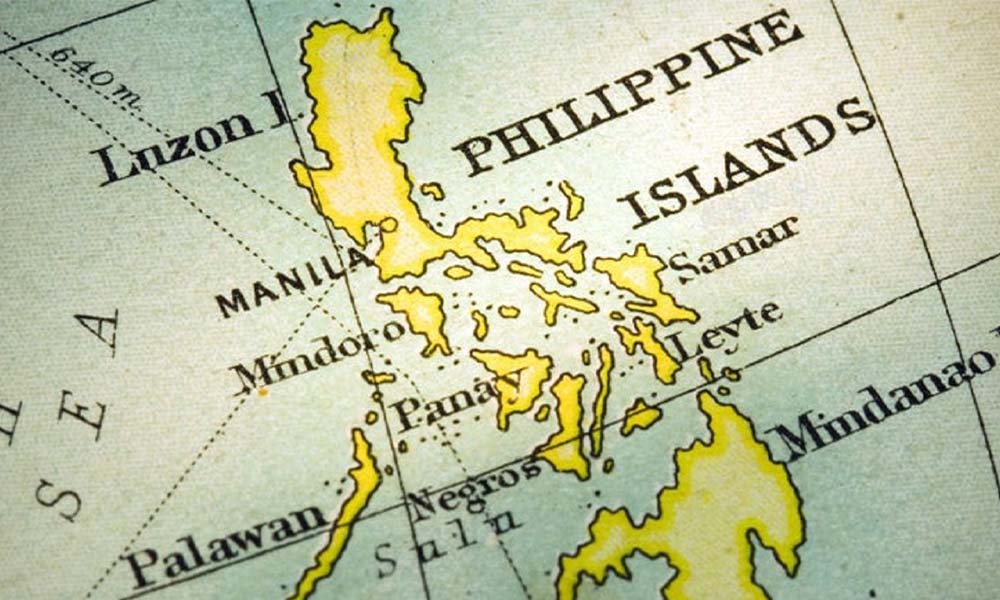
Further south sits the Philippines, the southern gate. Not by ambition, but by accident of geography. The archipelago straddles the maritime routes that link the South China Sea to the wider Pacific. Its exclusive economic zone overlaps with rich fishing grounds and undersea resources that matter not just economically, but politically. Who operates freely here influences trade flows, energy security, and how easily forces can move between theaters. This isn’t an abstract strategy. It’s maritime physics.
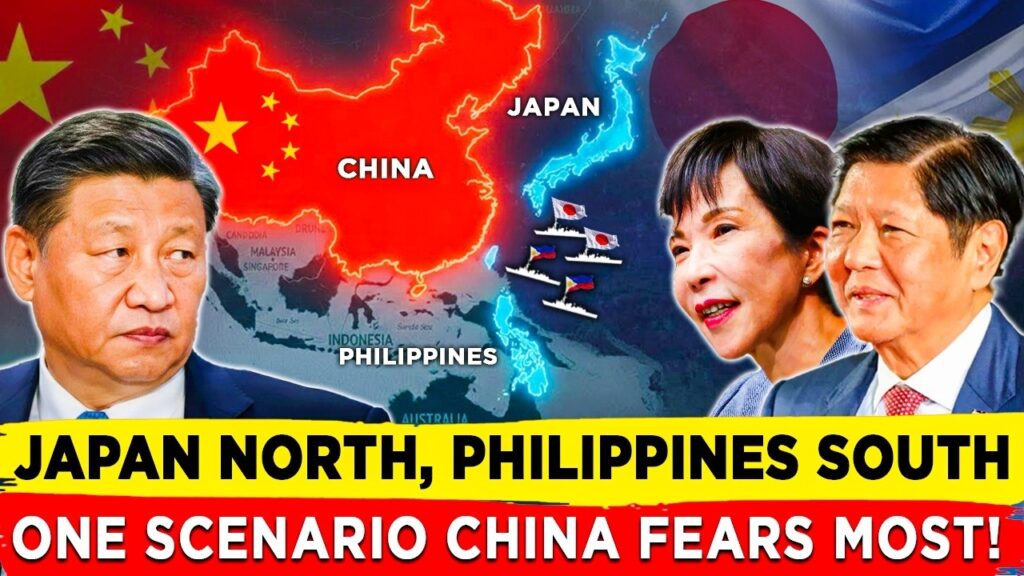
What makes this uncomfortable for Beijing is how these two positions interact. Japan in the north, the Philippines in the south. One locks, the other channels. Together, they bracket China’s maritime periphery in a way no single state can manage alone. Pressure applied to one doesn’t relieve pressure on the other. It compounds it. And here’s the quiet irony. Neither Japan nor the Philippines set out to play this role. Geography assigned it long before policy caught up. Strategy followed necessity, not the other way around.
You can argue intentions all day. You can accuse neighbors of alignment or outside influence. But at the end of it, China still has to sail through the same waters, past the same islands, under the same constraints. And those constraints aren’t going anywhere.
Different Disputes, Same Method: Incremental Pressure
Here’s the mistake Beijing keeps making: assuming these crises can be managed one at a time, neatly compartmentalized, like separate files in a drawer. Japan here. The Philippines there. Different histories, different legal arguments, different tones. But the method is the same. And everyone can see it.
If the Philippines Gets Meteor Missiles, the Air War Changes Overnight
Around the Senkaku Islands, Chinese coast guard vessels show up with clockwork regularity. Not in armadas. Not with missiles. Just enough ships, just often enough, to remind Japan they’re there. The incursions are calibrated, frequent, non-lethal, persistent. The goal isn’t to fight. It’s to normalize presence. To make yesterday’s red line feel like today’s background noise. That approach works only if the other side gets tired first.
Japan didn’t. Instead, Tokyo expanded coast guard deployments and treated the pressure as permanent, not episodic. Coordination with allies deepened quietly but deliberately. Surveillance improved. Response times tightened. And, crucially, the signaling sharpened. Administrative control over the islands wasn’t up for discussion, and it wasn’t going to erode through repetition.https://youtu.be/bSPJcYos1nE?si=5kAgLCjRXKO6x0f0
Japanese defense planning now reflects that reality. The message, repeated in official documents and public statements, is blunt: attempts to unilaterally change the status quo by force or coercion are unacceptable. Not dramatic. Not emotional. Just firm. And this is where compartmentalization fails
What happens near the Senkakus doesn’t stay near the Senkakus. Other capitals are watching how incremental pressure is applied, and how it’s resisted. Each patrol, each close approach, each “routine” incursion adds to a shared understanding of intent. The pattern matters more than the individual incident. Beijing may see these as manageable, low-risk actions. But to its neighbors, they look like rehearsal. And rehearsals, once recognized, stop being tolerated. That’s the problem with incremental pressure. It relies on ambiguity. But the more it’s used, the clearer it becomes. And clarity, in this region, doesn’t calm things down. It hardens them.
Case Study: The Philippines and Gray-Zone Escalation
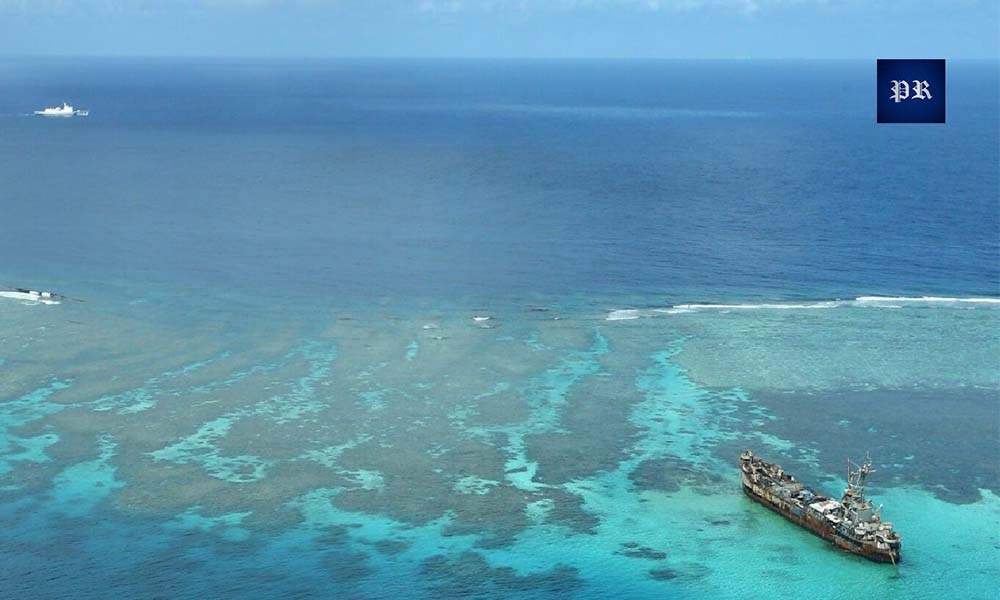
If Japan shows how incremental pressure looks in cold, methodical form, the Philippines shows what it looks like when it turns physical. In the South China Sea, the pattern is unmistakable. Water cannons fired at resupply missions. Dangerous maneuvering that leaves no room for error. Ships blocked, boxed in, shadowed for hours. Maritime militia moving in tandem with law enforcement vessels, just close enough to intimidate, just distant enough to deny responsibility. None of this targets warships. That’s the point. These actions go after civilian-linked and law-enforcement operations, the kind that are supposed to be routine, boring, non-threatening.
It’s pressure designed to stay below the threshold of war. And that’s exactly why it backfired. Manila didn’t respond with silence or restraint. It responded with exposure. Video footage released publicly. Incident timelines shared openly. “Assertive transparency,” as officials started calling it. Alongside that came legal appeals to international law and, crucially, a rapid expansion of defense partnerships that turned what were once local encounters into international reference points.
Here’s the parallel that matters: in both Japan’s case and the Philippines’, pressure was meant to be manageable precisely because it avoided open conflict. Instead, that restraint made resistance sustainable. It allowed governments to mobilize public opinion, partners, and legitimacy without triggering escalation fatigue.https://indopacificreport.com/philippines-to-hold-military-exercises-near-bajo-de-masinloc-despite-chinese-protests/
Law as a Force Multiplier — and Its Limits
The Philippines learned this lesson earlier than most. In 2016, an international tribunal ruled overwhelmingly in Manila’s favor, invalidating expansive “historic rights” claims that exceeded international maritime law. It was a landmark decision. Clear. Authoritative. Legally devastating.
And operationally insufficient. The ruling didn’t stop ships from coming. It didn’t prevent harassment at sea. It didn’t enforce itself. What it did do was clarify legitimacy, who was right, who wasn’t and leave the question of enforcement unanswered.
That gap had to be filled. With presence. With partners. With visibility. Japan reached the same conclusion, even without an arbitration ruling of that scale. Legal clarity without operational backing doesn’t freeze the status quo. It invites erosion. Slowly, quietly, but persistently. Law, it turns out, doesn’t replace deterrence. It multiplies it, if something stands behind it.https://www.youtube.com/watch?v=7ru4FlrsiNA
The Strategic Miscalculation: Treating Fronts as Isolated
This is the core error Beijing made. Both disputes were approached as bilateral. Controllable. Separable. Japan in the north, the Philippines in the south. Different histories, different audiences, different playbooks.
But coercion doesn’t stay local anymore. What followed instead was a predictable chain reaction. Transparency campaigns exposed incidents that once stayed obscure. International attention followed, drawn by clear patterns rather than isolated events. Partnerships began overlapping. Interoperability expanded across regions that weren’t supposed to connect.
And all of this unfolded in waters that matter to everyone. Roughly one-third of global maritime trade by value moves through these sea lanes. The South China Sea alone supports tens of millions of livelihoods across coastal states. You don’t disrupt that space quietly for long. What China applied locally, it triggered globally.
Why Japan and the Philippines Are Strategically Complementary
This is what turns friction into a two-front problem. Japan brings capability. Advanced naval and air forces. Deep surveillance and early-warning networks. Strategic reach and logistical capacity that anchor the northern half of the maritime theater.
Why the Philippines Is Considered the Weakest Link in the U.S. First Island Chain Policy
The Philippines brings legitimacy. Frontline exposure that internationalizes every incident. Legal authority rooted in arbitration. Geographic proximity to contested reefs and shoals where pressure is hardest to deny. Together, they form something more potent than a formal alliance strategy: one front of capability and one front of legitimacy. Capability deters escalation. Legitimacy attracts partners. Neither works as well alone. Together, they reinforce each other. And they don’t need coordination to do it.
Why This Two-Front Reality Is Hard to Reverse
Even if tensions cool tomorrow, the structure doesn’t reset. Geography stays fixed. Legal precedents don’t disappear. Defense agreements create institutional inertia. Transparency raises reputational costs that can’t be unlearned. Once disputes become internationalized, they rarely return to quiet bilateralism. Too many eyes are watching. Too many actors are invested. Too many lessons have been absorbed.
That’s the trap.
What Truly Haunts Beijing
It isn’t war. Not yet. What’s haunting is convergence. Pressure in the north strengthens resistance in the south. Responses reinforce each other without formal coordination. Deterrence logic aligns organically, not by design but by experience. China doesn’t face two enemies. It faces one pattern of behavior generating two fronts. And that’s harder to intimidate, harder to isolate, and much harder to undo. The most dangerous pressure is not opposition from one direction, but resistance that appears everywhere you push.https://youtu.be/83tErAXyq10?si=FZSYBvk7QnpB-CAJ