Why the Philippines Is Considered the Weakest Link in the U.S. First Island Chain Policy
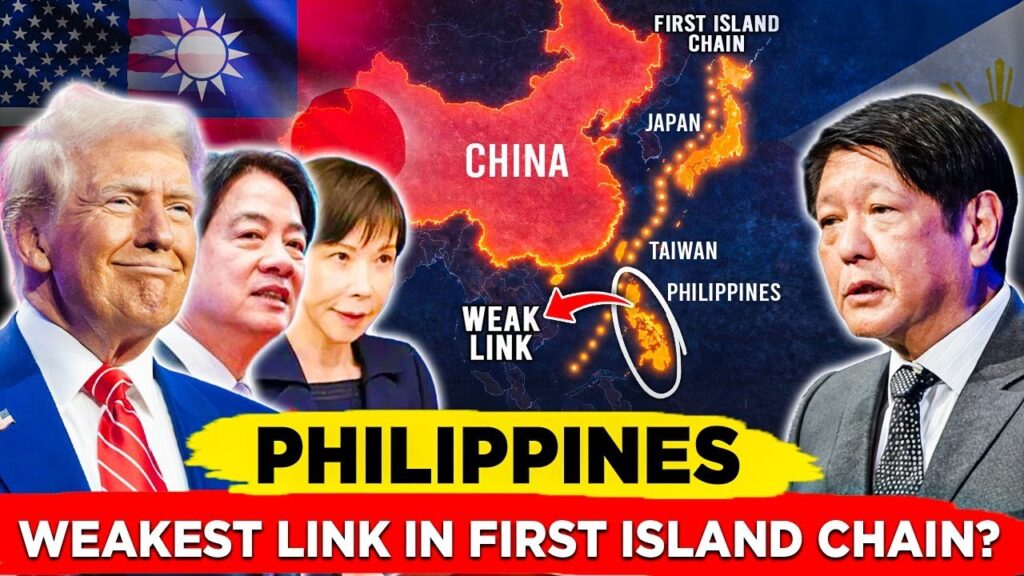
“What happens when the key gatekeeper in the Pacific can’t keep the gate?” That question haunts U.S. strategic planners as they map the First Island Chain, a critical arc of islands and maritime chokepoints stretching from Japan, through Taiwan and the Philippines, down to Borneo. This chain is more than geography; it is America’s first line of defense against China’s maritime expansion, designed to slow the People’s Liberation Army Navy, protect vital sea lanes, and provide time for allied forces to respond in a crisis.
At the heart of this chain sits the Philippines, straddling the Luzon Strait, the narrow but vital passage connecting the South China Sea to the Philippine Sea. Control here isn’t just about national sovereignty, it is about global commerce, military access, and strategic leverage. The Philippines is also a formal U.S. treaty ally under the 1951 Mutual Defense Treaty and hosts rotational U.S. forces under the 2014 Enhanced Defense Cooperation Agreement (EDCA). In theory, it should be a cornerstone of deterrence in Southeast Asia.
Yet in practice, the Philippines is often seen as the weakest link in this chain. Its political landscape is volatile, defense capabilities remain limited, governance challenges persist, and economic ties with China complicate its strategic reliability. The result is a nation with geographic significance unmatched in the region, but operational and political constraints that leave the U.S. and regional partners wary. This is not merely a question of military hardware, it is a story of policy, politics, and geography colliding in a high-stakes theater where hesitation or inconsistency could have enormous consequences

Geostrategic Value and the Strategic Paradox
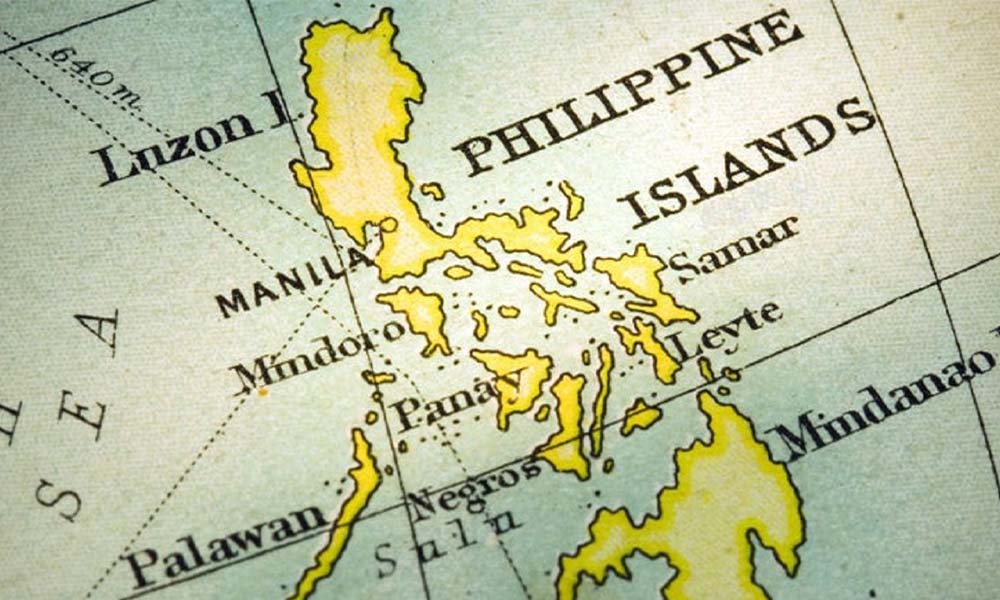
The Philippines occupies a geographic sweet spot that few nations in the world can claim. Its archipelagic chains stretch across the western Pacific, giving the country natural reach toward Taiwan, the South China Sea, and critical maritime corridors. Each island, strait, and peninsula is more than land, it is a potential platform for air, naval, and intelligence operations, capable of shaping regional access and controlling chokepoints that are vital to global trade and military mobility. Its Exclusive Economic Zone (EEZ) alone spans hundreds of thousands of square kilometers of strategically rich waters, underscoring the Philippines’ latent influence over one of the most contested maritime theaters in the world.
China Sends Warships to Counter US in South China Sea – Philippines on Alert!
The Philippines is a linchpin of the First Island Chain. The 1951 Mutual Defense Treaty binds the U.S. to defend Manila in the event of armed aggression, and the 2014 Enhanced Defense Cooperation Agreement grants rotational access at nine key sites including Basa Air Base in Pampanga and Balabac in Palawan, enabling rapid deployment and forward positioning of U.S. forces. These agreements theoretically transform the archipelago from a collection of islands into a force multiplier for allied deterrence, bridging the gap between Western Pacific powers and Southeast Asia.

hance, Manila’s operational reliability often fails to match its strategic potential. Political fluctuations, budgetary constraints, and limited defense capabilities have historically hampered the Philippines’ ability to act decisively against coercion, particularly from Beijing. The result is a striking disconnect, a nation whose location and resources could make it a keystone of regional security but whose execution leaves allies questioning its capacity to deter threats effectively. In other words, the Philippines is a treasure of geostrategic opportunity held back by the practical limits of policy and capability, a paradox that continues to complicate U.S. and allied planning in the First Island Chain.
Structural Military Weaknesses
Despite its geographic significance, the Philippines’ military posture has long struggled to match the demands of regional deterrence. For decades, the Armed Forces of the Philippines (AFP) have been oriented toward internal security and disaster response, tackling insurgencies and typhoon relief rather than preparing for external defense against a peer adversary. This focus has left gaps in core capabilities, from maritime domain awareness to integrated air defense and anti-ship systems, that are critical for projecting power or controlling contested sea lanes.

Budgetary constraints further exacerbate these limitations. According to SIPRI data, the Philippine military budget stood at roughly 1.5% of GDP in 2025, leaving little room for acquisition of modern platforms. The navy, for example, consists of only about 82 vessels, many of which are short-range, lightly armed, and ill-suited for sustained operations against a sophisticated adversary. Meanwhile, the AFP has repeatedly struggled to enforce sovereignty in contested waters. In 2025 alone, Chinese patrols reportedly blocked Philippine resupply missions to disputed features multiple times, highlighting not only tactical vulnerabilities but also a strategic inability to assert influence in its own maritime backyard.
This operational gap has left Manila heavily dependent on external guarantees for credible deterrence. While modernization programs are underway, indigenous defense industries remain nascent, and homegrown capabilities are insufficient to reliably counter Chinese coercion. In practice, the Philippines cannot enforce its sovereignty without U.S. support, forward-deployed allies, or regional partnership, a dependence that undermines its credibility as a sovereign actor in its own right. The result is a structural weakness at the heart of the First Island Chain, where geographic advantage exists but operational capability and therefore real deterrent effect, lags far behind.https://youtu.be/KnF1_utEdn8?si=4G_CtpwItY7aqHHx
Political Volatility and Strategic Ambiguity
One of the Philippines’ most enduring vulnerabilities in the First Island Chain isn’t hardware, it’s political unpredictability. Foreign policy orientation in Manila has often shifted dramatically with each administration, creating a strategic rollercoaster that allies and adversaries alike must navigate cautiously. Under the Duterte administration (2016–2022), the country leaned toward China, delaying the development of key EDCA facilities and scaling back joint patrols with U.S. forces. In contrast, the current Marcos Jr. administration has revived alliance cooperation, signaling a return to stronger ties with Washington and regional partners. This oscillation exposes a window of opportunity for Beijing, which can exploit periods of Philippine ambiguity to advance maritime claims or undermine alliance cohesion.
Domestic politics further complicate matters. Nationalist sentiment and skepticism toward foreign military presence remain strong in segments of Filipino society, generating resistance to deepening U.S. engagement or hosting larger numbers of rotational forces. Public opinion is divided, leaving policymakers constrained in how far they can commit to sustained defense initiatives without risking domestic backlash. The result is a strategic ambiguity that weakens deterrence: even with formal treaties and agreements in place, the Philippines’ political reliability is often questioned, reducing its credibility as a linchpin of regional security. In short, Manila’s domestic politics inject uncertainty into a theater where consistency is critical, reinforcing the perception of the Philippines as the “weakest link” in the First Island Chain despite its undeniable geographic and strategic importance.
Economic Dependence on China
Beyond politics and military capability, the Philippines’ position in the First Island Chain is shaped profoundly by economic realities. China is not only a major trading partner but also a critical source of investment and infrastructure financing. Initiatives such as the Belt and Road Initiative have channeled billions into Philippine roads, ports, and energy projects, creating tangible incentives for Manila to avoid direct confrontation with Beijing. Critical sectors, ranging from energy and agriculture to manufacturing and maritime commerce, are closely tied to Chinese markets, making economic disruption a potent tool of leverage.https://indopacificreport.com/philippines-kf-21-boramae-acquisition/
This economic dependence translates directly into strategic hesitation. Philippine leaders are often caught in a balancing act: pursuing closer security ties with the U.S. while simultaneously maintaining economic engagement with China. Even when formal treaties and defense agreements are in place, this duality can dilute strategic clarity, leaving allies uncertain about Manila’s willingness or ability, to act decisively in a crisis. In effect, economic leverage constrains military and diplomatic options, reinforcing perceptions of the Philippines as the “weakest link” in the First Island Chain despite its geostrategic potential.
South China Sea Challenges
Even with the 2016 Permanent Court of Arbitration ruling affirming Philippine maritime rights, Manila has struggled to enforce its claims. Chinese gray-zone tactics including harassment by maritime militia and repeated coast guard blockades, have exploited the Philippines’ limited capacity to impose costs. These operations deliberately remain below thresholds that would trigger formal U.S. defense commitments, allowing Beijing to pressure Manila without risking direct confrontation. As a result, Philippine patrols often face dilemmas of presence versus vulnerability, with attempts to assert sovereignty repeatedly undermined by superior numbers, speed, and coordination of Chinese assets. This gray-zone vulnerability highlights a structural weakness: geographic significance alone does not guarantee control or influence. Even in its own EEZ, the Philippines cannot fully deter or punish incursions, leaving sovereignty assertions contingent on external backing and reinforcing its perception as the “weakest link” in the First Island Chain.
Alliance Management Problems
Manila’s strategic role is further complicated by trust deficits and operational constraints within the U.S. alliance. Historical grievances, including the closure of U.S. bases in the early 1990s and doubts about American commitment under shifting administrations fuel skepticism, while Chinese information operations actively amplify public doubts about U.S. reliability.
Even with the EDCA designating nine sites, permanent stationing of U.S. combat forces is prohibited, and infrastructure limitations constrain rapid force projection. While joint exercises, such as the seventh annual maritime cooperative drills in 2025, signal improving cooperation, Manila remains less operationally robust than counterparts like Japan and Taiwan, whose Self-Defense Forces and asymmetric defense initiatives offer stronger funding, strategic clarity, and deterrent credibility.
Internal Security and Governance Constraints
Domestic challenges also siphon away critical resources. Persistent insurgencies from communist guerrillas to separatist movements in Mindanao demand AFP attention, diverting manpower and operational focus from external defense. Bureaucratic inefficiencies, procurement delays, and corruption further hamper modernization efforts, leaving capabilities patchy and reinforcing reliance on allies for both training and technological support.
Counterarguments: Conditional Resilience
Despite these weaknesses, the Philippines is not entirely without resilience. Under President Ferdinand Marcos Jr., EDCA sites have been expanded, military drills intensified, and the country has received significant U.S. aid, including hundreds of millions in Foreign Military Financing and defense infrastructure investments. Geography itself remains an irreplaceable strategic asset: even limited allied cooperation forces the PLA to account for Philippine territory when planning operations around Taiwan and the South China Sea. Manila’s willingness to publicize Chinese coercion also garners international legitimacy, creating strategic leverage beyond its pure military capacity. In other words, the Philippines’ weakness may be conditional and contingent, not permanent.
Strategic Implications for the First Island Chain
A weak Philippine link introduces significant vulnerabilities across the First Island Chain. One of the most immediate consequences is a reduction in maritime surveillance and denial capabilities, limiting the ability of U.S. and allied forces to detect and respond to PLA movements in real time. Gaps in monitoring and control of key sea lanes increase the risk of surprise incursions and reduce the effectiveness of early-warning systems, undermining the chain’s purpose as the first barrier to Chinese maritime expansion.

Beyond surveillance, limited Philippine capabilities also weaken early warning and power projection, constraining allied response time and operational flexibility. The ability to project force or contest contested waters depends on a credible local presence, and without it, U.S. and allied forces must operate from more distant bases, delaying intervention and reducing overall deterrence.
The burden of compensating for these gaps inevitably falls on other allies. Japan and U.S. bases in Guam and Okinawa must shoulder greater responsibility for regional monitoring, defense, and rapid response, stretching resources and complicating operational planning. This imbalance not only places additional pressure on regional partners but also highlights the strategic cost of Manila’s current vulnerabilities.
Strengthening the Philippines is therefore essential for the integrity of U.S. Indo-Pacific strategy. Achieving this requires political consistency, economic resilience, and credible military modernization, enabling Manila to contribute more reliably to surveillance, deterrence, and joint operations. Without these improvements, the southern flank of the First Island Chain risks becoming porous, undermining deterrence and potentially destabilizing the broader regional security architecture.
Conclusion: From Weakest Link to Strategic Linchpin
The Philippines’ perceived weakness is less about geography than about political inconsistency, limited capabilities, economic pressures, and governance constraints. These factors combine to reduce Manila’s operational reliability and strategic credibility, even as its location makes it indispensable to any U.S. and allied strategy in the Western Pacific.
Yet the story is not fixed. With sustained defense reform, credible investment in military capabilities, and deeper institutionalized alliance cooperation, the Philippines can evolve from a risk point to a strategic linchpin. Its islands could become the forward anchor of deterrence, a platform for maritime and aerial operations, and a force multiplier for U.S. and allied planning.
Ultimately, the future of U.S. strategy in the Indo-Pacific hinges not just on hardware or alliances, but on Manila’s ability to align its strategic intent with its strategic geography. In a theater where distance, access, and timing define power, the Philippines has the potential to transform from the “weakest link” into the chain’s most critical pivot.https://youtu.be/vmb0B9RBlnA?si=qT8dZ8H78XNYloTL