Philippines Accuses China of Piracy in the South China Sea: Incident Analysis and Strategic Implications
What does it mean when a state stops calling harassment “harassment” and starts calling it piracy? That single word choice, loaded with centuries of legal, moral, and strategic weight, is what made the latest confrontation at Second Thomas Shoal fundamentally different from the dozens of incidents that preceded it. When the Philippines publicly accused China of piracy following a violent encounter in the South China Sea, it was not merely describing an event at sea. It was signaling a shift in narrative, posture, and possibly escalation thresholds.
The incident itself followed a now-familiar pattern. Philippine vessels conducting a resupply mission to Second Thomas Shoal were confronted by Chinese maritime forces employing aggressive maneuvering, boarding actions, and the seizure of equipment. Such encounters have occurred repeatedly in recent years. What changed was Manila’s framing. By invoking piracy, a term rooted in international law and historically associated with criminal violence beyond state authority, the Philippines implicitly challenged Beijing’s attempt to normalize coercion under the guise of law enforcement and “sovereignty patrols.”
This rhetorical escalation matters because language shapes legitimacy. Most Southeast Asian states facing pressure from China have relied on calibrated, cautious phrasing: “unsafe maneuvers,” “incidents,” or “miscalculations.” Vietnam has protested; Malaysia has quietly reinforced; Indonesia has renamed waters and strengthened patrols, all while avoiding labels that could legally or diplomatically harden positions. By contrast, the Philippines has increasingly chosen clarity over ambiguity. Calling an act piracy reframes the encounter from a bilateral dispute into a question of international order, rules at sea, and collective response. China Is Watching the 9th U.S.–Philippines Patrol Very Closely!
Strategically, the episode fits squarely within China’s established pattern of gray-zone maritime coercion, the deliberate use of coast guard, maritime militia, and quasi-civilian assets to apply force without crossing the threshold of declared armed conflict. What makes this case distinct is how it intersects with alliance dynamics. Unlike many regional states, the Philippines operates under a formal mutual defense treaty with the United States, conducts regular joint patrols, and has openly aligned its maritime posture with broader Indo-Pacific deterrence efforts.
The piracy accusation, therefore, resonates far beyond the reef itself, raising questions about precedent, escalation control, and how far coercion can go before it triggers collective security mechanisms.
In that sense, Second Thomas Shoal is no longer just a rusting ship on a submerged reef. It has become a test case of narrative power, of legal framing, and of whether sustained gray-zone pressure can still hide behind technicalities when the language of international crime enters the conversation.
Factual Account of the Second Thomas Shoal Incident
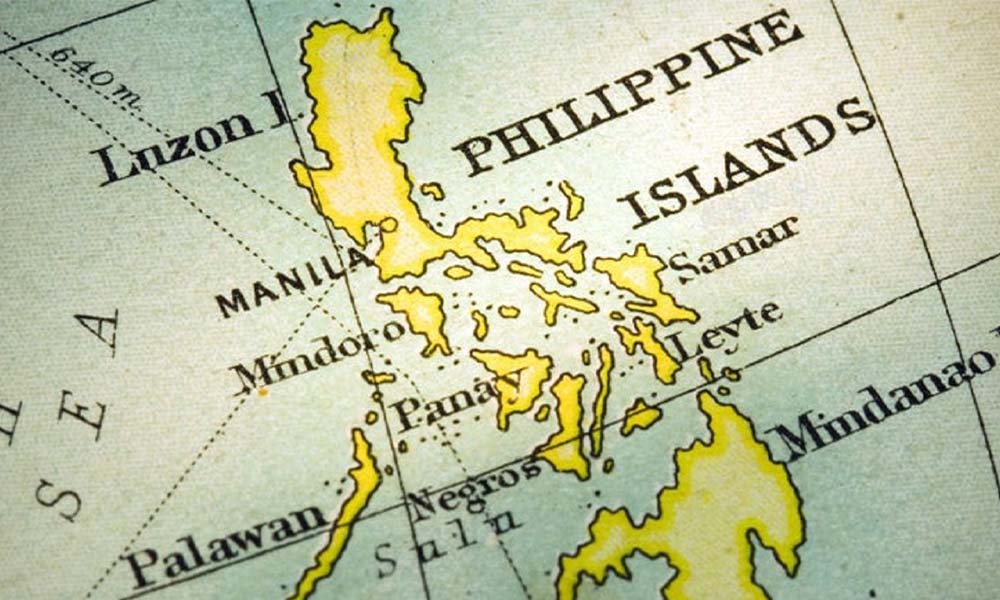
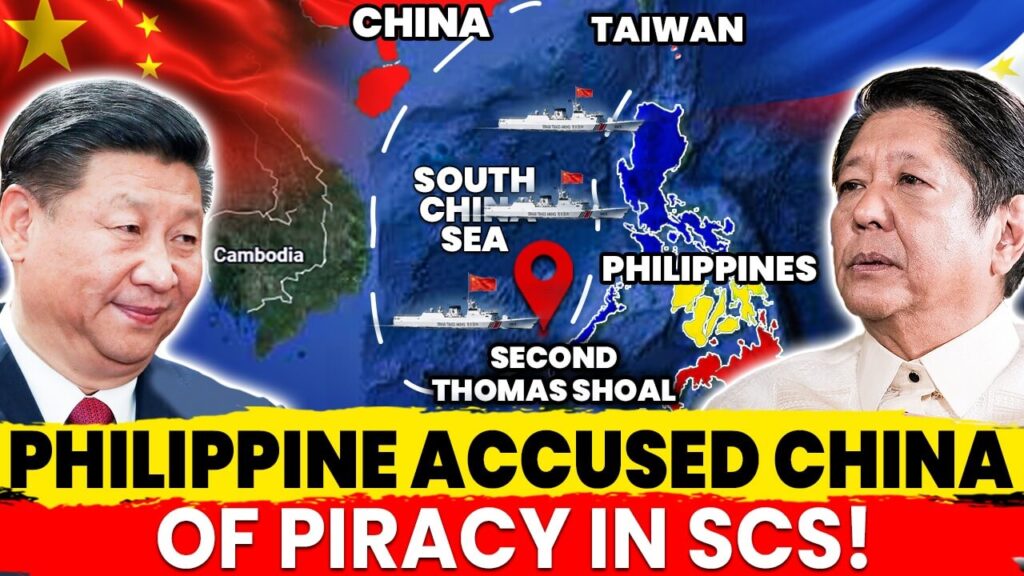
At the heart of the latest South China Sea confrontation lies Second Thomas Shoal, also called Ayungin Shoal by the Philippines, a low-lying reef roughly 105 nautical miles west of Palawan that sits well within the Philippines’ Exclusive Economic Zone (EEZ) as defined under the United Nations Convention on the Law of the Sea (UNCLOS). Manila has maintained a permanent presence there since 1999 by grounding the aging transport BRP Sierra Madre to reinforce its territorial claim, a symbolic fixture of sovereignty that China continues to contest.
On June 17, 2024, a routine rotation and reprovisioning (RoRe) mission by the Armed Forces of the Philippines (AFP) to deliver food, water, and other supplies to personnel aboard Sierra Madre devolved into violence when Chinese Coast Guard vessels aggressively intervened. According to the Philippines, Chinese personnel boarded at least one Philippine boat using cutlasses, spears, and knives, forcing Filipino sailors to defend themselves without firearms, per operational orders. Manila reports that eight Filipino personnel were wounded during the clash, including one sailor who lost his right thumb amid the melee. Philippine military leadership did not mince words.
AFP Chief General Romeo Brawner Jr. publicly characterized the episode as akin to “piracy,” stating that Chinese personnel had seized seven rifles still boxed for delivery and damaged communications and navigational equipment on the Filipino vessels. In a formal demand to Beijing, Manila later insisted on PHP 60 million in compensation for the equipment loss and the injury sustained by Seaman First Class Jeffrey Facundo, whose medical care for the severed digit was part of the total cost estimate.
From Manila’s perspective, the weapons involved were not firearms but bladed or improvised hand-held implements used by Chinese forces during boarding, showing the irregular and brazen nature of the clash that triggered Manila’s “piracy” label. Beijing, however, offered a sharply different account, rejecting Manila’s narrative as “distorted” and insisting that Chinese actions were “reasonable, lawful, professional, and restrained,” even as its coast guard continued patrols in contested areas. Philippines KF-21 Boramae Acquisition
In the immediate aftermath, the Philippine Coast Guard and Navy bolstered their presence around Second Thomas Shoal, deploying additional vessels and conducting more frequent patrols to deter further interference, moves the AFP described as necessary to uphold navigation rights and protect Filipino personnel operating in waters Manila considers sovereign.
This incident did not occur in isolation. It fits into a broader pattern of maritime confrontations between the two countries, ranging from water-cannon engagements against Filipino fishing boats in December 2025 to repeated blocking and collision incidents near Scarborough Shoal and other contested features of the South China Sea.
Second Thomas Shoal as a Recurrent Flashpoint
To understand why tensions keep boiling over at Second Thomas Shoal, you have to stop thinking of it as just a reef on a map. It sits inside the Spratly Islands, one of the most hotly contested island systems in the world, and just a short distance from major sea lanes that carry trillions of dollars in trade through the South China Sea every year. Control here is not symbolic; it shapes who watches, who moves, and who decides what is “normal” at sea.
For the Philippines, the shoal is deeply personal. Since 1999, Manila has maintained a constant presence through the grounded BRP Sierra Madre, a rusting World War II–era vessel deliberately run aground and turned into a living outpost. Filipino Marines rotate through harsh conditions, relying on periodic resupply missions for food, water, and medicine. Every successful run is quiet proof that the Philippines is still there. Every blocked mission feels like a test of resolve.
How the Philippines Is Building a Missile Wall Against China
That is where the pattern begins. Time after time, Chinese vessels have attempted to block, shadow, or physically disrupt Philippine resupply efforts. These are rarely dramatic naval battles. Instead, they unfold as tense standoffs at close range, ships cutting across bows, engines throttling forward, horns blaring, crews shouting across decks. The objective is not to sink a ship, but to exhaust, intimidate, and normalize interference without firing a shot.
Since 2021, the Philippine Coast Guard has done something unusual in maritime disputes: it has turned cameras outward. Video after video released by the PCG shows Chinese vessels using water cannons, executing dangerous close-quarter maneuvers, and deliberately obstructing Philippine boats on humanitarian and military resupply missions. These clips matter because they strip away abstraction. You see sailors knocked off balance by high-pressure water jets. You hear engines straining as hulls pass within meters of collision. It is pressure made visible.
What makes Second Thomas Shoal different from other disputed features is repetition. This is not a one-off crisis that fades from headlines. It is a cycle, resupply planned, interference anticipated, confrontation likely. Each encounter builds on the last, slowly raising stakes while testing how much friction can be applied before something snaps. Over time, the shoal has evolved from a static claim into a living stress test of endurance, credibility, and deterrence in the South China Sea. In short, Second Thomas Shoal is not dangerous because of what it is, but because of what keeps happening there, again and again, in plain sight.
Legal Context — Why the Philippines Used the Word “Piracy”
Under international law, piracy has a very specific meaning. The United Nations Convention on the Law of the Sea defines it as violent acts committed for private ends on the high seas, typically by non-state actors, classic criminals, not uniformed personnel flying a national flag. By that strict definition, confrontations involving state-affiliated forces usually fall outside the legal box labeled “piracy.”
That is where the complexity and the intent, comes in. When Chinese coast guard or maritime personnel act under state authority, their actions are normally classified as law-enforcement activity, however aggressive or disputed. Legally speaking, that makes the Philippines’ piracy label difficult to sustain in a courtroom sense. But Manila was not arguing a case before judges. It was speaking to an audience far larger than any tribunal.

In practice, the term piracy functions less as a legal charge and more as a strategic signal. It strips away technical language and reframes the incident in moral terms that are immediately understood: violence at sea, seizure of property, injury to sailors. It challenges the idea that such behavior can be dismissed as routine patrols or administrative enforcement. In one word, the Philippines recast coercion as criminality.
The objective is clear. By using language that resonates beyond bilateral diplomacy, Manila seeks to internationalize the incident, to push it out of the narrow frame of a Philippines–China dispute and into the broader conversation about maritime norms, freedom of navigation, and acceptable conduct at sea. Whether or not “piracy” holds up legally, it succeeds rhetorically by forcing the world to ask a sharper question: when does enforcement stop looking like law and start looking like force?
China’s Maritime Enforcement and Gray-Zone Operations
China rarely leads with gray hulls and naval guns. Instead, it sends white ships. The primary instruments of pressure in contested waters are not the navy, but the China Coast Guard and a vast network of maritime militia, vessels that look civilian, behave aggressively, and operate in the space between peace and war. This is not accidental. It is design.
The tactics are now well established. Chinese vessels block approaches, shadow targets at close range, board foreign boats, interfere with equipment, and maintain a constant presence that wears opponents down over time. These encounters are calibrated to stay just below the threshold that would justify a military response, while still imposing real physical and psychological pressure on crews at sea. No missiles. No declarations. Just relentless friction.
This approach is backed by scale. The China Coast Guard operates the largest coast guard fleet in the world, including multiple mega-cutters exceeding 10,000 tons, larger than many countries’ frigates. Their size is not just symbolic. It allows Chinese ships to intimidate smaller vessels simply by proximity, to absorb collisions, and to dominate contested spaces without ever firing a shot. Presence becomes power.
Crucially, the Philippines is not alone in facing this playbook. Similar patterns have played out against Vietnam in the Spratlys, Malaysia near offshore energy blocks, and Indonesia around the Natuna Islands. In each case, China frames its actions as routine enforcement, while regional states experience them as sustained coercion. How the Philippine Army’s 10th Infantry ‘Agila’ Division Is Rewriting AFP Strategy
These operations reveal the logic of China’s gray-zone strategy: reshape behavior, redefine norms, and expand control, not through sudden escalation, but through repetition. The danger lies not in any single incident, but in what happens when constant pressure becomes accepted as the new normal.
Philippine Policy Response and Defense Posture
For years, Manila tried quiet diplomacy. It avoided cameras, softened language, and handled incidents through back channels. That approach has now clearly changed. The Philippines has embraced transparency as a tool of defense, publicly releasing incident footage, photographs, and detailed briefings after confrontations at sea. By showing what its crews face in real time, Manila is no longer asking the world to take its word, it is putting evidence on the table.
This shift did not happen in a vacuum. The loss of effective access to Scarborough Shoal in 2012 was a turning point. Filipino fishermen were gradually pushed out, patrols were blocked, and control slipped without a single shot being fired. That experience left a lasting imprint on policymakers and the public alike: silence and ambiguity did not preserve access. Visibility mattered.
Operationally, the response has been steady rather than dramatic. The Philippine Coast Guard and Navy have increased patrol frequency in contested waters, while the Armed Forces of the Philippines have expanded maritime domain awareness, using radar, satellite tracking, aerial surveillance, and allied information-sharing to reduce blind spots at sea. The goal is simple but critical: know who is where, doing what, and record it.
Public opinion has moved in parallel. Repeated national surveys show consistently high domestic support for defending maritime claims and for closer security cooperation with allies, particularly the United States. For many Filipinos, the issue is no longer abstract geopolitics; it is about fishermen blocked from traditional grounds, sailors injured on routine missions, and sovereignty tested in plain sight.
The Philippine response reflects a hard-earned lesson. Deterrence is not only about ships and treaties; it is about narrative control, persistence, and public backing. By pairing transparency with steady operational pressure, Manila is signaling that it will no longer manage maritime disputes quietly and that endurance, not silence, now defines its posture.
Alliance Considerations and the United States
For the Philippines, every confrontation at sea now carries an alliance calculation. The Mutual Defense Treaty with the United States has existed for more than seven decades, but its relevance has never felt more immediate. In 2023–2024, Washington repeatedly and explicitly reaffirmed that the treaty applies to armed attacks on Philippine forces in the South China Sea, including coast guard and public vessels. That clarity matters. It narrows gray areas and raises the cost of miscalculation.
Cooperation has followed rhetoric. The two allies now conduct joint patrols, expand intelligence sharing, and operate under widened access arrangements through the Enhanced Defense Cooperation Agreement. Importantly, this is not about permanent U.S. bases. The emphasis is on rotational presence, interoperability, and speed, being able to operate together seamlessly when pressure rises. Deterrence here is subtle: not a flag planted, but a signal constantly reinforced.
Regional and ASEAN Implications
Across Southeast Asia, the Philippines is being watched closely. Other claimant states, Vietnam, Malaysia, and Indonesia, understand that what happens to Philippine vessels today could happen to theirs tomorrow. The concern is not a single clash, but the normalization of coercion: aggressive actions slowly becoming routine, unremarkable, and therefore tolerated. Yet regional responses remain constrained. ASEAN operates on consensus, a structure that prizes unity but limits decisive collective action.
As a result, responses tend to be cautious, fragmented, and national rather than regional. This creates a dangerous gap, where pressure accumulates at sea faster than institutions can respond. The risk is not sudden war, but incremental escalation, one low-level confrontation at a time.
China’s Official Position
Beijing has categorically rejected the Philippines’ accusations. Its position is consistent and carefully maintained: Chinese forces are operating within what China claims as its maritime jurisdiction, while Philippine missions are framed as deliberate provocations. In this narrative, China is enforcing order; others are destabilizing it.
10 Chinese Ships vs 1 Philippine Vessel How Beijing Turns Aggression Into “Routine Patrols”
Equally consistent is Beijing’s opposition to external involvement. The United States, in particular, is portrayed as an outside agitator turning local disputes into strategic flashpoints. This is not just diplomacy, it is information warfare. Competing narratives are aimed at different audiences: reassurance at home, justification regionally, and deflection internationally. Control of the story is treated as seriously as control of the sea.
Escalation Risks and Operational Challenges
The most dangerous factor in the South China Sea today is proximity. Ships maneuver within meters. Crews interact face-to-face. Tensions play out in real time, often without robust incident-prevention or crisis-management mechanisms to slow things down. In gray-zone operations, ambiguity is a feature but it is also a liability.
The risks are painfully human. An injury. A collision. A panicked reaction. An improvised weapon used a second too late or too early. None of these requires intent to escalate. They only require exhaustion, fear, or misjudgment. In such an environment, de-escalation becomes harder precisely because nothing officially counts as “war.”
Strategic Outlook
In the short term, pressure at Second Thomas Shoal is unlikely to ease. Philippine resupply missions will continue, and Chinese interference is likely to persist. Neither side can afford to blink without signaling weakness. In the medium term, Manila will lean even more heavily on alliance support, transparency, and legal-diplomatic signaling. The goal is endurance, keeping claims alive, costs visible, and norms contested rather than surrendered. The long-term challenge is deeper.
Can deterrence based on presence, publicity, and partnerships remain sustainable without binding regional enforcement mechanisms? Or does prolonged gray-zone pressure eventually erode even the most carefully calibrated responses?