Philippines and Taiwan maritime security cooperation amid Rising Regional Tensions
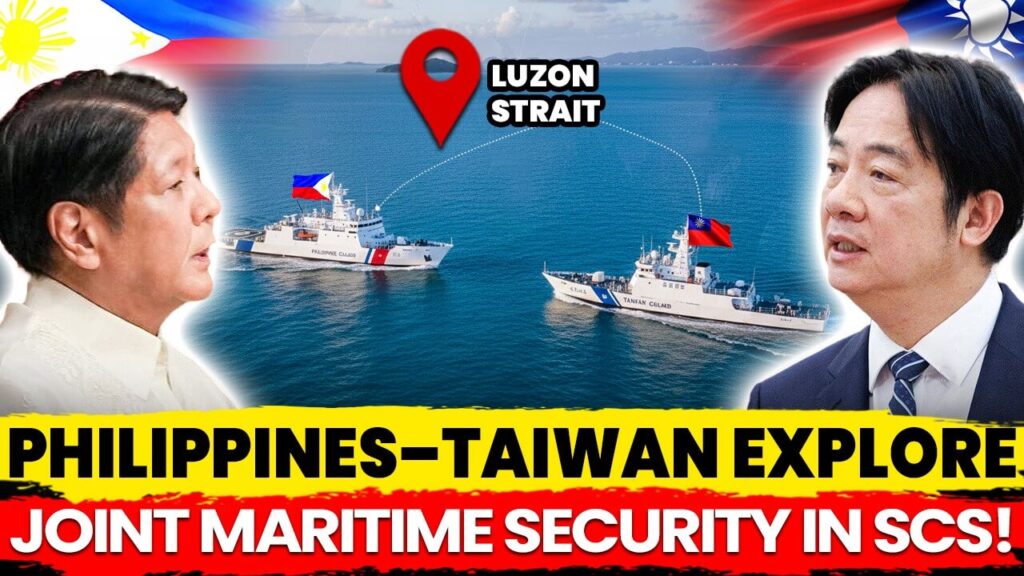
What looked like a low-key technical meeting in Manila between the Philippine Coast Guard and Taiwan’s Coast Guard Administration was, in reality, a quiet signal of how frontline states are adapting to a rapidly hardening maritime environment across East Asia. The discussions, focused on intelligence sharing, training, and capacity-building, were deliberately framed as non-political, yet they unfolded against a backdrop of unprecedented Chinese pressure in both the South China Sea and the Taiwan Strait.
In the weeks surrounding the meeting, Chinese coast guard vessels intensified harassment of Philippine resupply missions near Ayungin Shoal using water cannons and close-quarter maneuvering, while the PLA simultaneously conducted large-scale joint air-sea drills around Taiwan, repeatedly crossing the median line and rehearsing blockade scenarios. The simultaneity is not incidental; it reflects a single, integrated pressure strategy that treats Manila and Taipei not as separate theaters, but as linked nodes along the First Island Chain.
This is precisely why the PCG–CGA engagement matters. Rather than responding with overt naval coordination, which would invite escalation and diplomatic backlash, the Philippines and Taiwan are aligning at the level where China is actually applying force: coast guards, law-enforcement authorities, and administrative control at sea. Beijing’s gray-zone playbook relies on the normalization of coercion through “routine patrols,” maritime militia swarms, and legal narratives that blur the line between peace and conflict.
By strengthening coast-guard cooperation, Manila and Taipei are matching form with form, countering pressure without crossing thresholds that could justify military retaliation. This is not alliance-building in the traditional sense; it is operational alignment designed to deny China uncontested control of the maritime gray zone.
The approach mirrors a broader regional shift. Japan has doubled down on coast guard coordination with the Philippines and Vietnam, recognizing that most confrontations now involve white-hulled ships rather than destroyers. Indonesia and Australia emphasize joint patrols and maritime domain awareness to maintain presence without provocation.
Even smaller states are prioritizing legal enforcement, surveillance integration, and information sharing over headline-grabbing naval deployments. What sets the Philippines–Taiwan channel apart is its strategic geography: together, they anchor the southern and central arcs of the First Island Chain, meaning coordination between them directly complicates China’s ability to compartmentalize pressure and isolate targets.
This quiet Manila meeting signals a transition from isolated national responses toward a loosely networked maritime deterrence architecture, one that relies on coast guards as the first line of resistance, information as the decisive currency, and legitimacy as a strategic weapon. It does not announce itself with treaties or task forces, but it reshapes the operational environment all the same.
In an era where control is asserted not through battle but through repetition, presence, and administrative pressure, these understated linkages may prove more consequential than any single naval deployment.
Strategic Context — Two Flashpoints, One Connected Battlespace
The strategic backdrop to the Philippines–Taiwan coast guard engagement is defined by the convergence of two maritime flashpoints that are increasingly operating as a single, connected battlespace rather than isolated crises. In the South China Sea, the Philippines has faced an unprecedented surge in Chinese coercive activity over 2024–2025, with Manila documenting well over one hundred harassment incidents involving the China Coast Guard and maritime militia.

These encounters have included high-pressure water-cannon attacks against Philippine resupply missions, deliberate ramming maneuvers, close-in shadowing designed to force course changes, and the use of military-grade lasers to temporarily blind bridge crews. What makes this pressure structurally dangerous is not just its frequency, but its institutional backing. China now fields the world’s largest coast guard, with more than 150 large patrol vessels, many displacing over 10,000 tons, larger than most Southeast Asian naval frigates and increasingly armed, hardened, and integrated into joint operations with the PLA Navy and maritime militia forces.
At the same time, the Taiwan Strait has entered a phase of near-constant operational stress. Taiwan’s Ministry of National Defense reports almost daily PLA Navy, PLA Air Force, and China Coast Guard activity in and around the strait, often involving coordinated multi-ship and multi-domain formations. Median-line crossings, once rare and politically sensitive, have become routine.
Critically, China has begun relying more heavily on coast guard vessels to assert presence and jurisdictional claims, allowing Beijing to normalize operations that would otherwise appear escalatory if conducted solely by naval combatants. This shift mirrors tactics seen in the West Philippine Sea, where “law enforcement” framing is used to recast coercion as administration.
The key insight is that these pressures are not occurring in parallel by coincidence. They represent two pressure points within a single Chinese maritime strategy aimed at reshaping control along the First Island Chain without triggering outright conflict. By applying sustained, calibrated pressure through coast guards rather than navies, Beijing seeks to exhaust opponents politically, operationally, and psychologically, forcing them to choose between acquiescence and escalation. Japan Plans to Export Military Command & Control System to the Philippines
From this perspective, the South China Sea and the Taiwan Strait are operationally linked: success in normalizing dominance in one theater reinforces legitimacy claims and tactical confidence in the other. It is this recognition, that resistance must also be connected and coordinated that explains why Manila and Taipei are quietly aligning their coast guard responses. In a gray-zone contest defined by presence, repetition, and legality, fragmentation favors the pressure-applier; coordination favors the defender.
The Luzon Strait — Why Geography Forces Cooperation
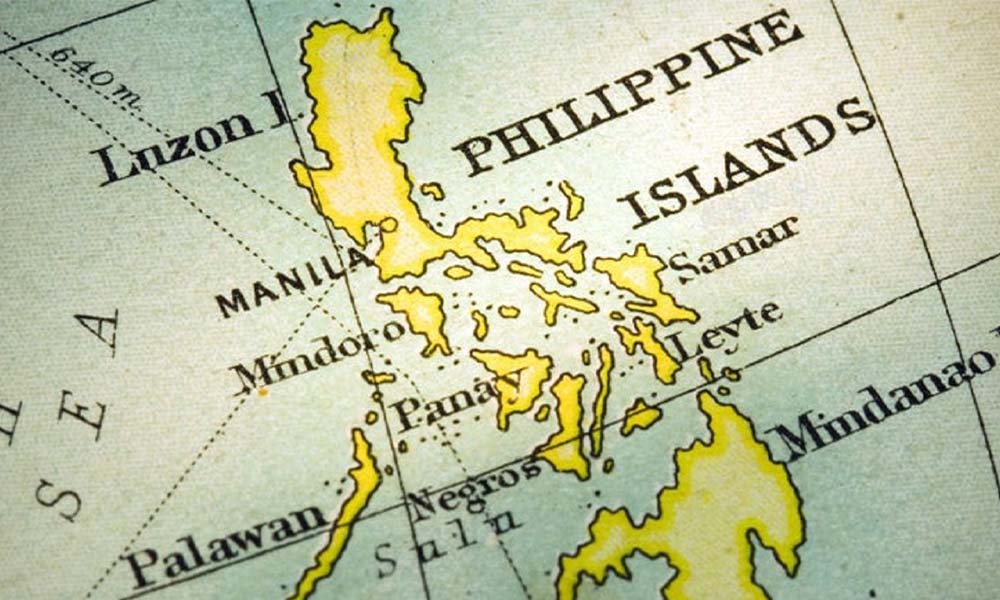
The Luzon Strait is the geographic hinge that makes separation between the South China Sea and the Taiwan Strait increasingly artificial, and it is precisely this geography that compels closer cooperation between the Philippines and Taiwan, regardless of political sensitivities. Sitting between northern Luzon and southern Taiwan, the strait forms the primary maritime corridor linking the South China Sea to the Philippine Sea and the wider Western Pacific.

For the PLA Navy, it is one of the most critical breakout routes for submarines and surface combatants seeking to evade containment inside the First Island Chain and operate freely in the open Pacific. For the United States and its allies, the same waters are indispensable for naval maneuver, reinforcement flows, and sustained operations across multiple theaters. Layered on top of this military reality is the strait’s economic and digital importance, carrying major global shipping lanes and hosting dense networks of undersea communication cables that underpin regional trade, finance, and connectivity.
This strategic value translates into an unavoidable operational reality for Manila. Any contingency involving Taiwan, whether a blockade, large-scale exercises, or outright conflict, would immediately spill into northern Philippine waters. PLA naval and coast guard movements transiting the Luzon Strait would place pressure on Philippine maritime domain awareness, airspace management, and coastal security, while U.S. and allied forces maneuvering in response would do the same.
The Philippines would not need to take sides actively to feel the effects; geography alone ensures exposure. Conversely, escalation in the South China Sea increasingly carries risks of cross-theater spillover into the Taiwan Strait, as Chinese forces operate with growing confidence and integration across both zones, blurring once-distinct operational boundaries.
This is why coast guard coordination between the Philippines and Taiwan is not merely optional or symbolic, but structurally necessary. Both sides monitor overlapping waters, face the same “law-enforcement”–driven pressure tactics, and confront the same challenge of maintaining sovereignty and safety without triggering escalation. As Gregory Poling of CSIS has noted, geography ensures that the Philippines cannot remain a bystander in a Taiwan crisis.
The Luzon Strait removes the luxury of strategic compartmentalization; it binds Manila and Taipei into a shared security environment where awareness, communication, and coordination become prerequisites for stability rather than political statements. In this sense, cooperation is not about alignment, it is about managing a reality imposed by maps, sea lanes, and the immutable logic of maritime geography.
What the Manila Talks Covered — Substance Beneath the Silence
Beneath the deliberately restrained public framing, the Manila talks between the Philippine Coast Guard and Taiwan’s Coast Guard Administration focused on practical cooperation areas that directly address the mechanics of gray-zone pressure at sea. At the core of the discussions was intelligence and information sharing, particularly in the realm of maritime domain awareness.
Both sides face the same operational challenge: identifying, tracking, and interpreting the behavior of coast guard and maritime militia vessels that operate aggressively yet remain just below the threshold of open conflict. Can Japan and the Philippines Really Deter China?
Vessel tracking, pattern-of-life analysis, and the early identification of anomalous or coercive behavior are essential to countering tactics designed to appear routine while gradually shifting control. Improving early warning of gray-zone activities allows coast guards to respond faster, document incidents more effectively, and reduce the risk of tactical surprise.
Capacity-building formed the second pillar of the talks, reflecting a shared understanding that deterrence in contested waters is as much about professionalism and readiness as it is about hull numbers. Training exchanges were discussed to improve boarding procedures, command-and-control practices, and coordination under stress, while search-and-rescue cooperation addressed a politically neutral yet operationally vital mission that often intersects with confrontations at sea.
Law-enforcement best practices in disputed or sensitive waters were also a key focus, particularly how to uphold safety, evidence collection, and legal credibility while operating under persistent harassment. In gray-zone contests, legitimacy is a force multiplier, and coast guards that act consistently, transparently, and within recognized norms are better positioned to counter coercion without escalation.
The talks also addressed operational coordination, especially the need for reliable crisis communication channels and incident-response protocols near shared sea lanes. Miscalculation remains one of the greatest risks in congested maritime environments like the Luzon Strait and adjacent waters.
Clear lines of communication, agreed procedures for close encounters, and shared expectations for de-escalation are essential to preventing localized incidents from spiraling into broader crises. These mechanisms are not about conducting joint operations in public view, but about ensuring predictability and control when pressure intensifies.
Equally important is what the Manila talks did not include. There was no public announcement of joint patrols, no alliance language, and no formal security pact. This strategic ambiguity is not a weakness; it is intentional design. The approach closely mirrors existing coast guard cooperation models between Japan and the Philippines, as well as Vietnam and the Philippines, where capability development and quiet coordination precede any overt signaling.
By prioritizing substance over symbolism, Manila and Taipei are building operational resilience first, while leaving strategic messaging flexible. The logic is clear: strengthen capacity now, normalize coordination quietly, and preserve the option to signal more openly later if circumstances demand it. In a gray-zone environment where escalation is often triggered by perception rather than intent, silence, when paired with capability, can be a strategic asset.
China’s View — Why This Cooperation Matters to Beijing
From Beijing’s vantage point, the significance of coast guard cooperation between the Philippines and Taiwan lies less in its immediate tactical impact and more in the strategic costs it introduces over time. China’s gray-zone strategy depends heavily on informational asymmetry and selective pressure, applying force incrementally, in fragmented theaters, and against individual targets that can be isolated politically and operationally.
Quiet coordination between Manila and Taipei directly complicates this approach. Expanded surveillance and information-sharing across the Luzon Strait and adjacent waters increase the likelihood that Chinese coast guard and maritime militia movements are tracked, documented, and contextualized as part of a broader pattern rather than dismissed as isolated incidents. This raises the risk that coercive actions intended to appear routine are instead exposed as deliberate and coordinated pressure.
More importantly, cooperation reduces China’s ability to compartmentalize its targets. Beijing has long managed maritime disputes by keeping them bilateral, pressuring the Philippines in the South China Sea, Taiwan in the strait, and Japan near the Senkaku—while insisting that each issue is unrelated to the others. When frontline actors begin sharing awareness and aligning responses, that fragmentation erodes.
Why the U.S. Wants Taiwan to Fund Philippines EDCA Military Bases?
Chinese actions in one theater can no longer be confidently assumed to remain politically contained there; pressure applied near Ayungin Shoal increasingly resonates in Taipei, just as operations around Taiwan attract scrutiny in Manila. This interconnection raises both political and operational costs, forcing Beijing to account for cross-theater consequences that its gray-zone tactics are designed to avoid.
There is also a narrative dimension that Beijing cannot ignore. China consistently frames maritime disputes as narrow, bilateral issues rooted in historical claims and domestic law enforcement. Coast guard cooperation among frontline states subtly undermines this narrative by reinforcing the perception that what is occurring is not a collection of separate disagreements, but a shared regional challenge requiring collective responses.
Crucially, this cooperation does not resemble formal containment. There are no alliances announced, no joint patrols publicized, and no overt military signaling. Instead, the optics point to regional pushback driven by necessity and geography rather than ideology or bloc politics. That distinction matters, because it makes it harder for Beijing to rally diplomatic support by portraying itself as the victim of external encirclement.
In strategic terms, coordination is precisely what China’s approach is designed to prevent. As Hal Brands has observed, China’s strategy relies on fragmentation, keeping opponents divided, hesitant, and reactive. Quiet, coast guard–level cooperation strikes at the foundation of that model. It does not confront Beijing head-on, but it steadily narrows the space in which gray-zone pressure can be applied cheaply, deniably, and without consequence.
For China, that is why even modest, understated cooperation matters: it shifts the contest from one of isolated endurance to one of shared resistance, where repetition no longer guarantees normalization and silence no longer ensures acquiescence.
Regional and Allied Implications
The implications of the Manila talks extend well beyond bilateral Philippines–Taiwan cooperation, pointing instead to a gradual integration of security practices along the First Island Chain. The PCG–CGA engagement complements an already expanding lattice of informal coordination that includes U.S.–Philippines joint maritime patrols, Japan–Philippines coast guard exercises, and Australia’s steadily increasing maritime presence in Southeast Asian waters.
What binds these efforts together is not a treaty framework but a shared operational logic: maintaining presence, awareness, and legal legitimacy in contested seas without formal alliance commitments. This trend reflects a broader shift in Indo-Pacific security toward functional networking, states cooperating where interests overlap, quietly aligning capabilities while avoiding the political costs and escalation risks associated with explicit military blocs.
For Southeast Asia, this model carries important signaling effects. It demonstrates that cooperation need not require choosing sides between major powers, nor does it demand overt alignment with U.S.-led containment narratives. Instead, it reinforces maritime law enforcement as a stabilizing mechanism, one that prioritizes safety, rules, and continuity over confrontation.
By keeping cooperation at the coast guard level, regional states preserve diplomatic flexibility while still strengthening their ability to resist coercion. This is particularly important for ASEAN members, many of whom face similar pressures but remain wary of moves that could fracture regional unity or provoke retaliation.
Constraints and Risks
At the same time, the constraints and risks surrounding this cooperation are real and persistent. Politically, Manila must balance closer coordination with Taiwan against its longstanding emphasis on ASEAN cohesion and strategic ambiguity. Any perception that the Philippines is drifting toward explicit cross-strait alignment could complicate relations with neighbors that prefer neutrality.
For Taiwan, diplomatic isolation imposes hard limits on how formal or visible such cooperation can become, forcing reliance on unofficial or technical channels that lack institutional depth. These sensitivities mean progress will likely remain incremental rather than declaratory.
Operational risks are equally significant. Gray-zone environments are inherently unstable, and closer coordination does not eliminate the danger of miscalculation during close encounters at sea. As information sharing increases, so does the risk of Chinese lawfare responses, legal, regulatory, or administrative actions designed to delegitimize cooperation or impose costs without confrontation.
There are also internal concerns about information security, particularly when intelligence sharing involves sensitive tracking data or operational patterns that could be exploited if compromised. Managing these risks will require discipline, trust, and robust safeguards, not just goodwill.
What Comes Next — From Talks to Traction
Looking ahead, the trajectory from dialogue to tangible impact is likely to follow a phased path. In the short term, progress will center on technical exchanges, professional training, and quiet intelligence coordination focused on maritime domain awareness and early warning. These steps are deliberately low-visibility but high-utility, laying the groundwork for trust and interoperability.
Over the medium term, cooperation could expand into joint training activities and more coordinated responses to incidents near shared sea lanes, particularly around the Luzon Strait, where spillover risks are highest. Over the long term, PCG–CGA coordination may be absorbed into a broader Indo-Pacific maritime security network, one that links coast guards, law-enforcement agencies, and civilian maritime authorities across the region without formal alliance structures.
The Manila talks illustrate how deterrence in the Indo-Pacific is evolving. This was not a headline-seeking move, nor an attempt to redraw strategic lines overnight. It was a pragmatic adaptation to sustained pressure, one that reflects how smaller and middle maritime states are learning to share burdens, increase resilience, and preserve stability without escalating conflict.
China’s Growing Flotilla: Satellite Images Reveal New Flashpoints in the West Philippine Sea
The deeper lesson is that deterrence today is no longer defined solely by firepower or visibility. It is increasingly distributed across networks, built through coordination rather than confrontation, and led as much by civilian maritime institutions as by navies. In this environment, quiet cooperation is not a weakness; it is the strategy.