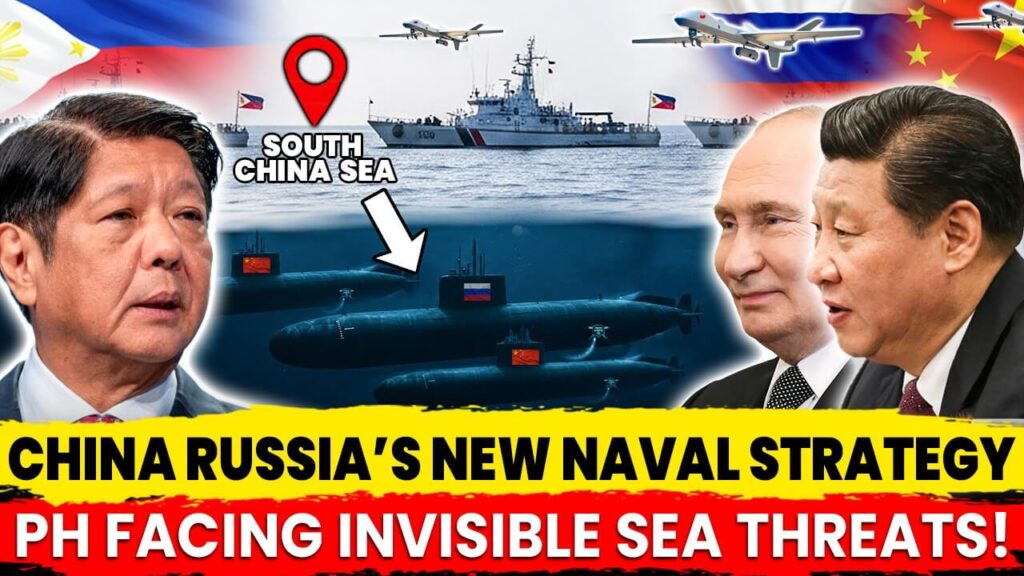
Russia and China Deploy Drones and Submarines as the Philippines Faces New Sea Threats
War at sea no longer announces itself with fleets on the horizon or cannons over open water. Today’s most consequential maritime weapons often remain invisible, slipping beneath waves, loitering silently for weeks, or operating autonomously without flags, radio calls, or crews. Power is no longer measured only in hulls and tonnage, but in sensors, algorithms, and the ability to strike or survey without ever being seen.
Across Asia, this quiet transformation is accelerating. China is rapidly expanding its use of maritime drones, unmanned surface vessels, and increasingly capable submarine forces to reshape control of contested waters without triggering open conflict. At the same time, Russia, hardened by confrontation with NATO and sustained warfare in Ukraine, is refining undersea and autonomous warfare doctrines that emphasize deniability, endurance, and asymmetric pressure. Together, these trends signal a shift in naval competition away from visible confrontation toward persistent, unseen dominance below and beyond the surface.
For the Philippines, this evolution arrives at a moment of heightened vulnerability. Already confronting relentless gray-zone pressure in the West Philippine Sea, water cannons, ramming incidents, militia swarms, and electronic harassment, Manila now faces threats that are cheaper to deploy, harder to attribute, and far more difficult to deter with conventional naval patrols. Submarines that never surface and drones that never tire transform coercion into a constant, ambient presence rather than a discrete incident.
This is the new maritime battlespace confronting the Philippines: one where escalation is measured in sensors activated, signals intercepted, and seabeds mapped rather than shots fired. In this environment, deterrence becomes murkier, warning time shrinks, and sovereignty is challenged not through invasion but through silent persistence. As one Indo-Pacific naval analyst warns, the next naval conflict will begin long before ships appear on the horizon.
THE TRANSFORMATION OF MARITIME WARFARE — FROM FLEETS TO NETWORKS
Maritime power is undergoing its most profound transformation since the rise of the aircraft carrier. For much of the 20th century, naval dominance was defined by visible strength, fleets, tonnage, missile counts, and the ability to project force through large surface combatants. That logic is now eroding. In its place is a networked model of warfare, where presence is constant, attribution is blurred, and power is exercised quietly through systems that do not need to return to port or even surface.
Drones and submarines matter today not because they are new, but because they solve three strategic problems simultaneously. They are vastly cheaper than traditional warships, allowing states to deploy them in large numbers without political or financial strain. They offer persistence, operating for weeks or months at sea, monitoring chokepoints, tracking vessels, and mapping seabeds without fatigue. And most critically, they reduce political risk. Unmanned systems enable plausible deniability, making them ideal tools for gray-zone operations that pressure rivals without crossing the formal threshold of war. A single frigate may cost billions and signal escalation; an autonomous vessel can apply pressure quietly, repeatedly, and with little accountability.
This shift has given rise to what strategists increasingly describe as an “invisible battlespace.” The decisive contest at sea is no longer confined to what radars can see or cameras can record. It unfolds beneath the surface and across vast sensor networks that fuse data from unmanned aerial vehicles scanning from above, unmanned surface vessels shadowing traffic lanes, and autonomous underwater vehicles mapping seabeds and tracking submarines. These systems operate as a web, feeding information into command centers where algorithms, not admirals on bridges, increasingly determine awareness and response. Japan–Philippines Security Ties Deepens as Manila Seeks More TC-90 Patrol Aircraft and Retired Abukuma Destroyers
In this environment, firepower alone is no longer the decisive metric of maritime strength. Sensors, data fusion, endurance, and the ability to interpret patterns over time now rival missiles and guns in strategic importance. Control of the sea is exercised not by dramatic confrontation, but by sustained observation, knowing who is present, where they move, and how long they stay. The side that dominates this invisible layer shapes the battlespace long before any crisis becomes visible to the public.
The central insight is stark but unavoidable: maritime dominance today is no longer about what you can see on the horizon. It is about what you can sense, track, and understand beneath it and how quietly you can do so without ever announcing your presence.
CHINA — DRONES AND SUBMARINES AS TOOLS OF CONTROL
China’s approach to maritime power in the South China Sea reflects a deliberate shift away from episodic shows of force toward continuous, low-visibility control. Rather than relying solely on coast guard cutters or naval task groups, Beijing is increasingly layering unmanned systems and submarines into its daily operations. These assets allow China to maintain a constant presence in contested waters while keeping escalation calibrated and ambiguity intact.
Maritime drones have become a central pillar of this strategy. China has deployed unmanned surface surveillance craft capable of long-duration patrols, as well as long-endurance unmanned aerial vehicles operating from fortified island bases across the Spratly chain. These systems are designed to loiter rather than confront. They monitor exclusive economic zones, observe chokepoints, and quietly shadow foreign vessels, collecting data, recording patterns, and signaling presence without the overt intimidation that crewed warships often provoke. By operating without crews, these platforms reduce political risk while extending China’s ability to watch, track, and normalize its activities across disputed waters.
In practice, unmanned systems increasingly operate as force multipliers for China’s coast guard and maritime militia. Observations of Chinese drones near Scarborough Shoal and throughout the Spratly Islands suggest a growing reliance on autonomous platforms to supplement patrols, cue manned vessels, and maintain surveillance even when ships rotate out of the area. This layered approach allows Beijing to sustain pressure continuously, transforming contested waters into spaces of routine observation rather than episodic confrontation.
Beneath the surface, submarines provide China with an even more powerful tool of control. Beijing has invested heavily in expanding and modernizing its fleet of diesel-electric submarines, many optimized specifically for shallow, cluttered littoral environments like the South China Sea. These boats operate quietly, exploit complex seabed terrain, and are well-suited for operations near the First Island Chain, where detection is difficult, and uncertainty works to China’s advantage. Regular patrols in these waters serve multiple roles: gathering intelligence, practicing sea-denial operations, and shaping adversary behavior through the simple possibility of unseen presence.
The strategic value of these submarines lies not in dramatic engagements, but in ambiguity. An undetected submarine alters risk calculations for every surface vessel and aircraft operating above it. For regional navies, including the Philippines, this uncertainty complicates patrols, logistics, and crisis response. China now operates one of the world’s largest submarine fleets, with a growing emphasis on quiet conventional platforms precisely because they enable influence without exposure, presence without provocation.
China’s use of drones and submarines reveals a clear strategic objective: to achieve constant maritime presence without constant confrontation. By filling contested spaces with sensors, autonomous platforms, and unseen submarines, Beijing applies sustained pressure while minimizing escalation risk and preserving deniability. Why the U.S. Wants Taiwan to Fund Philippines EDCA Military Bases?
As one regional anti-submarine warfare specialist notes, submarines allow China to shape the battlespace without ever revealing intent. In the modern South China Sea, control is no longer seized; it is quietly accumulated, day after day, beneath the surface.
RUSSIA — SUBSURFACE WARFARE AND STRATEGIC DISRUPTION
Russia’s approach to maritime power is not designed to dominate regional seas in the way China seeks to control the South China Sea. Instead, Moscow uses the undersea domain as a tool of strategic disruption, aimed less at holding territory and more at shaping global risk calculations. Submarines and autonomous systems form the core of this strategy, allowing Russia to project influence, threaten critical infrastructure, and complicate Western military planning far beyond its immediate neighborhood.
At the heart of Russia’s doctrine is a heavy emphasis on long-range strike submarines and autonomous underwater vehicles. These platforms are optimized for endurance, reach, and deniability rather than sustained presence. Russian submarines are not simply warfighting assets; they are instruments of leverage, capable of holding adversary infrastructure, sea lines of communication, and naval forces at risk without ever needing to surface. AUVs further extend this reach, enabling seabed mapping, surveillance, and potential interference with undersea cables and pipelines, targets whose vulnerability carries outsized strategic consequences.
Many of these concepts have been sharpened through operational experience. Russia’s Black Sea operations, conducted under constant NATO surveillance and constraint, have reinforced the value of stealth, ambiguity, and asymmetric disruption. At the same time, heightened awareness of NATO’s dependence on undersea infrastructure has elevated the seabed itself into a strategic domain. For Moscow, the ocean floor is no longer just terrain; it is a pressure point, where influence can be exerted quietly but globally.
While Russia’s direct naval presence in the Indo-Pacific remains limited, its strategic relevance should not be underestimated. Regular Russia–China joint naval exercises provide a mechanism for sharing operational experience, testing interoperability, and exchanging subsurface warfare concepts. These interactions allow Russian lessons in undersea disruption to flow into Chinese thinking, while reinforcing a broader narrative of alignment against U.S. and allied maritime dominance.

The cumulative effect is strategic, not tactical. Russia does not need to control Indo-Pacific waters to matter there. By cooperating with China and sustaining pressure in Europe and adjacent seas, Moscow forces the United States and its allies to divide attention, assets, and planning across multiple theaters simultaneously. This diffusion of focus is itself a form of leverage.
The reality is stark: Russia amplifies pressure not through regional dominance, but by complicating the global security environment. In an era where maritime competition is increasingly invisible and interconnected, even a limited undersea presence, combined with the right partners and doctrines, can have effects far beyond the ships and submarines actually deployed.
THE PHILIPPINES — EXPOSED IN A CHANGING MARITIME ENVIRONMENT
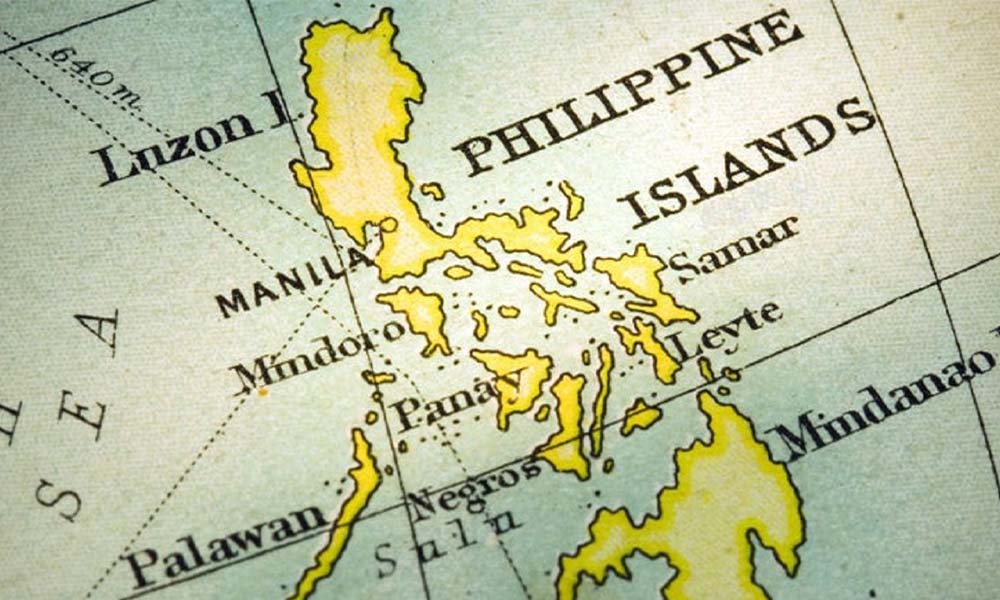
Geography has always been both the Philippines’ greatest strength and its deepest vulnerability. As an archipelagic nation straddling some of Asia’s most critical sea lanes, the country sits at the crossroads of regional trade, energy flows, and strategic movement between the Pacific and the South China Sea. Its vast maritime domain encompasses rich fisheries, vital shipping routes, and increasingly important undersea cable corridors that connect Southeast Asia to the global digital economy. Yet this same openness, thousands of islands, narrow straits, and expansive exclusive economic zones, creates an enormous surveillance and defense challenge.
That challenge is magnified by overlapping claims in some of the most contested waters on earth. Areas such as the West Philippine Sea are not only diplomatically sensitive but operationally dense, with foreign coast guard vessels, maritime militia, research ships, and now unmanned platforms operating in close proximity. In such an environment, even routine activity carries strategic meaning, and unseen systems can shape outcomes long before any surface encounter occurs.
Against this backdrop, the Philippines faces significant capability gaps in the very domains where maritime competition is shifting. Anti-submarine warfare remains limited, with few dedicated platforms capable of persistent undersea tracking. Detection of unmanned surface and underwater systems is uneven, constrained by cost, coverage, and technical complexity. Undersea domain awareness, knowing what is moving beneath the waves, where, and for how long, lags behind the growing sophistication of potential adversaries.
As a result, Manila continues to rely heavily on surface patrols, aircraft sorties, and legal and diplomatic instruments to assert its rights. These tools remain essential, but they are increasingly mismatched against threats that are quiet, deniable, and persistent. A drone that never surfaces or a submarine that is never seen cannot be challenged through radio calls, public exposure, or diplomatic protest alone.
The core challenge is stark. As maritime threats become less visible and more continuous, the cost of detection rises while the margin for error shrinks. For the Philippines, the gap between what must be monitored and what can realistically be monitored is widening, precisely as the strategic environment becomes more unforgiving. In this new era of maritime competition, absence of evidence no longer means absence of threat; it often means the opposite.
THE GRAY-ZONE DILEMMA — COERCION WITHOUT WAR
Gray-zone coercion thrives in the space between peace and conflict, and drones have become its most effective normalization tools. Continuous surveillance by unmanned systems is routinely framed as benign, administrative, or “lawful operations,” even when it occurs deep inside contested or disputed waters. Over time, constant monitoring becomes psychologically corrosive. It pressures crews, constrains maneuver, and conditions regional actors to accept persistent foreign presence as normal, without triggering the political thresholds that armed confrontation would provoke.
This form of coercion works precisely because it avoids kinetic escalation. There are no collisions to broadcast, no water cannons caught on camera, no visible damage to condemn. Instead, operational freedom erodes quietly. Fishing vessels alter routes. Patrols shorten durations. Decision-makers hesitate, not because a line has been crossed, but because the cost of constant friction accumulates. What begins as observation gradually becomes control, exercised through endurance rather than force.
Submarines deepen this dilemma by adding strategic ambiguity to an already opaque battlespace. Their presence is rarely provable in real time, yet its effects are immediate. A suspected submarine alters risk calculations for surface patrols, aircraft operations, and resupply missions, even if no contact is ever confirmed. Crucially, escalation control remains with the deploying power. The submarine’s operator decides when to reveal presence, when to disappear, and when to signal capability, leaving the targeted state reacting to shadows rather than actions.
For Manila, the implication is uniquely challenging. How does a state respond, legally, militarily, or diplomatically, to a threat it cannot publicly prove? International law, alliance politics, and domestic accountability all depend on evidence. Gray-zone tactics exploit this gap, placing the burden of proof on the very actor being pressured, while allowing the coercing power to deny intent and deflect responsibility.
VII. THE PHILIPPINE RESPONSE — ADAPTATION OVER ESCALATION
Faced with this evolving threat environment, the Philippines’ strategic answer is not escalation, but adaptation. Matching fleets ship-for-ship or submarine-for-submarine is neither feasible nor necessary. Instead, Manila’s emerging logic is asymmetric defense, prioritizing denial over dominance, and cost-imposition over numerical competition. The objective is not to control every square mile of sea, but to make contested waters increasingly difficult, costly, and politically risky for coercive operations.
This approach rests on several core adaptation pillars. First is maritime domain awareness. In a battlespace defined by invisibility, awareness becomes deterrence. Sensors, coastal radars, satellite data, unmanned systems, and fusion centers that integrate civilian and military information allow the Philippines to detect patterns, expose anomalies, and reduce strategic surprise. Seeing more, even imperfectly, shrinks the gray zone.
Second is alliance integration. Intelligence sharing, joint patrols, and integrated ISR cooperation with partners multiply Manila’s reach without requiring proportional investment. When surveillance, attribution, and response are shared, deniability weakens and coercion becomes harder to sustain quietly. Presence becomes collective rather than solitary.
Third is selective modernization. Rather than pursuing comprehensive naval parity, the Philippines is focusing on targeted capabilities with outsized deterrent effect: anti-submarine warfare to complicate undersea operations, air and missile defense to protect key nodes, and anti-ship missile systems to impose credible costs on surface aggression. These systems do not need to dominate the sea, they only need to contest it.
How the Philippines Is Building a Missile Wall Against China
Finally, legal and information warfare remain essential tools. Public exposure of coercive behavior, documentation of incursions, and strategic communication convert invisibility into reputational cost. In the gray zone, legitimacy matters, and narrative control can be as important as tactical response.
The message is clear. The Philippines does not need to match platforms or mirror adversaries system-for-system. It must instead match awareness with persistence, resilience with cooperation, and pressure with adaptability. In a maritime environment defined by quiet coercion, survival and sovereignty, depend less on visible strength than on the ability to see, endure, and respond intelligently over time.
ALLIANCES AS FORCE MULTIPLIERS
For the Philippines, alliances are not symbolic; they are operational. The United States plays a central role through joint intelligence, surveillance, and reconnaissance, including undersea monitoring that Manila cannot generate alone. EDCA sites enhance rapid response, logistics, and sustainment, turning geography into strategic depth. U.S. presence also extends deterrence by signaling that coercion does not occur in isolation.
Regional and extra-regional partners further multiply this effect. Japan and Australia contribute surveillance, training, and capacity-building, strengthening maritime awareness and resilience. European navies reinforce norms through freedom-of-navigation operations, adding diplomatic weight and international visibility. In the undersea domain, where no single state sees everything, partnerships matter as much as platforms.
ESCALATION RISKS AND STRATEGIC CALCULUS
The expansion of unmanned systems increases the risk of accidental encounters. Autonomous platforms operate persistently, often without clear signaling or reliable communication, especially underwater, raising the danger of miscalculation even without hostile intent. Narrative warfare compounds this risk. China frames its deployments as defensive and administrative, while portraying Philippine resistance as provocative. Control of the narrative shapes international perception as much as control of the water. Pressure also extends beyond the military domain. Economic retaliation, political influence, and coercive diplomacy remain integral to the broader strategy, reinforcing gray-zone pressure without firing a shot.
THE CORE QUESTION — CAN THE PHILIPPINES KEEP PACE?
Keeping pace does not mean matching technology system-for-system. It means staying adaptive as threats evolve, staying allied to reduce isolation, and staying transparent to deny coercion the cover of silence. Success lies in shrinking the gray zone, not eliminating it.
CONCLUSION — QUIET SEAS, LOUD SIGNALS
As Russia and China deploy drones and submarines, the waters around the Philippines are becoming more crowded and more dangerous, without appearing so on the surface. Maritime security will not be decided by who fields the biggest fleets, but by who sees first, reacts fastest, and stands together. In an era of invisible threats, awareness is power, and unity turns awareness into deterrence.