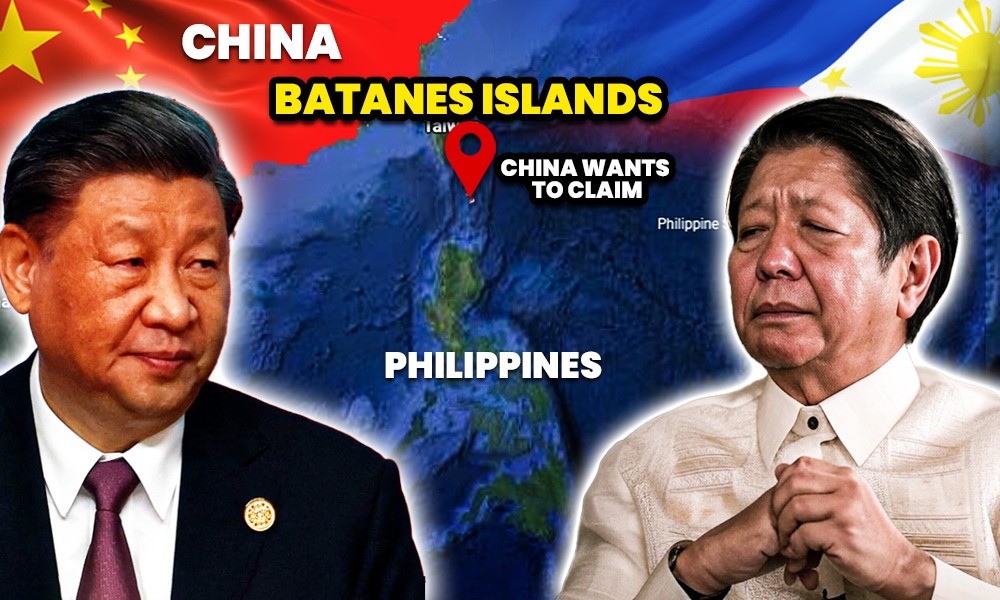
The Batanes Islands are the northernmost jewels of the Philippines, tiny, windswept, and breathtakingly beautiful. But geography is destiny. Just 200 kilometers from Taiwan, perched at the gateway of the Luzon Strait, these islands have transformed from a cultural treasure into a frontline chokepoint, a watchtower, and a potential tripwire in the Indo-Pacific.
Their significance lies in two undeniable facts: proximity to Taiwan and control of the Luzon Strait. At only 190 kilometers from Taiwan’s southern coast, Batanes is the closest Philippine territory to the island, making it a natural staging ground for military operations or humanitarian evacuations. At the same time, it straddles the Bashi Channel, a vital shipping lane and naval corridor. Whoever monitors or controls this passage can deny Chinese submarines and surface fleets freedom of movement into the Pacific.
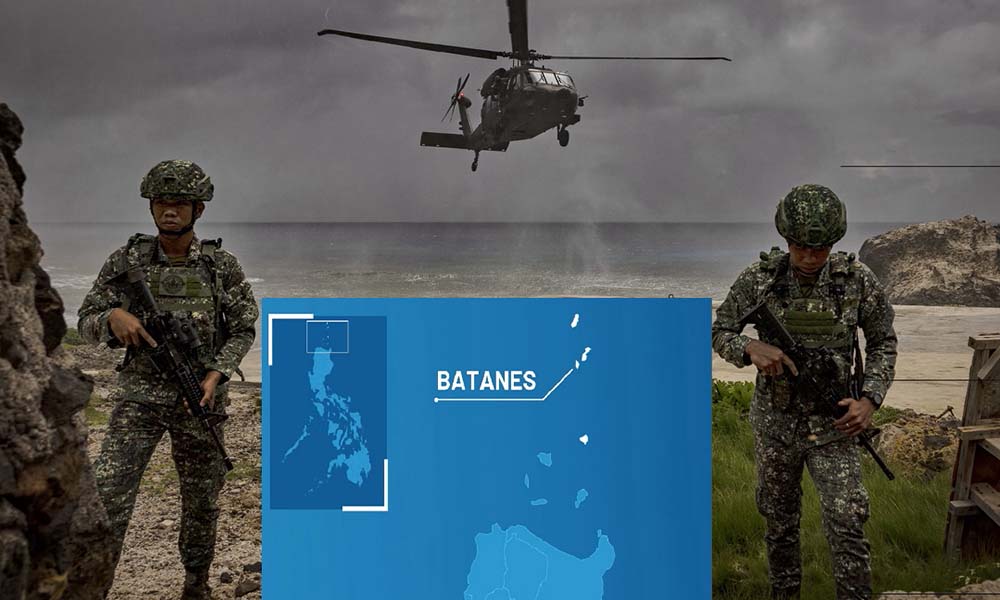
Recognizing this, the Philippines has made Batanes the spearhead of its “Comprehensive Archipelagic Defense.” New outposts, ports, and Coast Guard patrols are rising across the islands, while joint U.S.-Philippine drills are turning them into live training grounds. In 2025, for the first time, American and Filipino forces rehearsed “Maritime Key Terrain Security Operations” directly on Batan and Itbayat, deploying the cutting-edge NMESIS anti-ship missile system. Batanes is no longer passive; it is being prepared as the northern shield of the Philippines.
China, of course, has reacted. Its coast guard has escalated patrols, even bracketing the islands with three massive cutters in August 2025, a “new level of aggression,” according to analysts. Ignoring Philippine radio calls, these cutters exemplify Beijing’s gray-zone tactics, testing Manila’s resolve while stopping short of outright conflict. At the same time, China’s foreign ministry has warned Manila “not to play with fire,” while fake claims have circulated online suggesting Batanes historically belonged to China, quickly debunked by Manila as disinformation.
Looking ahead, the stakes are even higher. In a Taiwan contingency, Batanes could become a critical theater, an intelligence hub, a missile base, and perhaps a target for pre-emptive strikes. For the Philippines, this creates a delicate balancing act: strengthening its alliance with the U.S. without provoking China into economic retaliation or worse. Meanwhile, the Ivatan people, proud of their heritage, live with a quiet unease that their islands could become the frontline of a great power war.
The conclusion is clear: the Batanes Islands have entered a new era of strategic importance. Once a serene backwater, they are now a stronghold at the crossroads of power. For the Philippines, they symbolize proactive defense and sovereignty. For China, they represent a nightmare scenario, a tripwire that could drag it into direct confrontation with Manila, Washington, and the wider world. In the high-stakes rivalry of the Indo-Pacific, even the smallest islands can shift the balance of power.
The Geographical and Geopolitical Significance of Batanes
The Batanes Islands may look like tiny emeralds scattered in the sea, but their position on the map tells a much larger story. Just 190 kilometers south of Taiwan’s southern coast, they are the Philippines’ northernmost territory, closer to Taipei than to Manila. That proximity makes them far more than just remote islands. In any Taiwan contingency, Batanes could become a staging ground for military operations, humanitarian missions, and critical evacuations. For the Philippines, that includes the potential repatriation of nearly 150,000 Filipino workers living in Taiwan, a logistical task that would demand bases, airstrips, and safe corridors through the Luzon Strait. Geography alone gives Batanes a front-row seat to one of the most dangerous theaters in modern geopolitics.
But its importance doesn’t stop there. The islands sit squarely in the Luzon Strait, one of the most strategic waterways on Earth. This narrow passage links the Pacific Ocean to the South China Sea, and within it lies the Bashi Channel, a vital artery for global shipping and one of the busiest naval routes in Asia. For China, this channel is especially crucial: it’s the gateway for its submarines and surface vessels moving from their bases on Hainan Island and the Chinese mainland into the wider Pacific. For the United States and the Philippines, the implication is clear. Whoever holds the ability to monitor, or in a crisis, to blockade, the Bashi Channel holds the keys to Chinese naval mobility. In military terms, that’s called sea denial and Batanes is the perfect high ground from which to enforce it.
In short, these islands are not just dots on the map. They are a pivot point of power, close enough to Taiwan to matter in a conflict, and perfectly positioned over a maritime chokepoint that could decide the future of naval warfare in the Indo-Pacific. And that’s why, to Beijing, the Batanes are not just a curiosity. They are a threat.
The Philippines’ Strategic Edge: A “Comprehensive Archipelagic Defense
For decades, the Batanes Islands were seen as remote, almost untouched by geopolitics. But that perception has changed dramatically. Today, they are being reshaped into the frontline of what Manila calls its “Comprehensive Archipelagic Defense” strategy. The transformation begins on Mavulis Island, the northernmost tip of the Philippines, just shy of Taiwan’s southern waters. Defense Secretary Gilberto Teodoro Jr. has described Mavulis as nothing less than the “spearhead of the Philippines.” And Manila is treating it as such. New military outposts are being carved into the rugged landscape, alongside naval infrastructure and a planned civilian port, designed to serve fishermen in peacetime but capable of doubling as a resupply and logistics hub in crisis. The dual-use nature of this port underscores the strategy: keep Batanes resilient, useful, and ready for both people and soldiers.
The Philippine Coast Guard has already stepped up its vigilance. In early 2025, it deployed a patrol aircraft specifically to monitor what officials called the “irregular movements” of Chinese vessels near the islands. A spokesperson was blunt: the Coast Guard is prepared to deploy more aircraft and ships to ensure the integrity of the waters surrounding Batanes. This is not symbolic, it’s a recognition that the islands are under watch, and that Manila intends to respond in real time. In the past, Batanes was seen as vulnerable. Today, the Philippines is turning it into a forward sentinel.
But Manila isn’t doing this alone. Its oldest ally, the United States, has woven Batanes into the very fabric of the 1951 Mutual Defense Treaty. The shift is visible in the Balikatan exercises, the annual U.S.-Philippines joint drills. In April 2025, for the very first time, troops trained directly on Batan and Itbayat islands. The scenario: “Maritime Key Terrain Security Operations,” a rehearsal for holding strategic chokepoints. In these drills, U.S. Marines rolled out the NMESIS anti-ship missile system, a cutting-edge platform designed to strike naval targets over the horizon. The message to China was unmistakable: the Luzon Strait is no longer an open corridor, it can be closed, monitored, and defended.
And yet, beyond the missiles and maneuvers, there is a deeply human element. Local officials in Batanes have spoken of the drills as a matter of identity as much as defense. “This is a place of strong emotional appeal that shapes the Ivatan’s pride of place,” one official remarked, underscoring that the military buildup is not just about geopolitics, it’s about protecting communities that have lived on these islands for centuries. For the Ivatan people, preparedness is not an abstract idea; it’s about survival, dignity, and ensuring that their homeland is never treated as expendable in the rivalry of great powers.
Together, this buildup and cooperation mark a turning point. Batanes is no longer just a remote province, it is being operationalized as the northern shield of the Philippines, the tripwire of the U.S.-Philippine alliance, and a critical edge in the emerging contest with China. For Beijing, every runway extension, every port facility, and every joint drill in Batanes is a reminder: the Philippines and its allies are turning the islands into a spear aimed directly at China’s ambitions in Taiwan and the Pacific.
A-10 Thunderbolts in Philippines Clark Air Base a Game Changer Against China
China’s Reaction and the “Gray Zone” Strategy
China has not stayed silent as the Philippines and its allies strengthen Batanes. Instead, it has escalated its own playbook, one built on intimidation without crossing the line into open war. In August 2025, the world saw a striking example: three massive Chinese coast guard cutters maneuvered dangerously close to the Batanes Islands, effectively “bracketing” the archipelago. Analysts called it a “new level of aggression,” a message that Beijing is willing to flex its muscle even at the doorstep of Philippine territory. The Philippine Coast Guard later reported that one of these cutters completely ignored repeated radio calls, a textbook example of China’s “gray-zone tactics.” These are moves designed to erode sovereignty, project dominance, and intimidate, while carefully staying below the threshold of open conflict.
But the contest isn’t just happening on the water, it’s also being waged in the information sphere. Beijing’s rhetoric has grown sharper, with its foreign ministry openly warning Manila “not to play with fire” when it comes to Taiwan and the northernmost Philippine islands. Alongside these warnings, China has deployed disinformation campaigns aimed at muddying the waters. One viral claim, attributed to a supposed “Chinese scholar,” suggested that Batanes historically belonged to China. Manila quickly denounced this as fake news, but the intent was clear: to plant seeds of doubt, confuse the narrative, and undermine the Philippines’ moral and legal stance.
Taken together, these actions show China’s strategy in motion: military pressure at sea paired with propaganda on land. By combining gray-zone maneuvers with disinformation, Beijing seeks to unsettle the Philippines, test its resolve, and send a chilling warning to its allies. But in doing so, it only highlights what makes Batanes so strategically and symbolically, important. For Beijing, these islands are more than rocks in the sea; they are a potential thorn in its most sensitive ambition: the control of Taiwan and the wider Pacific.
China Coast Guard Releases Video of Manila’s So-Called ‘Provocation’ at Ren’ai Jiao
Future Implications and Challenges
The military build-up in Batanes isn’t just about today, it’s about tomorrow, and the shadow of what analysts call the “Taiwan contingency.” Every new outpost, every joint exercise with the United States is meant to send a clear signal to Beijing: if China tries to seize Taiwan, the Philippines and its allies will be ready to complicate that plan. By practicing “sea denial” in the Luzon Strait, Manila and Washington are showing they can choke off one of China’s most critical naval escape routes. It’s deterrence in action, a visible reminder that the path to Taiwan is more dangerous than Beijing would like.
But the very strength of this deterrence also carries a dangerous consequence. In the event of a Taiwan conflict, the Batanes Islands could quickly transform from a quiet frontier into a front line. Their location makes them a natural hub for intelligence-gathering, surveillance flights, and potentially even deployments of anti-ship missile systems. But that also paints a target on their back. Analysts warn that in any shooting war, China could see Batanes as an early strike target, seeking to neutralize the islands before they can be used to cut off the Bashi Channel. For the Philippines, that would mean its northernmost province becomes one of the most exposed flashpoints in Asia.
This is where Manila’s delicate balancing act comes into play. On one hand, it has leaned heavily on its alliance with the United States, revitalizing the 1951 Mutual Defense Treaty and opening its northern islands to joint exercises. On the other hand, it must navigate the risk of provoking Beijing too far. China remains one of the Philippines’ largest trading partners, and any escalation could trigger economic retaliation, from trade restrictions to investment freezes. The tightrope walk between deterrence and provocation is becoming narrower by the day.
And then there is the human dimension. The Ivatan people of Batanes live closer to Taiwan than they do to Manila, and they have watched with mixed feelings as their home is transformed into a geopolitical frontline. The Philippine government has vowed not to “cede one square inch” of territory to Beijing, a declaration of resolve. But for locals, the fear is real: that their island paradise could one day be caught in the middle of a superpower clash not of their making. Their lighthouses and fishing boats now share the horizon with warships and surveillance planes, a daily reminder that the fate of nations may soon play out in their backyard.
In the end, the future of Batanes is both its greatest strength and its greatest vulnerability. It is the Philippines’ strategic edge but it is also the place where the risks of the Indo-Pacific’s great rivalry are felt most directly.
U.S. Philippines Approve 500 Military Drills for 2026 | China Shocked!
Conclusion: A New Era of Strategic Importance
Once dismissed as a sleepy frontier of rolling hills and stone houses, the Batanes Islands have now stepped into history as a strategic stronghold. Their geography, perched at the gateway of the Luzon Strait, just 190 kilometers from Taiwan, has collided with a shifting geopolitical landscape to turn them into one of the most valuable pieces of territory in the Indo-Pacific chessboard. From new military outposts and joint U.S.-Philippine drills to Chinese cutters circling offshore, the transformation is undeniable: Batanes is no longer on the margins, it’s at the center.
What’s happening in these islands signals a new era of proactive defense for the Philippines. No longer content with simply reacting to incursions, Manila is building, training, and aligning its forces to meet threats head-on. For China, this means the northern frontier of the Philippines is not just watching, it’s preparing. For the region, it means stability rests not only on diplomacy but also on deterrence built in places like Batanes.
In the end, these islands are more than a strategic edge. They are a symbol of the Philippines’ resolve to defend its sovereignty and to stand as part of a wider alliance upholding a rules-based order in Asia. The lighthouses of Batanes now shine not just for fishermen, but for a nation navigating the storm of great power rivalry. And in their quiet strength lies a message Beijing cannot ignore: in the Indo-Pacific’s high-stakes game, even the smallest islands can alter the balance of power.