7 Nations, 17,000 Troops — How America Turned the Philippines Into a Coalition Fortress
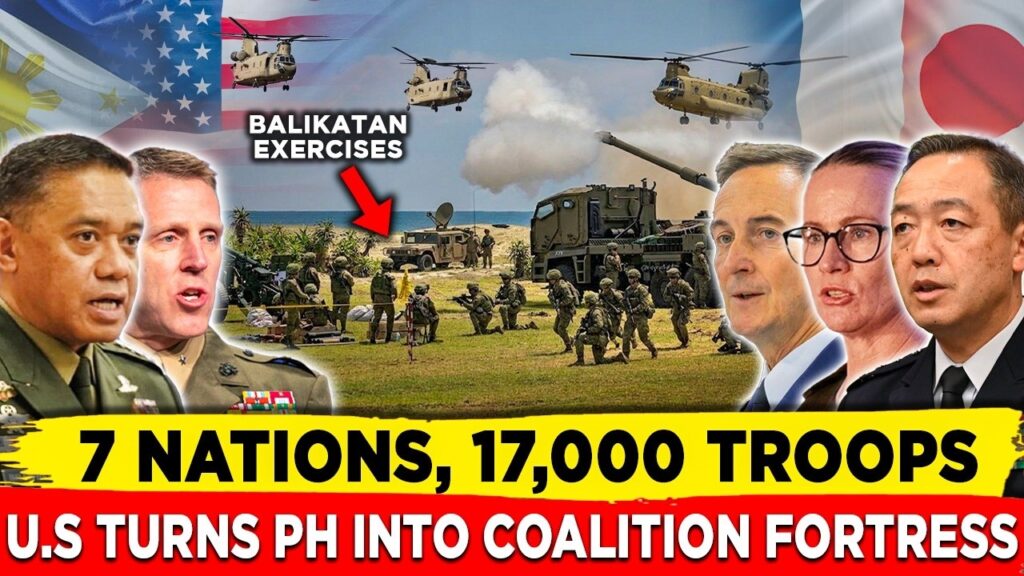
Balikatan 2026 opened on April 20 with seven nations, 17,000 troops, live Tomahawk cruise missile systems, Japan’s first ground force deployment to Philippine soil since World War II, and maritime strike drills 155 kilometers from Taiwan. The Philippines is no longer just a treaty ally. It’s becoming the load-bearing node of America’s Indo-Pacific deterrence architecture.

Indo-Pacific Report · April 22, 2026 · 13 min read · Coalition Warfare · Balikatan 2026 · US Alliances
In 1951, the United States signed a mutual defense treaty with a small archipelago nation in Southeast Asia. It was a Cold War calculation. A line drawn against Soviet expansion. Most people forgot about it within a decade.
Nobody is forgetting it now.
Because seventy-five years later, that same treaty has produced something that would have been unimaginable just five years ago. Seven nations. 17,000 troops. Live missile fires. Japanese ground forces returning to Philippine soil for the first time since World War II.
The Philippines is no longer just a treaty ally.
It’s becoming a coalition fortress.
How Balikatan 2026 Opened — and What It Signaled
On April 20, 2026, the 41st iteration of Exercise Balikatan officially opened at Camp Aguinaldo in Quezon City, Manila. Standing at the podium, AFP Chief of Staff General Romeo Brawner Jr. didn’t describe it as routine training:
“We gather today not simply to begin another exercise but to reaffirm something far more enduring. The strength of an alliance, the clarity of a shared purpose, and the responsibility that we carry together in securing our region.”
— General Romeo Brawner Jr., AFP Chief of Staff
More than 17,000 troops from seven nations — the Philippines, United States, Australia, Japan, Canada, France, and New Zealand — are conducting joint operations across land, sea, air, cyber, and space domains from April 20 to May 8. The US alone is contributing approximately 10,000 service members. Japan — participating as a full combat partner for the first time — has deployed 1,400 personnel from its Ground, Maritime, and Air Self-Defense Forces. Seventeen additional countries are present as observers.
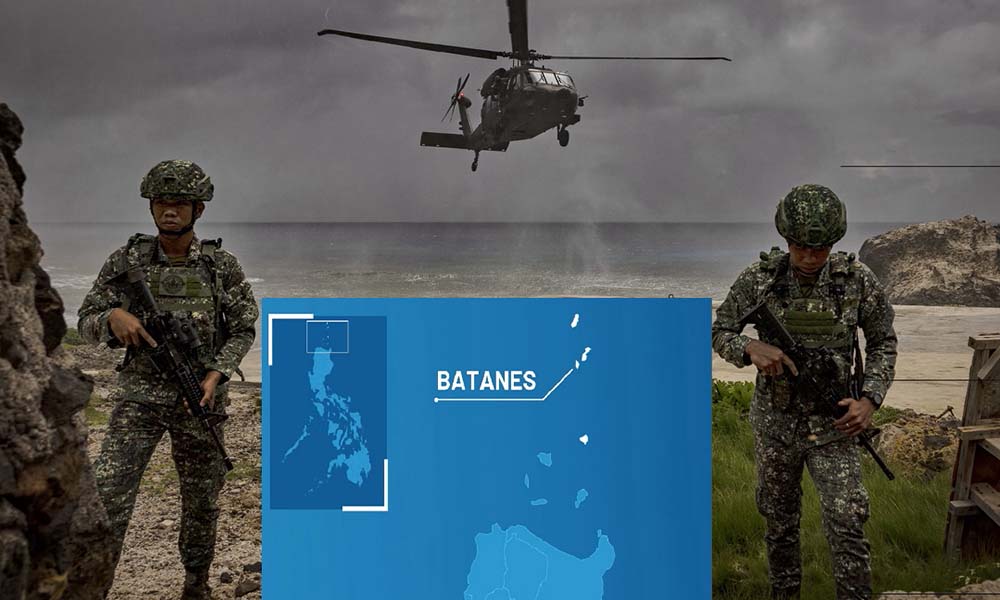
The weapons on display tell their own story. The US Typhon missile system — capable of firing Tomahawk cruise missiles with a range exceeding 1,600 kilometers — has been present in the archipelago since 2024. Japan’s Type 88 anti-ship cruise missile will be fired in a live sinking drill for the first time. The Philippines is showcasing its newly acquired BrahMos missiles. And for the first time in Balikatan’s history, maritime strike drills are being held on Itbayat Island — the northernmost point of the Philippines, just 155 kilometers from Taiwan.
China was watching. Beijing’s foreign ministry spokesperson Guo Jiakun delivered a pointed warning on the same day the exercises opened:
“We would like to remind the relevant countries that persisting in tying themselves together on security will only lead to setting themselves on fire and backfiring.”
— Guo Jiakun, Chinese Foreign Ministry Spokesperson, April 20, 2026
STRATEGIC MEANING
This Exercise Is Not About Training. It’s About Signaling.
Every weapons system on display, every live-fire drill, every flag at the opening ceremony carries a message. When US Marine Lt. Gen. Christian Wortman was asked directly if any nation was the target, he said:
“Emphatically no. There is no target nation.”
— Lt. Gen. Christian Wortman, US Balikatan Exercise Director
That’s the official line. The strategic reality is harder to ignore. Coastal defense drills are set fewer than 200 kilometers from Taiwan’s southern coast. Counter-landing exercises are running in Zambales — 143 miles from the disputed Scarborough Shoal. A Japanese destroyer transited the Taiwan Strait on its way to the exercise, prompting China to deploy naval and air forces to monitor it.
Elbridge Colby has argued that deterrence in the Pacific requires presence — not just promises. Balikatan 2026 is the most concentrated demonstration of that presence the region has ever seen.
155 km
FROM ITBAYAT ISLAND DRILLS TO TAIWAN — THE CLOSEST BALIKATAN HAS EVER OPERATED TO THE STRAIT

HOW THE PHILIPPINES GOT HERE
From Duterte’s Pivot to China to America’s Most Active Treaty Ally
Five years ago, this exercise would not have been possible. Under President Rodrigo Duterte, the Philippines spent years attempting to distance itself from Washington — courting Beijing, questioning the alliance, and threatening to scrap the Visiting Forces Agreement. The coalition building happening today is the direct reversal of that policy.
The Alliance Pivot Under Marcos
2022 President Ferdinand Marcos Jr. takes office. Immediate pivot back to Washington begins.
2024 Japan-Philippines Reciprocal Access Agreement signed. US Typhon launcher arrives in the archipelago.
Sep 2025 RAA enters into force. Japan cleared for full combat participation in Balikatan.
2026 Military access agreements signed with New Zealand, Canada, and France. 500+ joint activities approved for the year.
Apr 20, 2026 Balikatan 2026 opens. Seven nations. 17,000 troops. Japan’s ground forces in Philippines for first time since WWII. Graham Allison has observed that alliances are not built overnight. They are built through repeated exercises, shared equipment, and accumulated trust. What Marcos has done in three years is compress a decade of alliance-building into a single strategic pivot.
MILITARY AND GEOGRAPHIC STAKES
The Weapons, the Map, and Why Beijing Is Alarmed
Look at a map. Then look at the weapons.
The Typhon launcher sitting on Philippine soil can reach the Chinese mainland. Its Tomahawk missiles have a range exceeding 1,600 kilometers. Beijing has called its presence in the archipelago “extremely dangerous” and demanded its removal. It’s still there — and will be used during Balikatan.
Japan’s Type 88 cruise missile will sink a World War II-era Philippine minesweeper in a live-fire drill off northern Luzon. The NMESIS anti-ship missile system — designed specifically to threaten naval vessels in contested straits — is also present. And drills on Itbayat Island, 155 kilometers from Taiwan, mark the first time Balikatan has operated that close to the strait.
“Geography is destiny in the Pacific.”
— Robert Kaplan, Geopolitical Analyst
The Philippines sits at the intersection of the Taiwan Strait, the South China Sea, and the first island chain. It is, geographically speaking, the most strategically located US ally in the entire Indo-Pacific. Transforming it into a multi-domain coalition hub changes the military geometry of the entire region.
WEAPONS ON DISPLAY — BALIKATAN 2026
Typhon Launcher (US) — Tomahawk cruise missiles, 1,600+ km range
Type 88 Anti-Ship Missile (Japan) — Live sinking drill, first time fired in exercise
BrahMos Missiles (Philippines) — Newly acquired supersonic cruise missile
NMESIS Anti-Ship System (US) — Designed for contested strait operations
U.S. Transfers Marine Protector Patrol Boats to Philippines as China Escalates in South China Sea
ALLIANCE IMPLICATIONS
Japan’s Return to Philippine Soil — and What It Means
Japan’s role deserves special attention. 1,400 Japanese troops have arrived in the Philippines for combat exercises. It is the first time Japanese ground forces have operated in the Philippines since the end of World War II. The symbolism is not lost on anyone in the region. Colonel Takeshi Higuchi of Japan’s joint staff was direct about the purpose:
“These drills contribute to creating a security environment that tolerates no attempt to unilaterally change the status quo by force.”
— Col. Takeshi Higuchi, Japan Joint Staff
But Japan’s presence isn’t just symbolic. Japanese radar systems are being integrated into the exercise’s air and missile defense network — providing real early-warning capability. Japan’s Defense Minister Shinjiro Koizumi is flying in to observe the maritime strike phase personally.
Australia, Canada, France, and New Zealand round out a coalition that now stretches from the Pacific to Europe. Hal Brands has argued that America’s alliance network is its greatest asymmetric advantage over China. Balikatan 2026 is the most visible expression of that advantage ever assembled in one theater.
GLOBAL STRATEGIC CONSEQUENCES
China’s Response — and the Window That’s Closing
China’s response has been measured — but pointed. Beijing deployed naval and air forces to shadow the Japanese destroyer JS Ikazuchi as it transited the Taiwan Strait en route to the exercise. Foreign ministry spokesperson Guo Jiakun warned Tokyo to exercise caution rather than “flaunting its military might everywhere.” The message to all seven nations: there is a cost to showing up.
The timing adds pressure. The US is simultaneously managing a naval blockade of Iran, a Gulf oil crisis, and the Philippines is operating under a year-long national energy emergency from soaring fuel prices. China has historically probed alliance commitments when Washington appears stretched.
Michael Beckley has argued that China’s window for challenging the existing order is narrowing as the US alliance network consolidates. Balikatan 2026 is evidence of exactly that consolidation — and Beijing knows it.
CONCLUSION
The 1951 Mutual Defense Treaty between the US and Philippines was a Cold War document. It was never designed for a world in which Japanese ground forces would train on Philippine soil, where Tomahawk missiles could reach the Chinese mainland from Luzon, or where seven nations would conduct live maritime strike drills 155 kilometers from Taiwan.
That world now exists. And it exists because of three years of deliberate, accelerating alliance-building under President Marcos Jr.
7 nations. 17,000 troops. Live Tomahawk systems. Japanese boots on Philippine soil for the first time since 1945.
China cannot break this alliance diplomatically. The question Beijing is now answering — through behavior, through shadowing exercises, through warnings — is whether it intends to try something else.
The Philippines is no longer just a treaty ally. It is the load-bearing node of America’s Indo-Pacific deterrence architecture. And it’s open for business.