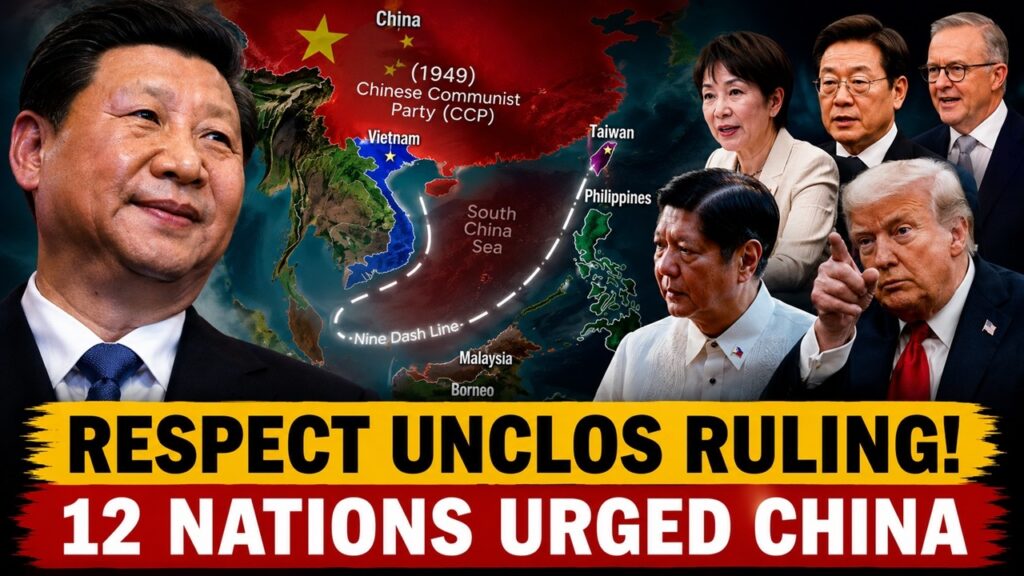
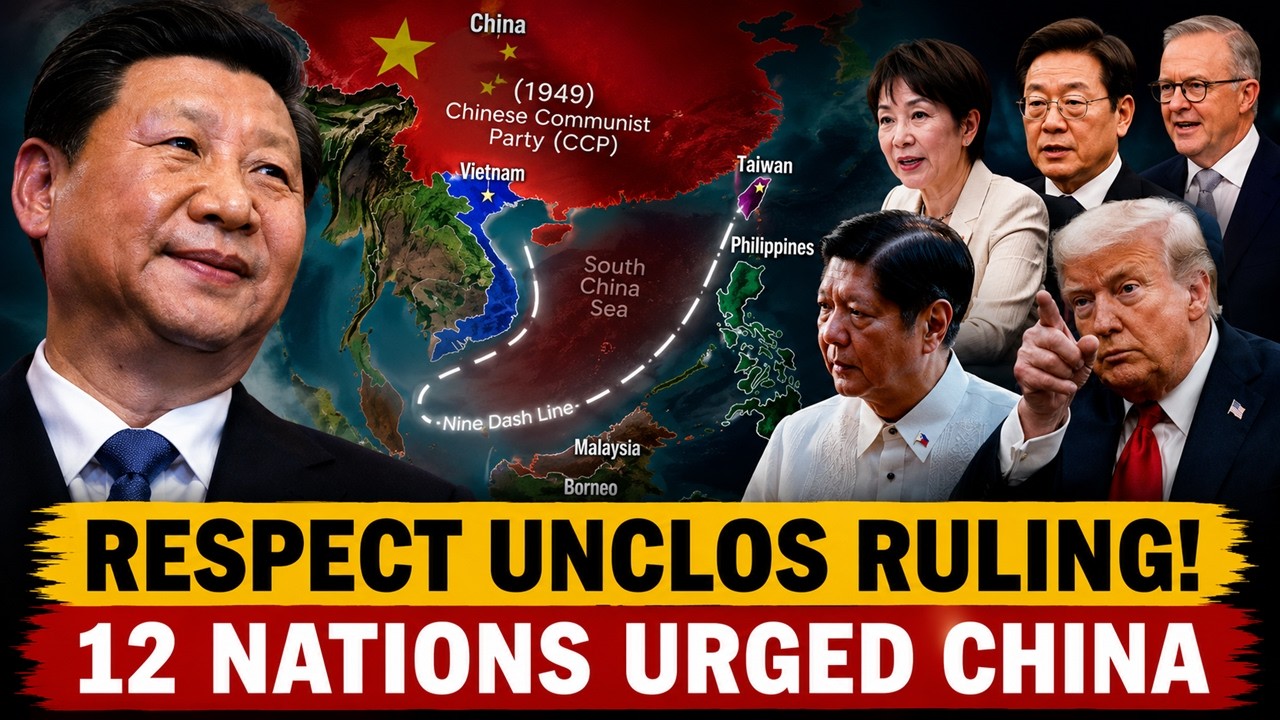
12 Nations Urge China to Respect UNCLOS Ruling on South China Sea!
This weekend, fourteen countries—including the United States, Japan, Australia, the United Kingdom, Canada, Germany, Italy, and the Philippines—delivered a rare united message to China.
On the tenth anniversary of the landmark South China Sea arbitration, they reaffirmed that the 2016 tribunal ruling remains legally binding between China and the Philippines—and that Beijing’s sweeping claims based on so-called “historic rights” have no basis under international law.
This wasn’t just another diplomatic statement.
It was one of the strongest coordinated international responses on the South China Sea in years.
But here’s what makes it remarkable.
China rejected this ruling the day it was issued—and it still rejects it today.
So why did fourteen governments decide to defend it ten years later?
Because this is no longer simply a dispute over reefs, shoals, or fishing grounds.
It’s become a test of something much bigger.
Can international law still influence the actions of major powers?
Or will the future of the South China Sea ultimately be decided by whoever can maintain the strongest presence at sea?
That’s exactly what we’ll uncover in this video.
What Exactly Happened on July 11–12, 2026?
[Visual: Calendar flips to July 11, 2026 → Flags of participating countries → Joint statement headline]
So, what exactly happened?
On July 11, 2026, just one day before the tenth anniversary of the South China Sea arbitration, fourteen governments issued a coordinated joint statement reaffirming their support for the landmark 2016 tribunal ruling.
The group included the United States, Japan, Australia, the United Kingdom, Canada, Germany, Italy, New Zealand, the Philippines, and several European partners—making it one of the broadest international endorsements of the ruling in the past decade.
Their message was straightforward.
They reaffirmed that the tribunal’s decision remains legally binding between China and the Philippines, and that China’s claims based on so-called “historic rights” have no legal foundation under international law.
But the statement went further.
Why China Now Sees Japan and the Philippines as America’s Frontline
It condemned coercive actions at sea—including the use of coast guard vessels, maritime militia, and other tactics to obstruct the lawful activities of neighboring states. It also reaffirmed support for UNCLOS, stressing that maritime disputes should be resolved peacefully and that freedom of navigation remains essential to regional and global security.
One point is especially important.
This was not a new court ruling. No new arbitration had taken place, and no new judgment had been issued.
Instead, the fourteen countries were sending a political and diplomatic message: the legal authority of the 2016 ruling has not changed simply because China continues to reject it.
That naturally raises the next question. Why did a decision issued ten years ago become one of the most consequential legal rulings in modern maritime history?
Why Fourteen Countries Reaffirmed the Ruling in 2026
Ten years after the tribunal issued its decision, many observers expected its political relevance to fade. Instead, the opposite occurred. The tenth anniversary became an opportunity for like-minded democracies and maritime nations to reaffirm that international law remains central to regional stability.
The joint statement issued by fourteen governments was not directed solely at China. It also served as a broader message supporting the international legal system established after World War II. Their statement emphasized several principles International law applies equally to all states regardless of size or military power. Maritime disputes should be resolved peacefully through legal mechanisms Freedom of navigation and overflight must remain protected Coast Guard and maritime militia should not be used to intimidate neighboring states UNCLOS remains the legal foundation governing maritime rights.
Many analysts interpreted the statement as a collective effort to reinforce legal norms amid increasing geopolitical competition throughout the Indo-Pacific.
China’s Position: Why Beijing Still Rejects the Award
China has consistently rejected the arbitration ruling since the proceedings began.
Beijing argues that the tribunal lacked jurisdiction because the dispute fundamentally concerns territorial sovereignty rather than maritime law.
Chinese officials maintain that the country’s historical activities in the South China Sea long predate UNCLOS and therefore cannot simply be dismissed by an international tribunal.
China also argues that disputes should be resolved exclusively through direct bilateral negotiations rather than third-party arbitration.
Following the 2016 decision, Beijing declared the award “null and void” and has continued to reject its legal validity.
Despite this legal disagreement, China has continued expanding Coast Guard patrols, maritime law enforcement operations, infrastructure development, and military activities throughout disputed areas.
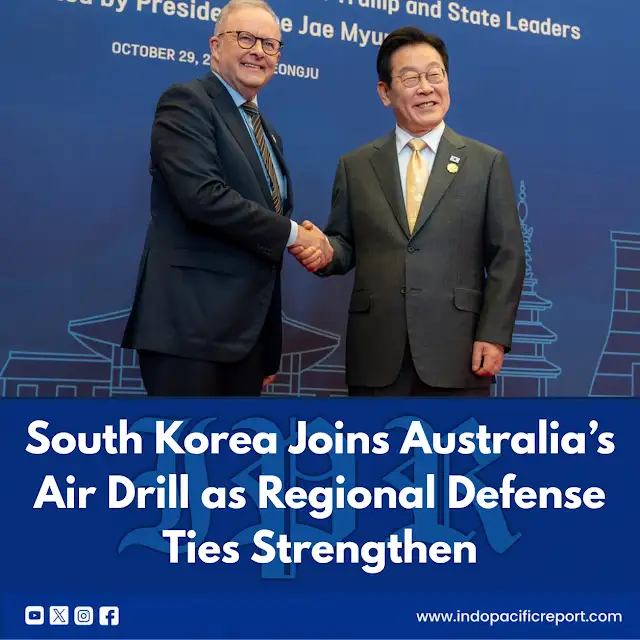
This legal and political divide remains one of the defining challenges in Indo-Pacific security.
Why the 2016 Arbitration Was Historic
[Visual: South China Sea map → Scarborough Shoal highlighted → Archive footage of the 2012 standoff → Fishing boats → Chinese Coast Guard vessels]
To understand why fourteen countries are still defending the 2016 ruling today, we have to go back to the moment this dispute changed forever.
It didn’t begin in a courtroom.
It began at sea.
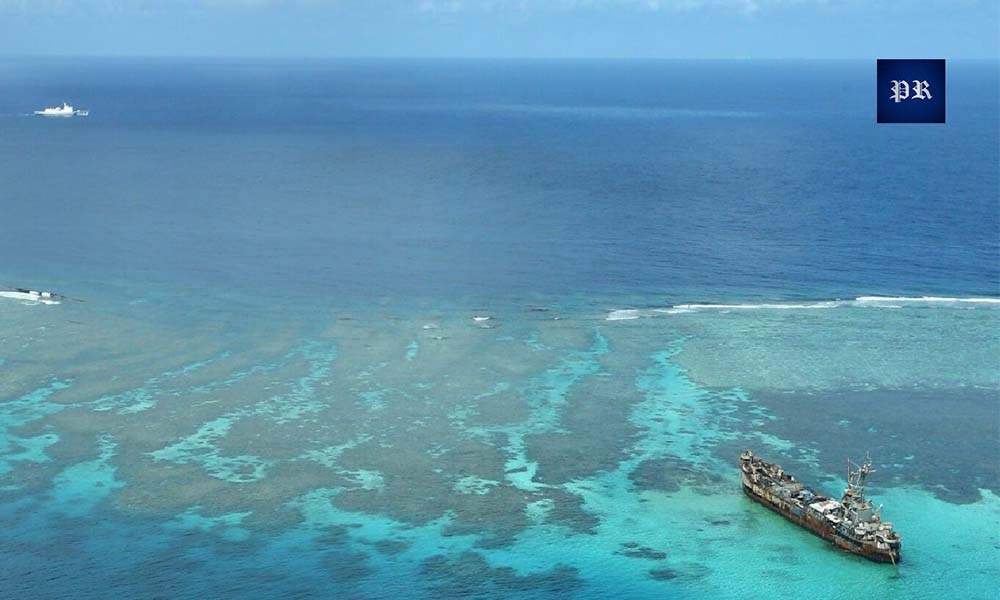
In 2012, Chinese and Philippine vessels became locked in a tense standoff at Scarborough Shoal, a rich fishing ground located within the Philippines’ Exclusive Economic Zone. After weeks of confrontation, China established effective control over the area, and Filipino fishermen gradually lost access to waters they had relied on for generations.
For Manila, the message was clear.
The dispute could no longer be managed the old way.
Instead of responding with military force, the Philippines made a decision that would reshape the South China Sea debate
What Happens Next?
The future of the South China Sea will likely depend on a combination of diplomacy, deterrence, and adherence to international law.
Three broad scenarios are possible.
First, countries continue strengthening legal and diplomatic cooperation while avoiding direct confrontation.
Second, regional militarization gradually increases as more countries expand Coast Guard operations, naval patrols, and defense partnerships.
Third, a serious incident at sea involving Coast Guard vessels or military forces could trigger a broader regional crisis. Although none of these outcomes is inevitable, the continued reaffirmation of the 2016 arbitration demonstrates that the legal debate remains highly relevant to the strategic competition unfolding across the Indo-Pacific.
About Indo-Pacific Report
For more geopolitical analysis, strategy coverage, and Indo-Pacific security reporting, visit Indo-Pacific Report:
Website
Facebook
YouTube
12 Nations Urge China to Respect UNCLOS Ruling on South China Sea!