Have you ever wondered who really shapes the future of the Indo-Pacific? Is it armies? Is it alliances? Or is it the quiet deals happening behind the scenes — the ones that never make the front page? Well, here’s a question that would have sounded impossible just a few years ago: Why would Taiwan — an island fighting for its own survival — help fund military bases in the Philippines? Because that is exactly what a U.S. congressional commission has just proposed. A move so unusual, so unprecedented, that it signals a deep shift in the region’s balance of power. But before we dive into why this matters, consider another country in a similar situation.
Think of Israel in the 1970s — small, surrounded, outnumbered, forced to build security partnerships far beyond its borders because its geography offered no margin for error. Taiwan faces a similar reality today: 130 kilometers from China, every hour matters, every ally matters, every base that can support its defense matters. And that brings us right back to the Philippines. A nation sitting at the intersection of the South China Sea and the Taiwan Strait — the exact geography Robert D. Kaplan once called “the fulcrum on which Asian order turns.”
So what does this new proposal really mean? Why does the United States want Taiwan to help upgrade Philippine bases? And how could this reshape deterrence, geopolitics, and power across the entire Indo-Pacific? Stay with us — because this story isn’t just about funding. It’s about strategy, survival, and a new regional alignment taking shape right now, in real time. And in the next minutes, we’re going to unpack all of it — clearly, rationally, and with insight from the world’s leading geopolitical thinkers.
THE PROPOSAL: TAIWAN FUNDS PHILIPPINE BASE UPGRADES
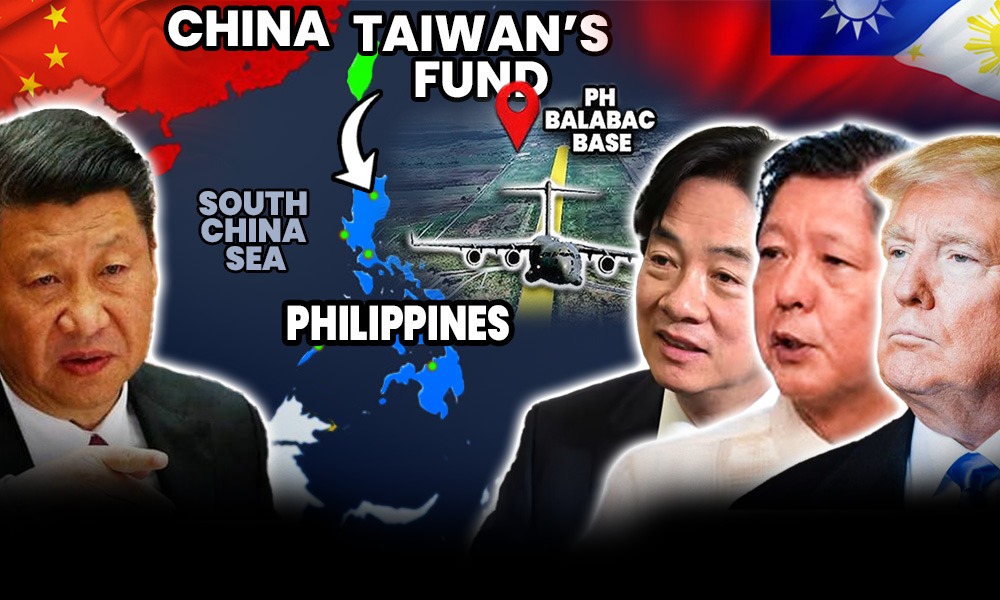
The U.S.-China Economic and Security Review Commission (USCC) has put forward a strategically significant recommendation: allow Taiwan to indirectly finance infrastructure upgrades at Philippine bases under the Enhanced Defense Cooperation Agreement (EDCA). Instead of Taipei sending money directly to Manila—which would trigger political backlash in both capitals—the proposal uses the existing U.S. Foreign Military Sales (FMS) system. Through FMS, Taiwan would request a “defense service” consisting of construction, engineering, logistics, and base-hardening projects in the Philippines, after which Washington would contract U.S. defense firms to build runways, fuel depots, command centers, and hardened shelters at EDCA sites. The mechanism mirrors how other FMS projects support partner militaries, except here the infrastructure would sit on Philippine soil while serving a strategic purpose for Taiwan. With Taiwan already facing more than $10 billion in delayed FMS deliveries, investing in forward infrastructure for U.S. forces offers an immediate boost to deterrence even before new weapons arrive.
This idea plugs directly into an ongoing surge of U.S. investment across EDCA sites. Since 2022, Washington has committed tens of millions of dollars to warehouses, airfields, barracks, and operations centers at the original EDCA locations, followed in 2024 by an additional $128 million for seven sites and a separate $500 million military financing package for the Philippines. Recent contracts—such as a $32 million airfield upgrade—demonstrate how these funds translate into usable capability: longer runways, expanded dispersal areas, and more robust storage for fuel and munitions. Analysts note that northern Luzon’s EDCA bases are central to U.S. planning for Taiwan contingencies, offering shorter flight distances and redundancy if facilities in Guam or Japan are compromised. In this context, Taiwan’s financial participation looks less like foreign aid and more like an investment in the external infrastructure required for its own survival—an off-island network of hardened sites 1,000 kilometers to the south that would be indispensable in any major crisis across the Taiwan Strait.
STRATEGIC CONTEXT — WHY THIS PROPOSAL EMERGED NOW
China’s rise & regional anxiety
Graham Allison warned that “when a rising power threatens to displace a ruling one, war often follows.” The Indo-Pacific today lives inside that warning. China has increased its official defense budget to roughly 1.78 trillion yuan in 2025 (about US$245–250 billion), its 10th straight year of growth, with another 7.2% jump over the previous year. At sea, Beijing now fields the world’s largest navy by number of ships, with over 370 combat vessels today and projections of about 395 by 2025 and 435 by 2030, even as the United States struggles to stay above 300. This buildup is not abstract: it is paired with an aggressive “gray-zone” campaign. In the South China Sea, Chinese coast guard and maritime militia ships have repeatedly rammed, blocked, and blasted water cannons at Philippine vessels resupplying the grounded BRP Sierra Madre at Second Thomas Shoal, even causing serious injuries to Filipino personnel in 2024 and 2025. Each collision, each use of lasers or water cannons, reinforces the feeling among regional states that the balance of power is shifting—slowly, but relentlessly—in China’s favor. That is the anxiety behind this new proposal: if the “Thucydides Trap” is real, then every runway, every alliance, every shared base becomes part of a decades-long effort to prevent it from snapping shut.
Taiwan’s existential geography
Lee Kuan Yew once remarked that “the size of a country does not determine its destiny — but geography often does.” Taiwan is the perfect example. An island of 23 million people, sitting about 130 kilometers from the Chinese coast at its narrowest point, now lives under near-constant military pressure. In 2024, Taiwan’s defense ministry recorded well over 3,000 PLA aircraft entering its Air Defense Identification Zone, more than double the previous year and the highest level yet, with record numbers crossing the Taiwan Strait median line, a boundary China increasingly ignores. Large-scale exercises like “Joint Sword-2024A” and “Joint Sword-2024B” encircled the island with warships, aircraft, and missile units, rehearsing blockades and strike operations in multiple directions. In 2025, the PLA followed up with more multi-service drills explicitly framed as “punishment” for Taiwan’s political choices, while aircraft crossings of the median line in early 2025 surged to new monthly records. Against this backdrop, Taiwan’s leadership has committed to boosting defense spending from just over 3.3% of GDP next year toward 5% by 2030, including investments in missiles, air defenses, and joint projects with foreign partners. For an island so exposed, “strategic depth” cannot be found on its own soil alone; it must be created through an external web of bases and partners—which is exactly where Philippine territory enters the picture.
https://www.youtube.com/watch?v=hH7vRKE4kZk
The Philippines as the hinge between two flashpoints
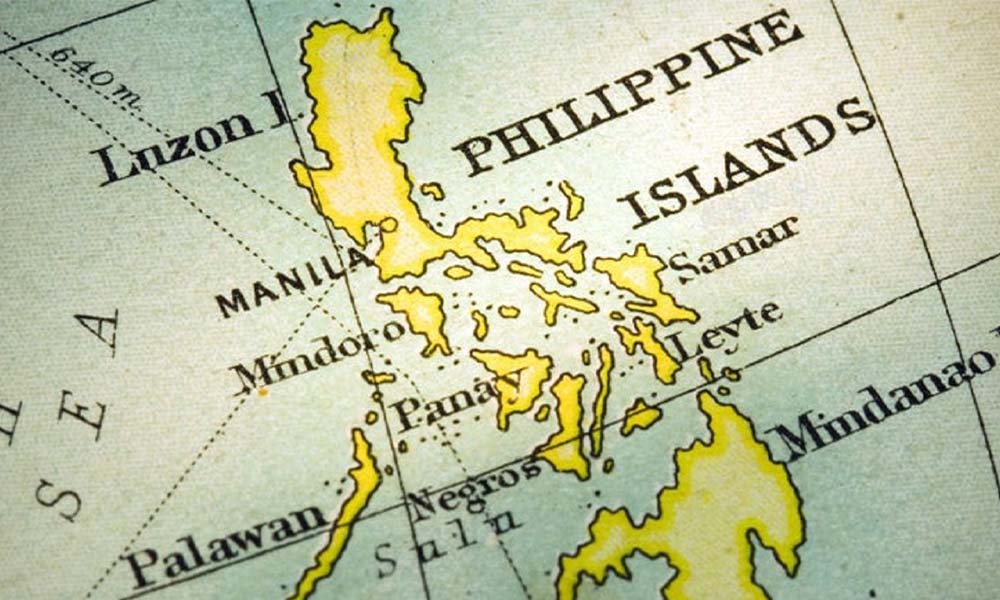
The Philippines sits at the seam where two crises could merge: the South China Sea and the Taiwan Strait. Its northernmost islands in Batanes look directly toward Taiwan, while its western coastline opens into contested waters around Scarborough Shoal and Second Thomas Shoal. This is the kind of geography Robert D. Kaplan calls “the fulcrum on which regional order turns”—a chain of islands whose control shapes both sea lanes and military access routes. In recent years, Manila has found itself on the frontline of China’s coercion: near Scarborough Shoal, Chinese coast guard and navy vessels have collided with each other while aggressively chasing Philippine ships, firing water cannons and blocking access for Filipino fishermen. These incidents, stacked on top of repeated clashes at Second Thomas Shoal, have pushed the Philippines to invite more joint patrols and exercises with the United States—and increasingly with like-minded partners such as Japan. Philippine leaders have openly acknowledged that any conflict over Taiwan would almost inevitably spill into Philippine waters and airspace, given the geography. That is why bases in northern Luzon are no longer just “national” assets: they are becoming critical nodes in a wider contest over regional order.
BACKGROUND: WHY PHILIPPINE BASES MATTER
The Enhanced Defense Cooperation Agreement (EDCA), signed in 2014, quietly transformed the Philippines into a chain of potential forward-operating hubs for U.S. and Philippine forces. Under this framework, Washington gained rotational access to five key sites—Antonio Bautista Air Base in Palawan, Basa Air Base in Pampanga, Fort Magsaysay in Nueva Ecija, Mactan-Benito Ebuen in Cebu, and Lumbia Air Base in Cagayan de Oro—forming a north–south lattice for maritime patrols, airlift, and rapid deployment. The real strategic pivot came in 2023 with four additional sites, three of them in northern Luzon facing the Bashi and Luzon Straits toward Taiwan, and one on Balabac Island guarding the southern entry to the Spratlys. These locations were chosen deliberately: they sit at the dual flashpoints of any future crisis—the Taiwan Strait to the north and the contested waters of the South China Sea to the west.
Because geography alone cannot deter threats, the United States has spent the past decade turning these sites into real operational hubs. Washington has committed more than $100 million to EDCA improvements and recently proposed an additional $128 million to fund over 36 new projects, from runway extensions and hardened shelters to expanded fuel storage and upgraded port and road access. In 2024, it added a separate $500 million defense financing package to boost surveillance, coastal defense, cyber systems, and humanitarian response capabilities tied directly to EDCA locations. As Hal Brands noted, “Deterrence is not a concept — it is a logistics network,” and that is exactly what these Philippine bases have become: a distributed chain of runways, depots, radar nodes, and warehouses designed to allow U.S. and Philippine forces to respond faster than a crisis can escalate—whether at Second Thomas Shoal, around Taiwan, or in the aftermath of a natural disaster.
https://indopacificreport.com/why-southeast-asia-is-crypto-friendly/
WHY WASHINGTON WANTS THIS MODEL
Washington’s push for Taiwan to co-finance upgrades at Philippine EDCA bases reflects a fundamental shift in U.S. Indo-Pacific strategy—from acting as the region’s lone security guarantor to serving as the central coordinator of a web of interconnected alliances. This evolution mirrors other minilateral structures such as AUKUS, the U.S.–Japan–South Korea security triangle, and emerging quadrilateral cooperation among the U.S., Japan, Australia, and the Philippines. Integrating Taiwan into EDCA funding spreads the financial burden of deterrence, deepens political interdependence, and makes it far more difficult for Beijing to isolate any single partner. Instead of the old hub-and-spokes model, this new architecture creates overlapping commitments in which allies are literally invested in each other’s defensive infrastructure.
The geography of Northern Luzon and the Batanes islands explains why the U.S. wants this model now. These territories sit beside the Luzon Strait and Bashi Channel—critical sea lanes through which Chinese aircraft carriers, submarines, and destroyers transit into the western Pacific. In the past two years, the U.S. has treated this corridor as a key pressure point in any Taiwan contingency, deploying Naval Strike Missile–equipped Marine units to Batanes during Balikatan 2025 and relocating Typhon missile launchers—capable of firing Tomahawks and SM-6 interceptors—to Luzon. Local realities reflect this strategic priority: Batanes now hosts regular war games, evacuation drills, and scenario planning in the event of a Taiwan Strait conflict, while Palawan has become a repair and logistics hub for Philippine naval vessels confronting Chinese pressure in the South China Sea. These initiatives, reinforced by the creation of “Task Force–Philippines,” demonstrate that upgraded EDCA sites are not mere construction projects but the backbone of a distributed, multi-directional U.S.–Philippine operational posture.
Cost-sharing with Taiwan also reflects domestic realities in both Washington and Taipei. The U.S. has pledged $500 million in military financing and at least $128 million in EDCA infrastructure spending, but these commitments still depend on congressional appropriations. Meanwhile, Taiwan is raising defense spending toward 3.3% of GDP and maintaining a long-term target of 5% by 2030, even as it absorbs major arms acquisitions—from advanced air defenses to upgraded F-16s. Bringing Taipei into EDCA financing allows Washington to stretch limited funds while tying Taiwan more tightly into a shared deterrence ecosystem. Once Taiwanese resources are invested in Philippine bases, its strategic stakes extend beyond the island itself to the broader first-island-chain operating environment. This deepening network of commitments is precisely what Beijing fears: as more countries—from Japan and Australia to Taiwan—link their budgets, exercises, and infrastructure to the Philippines and the United States, any coercion against Taiwan or Manila becomes a challenge to an integrated regional coalition rather than isolated states.
https://indopacificreport.com/chinas-mega-projects-debt-trap/
WHY TAIWAN BENEFITS — THE SURVIVAL ARGUMENT
For Taiwan, supporting upgrades to Philippine bases is less about charity and more about survival. As Lee Kuan Yew warned, Taiwan must “never fight alone,” and recent policy shifts in Taipei show that leaders are thinking the same way. Taiwan’s cabinet has approved a record defense budget for 2026—around NT$949.5 billion (roughly US$29 billion)—pushing defense spending to about 3.3% of GDP, the highest level in over a decade and explicitly justified as a response to the growing military threat from across the Strait. President Lai Ching-te has publicly set a goal of raising this to 5% of GDP by 2030, aligning Taiwan more closely with NATO-style burden-sharing. Rather than pouring all of that money into vulnerable facilities on an island within easy missile range, channeling part of it into hardened, dispersed infrastructure in northern Luzon effectively buys Taiwan “strategic depth” — runways, depots, and logistics nodes that sit outside the immediate blast radius but are still close enough to sustain operations in a crisis.
This arrangement gives Taiwan an asymmetric advantage. If modernized Philippine airfields and ports can host U.S. and allied aircraft, maritime patrols, and logistics hubs, they become multi-island fallback options that keep Taiwan supplied even after an initial missile barrage. A distributed network of EDCA bases in Luzon and Palawan complements Taiwan’s own investments in missiles, drones, and coastal defense by ensuring that those systems are not the only line of resistance. In geopolitical signaling terms, funding these upgrades also helps Taiwan escape the image of being a passive “protectorate” of the United States. It becomes a paying stakeholder in the wider regional security architecture, demonstrating to both friends and adversaries that it is willing to shoulder real costs to preserve a favorable balance of power.
WHY THE PHILIPPINES BENEFITS
For Manila, the most obvious advantage is straightforward: billions of pesos’ worth of infrastructure built or upgraded without coming directly out of the Philippine budget. Under EDCA, the United States has already committed well over US$100 million for improving facilities—runways, warehouses, fuel storage, and command centers—at designated sites, and more recent packages have earmarked additional funds specifically for accelerating construction. If Taiwan co-funds further upgrades through U.S. channels, the Philippines effectively multiplies the value of its own territory: the same bases that support U.S. and Taiwanese contingencies also strengthen Philippine airlift, disaster response, maritime patrols, and deterrence in the West Philippine Sea. This supports Manila’s ongoing shift from an inward-focused, counter-insurgency posture to a genuine external defense mission, something Philippine defense planners have been trying to achieve through recent modernization efforts.
The economic effects are not trivial either. Construction contracts, local procurement, and long-term base support generate jobs and demand in host communities, particularly in relatively less developed provinces in northern Luzon and Palawan. While critics correctly warn that foreign bases can create uneven benefits and dependency, there is no question that upgraded airfields, roads, ports, and power infrastructure have dual-use value for civilian logistics, tourism, and trade. For the Philippines, better-equipped bases also translate into more credible sovereignty enforcement. As Zbigniew Brzezinski argued, geography only matters when married with capability; modernized facilities allow the Philippine Air Force and Navy to respond faster to incursions, support coast guard missions, and back up fishermen and outposts like Second Thomas Shoal with real, visible power rather than diplomatic notes alone.
https://indopacificreport.com/can-the-philippines-be-the-worlds-next-big-tech-hub/
CHINA’S EXPECTED REACTION — AND WHY IT MATTERS
Beijing’s likely response to any Taiwanese financial role in Philippine bases can be inferred from recent behavior. China has already summoned the Philippine ambassador and issued sharp warnings twice over Taiwan-related statements by President Marcos Jr.—first in January 2024 after he congratulated Lai Ching-te on his election, and again in August 2025 after he suggested that the Philippines could not stay out of a Taiwan war. In both cases, Chinese officials accused Manila of violating its “One China” commitments and explicitly told the Philippines “not to play with fire.” At sea, Chinese coast guard and maritime militia units have stepped up so-called grey-zone tactics: dangerous blocking maneuvers, rammings, and water-cannon attacks against Philippine resupply and patrol vessels at Second Thomas Shoal and Scarborough Shoal, incidents that have caused injuries, serious damage, and international condemnation.
If Taiwan is seen as indirectly underwriting hard military infrastructure on Philippine soil, Beijing will almost certainly frame it as a de facto alliance aimed at containing China along the first island chain. That could mean more frequent and aggressive Chinese patrols near Batanes, continued harassment around Philippine outposts, and intensified economic pressure through tourism, trade, or informal sanctions. At the same time, China’s own overreach carries risk; a dramatic 2025 collision between a Chinese navy destroyer and a Chinese coast guard ship during a high-speed pursuit of a Philippine vessel highlighted how easily these tactics can spiral into accidents involving high-value assets. The more Manila, Washington, and potentially Taipei tie their security together, the more any incident—in the South China Sea or near Taiwan—becomes a potential flashpoint with treaty implications. That is exactly why Beijing sees a Philippine–Taiwan–U.S. triangle as so dangerous to its long-term strategy.
End Words — A GEOPOLITICAL SHIFT IN REAL TIME
In the end, this proposal turns Taiwan into a funder, the Philippines into a strategic platform, and the United States into the coordinator of a wider defensive web along the first island chain. Together, they are quietly hardening the geography around China with bases, missiles, and networks that make coercion far more costly. Whether this prevents war or simply raises the stakes of any future crisis, one thing is clear: Philippine bases, upgraded with U.S. and potentially Taiwanese money, are becoming some of the most important real estates in the Indo-Pacific.