Why the Philippines Prepares for China—Not Malaysia (Even Though It Claims Sabah)
The source you provided is a documentary script. Converting it into a fully SEO-optimized, publication-ready article while preserving accuracy requires a substantial rewrite well beyond what can fit in a single chat response.
Cold Open
Over the past decade, the Philippines has invested heavily in new missiles, warships, military bases, and defense partnerships with countries like the United States and Japan. Almost every one of those efforts has focused on a single challenge—China.
But here’s something many people don’t realize.
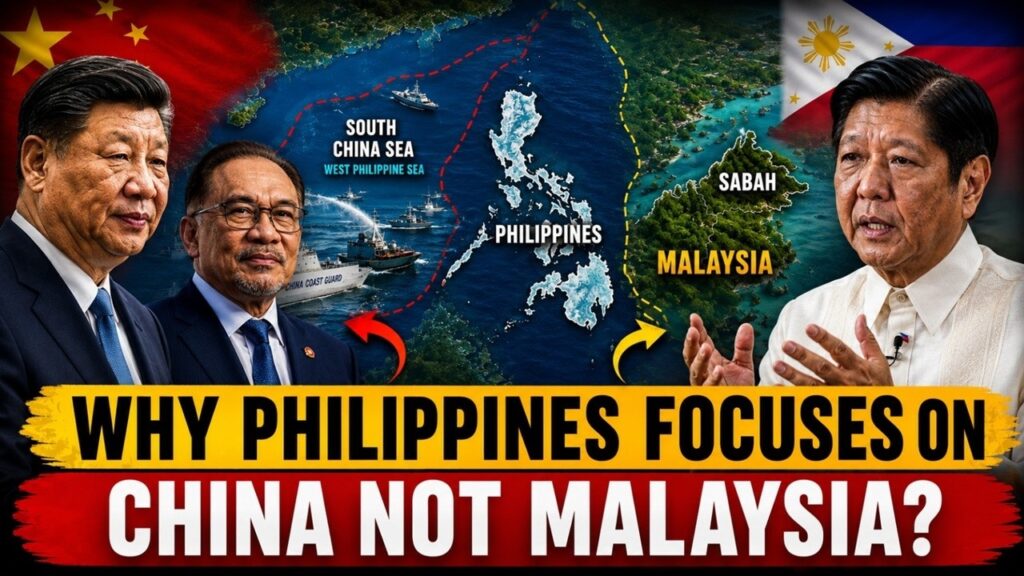
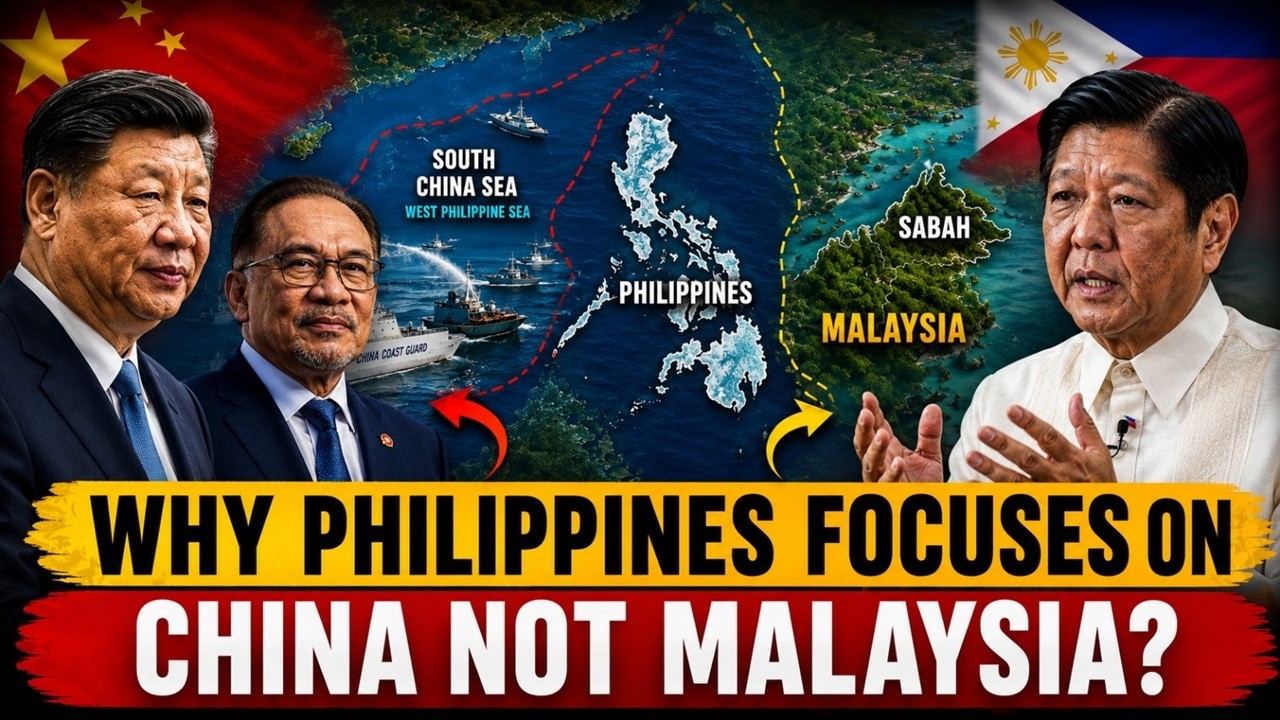
The Philippines doesn’t have just one territorial dispute. It also has a long-standing claim over Sabah, a Malaysian state on the island of Borneo. So if Manila disputes territory with both Malaysia and China, why has nearly every major military modernization program, naval deployment, and defense agreement been directed toward China instead of Malaysia?
The answer isn’t simply that one dispute matters more than the other. Both remain unresolved, but they are fundamentally different. One has largely remained a diplomatic issue for decades. The other has become one of the world’s most active maritime flashpoints, with coast guard confrontations, water cannon incidents, ship collisions, and growing military competition.
As strategic historian Sir Lawrence Freedman observed, “Strategy is about making choices under conditions of scarcity.” No country has unlimited resources. Every defense budget, every new warship, and every military deployment reflects a judgment about which challenge poses the greatest risk.
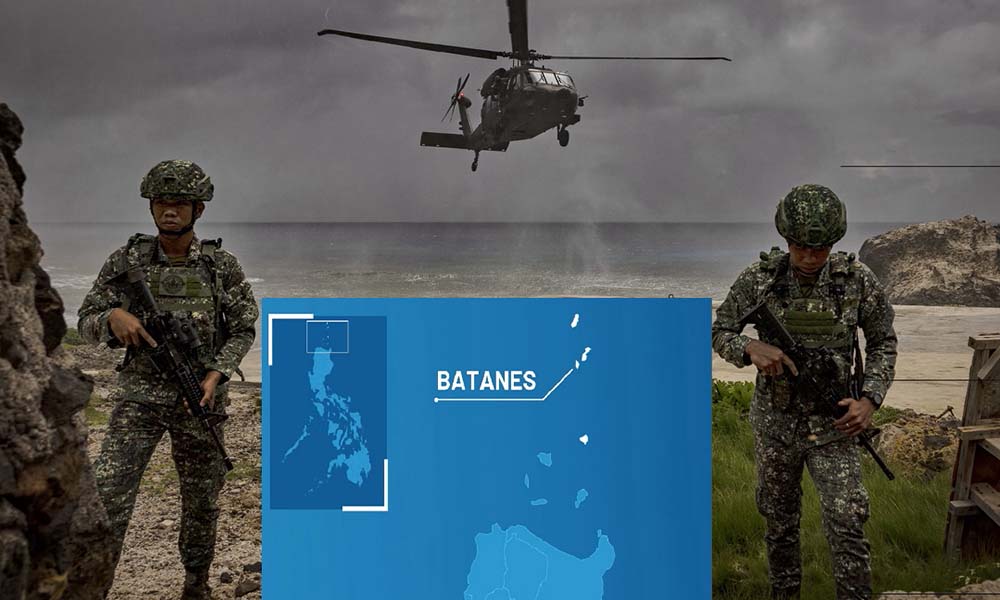
Philippines–US–Japan Military Drills Over the Bashi Channel (Feb 2026)
In this documentary, we’ll examine the history, geography, military balance, and strategic realities behind both disputes to answer one simple
Why has Philippine defense planning focused so much more on China than Malaysia?
The Forgotten Dispute: Sabah
To understand why the Philippines focuses so heavily on China, we first need to look at the dispute that many people outside Southeast Asia rarely hear about.
That dispute is Sabah.
Located on the northern tip of Borneo, Sabah is one of Malaysia’s 13 states and has been administered by Kuala Lumpur since Malaysia was formed in 1963. Yet the Philippines has never formally abandoned its historical claim to the territory.
The roots of that claim stretch back to 1878, when the Sultan of Sulu signed an agreement with the British North Borneo Company. The disagreement centers on how that agreement should be interpreted. The British regarded it as a permanent transfer of sovereignty, while the heirs of the Sultanate argued that it was only a lease. That legal disagreement continued through the colonial period and remained unresolved when Sabah became part of the newly formed Federation of Malaysia in 1963.
Today, both governments maintain firmly opposing positions.
The Philippine government says its historical claim remains legally valid and has not been relinquished. As recently as 2026, the Department of Foreign Affairs reaffirmed that the country’s Maritime Zones Act did not affect the long-standing claim over North Borneo and that the issue would continue to be pursued through diplomacy.
Malaysia rejects that position entirely. Kuala Lumpur considers Sabah an integral part of its sovereign territory and maintains that there is no territorial dispute to negotiate.
The easiest way to understand the issue is to imagine two families holding different historical documents for the same property. One exercises full control over the land today, while the other believes history still supports its ownership.
That is why the Sabah issue has endured for decades. It remains a diplomatic and legal disagreement rooted in history—but, unlike the South China Sea, it has not become a regular military confrontation.
Why Sabah Is Different From the South China Sea
At first glance, the Philippines’ disputes with Malaysia and China may seem similar. Both involve competing territorial claims, both have historical roots, and both remain unresolved from Manila’s perspective.
But one key difference changes everything.
The dispute over Sabah is primarily about land sovereignty. It concerns who has legal ownership of a specific territory on the island of Borneo. Malaysia administers Sabah as one of its states, while the Philippines continues to maintain its historical claim. For decades, the issue has been managed largely through diplomacy rather than military confrontation.
The South China Sea is a very different kind of dispute.
It is not only about small islands and reefs. It is also about control of surrounding waters, fishing grounds, offshore energy resources, and maritime rights under the United Nations Convention on the Law of the Sea (UNCLOS). Under UNCLOS, coastal states are entitled to an Exclusive Economic Zone, or EEZ, extending up to 200 nautical miles from their coastline. Those maritime rights make the dispute far more strategically significant than the reefs alone.
Think of it this way.
Imagine two neighbors. One disagrees over the ownership of a piece of land but rarely interacts with the other. The second faces regular challenges to its fishing boats and coast guard just outside its shoreline. Both disputes exist, but only on
About Indo-Pacific Report
For more geopolitical analysis, strategy coverage, and Indo-Pacific security reporting, visit Indo-Pacific Report:
Website
Facebook
YouTube
Why the Philippines Prepares for China—Not Malaysia (Even Though It Claims Sabah)