Manila, Philippines – In a significant show of military cooperation, the United States, Australia, Japan, New Zealand, and the Philippines commenced a joint military exercise in the Philippines’ exclusive economic zone (EEZ) in the South China Sea on September 28.
This exercise, termed the Maritime Cooperative Activity, highlights the collective commitment of these nations to enhance regional and international cooperation for a peaceful, stable, and prosperous Indo-Pacific.
Australian Defence Department Statement
Australian Defence Department stated that the importance of this exercise in a statement released on Saturday. “The Maritime Cooperative Activity demonstrates our collective commitment to strengthen regional and international cooperation in support of a peaceful, stable, and prosperous Indo-Pacific,” the statement read.
Participants and Objectives
The exercise involves a diverse array of naval and air assets from the participating nations. Australia’s contribution includes the HMAS Sydney, a Hobart-class guided missile destroyer, and a Royal Australian Air Force P-8A Poseidon maritime patrol aircraft. These assets will work alongside counterparts from the United States, Japan, New Zealand, and the Philippines to enhance interoperability and cooperation.
Backdrop of Rising Tensions
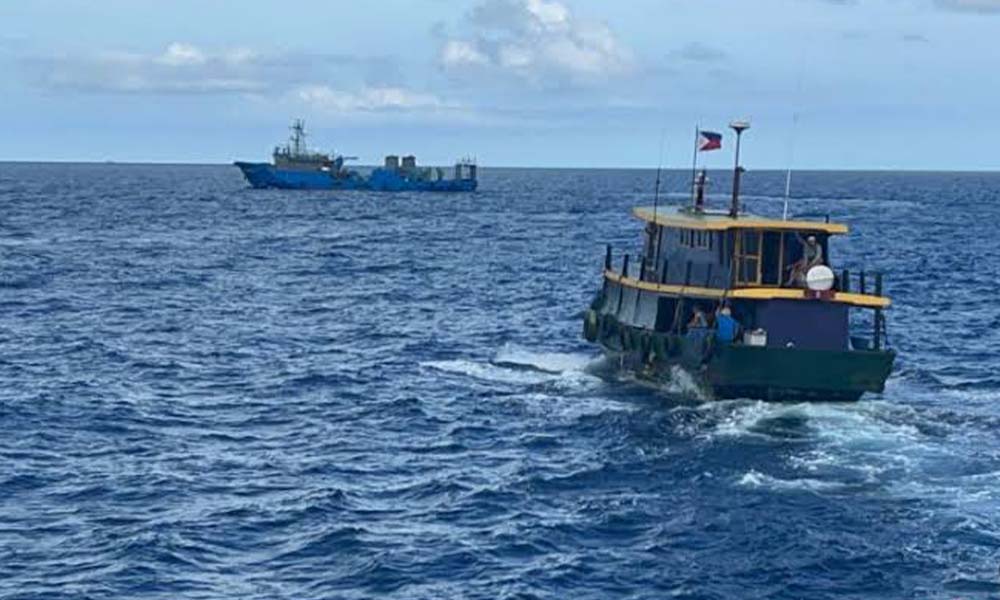
This joint exercise comes at a time of escalating tensions between Beijing and Manila over competing territorial claims in the South China Sea. The region has seen a series of confrontations, particularly around the Scarborough Shoal and the Second Thomas Shoal, areas rich in marine resources and strategic significance.
China’s Military Activities
Coinciding with the joint exercises, Chinese naval and air forces conducted patrols around a flashpoint reef in the South China Sea. The Southern Theater Command of the People’s Liberation Army (PLA) reported that these patrols included reconnaissance, early warning, and air-sea patrols. Beijing asserts its sovereignty over nearly the entire South China Sea, dismissing rival claims from several Southeast Asian countries and an international ruling that invalidated its expansive claims.
Historical Context of Scarborough Shoal
Scarborough Shoal, a triangular chain of reefs and rocks, is located 240 kilometers west of the Philippines’ main island of Luzon and nearly 900 kilometers from the nearest major Chinese landmass of Hainan. The shoal has been a point of contention since Beijing seized it from Manila in 2012.
Despite the 2016 ruling by the Permanent Court of Arbitration in The Hague, which stated that China’s claims have no legal basis, Beijing continues to assert its control over the area.
International Relations
The United States, in its statement, highlighted that the joint maritime exercises with its allies demonstrate a collective commitment to regional cooperation and the maintenance of a free and open Indo-Pacific. Australia’s Defence Department echoed this sentiment, emphasizing the importance of upholding the right to freedom of navigation and overflight in the region.
Strategic Importance of the South China Sea
The South China Sea is a critical maritime region, with significant strategic and economic importance. It is a major shipping route, with over $3 trillion worth of trade passing through its waters annually. The region is also rich in marine biodiversity and potential underwater oil and gas reserves, making it a highly contested area among neighboring countries.
Military Assets and Capabilities
The HMAS Sydney, equipped with advanced radar and missile systems, and the P-8A Poseidon, known for its anti-submarine warfare capabilities, are key assets in the joint exercise. These platforms will conduct various drills, including search and rescue operations, anti-submarine warfare, and maritime surveillance, to enhance the operational readiness of the participating forces.
China’s Response
In response to the joint exercises, the Chinese military’s Southern Theater Command reiterated its stance on the South China Sea. “China holds indisputable sovereignty over Huangyan Island and its adjacent waters,” the command stated, using the Chinese name for Scarborough Shoal. The command also accused countries outside the region of stirring up trouble and creating instability.
Diplomatic Efforts and Dialogues
Amid the military activities, diplomatic efforts continue to address the tensions in the South China Sea. Recent talks between Chinese and U.S. diplomats focused on reducing regional tensions and avoiding conflicts. However, the ongoing military maneuvers highlight the complexities and challenges in achieving a peaceful resolution.
Impact on Regional Security
The joint military exercise and China’s concurrent patrols underscore the fragile security environment in the South China Sea. The involvement of multiple nations in the exercise reflects a broader strategy to counterbalance China’s assertive actions and ensure the security of vital maritime routes.
Future Implications
The outcome of these exercises and the ongoing diplomatic engagements will have significant implications for the future security dynamics in the Indo-Pacific region. The continued presence of international forces in the South China Sea is likely to influence China’s strategic calculations and its approach to regional disputes.
Conclusion
As the joint military exercise progresses, the world watches closely to see how these developments will shape the geopolitical landscape of the South China Sea. The commitment of the United States, Australia, Japan, New Zealand, and the Philippines to regional stability and cooperation sends a strong message of unity and resolve in the face of rising tensions.
Additional Information
The joint exercise is part of a broader effort to enhance maritime security and uphold international law in the South China Sea. It also aims to strengthen the defense capabilities of the participating nations and promote peace and stability in the Indo-Pacific region.
Final Thoughts
The situation in the South China Sea remains fluid, with potential for both conflict and cooperation. The international community continues to advocate for peaceful resolution of disputes and adherence to international norms to ensure a stable and prosperous future for the region.
Follow us for more!