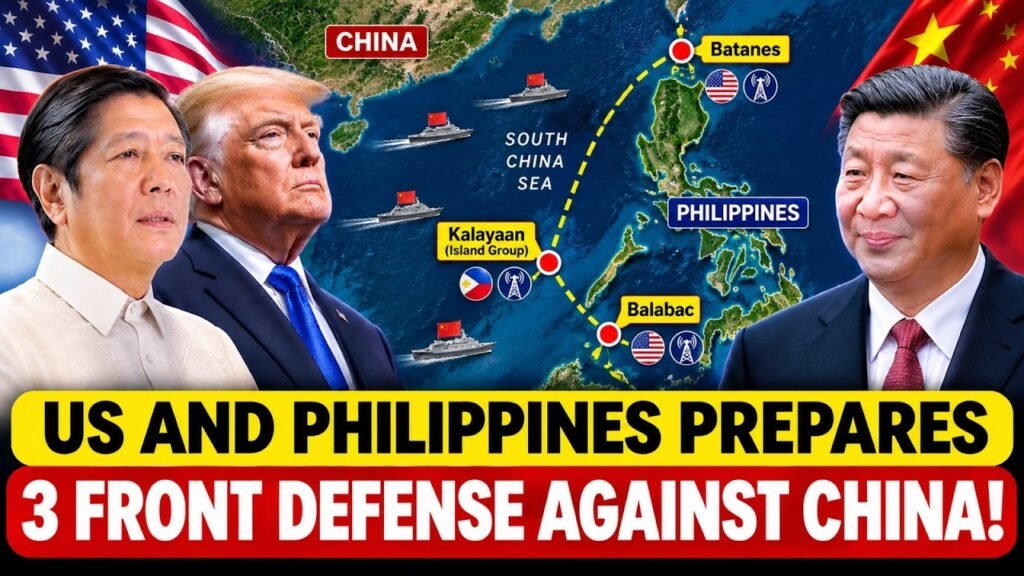
US and Philippines Are Building a 3-Front Defense to Deter China
The Philippines is facing an increasingly important challenge in the West Philippine Sea: protecting its offshore energy resources while managing growing maritime pressure from China. Beneath these waters lie natural gas and potential petroleum reserves that could play a major role in the country’s long-term energy security. Developing these resources could help Manila reduce its dependence on imported fuel, strengthen domestic electricity production, and support economic growth. However, the challenge extends beyond exploration and investment. The Philippines must also ensure that energy companies can operate in waters where China maintains a significant maritime presence and challenges Manila’s sovereign rights.
This is where the United States is becoming an important strategic partner. Through its defense commitments, maritime surveillance assistance, military cooperation, intelligence-sharing, and regional security partnerships, Washington is helping Manila strengthen its ability to monitor and protect its maritime interests. The objective is not simply to deploy American military forces around offshore energy installations. It is to improve the Philippines’ ability to identify maritime threats, respond to potential interference, and maintain lawful activities within its exclusive economic zone. The issue has implications far beyond the South China Sea dispute. Access to domestic energy resources affects electricity prices, industrial development, economic stability, and national security. As competition between Washington and Beijing continues to influence the Indo-Pacific, the Philippines’ ability to develop its offshore resources is becoming an important test of its strategic independence. The central question is whether Manila can turn its legal maritime rights into practical economic opportunities despite China’s growing influence in the region.
THE PHILIPPINES’ GROWING ENERGY SECURITY CHALLENGE
The Malampaya gas field, located offshore from Palawan in the West Philippine Sea, remains one of the most important components of the Philippines’ domestic energy system. For many years, it has supplied natural gas to power plants in Luzon, helping generate electricity for households, businesses, and industrial facilities. Its contribution has been particularly important because the Philippines relies heavily on imported energy to meet its growing domestic requirements. As electricity demand increases, maintaining reliable sources of domestic natural gas has become an important national priority. The importance of Malampaya becomes clearer when considering the country’s exposure to international energy markets. The Philippines imports significant quantities of coal, oil, and other energy resources, making its economy vulnerable to changing global fuel prices and disruptions in international supply chains. When international prices rise, electricity generation becomes more expensive, creating additional pressure on households and businesses. Manufacturing companies face higher operating costs, transportation expenses increase, and consumers may experience the effects through rising prices. Domestic natural gas provides an opportunity to reduce some of these vulnerabilities by supporting electricity production through locally available resources.
A major development came on November 6, 2026, when the Philippine Department of Energy announced the achievement of first gas under Malampaya Phase 4. The Malampaya East-1 and Camago-3 wells have added an estimated 222 billion cubic feet of natural gas to the country’s resource base. This development is expected to extend the operational life of the Malampaya project by approximately six years, potentially supporting production until around 2034. The achievement represents an important step in maintaining the country’s existing domestic gas supply while Manila continues to search for additional offshore resources. Malampaya currently supplies approximately 20 percent of Luzon’s electricity requirements, making it an important contributor to the country’s energy stability. Its production supports power generation at a time when electricity demand continues to increase alongside population growth, urban development, and industrial expansion. Any significant reduction in domestic gas production could increase pressure on the Philippines to purchase more imported fuel, potentially exposing electricity consumers to international price fluctuations. Extending Malampaya’s production therefore provides Manila with additional time to develop a more diversified energy strategy.
Philippines Is Turning Pag-asa Island Into a Military Stronghold Against China!
However, the expansion of Malampaya does not eliminate the Philippines’ long-term energy challenges. Existing gas fields have limited production lives, and maintaining supply requires continuous investment in exploration, drilling technology, and infrastructure. The country cannot depend indefinitely on one major offshore gas project. It needs additional discoveries that can support future electricity generation and reduce its exposure to imported energy. This is why the government continues to consider other potential resource areas in the West Philippine Sea, particularly Reed Bank, also known as Recto Bank. Reed Bank is considered a potentially important area for future oil and natural gas exploration. Located within the Philippines’ claimed exclusive economic zone, the area has attracted attention because of its possible contribution to domestic energy production. However, potential reserves should not be confused with commercially established production. Further geological assessments, exploration activities, technical studies, and substantial financial investment would be necessary before these resources could become a reliable source of energy. The development process also requires specialized drilling equipment, offshore support vessels, trained personnel, and long-term investment commitments.
CHINA’S MARITIME PRESSURE
China’s growing maritime presence in the South China Sea has created a difficult operating environment for the Philippines. Chinese Coast Guard vessels, naval forces, and maritime militia operate across areas where several countries have overlapping maritime claims. For Manila, the concern is not limited to the presence of Chinese military vessels. It also involves the possibility that routine government activities, maritime research, fishing operations, and future energy exploration could face pressure from Chinese ships. These developments create uncertainty around the Philippines’ ability to exercise its sovereign rights within its exclusive economic zone. Unlike a conventional military confrontation, maritime pressure can take place through repeated patrols, surveillance activities, the presence of government vessels, and challenges to another country’s maritime operations. Such activities can make it difficult for the Philippines to maintain a consistent presence in strategically important areas. They can also create uncertainty without necessarily producing an immediate military crisis. This approach is particularly relevant to offshore energy development because exploration companies depend on predictable operating conditions. Even without a direct attack on an energy installation, repeated interference can increase project costs and discourage investors.
Reed Bank has become an important example of this challenge. The area is strategically significant because of its potential oil and natural gas resources, but its location within the wider South China Sea dispute creates additional complications for future exploration. On May 7, 2026, the Philippine Coast Guard accused the Chinese research vessel Xiang Yang Hong 33 of conducting unauthorized marine scientific research near Reed Bank, according to reporting by Reuters. Philippine authorities reported that the research vessel was accompanied by a Chinese Coast Guard vessel and thirteen Chinese maritime militia vessels. Beijing disputed Manila’s interpretation of the activity, reflecting the continuing disagreement over maritime rights and activities in the area. The incident highlights why the Philippines is concerned about the security environment surrounding its offshore energy resources. Research vessels operating alongside government ships and maritime militia can complicate the monitoring of activities in disputed waters. For Philippine authorities, identifying the purpose of these deployments and determining whether they interfere with lawful activities requires reliable surveillance and effective maritime coordination. For energy companies, the presence of multiple foreign vessels near a potential exploration site can raise questions about operational safety, insurance costs, and the possibility of future interruptions.
Offshore exploration is an expensive and technically demanding process. Companies must transport drilling equipment, maintain support vessels, employ specialist personnel, and coordinate complex operations over extended periods. A project can require substantial financial investment before any commercially recoverable resources are confirmed. If companies believe that their vessels may face repeated interference, their assessment of the project’s commercial risks can change significantly. Higher insurance premiums, operational delays, and uncertainty about government support may make an otherwise promising exploration opportunity less attractive. China does not necessarily need to physically damage an offshore platform to influence the Philippines’ energy development. Persistent maritime pressure can create enough uncertainty to discourage companies from entering an area or continuing their investment plans. This is one reason why the Reed Bank issue has become strategically important. If the Philippines cannot maintain lawful activities in its own maritime areas, its natural resources may remain undeveloped despite their potential economic value. The challenge is therefore connected to both national sovereignty and long-term economic security.
THE 2016 SOUTH CHINA SEA ARBITRATION
The Philippines’ position in the West Philippine Sea is supported by international maritime law, particularly the United Nations Convention on the Law of the Sea (UNCLOS) and the 2016 South China Sea arbitration award. These legal frameworks are important because they establish the rights of coastal states to explore and develop natural resources within their legally recognized maritime zones. For Manila, the legal foundation is essential to its efforts to develop offshore oil and natural gas resources, including the potential reserves around Reed Bank. The 2016 arbitration was initiated by the Philippines to challenge several aspects of China’s claims and activities in the South China Sea. The tribunal concluded that China’s claimed historic rights within the nine-dash line were incompatible with UNCLOS to the extent that they exceeded the maritime entitlements permitted under the Convention. This was a significant legal development because it clarified that historical claims could not override the maritime rights established under international law. The decision strengthened the Philippines’ legal position regarding its entitlement to resources within its exclusive economic zone.
The tribunal also addressed specific maritime features and China’s activities in the region. It determined that Mischief Reef and Second Thomas Shoal are low-tide elevations located within the Philippines’ exclusive economic zone and continental shelf. It further found that China had violated Philippine sovereign rights by interfering with petroleum exploration activities. These findings are particularly relevant to the energy dispute because they establish that the Philippines has legally recognized resource rights in areas where it is entitled to exercise them under UNCLOS. Under UNCLOS, an exclusive economic zone generally extends up to 200 nautical miles from a coastal state’s baselines, subject to the Convention’s rules on maritime boundaries and overlapping entitlements. Within this zone, the coastal state has sovereign rights to explore, exploit, conserve, and manage natural resources. These rights include living resources in the water and non-living resources beneath the seabed, such as oil and natural gas. This means that the Philippines has legal authority to develop qualifying energy resources within its EEZ, provided that its activities comply with applicable international law.
However, an exclusive economic zone should not be confused with territorial waters or complete territorial sovereignty. Other states retain certain freedoms under UNCLOS, including navigation and overflight, as well as other internationally lawful uses of the sea. The Philippines therefore cannot treat its entire EEZ as national territory in the same way as its land or territorial sea. Its legal authority over natural resources is specific and distinct from unrestricted control over all activities within the maritime zone. Understanding this distinction is essential to evaluating the South China Sea dispute accurately. The 2016 arbitration award is final and binding under UNCLOS, although China has rejected the ruling and continues to maintain its claims. The award did not decide sovereignty over every disputed island or maritime feature in the South China Sea. Instead, it addressed maritime entitlements and specific questions concerning China’s conduct under the Convention. This distinction matters because the legal dispute involves several different issues, including sovereignty over land features, maritime boundaries, and rights over natural resources.
The United States supports the Philippines’ position that maritime disputes should be addressed according to international law. However, American support does not create or grant Philippine resource rights. Those rights originate from UNCLOS and the Philippines’ legally established maritime entitlements. Washington’s role is primarily to strengthen the conditions that allow Manila to exercise those rights through maritime surveillance, defense cooperation, diplomatic support, and regional partnerships. For the Philippines, the legal ruling provides an important foundation, but international recognition alone cannot guarantee successful energy development. Offshore resources require investment, technical expertise, secure transportation, and the ability to maintain operations in challenging maritime conditions. If companies cannot operate confidently, the country’s legal rights may not translate into actual economic benefits. This is why the legal foundation and the security relationship with the United States are closely connected. The law establishes what the Philippines is entitled to do, while stronger national capabilities and international partnerships can help Manila protect its ability to do it.
THE UNITED STATES–PHILIPPINES MUTUAL DEFENSE TREATY
The foundation of American security support for the Philippines is the 1951 Mutual Defense Treaty (MDT), which established a formal defense relationship between the two countries. Over the decades, this agreement has become one of the most important elements of the United States’ security presence in the Indo-Pacific. Although the treaty was originally designed to respond to armed attacks against either country, its strategic importance has expanded as maritime competition in the South China Sea has intensified. Today, it provides a framework for military cooperation, defense planning, joint exercises, and deterrence against potential aggression. For the Philippines, the treaty is particularly important because it strengthens the country’s position in a maritime environment where China possesses considerably greater naval and coast guard capabilities. A significant clarification came in 2023, when Washington and Manila issued updated Bilateral Defense Guidelines. These guidelines confirmed that an armed attack on Philippine armed forces, public vessels, or aircraft, including Philippine Coast Guard vessels, anywhere in the South China Sea would invoke the mutual defense commitments under the treaty. The clarification was important because many of the most serious confrontations between China and the Philippines have involved Coast Guard ships and other government vessels rather than conventional military forces. By explicitly including Philippine Coast Guard vessels and public vessels within the framework, the two allies strengthened the credibility of their security relationship.
This commitment has direct relevance to offshore energy development. If the Philippines begins exploration activities near Reed Bank or other potential energy locations, its government vessels may need to monitor the surrounding maritime environment, provide support, and respond to suspicious activity. These responsibilities could bring Philippine Coast Guard or Navy vessels into contact with Chinese government ships. In such circumstances, the existence of a formal defense treaty can influence how Beijing calculates the potential consequences of using force against Philippine public vessels. The treaty strengthens deterrence by increasing the strategic costs that China would have to consider before carrying out an armed attack against covered Philippine forces or public vessels. Beijing must take into account the possibility that an incident could involve the United States and create a much wider regional security crisis. This does not mean that every maritime confrontation will automatically result in American military intervention. The treaty contains specific obligations, and its application depends on the circumstances of an incident. A dispute involving a commercial drilling vessel, for example, is not automatically equivalent to an armed attack against a Philippine public vessel.
Washington’s contribution is therefore broader than promising military support during a crisis. Through training, intelligence cooperation, defense planning, and military assistance, the United States is helping Manila improve its ability to manage maritime challenges before they develop into larger confrontations. For energy security, this matters because companies need confidence that the Philippine government can monitor its offshore activities and respond appropriately when its lawful operations face interference. The Mutual Defense Treaty does not guarantee that every energy project will remain free from disruption, but it provides an important strategic foundation for protecting the wider maritime environment in which those projects must operate.
MARITIME SURVEILLANCE AND AMERICAN TECHNOLOGY
One of the biggest challenges facing the Philippines is its ability to monitor activity across an extensive maritime area. As an archipelagic country with thousands of islands and important offshore economic zones, Manila must track commercial vessels, fishing boats, foreign government ships, and military movements. The increasing presence of Chinese Coast Guard vessels and maritime militia makes this responsibility even more complicated. Without reliable information about what is happening at sea, Philippine authorities may struggle to identify suspicious movements, document possible interference, or respond quickly to emerging situations. Maritime domain awareness has therefore become a major part of American assistance to the Philippines. It involves collecting, analyzing, and sharing information about activities across maritime areas. This information can help authorities understand which vessels are operating in a particular location, identify unusual patterns, and determine whether certain activities may threaten national interests. For offshore energy development, this capability is especially important because Philippine authorities need to monitor exploration areas and maintain awareness of vessels operating near commercial activities.
An important development came in June 2026, when the United States provided four Ocean Aero Triton autonomous underwater and surface vehicles to the Philippine military, according to Reuters. The equipment was reportedly valued at approximately $13 million. These autonomous vehicles are designed to operate both above and below the water and can reportedly remain deployed for up to 30 days without requiring a crew. Their capabilities can support maritime monitoring, information collection, and the identification of activities that may require further investigation. The significance of autonomous maritime technology is that it can extend surveillance capabilities without requiring Philippine personnel to remain aboard a vessel continuously. Traditional maritime patrols require ships, aircraft, fuel, and trained crews. Autonomous systems can provide another layer of information collection and help authorities monitor areas where maintaining a permanent human presence would be expensive or difficult. This is particularly useful for a country that needs to monitor large maritime areas while gradually improving its defense budget and technological capabilities.
JOINT MARITIME ACTIVITIES: HOW WASHINGTON AND
Beyond providing surveillance technology and defense assistance, the United States is helping the Philippines improve its ability to operate alongside allied forces at sea. Joint maritime cooperative activities are an important part of this relationship because they allow both countries to practice communication procedures, coordinate ship movements, conduct operational training, and improve their understanding of maritime security challenges. These activities also demonstrate that the Philippines is not managing its maritime security concerns entirely alone. Instead, it is building a wider network of partnerships that can support its ability to operate in the West Philippine Sea. One significant development occurred from May 26 to May 30, 2026, when the United States Coast Guard and Philippine forces conducted a maritime cooperative activity near Scarborough Shoal. According to USNI News, the American cutter USCGC Midgett operated alongside the Philippine Navy frigate BRP Antonio Luna and the Philippine Coast Guard vessel BRP Melchora Aquino. The participation of a U.S. Coast Guard vessel was particularly notable because it expanded cooperation beyond traditional Navy-to-Navy activities. It demonstrated the importance both countries place on maritime law enforcement, coast guard coordination, and the management of encounters involving government vessels.
Another maritime cooperative activity took place on June 27 and 28, 2026. The United States Coast Guard and the Armed Forces of the Philippines conducted their eighth maritime cooperative activity of the year, focusing on activities that included search and rescue, maritime domain awareness, Coast Guard law-enforcement tactics, and division tactics. These exercises help personnel develop common procedures and improve their ability to coordinate when operating in challenging maritime environments. They also allow the two countries to identify operational weaknesses and improve communication between their respective forces. The value of these activities becomes clearer when considering the nature of maritime pressure in the South China Sea. Not every confrontation involves naval warships or the use of weapons. Many incidents involve Coast Guard vessels, fishing fleets, maritime militia, and government ships operating close to one another. In such situations, effective communication, professional maritime procedures, and accurate documentation can be just as important as conventional military strength. Joint training helps Philippine personnel become more familiar with coordinated responses and improves their ability to manage complicated maritime encounters.
WHY JAPAN AND AUSTRALIA MATTER TO PHILIPPINE
The Philippines’ maritime security strategy is becoming increasingly connected to cooperation with countries beyond the United States. Japan and Australia have emerged as important partners in supporting Manila’s maritime capabilities, defense modernization, and regional security cooperation. This broader network matters because the challenges in the South China Sea cannot be addressed by one country alone. China’s maritime presence is supported by substantial naval, coast guard, and economic capabilities, while the Philippines must manage a large maritime area with comparatively limited resources. Cooperation with several partners gives Manila additional opportunities to strengthen its position. Japan has a particularly important role because of its advanced maritime technology, coast guard experience, and growing security relationship with the Philippines. Tokyo has supported Philippine maritime capacity building through equipment assistance, training, and defense cooperation. Japan also has its own concerns about maritime stability because the security of important shipping routes across the East China Sea and South China Sea affects its economy. For both countries, maintaining freedom of navigation and respecting international maritime law are important regional interests.
The growing relationship between Japan and the Philippines also creates opportunities for stronger defense coordination. Their cooperation includes maritime security, information-sharing, training, and efforts to improve the operational capabilities of their respective forces. These developments can help the Philippines improve its ability to monitor its waters and maintain a stronger maritime presence. Although Japan is not responsible for defending Philippine offshore energy projects, its assistance can strengthen the wider environment in which Manila seeks to protect its economic interests. Australia is another important partner. Canberra has expanded its security cooperation with the Philippines through joint maritime activities, military exercises, defense engagement, and support for regional maritime stability. Australian forces have participated in cooperative activities involving the Philippines and the United States, demonstrating the growing importance of multilateral coordination. Such activities provide opportunities to improve communication and operational cooperation among countries that share concerns about maritime security in the Indo-Pacific.
EDCA AND STRATEGIC MILITARY INFRASTRUCTURE
A strong military partnership requires more than defense agreements, advanced equipment, and joint exercises. Armed forces also need reliable infrastructure to move personnel, maintain equipment, store supplies, and support operations over long distances. For the United States and the Philippines, the Enhanced Defense Cooperation Agreement (EDCA) provides an important framework for strengthening this infrastructure. Signed in 2014, the agreement allows rotational American access to agreed Philippine military locations and supports infrastructure improvements, combined training, interoperability, and logistical cooperation. EDCA has become increasingly important as Washington and Manila expand their security relationship. The agreement provides opportunities to improve facilities that can support the movement of military personnel and equipment during training activities and other agreed operations. Infrastructure development may include improvements to runways, storage facilities, fuel systems, communications, and logistical support. These improvements can strengthen the ability of Philippine forces to operate across the country’s extensive maritime territory while making cooperation with American forces more efficient.
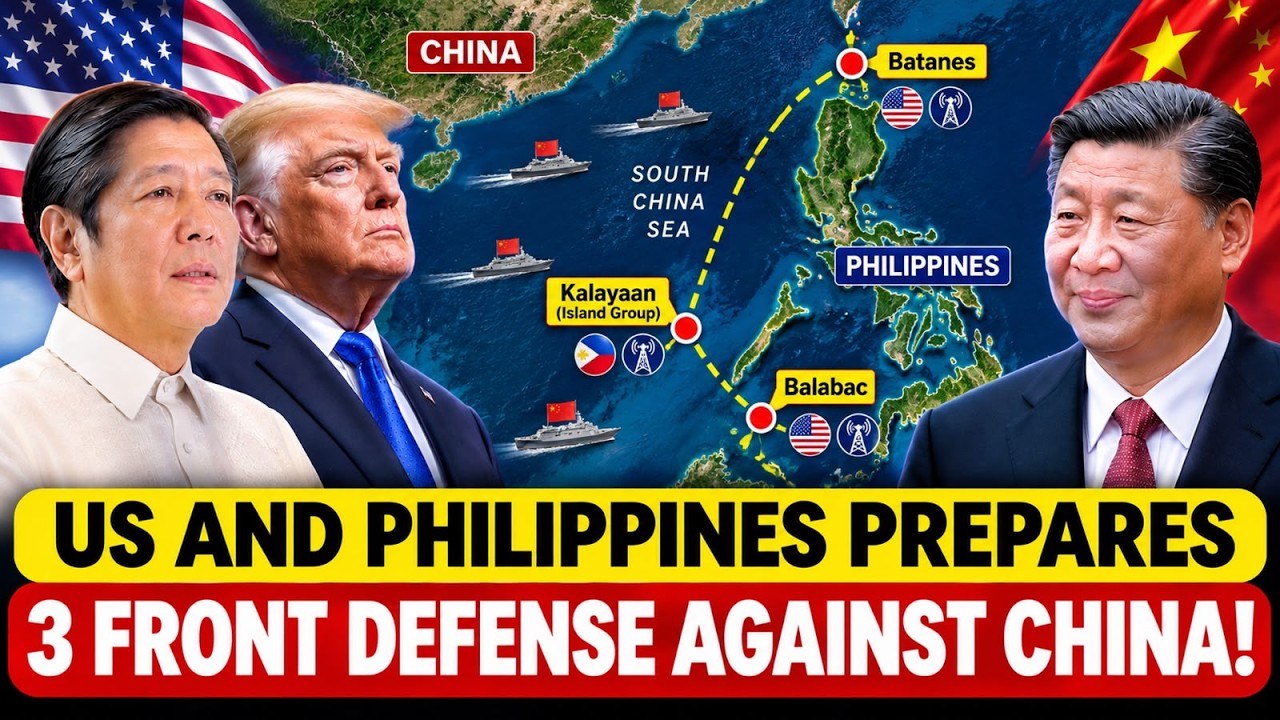
The geographical location of EDCA sites is also strategically significant. Facilities such as Basa Air Base in Luzon and the agreed location at Balabac in southern Palawan contribute to a wider network that supports military mobility and regional access. Palawan is particularly important because of its proximity to the West Philippine Sea and maritime areas where the Philippines has important economic and security interests. Better infrastructure in strategically located areas can help improve the movement of personnel and equipment and support the wider maritime surveillance and defense network. However, EDCA should be understood accurately. It does not establish permanent American military bases under U.S. ownership, nor does it transfer Philippine sovereignty over the agreed facilities. The locations remain Philippine military facilities, and American access operates within the terms of the agreement. This distinction is important because the purpose of EDCA is to strengthen defense cooperation while maintaining Philippine control over its territory.
The agreement also has an indirect connection to offshore energy security. EDCA locations should not be described as facilities specifically designed to defend Malampaya or Reed Bank. Offshore energy installations require a combination of maritime monitoring, government coordination, reliable logistics, and the ability to respond to security incidents. Improvements to military infrastructure can support these wider capabilities by making it easier for Philippine forces to move, communicate, and sustain operations. For example, a stronger logistical network can help the Philippine military maintain equipment, support patrol operations, and coordinate with allied forces. Reliable facilities also make joint exercises more effective because personnel can operate from better-equipped locations. These improvements become especially relevant when maritime activity increases and Philippine authorities need to monitor different areas simultaneously.
PHILIPPINE MILITARY MODERNIZATION
The Philippines understands that international partnerships alone cannot protect its maritime interests. Although American assistance provides important support, Manila must continue investing in its own defense capabilities if it wants to maintain a credible presence in the West Philippine Sea. This has encouraged the government to modernize its armed forces, with increasing attention to naval capabilities, coastal defense, maritime surveillance, communications, and the protection of important sea routes. The objective is to reduce capability gaps and improve the country’s ability to respond to different types of maritime challenges. For many years, the Philippines faced limitations in its ability to monitor and defend its extensive maritime territory. Its naval and air capabilities were not sufficient to maintain a continuous presence across all strategically important areas. As China’s military and coast guard capabilities expanded, the difference between the two countries became more visible. Manila therefore began placing greater emphasis on modernization, recognizing that maritime security requires more than diplomatic statements and international legal arguments. It also requires the equipment, personnel, and operational readiness needed to protect national interests.
One important example of Philippine modernization is the BrahMos coastal defense missile system acquired from India. The system provides the Philippines with a maritime strike capability and strengthens its wider coastal defense posture. Its acquisition is particularly significant because it demonstrates that Manila is diversifying its defense partnerships rather than depending entirely on American military assistance. India has become an important supplier in the Philippines’ effort to develop capabilities that can contribute to maritime deterrence. BrahMos is not an American weapon, and it is not a dedicated defense system for Malampaya or Reed Bank. Its role is connected to the Philippines’ broader national defense requirements. The system can contribute to coastal defense by strengthening the country’s ability to respond to maritime threats within the framework of its defense strategy. Its presence may also influence how potential adversaries assess the risks of operating near Philippine territory.
Modernization also involves improving naval vessels, maritime patrol capabilities, radar coverage, communications, and the operational strength of the Philippine Coast Guard. These capabilities are essential because the country faces challenges that range from illegal fishing and maritime surveillance to more serious confrontations involving foreign government vessels. A stronger Coast Guard can help enforce maritime laws and maintain a government presence, while a more capable Navy provides additional support for national defense. For offshore energy security, these developments are important because exploration and production require a stable maritime environment. Philippine authorities need to monitor the waters around energy installations, identify suspicious vessels, and ensure that commercial activities can continue without unnecessary disruption. Stronger coastal defense and surveillance capabilities can contribute to this objective by making the country’s maritime presence more credible.
About Indo-Pacific Report
For more geopolitical analysis, strategy coverage, and Indo-Pacific security reporting, visit Indo-Pacific Report:
Website
Facebook
YouTube
US and Philippines Are Building a 3-Front Defense to Deter China