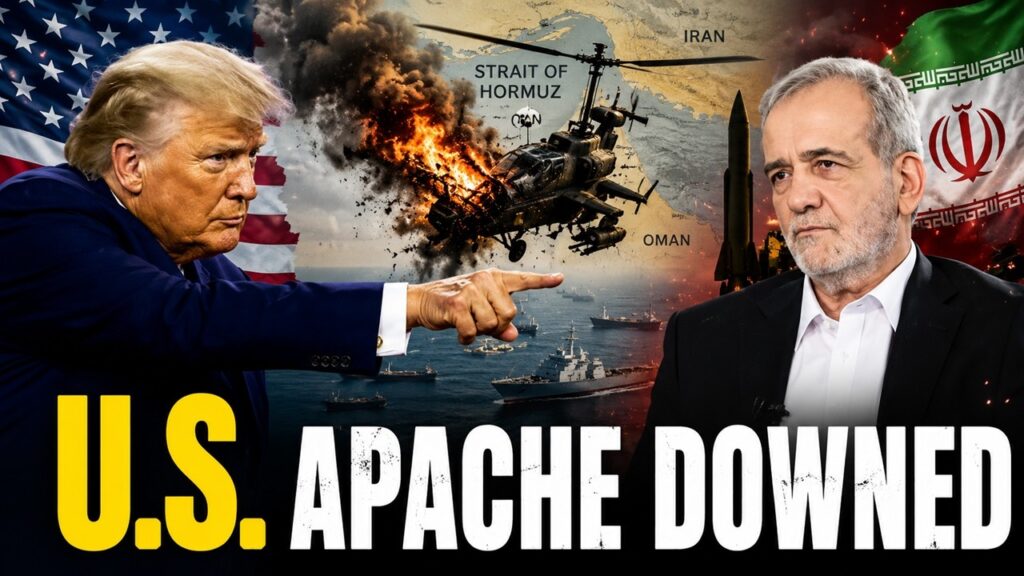
Trump Vows Response After Iran Downs U.S. Apache Helicopter
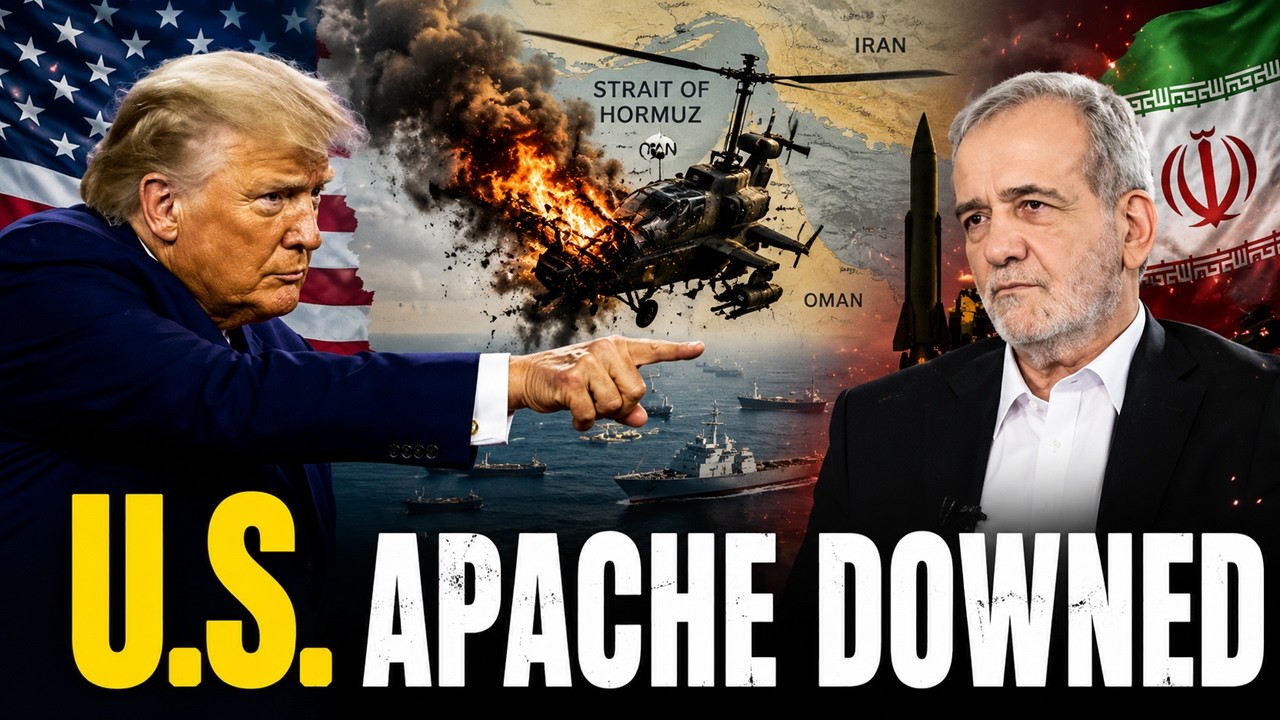
A reported incident involving a U.S. Apache helicopter near the Strait of Hormuz has raised tensions between the United States and Iran, sparking global security concerns over one of the world’s most strategic waterways. Tensions in the Middle East have once again drawn global attention after reports emerged of a serious incident involving a U.S. Army AH-64 Apache attack helicopter near the Strait of Hormuz. According to statements attributed to U.S. President Donald Trump, the helicopter was allegedly shot down by Iranian forces during a patrol mission in the region on June 9.
While investigations are still ongoing and official confirmation remains limited, the incident has already sparked widespread concern about a possible escalation between Washington and Tehran.
WHAT HAPPENED NEAR THE STRAIT OF HORMUZ?
The aircraft involved was reportedly an AH-64 Apache attack helicopter operating under U.S. Central Command in the waters near Oman, close to the Strait of Hormuz. The helicopter went down during a regional patrol operation.
U.S. military sources confirmed that both crew members survived the incident and were rescued within approximately two hours. They were later reported to be in stable condition.
However, the cause of the incident remains under investigation. While political statements have suggested possible Iranian involvement, no final verified conclusion has been publicly confirmed by independent military investigators.

A HIGH-TECH RESCUE OPERATION USING DRONE BOAT TECHNOLOGY
One of the most notable developments in this incident is the use of advanced unmanned systems during the rescue operation. Reports indicate that the U.S. military deployed an autonomous surface vessel, known as “Corsair,” to assist in locating and recovering the downed crew.
This marks a significant step in the growing use of artificial intelligence and autonomous naval systems in real-world military operations. The crew was safely recovered and later airlifted to secure facilities.
THE POLITICAL RESPONSE AND RISING TENSIONS
Following the incident, U.S. President Donald Trump publicly stated that Iran was responsible for the attack and emphasized that the United States “must respond.” His comments immediately heightened concerns of potential escalation in an already volatile region.
At the same time, U.S. defense officials have stressed that a full assessment is still underway. Washington faces a complex balancing act: responding firmly to protect military credibility while avoiding a broader regional conflict.
WHY THE STRAIT OF HORMUZ IS STRATEGICALLY CRITICAL
The Strait of Hormuz is one of the most important maritime chokepoints in the world. It connects the Persian Gulf to the Arabian Sea and is responsible for a significant portion of global oil and gas transportation.
Any disruption in this narrow waterway can have immediate global consequences, including rising energy prices and supply chain instability. This is why even isolated incidents in the region attract urgent international attention.
A REGION ALREADY UNDER PRESSURE
This latest development does not exist in isolation. The Middle East is already experiencing heightened tensions involving multiple regional actors, including Iran, Israel, and the United States.
Over the past months, the region has witnessed missile exchanges, drone strikes, and increased military activity. The helicopter incident adds another layer of uncertainty to an already fragile security environment.
WHAT COMES NEXT?
The situation remains fluid. The United States is expected to continue its investigation into the cause of the incident while also evaluating possible policy responses.
Diplomatic channels between Washington and Tehran remain open, but trust between the two sides is extremely limited. The key question now is whether this incident will lead to further escalation or become another flashpoint that is contained through diplomatic pressure.
US to Deploy Advanced Missiles in Philippines Amid South China Sea Tensions
For now, global attention remains fixed on the Strait of Hormuz, where even a single incident has the potential to reshape regional stability.
ABOUT INDO PACIFIC REPORT
For more geopolitical analysis and breaking updates, visit our platforms:
https://www.youtube.com/watch?v=bwVtoMdJkZQ