Should America Pull Back From the First Island Chain?
The United States faces a growing strategic dilemma in the Indo-Pacific: maintaining military forces close enough to deter China while ensuring they can survive a potential conflict. Here is why the First Island Chain matters, what a shift toward Guam and the Second Island Chain could mean, and how the Philippines fits into America’s regional defense strategy.
The United States is facing a difficult question about its military strategy in the Indo-Pacific: should Washington continue strengthening its military presence along the First Island Chain, or should it move more forces farther away from China’s growing military reach? The debate is becoming increasingly important as tensions involving China, Taiwan, the South China Sea, and the Philippines continue to shape regional security. For American defense planners, the challenge is not simply how to deter China, but how to ensure that US forces remain capable of responding if a major crisis begins.
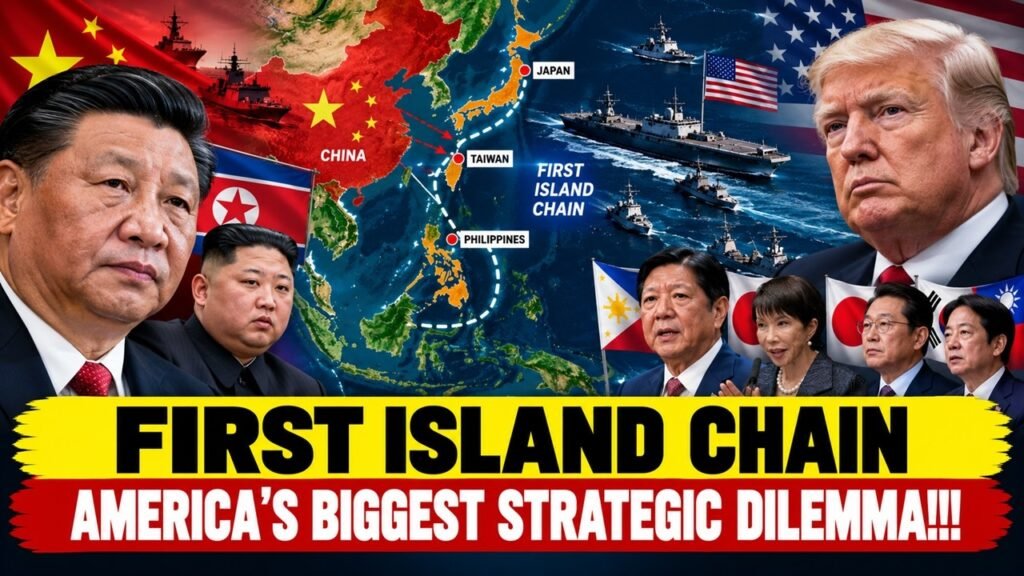
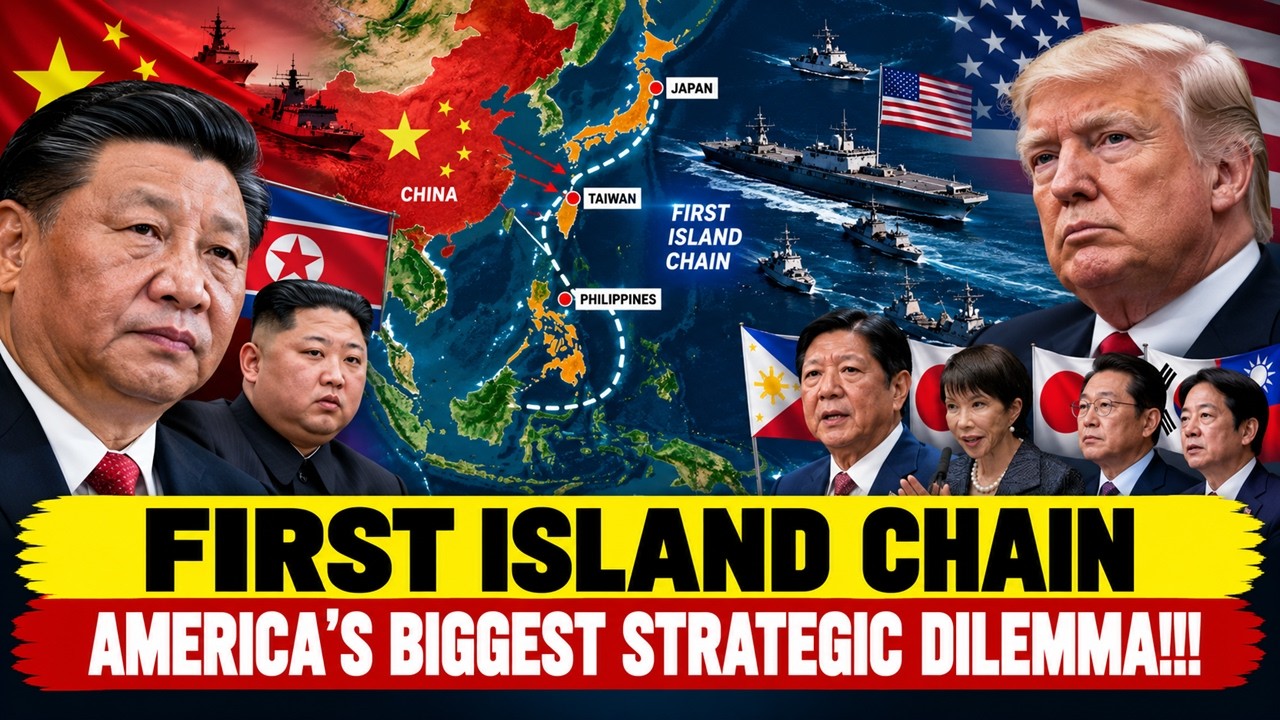
The First Island Chain stretches across the western Pacific, connecting Japan, Taiwan, and the Philippines through a series of strategically important islands and maritime approaches. Its location gives the United States and its regional partners access to areas that would become critical during a conflict involving Taiwan or the South China Sea. However, this geographic advantage comes with a serious disadvantage. Military bases, aircraft, missile systems, fuel supplies, ports, and command facilities positioned relatively close to China could face intense attacks during the opening stages of a major war.
What Is the First Island Chain and Why Does It Matter?
The First Island Chain is a strategic geographic arc that generally runs from Japan through the Ryukyu Islands and Taiwan toward the Philippines and the surrounding maritime approaches. It is not a single defensive wall or a continuous line of American military bases. Instead, it describes a region whose location gives military planners access to important waterways, air routes, and potential conflict zones along China’s eastern maritime approaches. For the United States, the First Island Chain provides several advantages. Forces operating from locations within or near this region can monitor Chinese military activity, support regional allies, conduct maritime surveillance, and respond more quickly to developments around Taiwan and the South China Sea. Access to airfields, ports, logistics facilities, and allied territory can also complicate China’s efforts to operate freely beyond its immediate coastal waters. These advantages are central to the American concept of deterrence by denial, which seeks to convince a potential adversary that military aggression is unlikely to achieve its objectives.
Philippines Deploys BRAHMOS Missiles in LUZON to Deter China!
Geography is particularly important because a conflict in the western Pacific could develop quickly. If tensions around Taiwan escalated into a military confrontation, the ability to operate aircraft, coordinate naval forces, share intelligence, and supply deployed units would become critical. Forces positioned farther away could still contribute, but they might require more time, additional aerial refueling, and longer logistical routes. Forward access can therefore create opportunities that are difficult to reproduce from distant bases.
However, proximity does not automatically guarantee military superiority. Modern long-range missiles, precision-guided weapons, drones, cyber operations, and attacks on communications infrastructure can threaten military facilities that once appeared relatively secure. The same geography that helps the United States respond quickly can expose its forces to a greater concentration of Chinese military capabilities. This is why the future of the First Island Chain has become a debate about both deterrence and survivability.
Why the United States Is Strengthening Its Forward Military Presence
Washington’s continued focus on the First Island Chain reflects concern about China’s growing ability to project military power across the western Pacific. China has invested heavily in missiles, aircraft, naval forces, surveillance systems, and other capabilities that could complicate American intervention during a regional conflict. US defense planners consequently want to ensure that China cannot assume it would gain a decisive advantage simply by using its geographic proximity to Taiwan and other potential flashpoints.
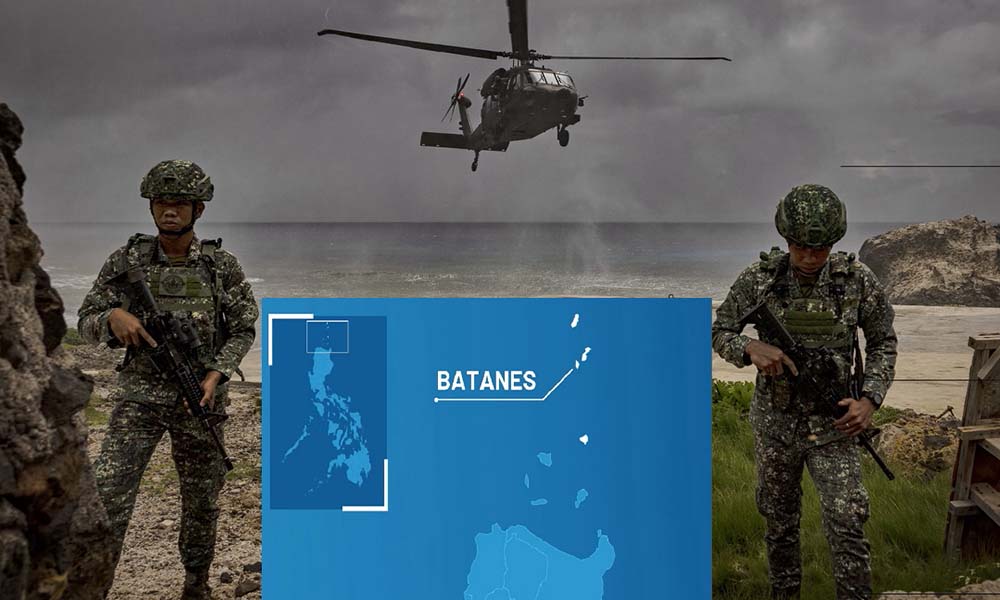
The American approach emphasizes the ability to deny an adversary freedom of action rather than relying exclusively on the threat of retaliation. This means developing a network of military capabilities that can monitor activity, complicate hostile operations, protect important maritime routes, and support regional partners. Forward deployments can make that network more responsive, particularly when American forces have access to facilities in Japan and the Philippines. The Philippines has become especially important because of its location near the South China Sea and the approaches to the Luzon Strait. Northern Luzon is geographically close to Taiwan, while western Philippine territory faces the South China Sea. Access to these areas can provide valuable options for surveillance, logistics, exercises, and the movement of military forces. The Philippines is therefore relevant to more than one potential contingency in the western Pacific
Can US Forces Survive the Opening Stages of a War?
The strongest argument for reducing some of America’s forward military footprint is the growing vulnerability of fixed infrastructure. A military base may be valuable because it places aircraft, personnel, and supplies near a potential battlefield, but its usefulness depends on whether those assets can continue operating when an adversary attacks. A runway that is damaged, a fuel depot that is destroyed, or a command center that loses communications can reduce a base’s effectiveness even if the surrounding facilities remain intact.
China’s long-range strike capabilities make this concern particularly important. In a high-intensity conflict, US installations within reach of Chinese weapons could face attacks intended to disrupt aircraft operations, damage logistics networks, exhaust defensive systems, and slow the movement of reinforcements. The threat would not be limited to airfields. Ports, ammunition storage sites, communications networks, maintenance facilities, and fuel supplies could also become targets.
The problem is not limited to the possibility of individual facilities being destroyed. A military force depends on a network of supporting capabilities, and damage to one part of that network can affect operations elsewhere. Aircraft may survive an attack but remain grounded if runways cannot be repaired or fuel is unavailable. Ships may remain operational but struggle to receive supplies if ports are damaged. Commanders may retain personnel and equipment but face difficulties coordinating forces if communications systems are disrupted.
This is the central survivability argument behind proposals to shift more military infrastructure toward the Second Island Chain. Supporters argue that a force positioned farther from China may be more difficult to attack and could retain greater combat power during a prolonged conflict. However, distance alone does not guarantee safety. Long-range weapons can threaten facilities far from the immediate front line, and rear bases also depend on vulnerable supply routes and communications systems. The objective should therefore be to reduce the consequences of an attack rather than assume that any geographic position is invulnerable.
What Is the Second Island Chain
The Second Island Chain refers to a broader set of strategic locations farther east in the western Pacific, commonly associated with Guam, the Northern Mariana Islands, Palau, Micronesia, and other regional positions. Australia also plays an important role in the wider network of American military access and support. These locations offer greater geographic depth than many positions closer to China’s coastline, although their value varies according to the mission, available infrastructure, and operational requirements.
Guam is particularly important because it is a major American military hub in the western Pacific. It supports naval and air operations and provides infrastructure that can contribute to logistics, reinforcement, and regional power projection. Strengthening facilities on Guam and other rear-area locations could help the United States maintain a greater share of its combat power outside the most heavily contested areas while preserving the ability to send forces forward when necessary.
Why a Complete American Pullback Could Weaken Deterrence
Although the vulnerabilities of forward bases are real, a large-scale American withdrawal could create serious strategic costs. Deterrence depends not only on the number of military assets a country possesses but also on whether a potential adversary believes those assets can be used effectively and in time. A powerful force positioned far from a crisis may still have a major impact, but its ability to respond could depend on warning time, transportation capacity, access agreements, and the condition of regional infrastructure.
A major reduction in forward access could also affect how American allies assess their security. Japan, the Philippines, and other regional partners may question whether the United States could respond quickly enough during a rapidly developing confrontation. Such concerns would not automatically cause an alliance to weaken, but they could influence defense spending, military planning, and political decisions about cooperation with Washington. China would also have to evaluate any change in American force posture. A more distant American presence could complicate Chinese planning if US forces remained capable of responding from multiple directions. Conversely, if Beijing concluded that American intervention would be delayed or politically uncertain, its assessment of the regional military balance could change. Neither outcome is inevitable, and it would be misleading to assume that a pullback would automatically lead to Chinese aggression. The important point is that military posture shapes expectations, and those expectations are central to deterrence.
Why the Philippines Is Central to America’s Indo-Pacific Strategy
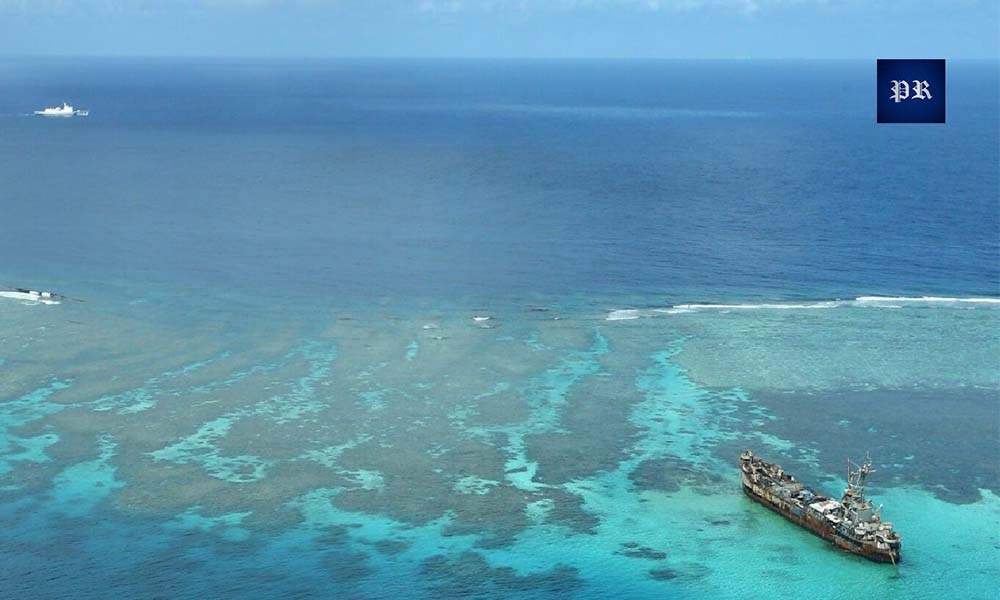
The Philippines occupies a strategically significant position between the South China Sea and the western Pacific. Its northern islands lie near the approaches to the Luzon Strait and Taiwan, while its western coastline faces maritime areas that have become important to regional security. This geography gives the country a role in surveillance, maritime awareness, logistics, and potential support for allied operations across more than one strategic direction. For Washington, cooperation with Manila can help maintain access to important locations without requiring every American force to remain permanently stationed in the Philippines. Defense cooperation arrangements, joint exercises, infrastructure improvements, and access to agreed facilities can provide operational flexibility. Such arrangements are particularly relevant when military planners are trying to distribute forces across multiple locations rather than concentrate them at a few large bases.
The Philippines also faces its own security challenges. Disputes in the South China Sea, concerns about maritime access, and the need to protect national territory make stronger surveillance and defensive capabilities important to Manila regardless of the exact size of the American military presence. Investment in coastal defense, maritime-domain awareness, air defense, drones, communications, and resilient logistics could strengthen the Philippines’ ability to monitor and respond to developments in its surrounding waters.
However, greater defense cooperation does not remove the need for careful political judgment. Decisions about foreign military access, weapons deployments, and operational support have implications for Philippine sovereignty, domestic opinion, economic interests, and relations with neighboring countries. Manila must weigh the benefits of cooperation with Washington against the risks of becoming more exposed during a confrontation between major powers.
Could the Philippines Become More Responsible for Its Own Defense?
A shift toward a more distributed American military posture could increase pressure on the Philippines to strengthen its own defense capabilities. This would fit the broader argument that US allies should assume greater responsibility for protecting their territory while the United States contributes advanced capabilities, intelligence, logistics, and wider strategic support. In practice, however, developing credible military capacity takes time, funding, training, and sustained institutional planning.
For the Philippines, maritime surveillance is particularly important because the country has an extensive coastline and operates across a large maritime area. Better radar coverage, unmanned surveillance systems, coastal sensors, and improved information-sharing could help authorities understand what is happening in surrounding waters. Stronger maritime awareness would also support coast guard operations and help the government make more informed decisions during periods of tension. Coastal defense and air defense are additional priorities. Systems designed to complicate hostile naval or air operations could strengthen the country’s ability to protect key areas, while resilient communications and logistics would help maintain operations during a crisis. These capabilities would need to be integrated with training, maintenance, command arrangements, and clear rules governing their use. Purchasing equipment alone would not create an effective defense network.
Taiwan Is the Central Test of the First Island Chain Strategy
Taiwan is one of the most important factors shaping the debate over American military posture in the western Pacific. Its location, political status, and relationship with China make any potential crisis around the island a major concern for regional security. A conflict could affect maritime routes, regional economies, neighboring countries, and the wider relationship between Washington and Beijing.
Supporters of a strong forward posture argue that American forces need access to the region to respond effectively if a crisis develops. Nearby facilities can support surveillance, logistics, and the movement of military forces, potentially making intervention more practical. They also argue that visible readiness can help discourage military action by reducing the expectation that an aggressor could achieve its objectives quickly.
Advocates of a greater emphasis on the Second Island Chain raise a different concern. If American aircraft, ships, and support facilities are concentrated close to China, they could face attacks designed to disrupt operations before they become effective. Moving some high-value assets farther away might preserve more of the force for a prolonged conflict and reduce the risk associated with a limited number of exposed installations.
Why a Distributed Military Network May Be Better Than a Line of Bases
The traditional image of a forward military posture often emphasizes large bases with aircraft, personnel, and support facilities concentrated in a small number of locations. Such bases can be efficient in peacetime, but concentration creates potential vulnerabilities during a high-intensity conflict. An adversary that can identify and attack a limited number of critical facilities may be able to disrupt operations across a much wider area.
A distributed network offers a different approach. Instead of relying on a few major installations, forces could operate across multiple airfields, ports, logistics locations, and temporary deployment sites where suitable infrastructure and political agreements exist. Some facilities could provide routine support, while others could serve as alternatives if primary locations became unavailable. This approach would make it more difficult for a single attack to disable an entire operational network.
Dispersion must be accompanied by reliable communications, compatible equipment, trained personnel, fuel supplies, maintenance capacity, and sufficient ammunition. Without these supporting elements, distributing forces could create logistical confusion rather than resilience. Commanders would also need to coordinate operations across a wider geographic area while ensuring that different units could share information and support one another.
Allied cooperation is equally important. Japan, the Philippines, Australia, and other partners have different capabilities, political constraints, and infrastructure requirements. Building a distributed network therefore involves more than military planning. It requires agreements about access, responsibilities, information-sharing, infrastructure protection, and the political circumstances under which facilities could be used.
If developed successfully, such a network could connect forward access with deeper support across the Second Island Chain. American forces would not need to place every critical asset near China, but they would retain options to move forward when necessary. This would make the First Island Chain less dependent on a small number of permanent American installations and more reliant on a wider regional defense architecture.
The Economic and Political Costs of Moving Military Forces
The debate over American military posture is not only about missiles, aircraft, and geography. It also involves substantial financial and political considerations. Building hardened facilities, maintaining dispersed operating locations, improving ports and airfields, and securing logistics networks can require long-term investment. Moving forces farther away may reduce some risks, but it can also increase transportation costs, maintenance demands, and the need for aerial refueling and additional support infrastructure.
Allied governments must also decide how much access they are prepared to provide. Hosting foreign forces or supporting military operations can raise questions about sovereignty, domestic political support, and the possibility that local territory could become a target during a conflict. These concerns are especially significant for countries that have important economic relationships with China and want to avoid being drawn into a wider confrontation.
For the Philippines, the balance is particularly sensitive. Stronger defense cooperation with the United States may improve deterrence and support maritime security, but it also requires Manila to consider the consequences of greater military activity near its territory. The government must evaluate the benefits of access arrangements alongside the potential costs to national security, diplomacy, trade, and regional stability.
A sustainable American strategy must therefore account for the political choices of its allies rather than treating access as a permanent or automatic resource. A military network is only as effective as the facilities, agreements, and partnerships that support it. Investments in infrastructure and equipment must be accompanied by diplomatic engagement and a clear understanding of what each country is willing and able to contribute.
Conclusion
The debate over the First Island Chain reflects one of the most difficult questions in modern military strategy: how can a country maintain a credible forward presence without making its forces dangerously vulnerable? The United States benefits from access to Japan, the Philippines, and other locations close to potential flashpoints, but those same positions could face intense pressure during a major conflict. Moving more capabilities toward Guam, Palau, Australia, and other rear-area locations could improve strategic depth, although excessive distance could complicate rapid intervention and weaken confidence in American responsiveness.
For the Philippines, the consequences are especially important. Its geographic position gives it a role in both the South China Sea and the approaches toward Taiwan. That makes cooperation with the United States strategically valuable, but it also means that decisions about military access and infrastructure must account for Philippine sovereignty, national defense requirements, and the risks of regional escalation.
The strongest strategy is likely to combine forward access with greater survivability. Rather than treating the First and Second Island Chains as competing choices, Washington can develop a connected regional network in which forward locations support surveillance and timely response while deeper positions provide logistics, reinforcement, and operational resilience. Stronger allied capabilities would help distribute responsibilities, although they would not eliminate the need for effective American support.
About Indo-Pacific Report
For more geopolitical analysis, strategy coverage, and Indo-Pacific security reporting, visit Indo-Pacific Report:
Website
Facebook
YouTube