Introduction: The West Philippine Sea as a National Lifeline
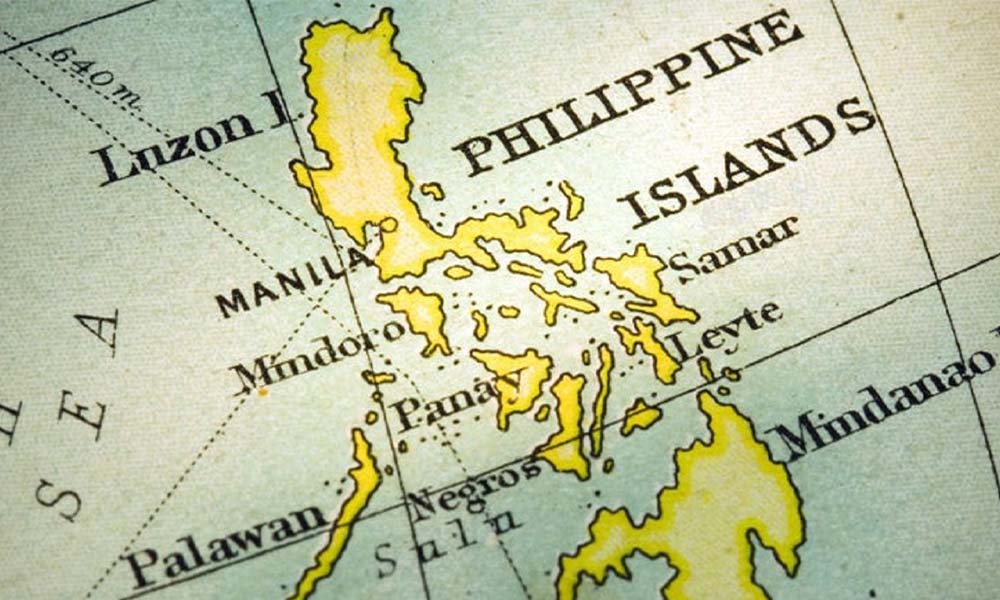
The West Philippine Sea (WPS) — the portion of the South China Sea lying within the Philippines’ Exclusive Economic Zone (EEZ) — has once again surged to the forefront of Manila’s foreign policy, defense strategy, and national identity. More than just water, it is a vital artery for national food security, energy sovereignty, and maritime trade routes. In October 2025, the Philippines doubled down on its position with a powerful declaration: its sovereign rights over the WPS are “incontrovertible” — leaving no room for ambiguity, negotiation, or revisionism.
This stance, grounded in international law, historical treaties, and the binding 2016 Arbitral Award, signals a new era of assertive diplomacy and legal resilience. As tensions escalate with China’s gray-zone tactics, Manila is not backing down — it’s doubling down on rules-based order, sovereign jurisdiction, and diplomatic clarity.
The Legal Cornerstone: 2016 Arbitral Award – A Binding Victory
At the heart of the Philippines’ “incontrovertible” claim lies the 2016 Arbitral Award issued by the Permanent Court of Arbitration (PCA) in The Hague. This landmark ruling, under the United Nations Convention on the Law of the Sea (UNCLOS), decisively invalidated China’s Nine-Dash Line, declaring it “without legal basis.” The tribunal affirmed that Scarborough Shoal (Bajo de Masinloc) — located just 120 nautical miles from Zambales — is legally classified as a rock under UNCLOS Article 121(3), meaning it cannot generate its own EEZ and falls squarely within the Philippine EEZ.
The PCA also ruled that China violated Philippine sovereign rights by blocking Filipino fishermen at Scarborough Shoal, Mischief Reef, and Second Thomas Shoal (Ayungin). It condemned Beijing’s land reclamation and artificial island-building for causing “severe, irreparable harm to the coral reef ecosystem.”
As National Security Adviser Eduardo Año stated in August 2025:
“There is an arbitral ruling that clearly states our rights in the West Philippine Sea, and it is well-documented.”
This award isn’t just symbolic — it’s enforceable international law, recognized by global institutions and allies alike.
Historical & Constitutional Foundations: From Treaties to Constitution
The Philippines’ claim to the West Philippine Sea isn’t modern political posturing — it’s rooted in centuries-old treaties and constitutional mandates.
Key historical anchors:
- Treaty of Paris (1898): Ceded the Philippine archipelago to the U.S., including maritime features now part of the WPS.
- Treaty of Washington (1900): Clarified boundaries, explicitly including islands outside the original cession — reinforcing Philippine territorial integrity.
- 1930 U.S.-Great Britain Treaty: Defined maritime limits between the Philippines and North Borneo, further solidifying historical claims.
Domestically, the 1987 Philippine Constitution enshrines the duty to protect marine resources. Article XIII, Section 7 mandates the State to “protect the rights of subsistence fishermen” against foreign intrusion — turning sovereignty into constitutional obligation.
President Ferdinand Marcos Jr. reinforced this during his May 2024 Shangri-La Dialogue address:
“The Treaty of Paris crystallized our islands into a cohesive whole… the Treaty of Washington clarified the extent of our territory.”
And in October 2025, Philippine Coast Guard officials dismissed claims that the Treaty of Paris excludes Scarborough Shoal or the Kalayaan Island Group (KIG) — asserting they fall within the Philippine EEZ under UNCLOS, complementing, not contradicting, historical treaties.
Philippines’ Balabac Island to Light Up with 102kWh Solar Energy
Asserting Rights Through Legislation & Policy
Manila isn’t stopping at diplomacy — it’s codifying its WPS rights into domestic law.
In November 2024, Congress passed two landmark laws:
- Philippine Maritime Zones Act
- Philippine Archipelagic Sea Lanes Act
These laws legally define the country’s territorial sea, contiguous zone, EEZ, and continental shelf, giving teeth to UNCLOS and the 2016 Arbitral Award. As Senate President Chiz Escudero said:
“This is domestic law, on top of the 2016 arbitral ruling, that will bind executive officials.”
In July 2024, President Marcos declared in his State of the Nation Address (SONA):
“The Philippines cannot yield. The Philippines cannot waver. The West Philippine Sea… is ours.”
Beyond legislation, Manila submitted its Extended Continental Shelf (ECS) claim to the UN Commission on the Limits of the Continental Shelf (CLCS) — a concrete, internationally recognized act of sovereign assertion under UNCLOS Article 76.
Confrontations & Transparency Initiatives: Countering Gray-Zone Coercion
While Manila asserts its rights through law, China continues its gray-zone coercion campaign — using non-military aggression to assert control.
Key incidents (2024–2025):
- June 2024: Chinese vessel rams a Philippine ship, injuring a serviceman.
- April 2024: Scarborough Shoal Water Cannon Incident — China Coast Guard (CCG) and Chinese Maritime Militia (CMM) attacked PCG and BFAR vessels with high-pressure water cannons, damaging navigation systems and forcing retreat.
In response, the Philippines launched its “transparency initiative” — publicly documenting, photographing, and broadcasting every hostile encounter. As NSC officials confirm, this strategy turns coercion into accountability, rallying global opinion while maintaining proportionate, lawful responses.
The presence of the 165-meter-long CCG vessel 5901 — dubbed the “Monster Ship” — since January 2025 underscores Beijing’s escalating pressure. Manila’s dual-track approach — transparency + lawful assertion — is emerging as a model for small nations resisting coercion.
Domestic & International Support: Unity at Home, Alliances Abroad
The Philippines’ WPS stance enjoys overwhelming domestic consensus and growing international backing.
At Home: Public Backing as Political Fuel
- OCTA Research (Nov 2024): 84% of Filipinos support defending WPS rights.
- Pulse Asia (June 2025): 65% want AFP/PCG modernization prioritized.
- Voters increasingly choose candidates who pledge to defend Philippine sovereignty — making foreign policy an electoral issue.
Abroad: Allies Rally Behind the Rule of Law
- Quad Summit (Sept 2024): U.S., Japan, Australia, India jointly recognized the 2016 Arbitral Award as the basis for peaceful resolution — a direct rebuke to Beijing.
- Enhanced Defense Cooperation Agreement (EDCA): Eight joint Maritime Cooperation Activities (MCAs) with the U.S. in 2023–2024, including patrols near Scarborough Shoal.
- Japan, Australia, South Korea have expanded partnerships via radar donations, coast guard training, and joint exercises — forming a coalition for Indo-Pacific stability.
China’s Bombers Move In, Manila Refuses to Back Down – South China Sea Crisis Escalates
Conclusion: Commitment to a Rules-Based Order
The Philippines’ position in the West Philippine Sea is not about nationalism alone — it’s about global norms, legal legitimacy, and national survival. Its claim rests on:
International Law (UNCLOS)
Binding Arbitral Award (2016)
Historical Treaties
Constitutional Mandate
Legislative Codification
Public Consensus
Allied Solidarity
As the Department of Foreign Affairs (DFA) declared on October 7, 2025:
“The Philippines will continue to assert and preserve its territorial integrity, and strongly uphold its sovereignty, sovereign rights, and jurisdiction in accordance with international law.”
This is more than rhetoric — it’s a pledge to future generations that the nation will act peacefully, responsibly, and resolutely, guided by law, not force.
At its core, the Philippines stands as a maritime democracy — proving that strength lies not in military might, but in moral legitimacy. By grounding its defense of the West Philippine Sea in transparency, unity, and legality, Manila ensures its claim — and its place in the Indo-Pacific rules-based order — remains unassailable.