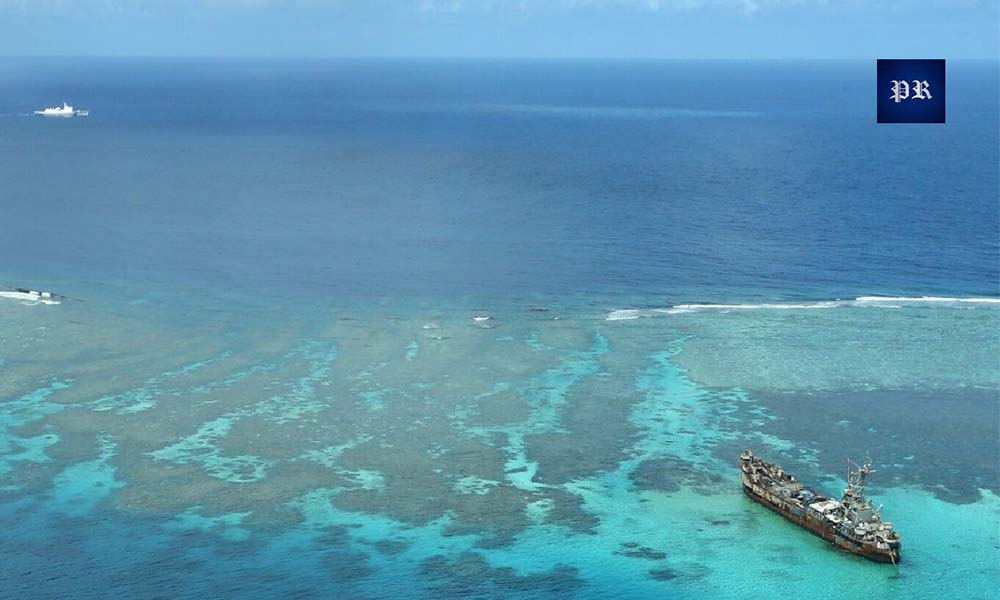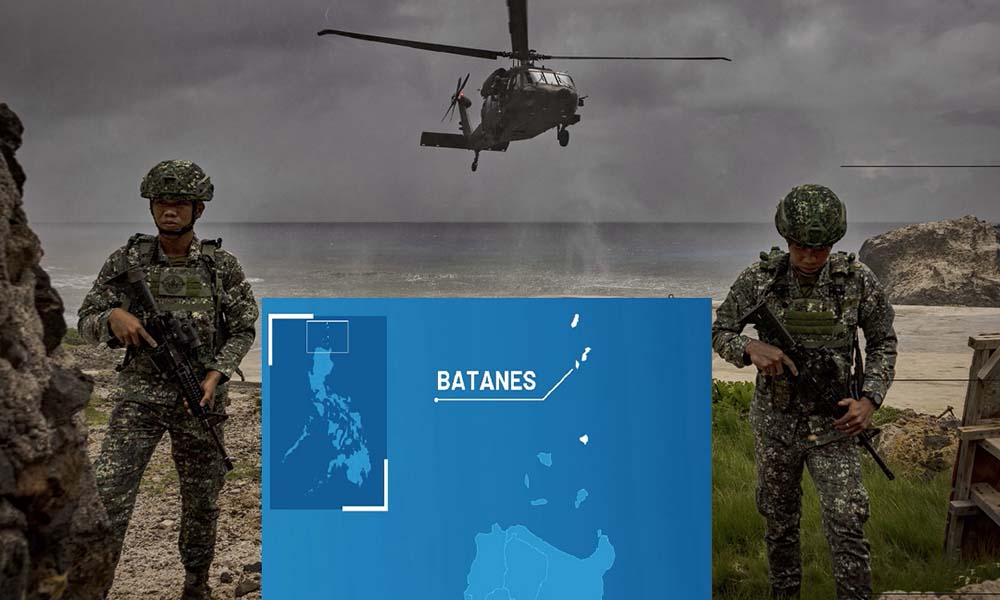
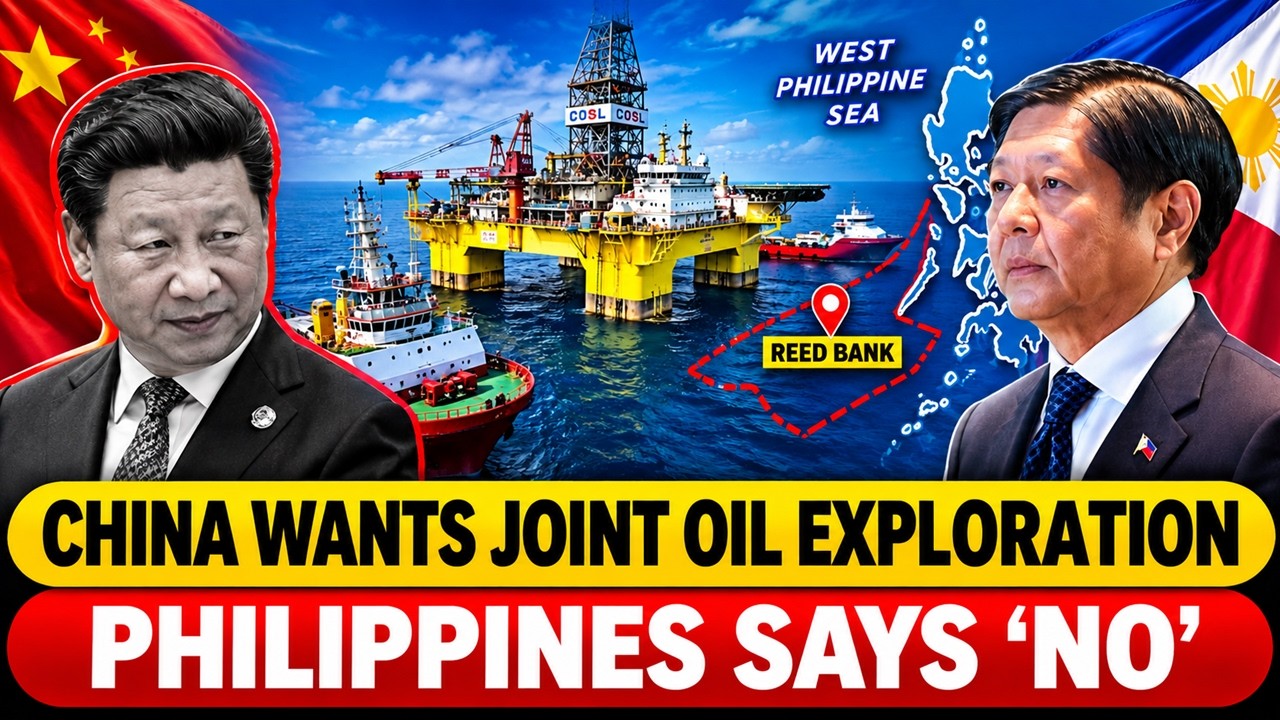
The disagreement became particularly significant on November 3, 2026, when Philippine Defense Secretary Gilberto Teodoro Jr. rejected renewed criticism surrounding the possibility of joint oil and gas exploration with China. His position reflected concerns about the legal foundation of previous negotiations and the constitutional requirements governing Philippine natural resources. President Ferdinand Marcos Jr. had previously expressed interest in reopening discussions about possible energy cooperation, recognizing that the country needs new sources of domestic energy. However, Teodoro’s position demonstrated that economic opportunities cannot be considered separately from the country’s constitutional responsibilities and maritime claims. The difference between these positions reflects a wider policy challenge within the Philippine government, where policymakers must balance the immediate need for energy investment against the long-term importance of protecting national interests.
Why the West Philippine Sea Is Strategically Important
The West Philippine Sea is one of the most strategically important maritime areas for the Philippines because of its potential natural resources, geographical position and connection to the wider South China Sea dispute. The term is used by Manila for maritime areas on the western side of the Philippine archipelago, including areas within the country’s maritime entitlements. These waters are important not only for fishing, shipping and maritime security but also for possible offshore petroleum exploration. The Philippines has a strong economic interest in identifying and developing commercially viable energy resources within its maritime zones because additional domestic production could reduce its dependence on imported fuel and improve long-term energy security. As the country’s population, industries and electricity requirements continue to grow, access to reliable energy supplies has become an increasingly important national priority. One of the most important areas in this discussion is Reed Bank, also known as Recto Bank, which has attracted attention because of its potential offshore oil and natural gas resources. Its strategic importance comes from the possibility that commercially recoverable petroleum deposits could contribute to the Philippines’ domestic energy supply. If successful exploration identifies viable reserves, the country could gain an additional source of natural gas for electricity generation and industrial development. This could help reduce exposure to international fuel price fluctuations and improve the government’s ability to plan its future energy requirements. However, discovering petroleum resources does not automatically guarantee economic benefits. Offshore exploration requires specialized vessels, advanced seismic technology, drilling equipment, experienced engineers, insurance and substantial financial investment. Companies also need confidence that their operations will take place within a stable legal environment.
US Expands Military Support for the Philippines — China Is Watching!
The presence of competing Chinese claims makes the development of these resources more difficult. The Philippines maintains that it possesses maritime rights over resources within its exclusive economic zone, while China continues to advance claims that Manila considers inconsistent with international maritime law. This disagreement creates uncertainty for companies that may otherwise be interested in investing in offshore exploration. Energy firms usually evaluate not only the geological potential of a particular area but also the political and legal risks associated with operating there. If companies believe that exploration could trigger diplomatic confrontation, operational restrictions or disputes over jurisdiction, they may delay investment or choose opportunities in less complicated locations. Consequently, the future of Reed Bank and other potential offshore energy areas depends on more than the availability of petroleum reserves. It also depends on the Philippines’ ability to establish a secure legal and operational environment.The Philippines has already attempted to establish an energy cooperation framework with China, meaning the current disagreement is not the result of a complete absence of diplomatic engagement. Previous negotiations demonstrated that both countries were willing to discuss potential economic opportunities, but they also revealed how difficult it is to establish an agreement that satisfies both governments’ legal and political requirements. The termination of negotiations in 2022 showed that diplomatic goodwill alone was insufficient to overcome the constitutional and maritime disagreements. This history is essential to understanding why the Philippine government remains cautious about another arrangement. Any new proposal would need to address the legal problems that undermined previous efforts instead of simply repeating the language of cooperation without providing practical guarantees.
The 2016 South China Sea Arbitration and Its Impact on Energy Exploration
The 2016 South China Sea arbitral award remains one of the most important legal developments in the maritime dispute between the Philippines and China. The Philippines initiated arbitration proceedings under the United Nations Convention on the Law of the Sea in 2013 to challenge aspects of China’s maritime claims and clarify the rights available to coastal states under international law. On July 12, 2016, the tribunal issued its award, addressing China’s claims based on historic rights within the nine-dash line and several questions concerning maritime entitlements in the South China Sea. The decision was significant because it clarified that China’s historic-rights claims could not extend beyond the maritime entitlements permitted under UNCLOS. It also addressed China’s interference with Philippine activities in areas where the Philippines possessed maritime rights. The legal importance of the award must be understood carefully because it did not settle every territorial disagreement in the South China Sea. The tribunal did not determine sovereignty over every disputed island or maritime feature, nor did it prohibit every possible form of economic cooperation between the Philippines and China. Instead, its central contribution was to clarify important questions concerning maritime entitlements and the legal rights of coastal states over resources within their exclusive economic zones and continental shelves. Under UNCLOS, an exclusive economic zone does not become national territory, but the coastal state possesses sovereign rights to explore, exploit, conserve and manage natural resources within the relevant maritime area. These rights are especially important when governments consider offshore petroleum development because oil and natural gas resources are generally located beneath the seabed. China rejected the arbitral award and continues to dispute its conclusions, creating a persistent legal and diplomatic disagreement between the two governments. For the Philippines, however, the award remains an important foundation for protecting its maritime rights and opposing claims that it believes exceed the limits of international law. This is one reason why any proposed energy agreement with China must be carefully examined. Manila needs to ensure that commercial cooperation does not create an interpretation that weakens its legal position or introduces uncertainty about its authority over offshore resources. A future agreement would therefore need to clearly identify the geographical area, explain the legal basis of operations and establish how both countries would participate without requiring the Philippines to abandon its position under international law.
Why Foreign Oil Exploration Requires Strict Legal Safeguards
The 1987 Philippine Constitution creates one of the most important legal barriers to the proposed joint oil exploration arrangement with China. Article XII, Section 2 establishes that the State owns the country’s natural resources and that their exploration, development and utilization must remain under the full control and supervision of the government. This constitutional principle is central to the country’s energy policy because petroleum resources are considered part of the national wealth. The government therefore cannot approve an offshore exploration arrangement simply because it offers access to foreign investment, technology or financial assistance. Any proposed project must follow the constitutional framework and preserve the authority required by Philippine law. At the same time, the Constitution does not completely prohibit foreign companies from participating in the Philippine petroleum industry. It provides several legal mechanisms through which natural resources can be explored and developed. The State may undertake activities directly or enter into permitted co-production, joint venture and production-sharing arrangements with qualified Filipino citizens or corporations. It also allows the President to enter into agreements with foreign-owned corporations involving technical or financial assistance for large-scale exploration, development and utilization of petroleum and other mineral resources. This distinction is important because the actual legal question is not whether foreign companies can participate, but whether their participation follows the constitutional requirements and preserves Philippine State control and supervision.
The nature of the activity is equally important. A government cannot automatically avoid constitutional restrictions by describing petroleum exploration as preliminary research, technical cooperation or seismic surveying. If the purpose of an activity is to determine whether oil or natural gas exists in a particular area, it may legally qualify as exploration regardless of the terminology used in the agreement. This means that policymakers must examine who is conducting the work, which resources are being investigated, who controls the operations and who owns the information collected during the process. These questions must be answered before an agreement is approved because they directly affect its legal validity. For the Philippines, constitutional compliance is not an administrative formality that can be addressed after negotiations. It is a fundamental requirement that determines whether the proposed energy project can lawfully proceed.
The 2005 Joint Marine Seismic Undertaking: Why the Previous Agreement Failed
The Philippines has already attempted to cooperate with China and Vietnam on offshore petroleum research through an agreement that later became one of the most controversial examples of regional energy cooperation. On March 14, 2005, the Philippine National Oil Company, China’s China National Offshore Oil Corporation and Vietnam’s PetroVietnam signed the Joint Marine Seismic Undertaking, commonly known as the JMSU. The agreement covered approximately 142,886 square kilometres in the South China Sea and was intended to investigate the petroleum potential of the area through marine seismic surveys. Supporters presented the arrangement as an opportunity for the three countries to explore possible energy resources while reducing tensions surrounding their overlapping maritime claims. The idea was that technical cooperation could create economic opportunities without immediately requiring the governments to resolve their wider territorial disagreements. However, the agreement soon attracted criticism in the Philippines because of concerns about foreign participation in the exploration of national resources. Critics argued that the arrangement allowed wholly foreign-owned companies to participate in activities that should have remained under the control and supervision required by Article XII of the Philippine Constitution.
The central legal disagreement concerned whether seismic surveys should be considered preliminary scientific research or actual petroleum exploration. This distinction became extremely important because the agreement was designed to identify the potential presence of oil and gas resources, meaning its activities were directly connected to the possibility of future commercial development. Critics also raised concerns about the ownership and control of information collected during the surveys, arguing that these issues could affect the government’s constitutional authority over natural resources. On January 10, 2023, the Philippine Supreme Court ruled by a 12–2–1 vote that the Joint Marine Seismic Undertaking was unconstitutional and void. The Court concluded that seismic research intended to determine petroleum potential qualified as exploration under the Constitution. Describing the activity as pre-exploration did not change its essential purpose or remove it from the applicable constitutional restrictions. On July 5, 2023, the Court denied reconsideration with finality, confirming its earlier decision. This judgment became particularly important for future discussions about energy cooperation with China because it demonstrated that a new agreement could not simply repeat the structure of the 2005 arrangement. Any future proposal would need to satisfy the constitutional requirements in substance, including questions concerning government supervision, operational control and the ownership of exploration-related information. The ruling did not eliminate the possibility of foreign investment in Philippine petroleum development, but it established that international cooperation must take place through legally permitted arrangements.
Malaysia and Thailand: How Two Countries Developed Offshore Energy Cooperation
The experience of Malaysia and Thailand provides an important regional example of how governments can manage overlapping maritime claims while developing offshore petroleum resources. Both countries faced competing continental shelf claims in the Gulf of Thailand, where valuable energy resources created economic opportunities but also presented diplomatic challenges. Instead of allowing the disagreement to permanently prevent petroleum development, the two governments negotiated a framework that allowed them to explore and exploit resources in a defined area. In 1979, Malaysia and Thailand signed a memorandum of understanding establishing a joint development arrangement covering approximately 7,250 square kilometres. The agreement was designed to manage the overlapping claims while allowing both countries to benefit from the development of non-living natural resources, particularly offshore petroleum. One of the most important features of the Malaysia-Thailand arrangement was the creation of the Malaysia-Thailand Joint Authority. This institution was established to supervise and administer petroleum exploration and production activities within the Joint Development Area. Rather than relying only on political discussions between the two governments, the arrangement created a dedicated mechanism responsible for managing practical operations. This institutional structure was important because offshore energy projects require long-term planning, regulatory supervision and clear commercial arrangements.
Energy companies need to know which authority is responsible for approving activities, how operations will be monitored and how the financial benefits will be distributed. By establishing a defined geographical area and a dedicated administrative structure, Malaysia and Thailand created a more predictable environment for offshore petroleum development. The arrangement also demonstrated that governments do not always need to settle every aspect of a maritime boundary disagreement before pursuing economic cooperation. Both countries were able to establish a practical framework that allowed resource development to proceed while managing their overlapping claims through agreed procedures. Malaysia also developed a separate petroleum cooperation framework with Vietnam through a 1992 memorandum concerning an area of overlapping continental shelf claims. Their later cooperation included the PM3 Commercial Arrangement Area, providing another example of how regional governments can establish mechanisms for managing offshore resources. These experiences demonstrate that joint development can become a useful diplomatic and economic instrument when countries are prepared to negotiate clear rules and establish institutions capable of implementing them.
Why the Philippines Cannot Simply Copy the Malaysia-Thailand Model
Although Malaysia and Thailand provide valuable lessons for regional energy cooperation, their arrangement cannot simply be transferred to the Philippines-China dispute. The legal and political circumstances facing Manila are considerably different, particularly because the Philippines has a constitutional framework that establishes specific requirements for natural resource exploration and development. Malaysia and Thailand negotiated their joint development arrangement through a bilateral framework and created a dedicated authority to supervise petroleum operations. The Philippines, however, must ensure that any foreign participation complies with Article XII, Section 2 of its Constitution and preserves the full control and supervision required by Philippine law. These requirements create additional legal considerations that cannot be removed simply by adopting the institutional structure used by another Southeast Asian country. The previous experience of the Joint Marine Seismic Undertaking also makes the Philippine situation more complicated. The Supreme Court has already examined an arrangement involving the Philippines, China and Vietnam and ruled that its petroleum-related seismic activities violated constitutional requirements. This means that future proposals will face questions that have already been addressed by the country’s highest court.
The government must demonstrate that any new arrangement is legally different in substance and that it properly protects Philippine authority over exploration activities and resource-related information. A general commitment to share benefits or cooperate economically would not be sufficient if the operational structure failed to meet constitutional requirements. There is also a wider diplomatic difference between the two situations. Malaysia and Thailand developed their joint development framework in a specific area of overlapping continental shelf claims, whereas the Philippines-China disagreement forms part of the broader South China Sea dispute involving maritime entitlements, competing strategic interests and the 2016 arbitral award. This creates additional sensitivity around the geographical scope and legal interpretation of any proposed project. A workable arrangement would need clearly defined boundaries, transparent operational rules, agreed responsibilities and safeguards protecting the Philippines’ legal position. The experience of Malaysia and Thailand can help Manila understand the importance of strong institutions and carefully designed agreements, but the final framework must be based on Philippine law and the country’s own maritime circumstances.
Why the Philippines Still Needs Offshore Oil and Gas Development
Energy security remains one of the strongest reasons the Philippines continues to examine opportunities for offshore petroleum exploration. The country needs reliable electricity and fuel to support households, businesses, manufacturing, transportation and long-term economic growth. When domestic energy production is insufficient, the Philippines becomes more dependent on imported fuel, exposing its economy to international price fluctuations and potential supply disruptions. These challenges are particularly important for a developing economy where rising energy costs can affect industrial competitiveness, household budgets and the overall cost of doing business. Additional domestic natural gas production could provide an important source of energy diversification and reduce some of the risks associated with dependence on foreign supplies. The Malampaya gas field has historically played an important role in the country’s domestic energy supply, but changing production levels and increasing demand have made the development of additional resources increasingly important. The Philippine government has therefore focused attention on further development opportunities and potential new discoveries. However, developing offshore energy resources requires much more than identifying a promising geological area. Companies must conduct seismic surveys, evaluate potential reserves, determine whether extraction is commercially viable and invest in the infrastructure required to bring petroleum resources to market.
These activities require substantial financial resources and can take several years before producing meaningful economic returns. For this reason, offshore exploration must be treated as a long-term national development strategy rather than an immediate solution to energy shortages. The Philippines also needs advanced technology and experienced international companies to develop complex offshore projects. Energy firms with substantial offshore experience can provide specialized equipment, technical knowledge, engineering services and financial resources that may not be readily available domestically. This is one reason cooperation with companies such as China’s CNOOC can appear economically attractive. However, the availability of foreign expertise does not automatically make every partnership legally appropriate or strategically beneficial. The government must evaluate the commercial advantages of an agreement alongside its constitutional and diplomatic consequences. A successful energy strategy should attract international investment while ensuring that the Philippines retains the authority necessary to manage its natural resources and protect its long-term national interests.
What the Dispute Means for China and the Philippines
The disagreement over offshore energy cooperation has consequences that extend far beyond the petroleum industry. For the Philippines, the West Philippine Sea is connected to national security, economic development and the protection of maritime rights. Any agreement involving exploration activities must therefore be evaluated according to its potential impact on the country’s legal position and its ability to exercise sovereign rights over natural resources. Manila is particularly concerned that unclear arrangements could create uncertainty about jurisdiction, operational control and the legal status of activities conducted in areas where China asserts competing claims. These concerns do not mean that every Chinese investment proposal is automatically unacceptable, but they explain why the Philippine government must examine the terms of any agreement carefully. For China, the rejection represents another setback in efforts to establish a framework for bilateral energy cooperation with the Philippines. Beijing has an interest in expanding economic engagement in the South China Sea, where offshore petroleum resources could create significant commercial opportunities. However, the continuing maritime disagreement makes it difficult to separate economic cooperation from wider strategic considerations. Even when both countries identify potential financial benefits, they must still address the legal and diplomatic questions surrounding the geographical area and the authority under which exploration would take place.
This demonstrates that economic incentives alone cannot resolve disputes involving competing interpretations of international maritime law. The Philippines must also maintain a balance between protecting its maritime rights and managing its wider relationship with China. The two countries have important economic and diplomatic connections, and a disagreement over offshore petroleum exploration does not automatically require the suspension of all cooperation. Manila can continue engaging with Beijing on trade, regional diplomacy and other areas of mutual interest while maintaining its position on maritime entitlements. The challenge is to ensure that economic relationships do not create pressure to compromise legal responsibilities. In this context, the rejection of joint exploration should be understood as a decision about the legal structure of a particular energy arrangement rather than a complete rejection of international economic cooperation.
Conclusion
The Philippines’ rejection of renewed joint oil exploration with China highlights the difficult balance between energy security, foreign investment and national sovereignty. The country needs additional domestic energy resources to support economic growth and reduce dependence on imported fuel, but it must also protect the constitutional principles and maritime rights governing its natural resources. The experiences of Malaysia and Thailand demonstrate that joint development can provide a practical mechanism for managing overlapping maritime claims, provided that governments establish clear legal arrangements, dedicated institutions and transparent procedures for sharing economic benefits. However, the Philippine situation is different because of its constitutional restrictions, the 2016 South China Sea arbitral award and the Supreme Court’s 2023 ruling against the 2005 Joint Marine Seismic Undertaking.
The failed 2018 negotiations with China also demonstrate that diplomatic goodwill cannot replace a legally workable agreement. Although President Marcos has shown interest in exploring possible energy cooperation, the government must ensure that any future arrangement complies with the Constitution and protects Philippine State control over natural resources. Defense Secretary Gilberto Teodoro’s opposition reflects the importance of these legal and strategic concerns at a time when the country is searching for additional energy supplies. The Philippines does not necessarily have to choose between economic development and protecting its maritime rights. It can pursue international investment, strengthen its petroleum service-contract system, develop Malampaya and other domestic energy opportunities and improve its technical capabilities while maintaining its legal position. Ultimately, the most important question is not whether the Philippines can sign an agreement with China, but whether it can develop its offshore energy resources through a system that protects national interests and provides long-term economic benefits. Malaysia and Thailand have demonstrated the value of institutional cooperation, but Manila must create an approach suited to its own legal and political circumstances. The future of Philippine energy security will depend on the government’s ability to attract responsible international investment, maintain constitutional safeguards and ensure that the country’s natural resources are developed for the benefit of the Filipino people.
About Indo-Pacific Report
For more geopolitical analysis, strategy coverage, and Indo-Pacific security reporting, visit Indo-Pacific Report:
Website
Facebook
YouTube