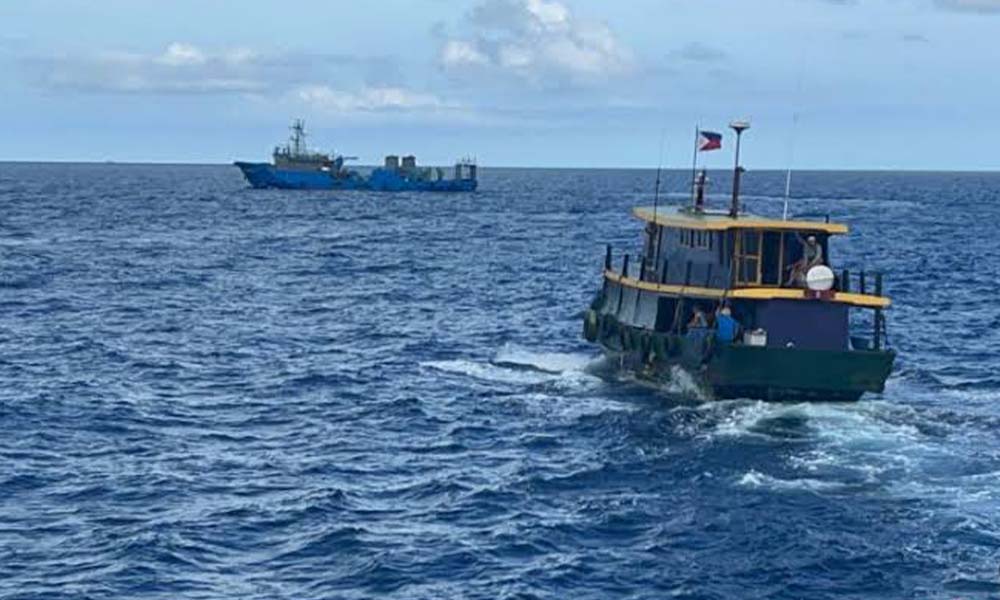
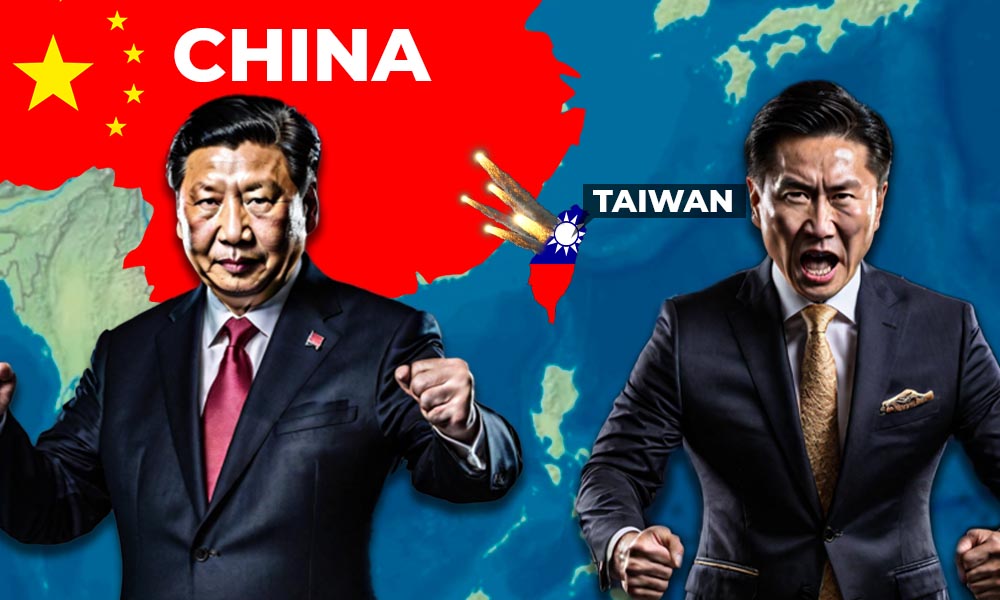
Philippine President Ferdinand Marcos Jr. confronted Chinese Premier Li Qiang during regional summit talks in Laos on Thursday, amid escalating tensions in the South China Sea. The recent clashes between Chinese and Philippine vessels in disputed waters have raised fears that the situation could spiral into a broader conflict.
Marcos Confronts China Amid Escalating South China Sea Tensions
The meeting, part of the Association of Southeast Asian Nations (ASEAN) summit, came after a series of discussions focused on regional security issues, including the ongoing civil war in Myanmar. Marcos took the opportunity to highlight the link between political security and economic cooperation, pressing for urgent progress on a long-stalled code of conduct for the South China Sea.
The South China Sea has been the site of increasing confrontations between China and the Philippines, particularly around disputed reefs and islands. The clashes, which have included reports of water cannon usage and boat rammings, are threatening to disrupt regional stability and draw in outside powers, including the United States, which has a defense treaty with the Philippines.
Marcos told the summit that ASEAN and China must accelerate negotiations for a maritime code of conduct. “The situation in the South China Sea remains tense and unchanged,” he said, emphasizing the need for all parties to earnestly manage their differences and reduce tensions through dialogue.
The code of conduct was first proposed in 2002, but negotiations only began in earnest in 2017. Progress has been slow, with discussions hampered by disagreements over basic concepts like self-restraint. Some ASEAN countries are also concerned that the final agreement may not be legally binding, limiting its effectiveness in managing disputes.
China, which claims sovereignty over nearly all of the South China Sea, has been expanding its presence in the region. Using historical maps, it asserts control over areas that overlap with the exclusive economic zones (EEZs) of several ASEAN countries, including the Philippines, Malaysia, and Vietnam. Beijing has also deployed coastguard vessels deep into Southeast Asia, further heightening tensions.
Despite the growing frequency of clashes, China has urged outside countries to respect its peace efforts. Premier Li Qiang, without naming any specific nation, called for countries beyond the region to support regional stability rather than escalate tensions. He reiterated that China prefers to resolve disputes through dialogue and cooperation.
The confrontations between Chinese and Philippine vessels have been particularly fierce around Scarborough Shoal and the Spratly Islands, areas that lie within the Philippines’ 200-nautical-mile EEZ. However, China continues to claim sovereignty over these territories, despite a 2016 United Nations tribunal ruling that rejected Beijing’s expansive claims.
Ongoing Disputes Over the South China Sea: A Threat to Regional Stability
The clashes have also involved physical confrontations. In recent incidents, Chinese coastguards used water cannons against Filipino personnel, while confrontations between the two sides have led to injuries, including a Filipino sailor losing a finger during a skirmish in June. Both sides have accused each other of illegal territorial intrusions.
The escalating tensions have drawn concern from regional leaders. Singapore’s Prime Minister Lawrence Wong warned that the South China Sea is a “live and immediate issue,” with the risk of an accident leading to conflict. The prospect of an escalation involving the United States, a close ally of the Philippines, has added another layer of complexity to the situation.
The South China Sea holds immense strategic importance. With an estimated $3.4 trillion in trade passing through its waters annually, it is one of the world’s busiest maritime routes. The region is also rich in natural resources, including 11 billion barrels of oil and 190 trillion cubic feet of natural gas, making it a key area for energy security.
In addition to its economic value, the South China Sea has significant military importance. China has built artificial islands and fortified its outposts with military-grade infrastructure, including runways, missile systems, and military aircraft facilities. Beijing’s military build-up has been seen as a strategy to dominate the region and deny access to foreign forces, particularly from the United States.
While other ASEAN claimants like Vietnam and the Philippines have also established outposts in the Spratly Islands, the scale of China’s reclamation and militarization efforts far surpasses those of other countries. Since 2013, China has created over 3,200 acres of new land in the region, reinforcing its territorial claims with military infrastructure.
ASEAN’s Push for Diplomacy and Cooperation in a Region on the Brink
The presence of foreign military forces, especially from the United States, further complicates the situation. Under a 1951 defense treaty, the U.S. is obligated to defend the Philippines in the event of an armed attack, including any actions against its public vessels or coastguard personnel in the South China Sea.
As the situation escalates, ASEAN leaders have called for restraint and respect for international law. In a draft summit statement, they reiterated their commitment to maintaining peace and stability in the region, while urging all sides to avoid actions that could provoke further conflict.
Marcos expressed frustration at the lack of progress in negotiations on the maritime code, but ASEAN Secretary-General Kao Kim Hourn remained optimistic, noting that talks were ongoing. “It’s not static, it’s not at a standstill,” he said, pointing to the continued efforts to find a consensus.
The Laos summit also touched on other regional issues, including the Myanmar crisis. ASEAN leaders called for an end to violence in Myanmar, which has been gripped by civil war since a 2021 military coup. They supported greater cooperation with neighboring countries and the United Nations to address the crisis and its spillover effects, including narcotics and crime.
As ASEAN grapples with its internal and external challenges, the South China Sea remains a flashpoint, with the potential to ignite a wider regional conflict. Marcos’ call for urgency in resolving the maritime dispute underscores the pressing need for diplomacy and cooperation in a region fraught with tensions.
Click here to learn more!