The sky was clear, the hum of the aircraft steady as a Philippine patrol plane cut through the clouds over the South China Sea. Below, the vast expanse of blue stretched endlessly, beautiful, but contested. Then, suddenly, a sharp voice crackled over the radio: “Unidentified aircraft, you are entering Chinese airspace. Leave immediately, or we will take necessary action.”
The Philippine pilot, trained for moments like this, kept his course. He had heard these warnings before. But today, something was different. A sudden flash, warning flares streaked past his cockpit. Just ahead, a Chinese fighter jet banked sharply, cutting dangerously close. The message was clear: Turn back, or face the consequences. This isn’t a scene from a military thriller. It’s a scenario that could become reality if China escalates its attempts to control the skies over the South China Sea. The question is, how will the Philippines and its allies respond?
With tensions rising, the world watches. If China moves to impose an Air Defense Identification Zone (ADIZ) or restrict flights, the response could reshape not only the South China Sea dispute but the entire Indo-Pacific order. The Philippines, backed by allies like the U.S. and Australia, would face a pivotal moment, one that could define the region’s security for decades to come.
Background on the South China Sea Dispute
In the dead of night, under the cover of darkness, Chinese dredgers worked tirelessly, turning submerged reefs into military outposts. Satellite images later revealed the truth, runways, missile sites, and radar stations rising from the sea, marking Beijing’s relentless push to cement its claims over the South China Sea. For decades, China has insisted that nearly the entire South China Sea belongs to it, using its so-called “Nine-Dash Line” to justify expansive territorial claims. This ambition isn’t new. In 2013, China shocked the world by imposing an Air Defense Identification Zone (ADIZ) over the East China Sea, demanding that foreign aircraft identify themselves before entering. Many wondered: would the South China Sea be next?
But the Philippines had its own story to tell. In 2016, after years of intimidation and harassment by Chinese forces, Manila took Beijing to court, and won. The Permanent Court of Arbitration (PCA) in The Hague ruled in favor of the Philippines, declaring China’s claims baseless under international law. It was a historic victory, but one that China refused to acknowledge. Instead, Beijing doubled down, increasing military patrols, shadowing Filipino vessels, and constructing even more artificial islands.
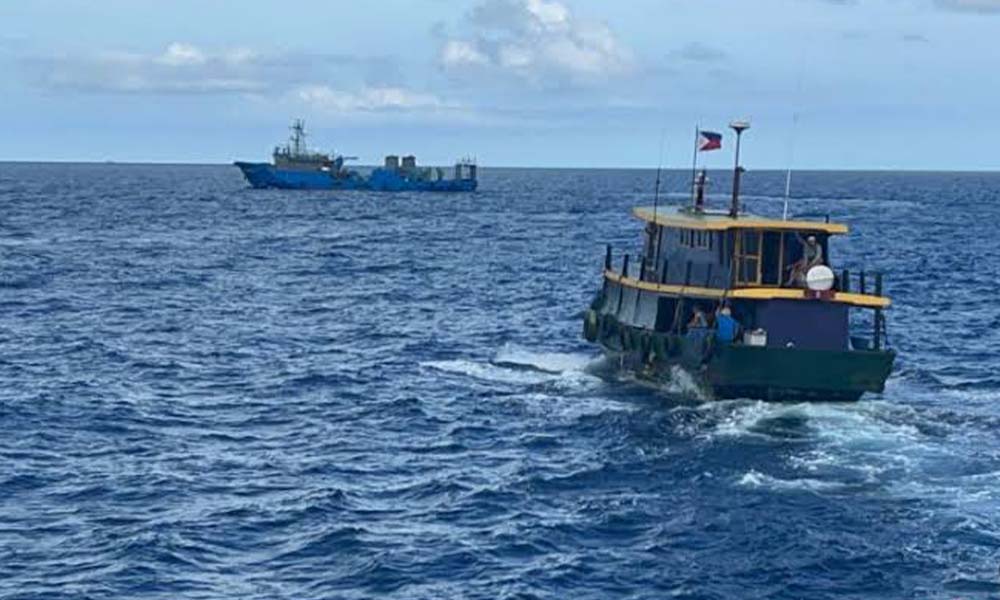
Fast forward to today, and tensions are at a boiling point. Chinese coast guard ships block Philippine resupply missions to outposts in disputed waters. Fighter jets intercept patrol planes. Warning flares light up the sky. The world watches, wondering how long before one miscalculation triggers a larger conflict. And now, the question looms: What if China imposes an ADIZ over the South China Sea? Will Philippine and allied aircraft be forced to turn back? Or will this be the moment the region finally stands its ground?
Enforcement Measures: How China Could Restrict Flights?
China is rapidly tightening its grip over the South China Sea, and restricting foreign flights could be its next power move. We’ve already seen Chinese J-16 fighter jets aggressively intercept foreign aircraft, like the Australian P-8A Poseidon, dropping flares dangerously close to force it away. Similar tactics could soon target Philippine or allied aircraft, buzzing dangerously close to intimidate and establish de facto control over disputed airspace.
But China doesn’t need direct confrontation to impose restrictions. Its advanced electronic warfare (EW) capabilities, including the Y-9LG aircraft, could disable foreign patrols mid-flight. Imagine Philippine pilots suddenly losing communication, their radars jammed, and their surveillance equipment rendered useless. These EW systems can blind enemy aircraft, making enforcement possible without firing a single shot.
If military threats aren’t enough, Beijing could weaponize its economic influence. In 2012, after tensions over Scarborough Shoal, China banned Philippine banana imports, devastating the industry overnight. A similar economic squeeze, through trade restrictions, investment freezes, or diplomatic isolation, could pressure Manila into compliance if China declares an Air Defense Identification Zone (ADIZ) or flight restrictions over the South China Sea.
But the consequences of a Chinese-enforced airspace wouldn’t stop with the Philippines. A no-fly zone backed by Beijing would force the U.S. and its allies to respond, raising the risk of military escalation. Global trade and supply chains would suffer as key shipping and air routes face disruption. The world isn’t asking if China will act, it’s asking when. And when that moment comes, will the skies be defended, or surrendered, one flight at a time?
Implications for the Philippines: The Storm Over Sovereignty
On a routine patrol over the Scarborough Shoal, a Philippine Air Force turboprop hums steadily above the disputed waters. Suddenly, a Chinese navy helicopter closes in, only 10 feet away. The Filipino pilot grips the controls tightly, radioing a calm but urgent warning: “You are flying too close. You are very dangerous.” This is the new reality the Philippines faces. China’s increasing aerial aggression, whether through near-miss encounters, fighter jet intercepts, or even an outright Air Defense Identification Zone (ADIZ), poses an existential challenge to Philippine sovereignty.
If Beijing successfully restricts Philippine aircraft in what should be open international airspace, it sets a dangerous precedent: China controls not just the sea, but the sky. With each confrontation, the risk of an accident or an intentional escalation grows. What happens if a Chinese fighter jet fires warning shots at a Philippine patrol plane? What if a close-call collision turns into a crash? These are no longer hypothetical questions, but urgent concerns for Philippine national security.
Economic and Trade Impact: A Stranglehold on the Skies
A flight from Manila to Singapore usually takes around three hours. But imagine a scenario where China suddenly declares restricted airspace over the South China Sea, forcing airlines to take longer, costlier detours. The impact? Millions of dollars in additional fuel costs, flight delays, and disrupted logistics. The aviation industry would bear the brunt of the restrictions, with Philippine Airlines (PAL) and Cebu Pacific facing operational nightmares. Tourism, already a key pillar of the Philippine economy, would take a hit. If Beijing extends its restrictions beyond military aircraft and begins targeting commercial flights, foreign visitors, especially from China, South Korea, and Japan, could think twice before flying to the Philippines.
In a worst-case scenario, China could weaponize its economic influence, just as it did in 2012 when it banned Philippine banana imports amid tensions over Scarborough Shoal. Today, with Beijing being one of Manila’s largest trading partners, any air restrictions could trigger economic retaliation that ripples beyond aviation, affecting exports, infrastructure investments, and supply chains.
Diplomatic and Political Fallout: The Pressure to Act
Inside Malacañang Palace, Philippine officials are already weighing their options. Defense Secretary Gilberto Teodoro has made it clear: “That is a very serious transgression of international law, which will demand our response.” But what does a response look like? The Philippines stands at a crossroads. Backing down means ceding control of its own airspace. Pushing back, however, means a potential diplomatic and military showdown with China, one that Manila cannot fight alone.
This is where alliances become critical. The Philippines has strengthened its defense ties with the US, Japan, and Australia, forming a regional security coalition. If China escalates its airspace restrictions, Manila will likely seek joint patrols, military drills, and diplomatic pressure from ASEAN, QUAD, and Western allies. Already, nations like Japan and Australia have defied China’s ADIZ in the East China Sea. If Beijing attempts the same over the South China Sea, the question is: Will the Philippines and its allies do the same?
A Test of Resolve in the Indo-Pacific
In 2013, when China declared its ADIZ over the East China Sea, Japan and the US immediately flew military aircraft through the zone, ignoring Beijing’s demands for identification. It was a clear message: China’s unilateral rules wouldn’t be accepted. If China imposes a similar restriction over the South China Sea, the world will watch closely. Will the Philippines stand firm and fly its patrols undeterred? Will the US and its allies send military jets in solidarity? One thing is certain, China’s actions will not just determine who controls the airspace over the South China Sea, but who dictates the future balance of power in the Indo-Pacific.
Philippine Responses: Holding the Line
Inside a UN conference hall, Philippine diplomats prepare a fiery speech. The message? China’s air restrictions violate international law, and Manila will not stay silent. The first response would be diplomatic: filing formal protests at the United Nations, ASEAN, and other international bodies. The Philippines has done this before, but now, with heightened tensions and near-miss aerial encounters, it would push for broader regional backing.
But ASEAN is divided on China. Countries like Vietnam and Indonesia may support the Philippines, while others, like Cambodia and Laos, heavily influenced by Beijing, may hesitate. That’s why stronger regional alliances are critical. Manila is likely to deepen its defense and security ties with Japan, Australia, and India, nations wary of Chinese aggression. Could this be the moment ASEAN finally unites against Beijing’s coercion? Or will internal divisions allow China to tighten its grip?
Military and Strategic Actions: Strength in the Skies
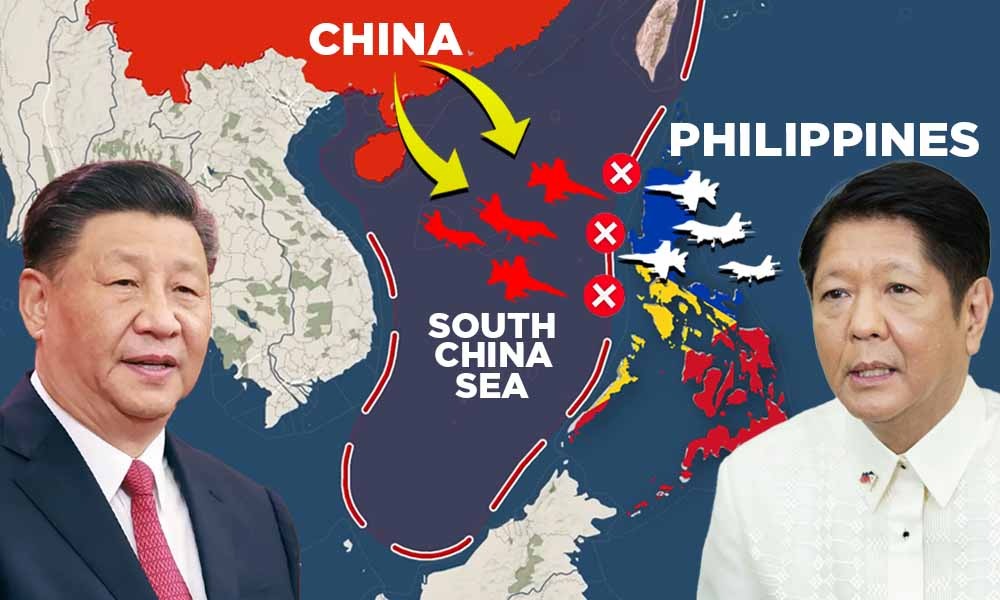
Imagine this: A formation of Philippine, U.S., Japanese, and Australian fighter jets slicing through the South China Sea airspace—a direct challenge to Beijing’s claims. This is no longer fiction. In response to any Chinese air restrictions, the Philippines could conduct joint aerial and maritime patrols with its allies. The U.S. Mutual Defense Treaty ensures that if a Philippine aircraft is attacked, Washington is obligated to respond.
The Philippine Air Force (PAF) is also ramping up its capabilities. Manila recently secured new aircraft, including F-16 fighter jets and maritime surveillance planes. But to effectively monitor the skies, it needs further investments in early warning systems, radar networks, and drone technology. At sea, the Philippine Navy and Coast Guard would likely increase patrols in contested areas, possibly escorting supply missions to outposts like Second Thomas Shoal. The message? Manila will not be bullied out of its own airspace.
Legal Recourse: Back to the 2016 Tribunal Victory
In 2016, the Permanent Court of Arbitration (PCA) ruled against China’s sweeping claims in the South China Sea, marking a historic victory for the Philippines. Yet, Beijing ignored the ruling. If China enforces an Air Defense Identification Zone (ADIZ), Manila could take the case to international courts again—this time, seeking broader global support. By rallying allies like the U.S., EU, Japan, and Australia, the Philippines could push for diplomatic and economic consequences against Beijing’s illegal actions. However, the real question remains: will China care? With its track record of disregarding international law, enforcement will be the key challenge.
Regional and Global Reactions: How the World Responds
ASEAN: United or Divided?
ASEAN has always walked a fine line between economic dependence on China and concerns over its aggressive actions. Some member states, like Vietnam and Indonesia, could join the Philippines in pushing back, given their own maritime disputes with China. Meanwhile, Malaysia and Thailand may opt for neutrality, balancing their interests. However, Cambodia and Laos, China’s closest allies, are likely to remain silent. Could this lead to an ASEAN-wide military cooperation? Or will Beijing’s economic leverage keep the region divided?
United States and Allied Nations: Backing Manila?
The U.S. and its allies are unlikely to sit idle. Freedom of navigation and overflight is a red line for Washington, which has already been conducting regular air and naval patrols in the region. If China targets Philippine military aircraft, the U.S. could escalate by deploying more warships and fighter jets, conducting joint air patrols with the Philippines, Japan, and Australia, or even invoking the Mutual Defense Treaty, bringing tensions to a boiling point.
Meanwhile, Australia and Japan, both increasing their military ties with Manila, could send fighter jets and surveillance aircraft to deter Chinese actions. If the crisis deepens, the QUAD alliance (U.S., Japan, India, and Australia) may be forced to take a stronger stance. In that case, Beijing could find itself in a confrontation it didn’t anticipate.
China’s Countermoves: Retaliation on All Fronts
China will not back down without a fight, but its response may not be purely military. Beijing could block Philippine exports, just as it did with bananas in 2012, hurting industries reliant on Chinese trade. Chinese-funded infrastructure projects in the Philippines could be delayed or scrapped, adding economic pressure. On the diplomatic front, China would likely frame the Philippines as a U.S. puppet, attempting to sway neutral ASEAN nations to its side. The key question is: Can the Philippine economy withstand a Chinese backlash? Or will deepening trade ties with the U.S., Japan, and the EU help cushion the blow?
Future Scenarios: Where Do We Go From Here?
Future scenarios could unfold in several ways. In an open confrontation, China enforces an ADIZ, and the Philippines, backed by the U.S., defies it, leading to direct aerial encounters with a high risk of miscalculation escalating into conflict. A long-term standoff could see the Philippines and its allies pushing back diplomatically while China enforces selective air restrictions, creating a prolonged dispute similar to the East China Sea standoff with Japan. A diplomatic compromise, though unlikely, could emerge if ASEAN and global pressure force China to de-escalate without losing face, offering a temporary resolution through backchannel negotiations.
The Battle for the Skies: A Defining Moment
This is more than just an airspace dispute, it’s a battle for sovereignty, security, and influence in the Indo-Pacific. How Manila and its allies respond will determine whether China’s coercion is met with resistance or quiet acceptance. The skies over the South China Sea could become the next great flashpoint of our time. The only question is: When that moment arrives, will the world push back?