China Challenged the Wrong Philippine Warship — Tensions Rise Near Sabina Shoal
Opening Hook — A Moment That Could Have Sparked War
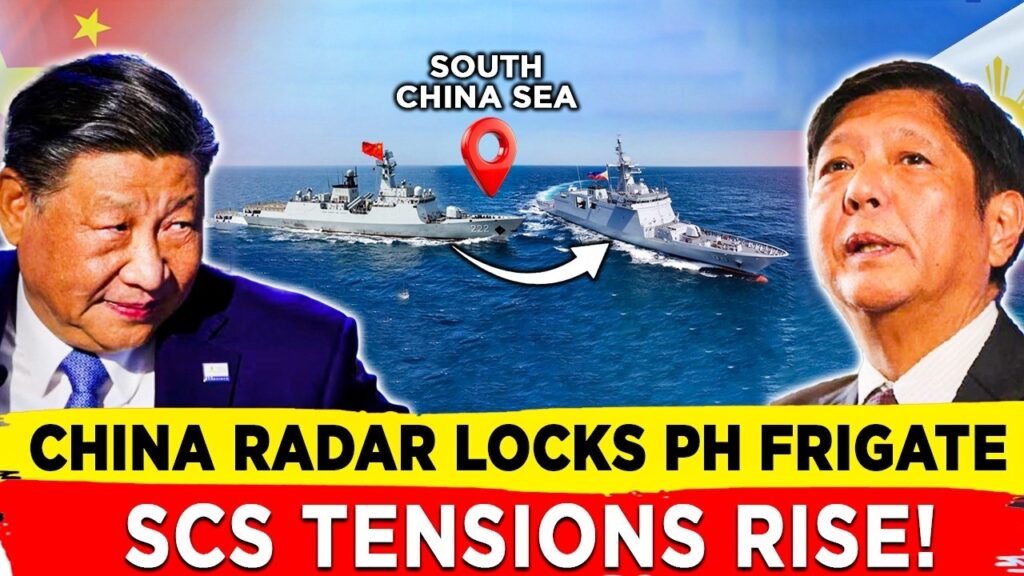
Henry Kissinger once warned that “The most dangerous moment in any conflict is when both sides believe they are acting defensively.” That insight has echoed through decades of great-power rivalry, and nowhere does it feel more relevant today than in the crowded waters of the South China Sea. What appears routine on the surface — a patrol, a radar scan, a radio call — can quickly turn into a confrontation when mistrust runs deep and military forces operate at close range. This reality unfolded on March 7, 2026, when the Philippine Navy frigate BRP Miguel Malvar was conducting a standard sovereignty patrol near Sabina Shoal, a disputed reef west of Palawan. Without warning, its sensors detected a Chinese Type 056A-class corvette, hull number 622, directing fire-control radar toward the Philippine vessel — a signal widely understood in naval operations as preparation for targeting weapons, not routine observation.
The response from the Philippine side followed strict doctrine. A radio challenge was issued immediately, demanding disengagement. Moments later, the Chinese vessel powered down its targeting radar, and the tension eased — at least for that moment. No shots were fired, but the margin between restraint and escalation was dangerously thin. Officials later compared the action to pointing a loaded weapon, a simple analogy that captured the seriousness of what had occurred. More importantly, the encounter did not happen in isolation. It took place in waters already marked by repeated confrontations — water cannon incidents, laser targeting, and aggressive maneuvers that have steadily raised tensions over recent years.https://www.youtube.com/watch?v=5epL6sP1qao
This single radar signal, brief as it was, reflects a much larger strategic contest now unfolding across the Indo-Pacific. The South China Sea is not just a disputed body of water — it is a crossroads of trade, security, and national ambition. To understand why this moment mattered, and why such incidents are becoming more frequent, we must first look closely at the technology behind the confrontation — what a fire-control radar lock truly means, and why naval forces treat it as one of the clearest warning signs short of open conflict.
Why Radar Lock Is Serious
Warships use different types of radar. Some are meant for navigation or general surveillance, scanning the horizon for nearby vessels. Fire-control radar is different. It is the system used to calculate precise targeting data — distance, speed, direction — needed to guide naval guns or missiles toward a target. When that system locks onto another ship, it signals preparation for possible engagement. Not routine tracking. Not passive observation. It is a step taken when weapons may soon follow.https://www.youtube.com/watch?v=5epL6sP1qao
In naval operations, this kind of targeting is widely treated as a combat-level signal, even if no missile is launched. Defense experts often describe it as a move that crosses from presence into threat. Many naval encounters in the Indo-Pacific have remained tense but manageable because ships stayed within surveillance mode. A fire-control radar lock changes the atmosphere instantly. It compresses reaction time. It forces commanders to prepare for the worst-case scenario. That is why officials in Manila reacted strongly, stressing that such actions are not harmless gestures but dangerous signals that raise the risk of sudden escalation.

Philippine military leadership later described the moment in plain language that anyone could understand. They compared the act to aiming a gun at someone’s head — a move that signals intent, even if the trigger is never pulled. The visual is simple but powerful. Imagine a laser sight appearing on a target in the dark. Nothing has fired yet, but everyone knows what could come next. That is the tension created by radar lock.
Geographic Context — Why Sabina Shoal Matters
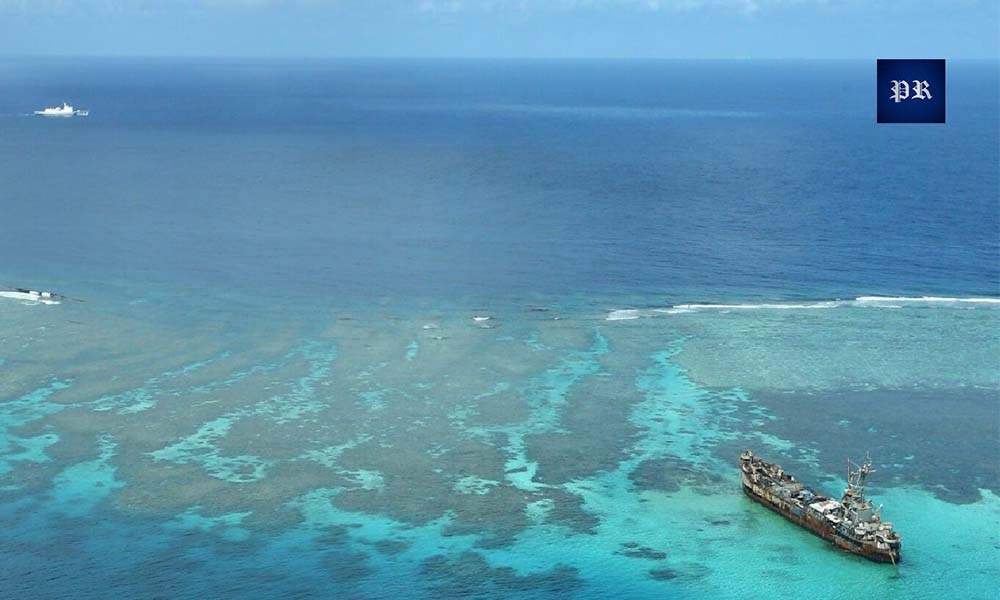
Sabina Shoal, known locally as Escoda Shoal, sits roughly 75 nautical miles west of Palawan, well within the Philippines’ 200-nautical-mile Exclusive Economic Zone (EEZ). On maps, it appears as a small feature — a submerged reef barely visible above water at low tide. But in strategic terms, its location is anything but minor. It lies inside the Spratly Islands region, one of the most contested maritime zones on Earth, where multiple countries maintain claims and regularly deploy coast guard and naval forces to assert presence. What looks distant and quiet on the surface is, in reality, watched closely by radar screens across the region.https://www.youtube.com/watch?v=Jdc639gvcn8
The value of these waters goes far beyond geography. Sabina Shoal sits near some of the richest fishing grounds in Southeast Asia, supporting coastal communities that depend heavily on daily catch for food and income. Beneath the seabed, surveys have long suggested the presence of untapped oil and natural gas reserves, resources that could shape energy security for decades. Above the waterline, the importance is even clearer. The wider South China Sea hosts shipping routes that carry an estimated $3 trillion to $3.5 trillion worth of global trade every year, including energy shipments bound for Japan, South Korea, and China itself. Tankers, cargo vessels, and naval ships pass through these lanes daily, making the region one of the busiest maritime corridors in the world.

This is why encounters near Sabina Shoal are never treated as isolated events. These waters are not empty, forgotten stretches of ocean. They are a resource-rich and highly strategic crossroads, where food security, energy supply, and global commerce intersect.
Regional Echoes — Japan Faced Similar Actions
The pattern seen near Sabina Shoal is not confined to Philippine waters. Similar signals have been reported elsewhere in the region, most notably around Japan. In December 2025, Japanese defense officials revealed that Chinese military aircraft had directed fire-control radar at Japan Air Self-Defense Force F-15 fighters operating near Okinawa, an area that sits close to heavily trafficked air and sea corridors in the East China Sea. According to Japan’s Ministry of Defense, the radar targeting occurred during routine aerial monitoring, a mission meant to track foreign aircraft approaching Japanese airspace. The moment the targeting signal was detected, Japanese pilots shifted posture and reported the incident up the chain of command. Even without missiles fired, the signal carried the unmistakable tone of escalation.
Tokyo reacted swiftly and publicly. Japanese officials lodged a formal protest, warning that radar targeting against aircraft creates unnecessary danger and raises the risk of accidental conflict. The incident drew attention across Asia because it reinforced a growing concern among regional militaries: these tactics are not isolated or random. They are appearing across multiple theaters — from the waters near the Philippines to the skies near Japan. Defense analysts increasingly describe this as a regional pattern, not a localized dispute.https://www.youtube.com/watch?v=Jdc639gvcn8
China’s Strategic Thinking — “Force the First Shot”
Behind many of these encounters lies a deeper layer of strategy — one that relies on pressure without crossing into full-scale conflict. Philippine naval leaders have repeatedly warned that some of these actions appear designed to provoke reactions while avoiding direct war. Rear Admiral Roy Vincent Trinidad, speaking during recent briefings in Manila, noted that Chinese naval behavior often seeks to create tense situations where the other side is pushed to respond first. The thinking is simple but calculated: maintain constant pressure, test responses, and push boundaries without firing the opening shot. By doing so, a rival is placed in a difficult position — either tolerate the pressure or risk escalation by reacting too strongly.
This approach serves multiple purposes at once. It allows forces to pressure rivals, observe how quickly they respond, and measure the strength of their resolve. It also helps normalize aggressive presence in disputed waters, making once-rare confrontations seem routine over time. In the South China Sea alone, the number of close encounters has steadily increased since 2020, with coast guard and naval vessels appearing more frequently around contested shoals and supply routes.https://indopacificreport.com/china-warns-philippine-aircraft-over-scarborough-shoal-tensions-rise/
Defense analysts often place this strategy under a broader concept known as “gray-zone warfare.” In simple terms, it refers to actions that are aggressive yet carefully controlled — steps that stop just short of open war. These include water cannon attacks, laser illumination, close-range maneuvering, and radar targeting like the one seen near Sabina Shoal. The goal is not to win a battle in the traditional sense, but to slowly shift control, influence perception, and weaken resistance without triggering a conventional military response.
Restraint, Readiness, and Rising Partnerships — How Manila Responds to Pressure
When the radar lock warning appeared on screens aboard BRP Miguel Malvar, the response was immediate but measured. Philippine Navy crews followed strict operational rules — no panic, no sudden aggression. A radio warning was issued to the approaching Chinese vessel, clearly demanding that the targeting signal be disengaged. The situation did not spiral, and that was by design. Philippine defense officials have repeatedly stressed that their forces are trained to avoid escalation while protecting sovereignty, operating firmly within international law, particularly under the framework of the United Nations Convention on the Law of the Sea (UNCLOS) and the 2016 arbitration ruling that invalidated sweeping maritime claims in the South China Sea. This disciplined response has become central to Manila’s policy: hold position, assert rights, but do not fire first. It is a careful balance between restraint and readiness — one that relies on training as much as equipment.
Yet restraint alone is no longer seen as enough. In recent years, the Philippines has moved steadily to strengthen its military capability, driven in part by repeated confrontations at sea. Under the country’s ongoing Armed Forces modernization program, billions of pesos have been directed toward new platforms and systems. Plans continue to move forward for the acquisition of modern multirole fighter aircraft, with discussions involving advanced fighter platforms that could significantly expand air defense coverage. At sea, the Navy continues to rely on its Jose Rizal-class guided missile frigates, among the most advanced surface combatants in its fleet, while expanding maritime surveillance networks designed to track activity across wide stretches of ocean. The national defense budget itself has grown sharply in recent years — reaching over ₱280 billion (around $5 billion) in 2024, with sustained increases planned to support radar systems, patrol aircraft, coastal defense batteries, and naval upgrades. Incidents like the Sabina Shoal confrontation often serve as reminders that modernization is not theoretical — it is a response to real-world pressure.
China Warns Philippine Aircraft Over Scarborough Shoal – Tensions Rise!
Partnerships have also become a defining part of Manila’s strategy. Over the past few years, the Philippines has deepened security cooperation with regional and global allies, transforming what were once limited exercises into regular multinational operations. Joint patrols involving the United States, Japan, Australia, and Canada have become more frequent in the South China Sea, sending a visible message of collective presence. The revival and expansion of agreements such as the Enhanced Defense Cooperation Agreement (EDCA) with Washington have opened additional Philippine bases to allied forces, allowing faster response times and better coordination. Large-scale drills — including multinational naval exercises involving warships from multiple countries — have strengthened interoperability and tactical coordination. What was once largely a bilateral contest is steadily evolving into a multilateral deterrence network, where presence is shared and risks are spread across partners.
Risk of Miscalculation and the Human Edge — Where Seconds Decide Outcomes
Modern naval confrontations move fast, sometimes faster than decisions can safely follow. Warships today travel at 25 to 30 knots, closing distance in minutes, while advanced targeting systems can lock onto targets in seconds. Radar screens update constantly. Data flows without pause. In crowded waters like the South China Sea — where coast guard ships, naval vessels, and fishing boats often operate within visual range — even a small mistake can turn serious very quickly. Defense analysts have warned for years that the greatest danger in these encounters is not always deliberate attack, but miscalculation under pressure. One wrong maneuver, one misunderstood signal, or one delayed response could trigger an exchange of fire. And in a region packed with alliances, a local clash could widen fast, potentially drawing in treaty partners such as the United States under mutual defense obligations.https://www.youtube.com/watch?v=Jdc639gvcn8
History shows that many conflicts do not begin with clear intent. They begin with confusion, fear, and split-second judgment. Officials across the Indo-Pacific have repeatedly highlighted how the increasing use of fire-control radar, close-range maneuvers, and aggressive signaling reduces decision time for commanders. During recent standoffs in disputed waters, vessels have come within tens of meters of each other — distances that leave almost no room for correction if something goes wrong. This reality is why many military planners stress rules of engagement, communication protocols, and disciplined restraint. Because in high-speed encounters, there is rarely time to debate. There is only time to act.
What’s REALLY Behind China’s Aggressive Moves in the South China Sea?
Behind every radar signal and tactical movement, there are human beings carrying the weight of those decisions. On ships like BRP Miguel Malvar, sailors sit in dimly lit combat information centers, watching glowing screens and listening to radio chatter that never fully stops. Officers track movements, interpret signals, and make calls that could shape the course of an entire mission. Alarms can sound without warning. Voices tighten over communication lines. Eyes remain fixed on displays, waiting for confirmation — or relief. Discipline becomes the strongest shield in those moments. Because in the end, strategy may guide the mission, but it is sailors — alert, trained, and steady under pressure — who stand at the front line when tension rises and seconds begin to matter most.https://www.youtube.com/watch?v=Jdc639gvcn8
What Comes Next — Rising Encounters and the Larger Strategic Message
Looking ahead, the path seems clear, even if the waters remain uncertain. Naval patrols across the South China Sea are expected to increase, not slow down, as coastal states reinforce their presence in disputed zones. The Philippines has already signaled plans to expand maritime patrols around contested features like Sabina Shoal and Second Thomas Shoal, supported by improved surveillance aircraft and coastal radar systems. At the same time, joint military drills are becoming more frequent and more complex. In recent years, multinational exercises involving the Philippines, the United States, Japan, and Australia have expanded in scale, with some drills now featuring dozens of ships, aircraft, and thousands of personnel operating together. Defense partnerships are also widening. New access arrangements, base-sharing initiatives, and coordinated patrols suggest that regional security networks will continue to deepen. Yet with every new patrol and every larger exercise, the likelihood of encounters at sea also rises. The most realistic expectation is simple: there will be more standoffs, not fewer, as competing claims and growing military presence overlap in the same narrow waters.
Pag-asa: The Tiny Island China Wants, but Filipinos Are Ready to Die For
Taken together, the radar lock incident near Sabina Shoal sends a larger message about the state of the region. The South China Sea remains one of the world’s most volatile maritime arenas, where powerful ships sail within sight of each other and restraint often becomes the difference between peace and crisis. So far, disciplined responses — radio warnings instead of gunfire, maneuvering instead of retaliation — have prevented these encounters from turning violent. But beneath that restraint lies a steady rise in strategic competition. Warships are more capable, alliances are stronger, and stakes are higher than they were just a decade ago. The ships disengaged that day, and the tension eased for the moment. But the rivalry that brought them face to face did not fade — it continues to shape every patrol, every signal, and every decision made in those contested waters.https://youtu.be/fp5_GQxMKP4?si=PCXLoindJwKEY4jy