Something big is happening in the Indo-Pacific and it’s shaking Beijing to the core. The United States, South Korea, Japan, Taiwan, the Philippines, and India are no longer just regional powers, they’re rapidly transforming into a unified deterrent force. What brought them together? China’s relentless military moves, its aggressive expansion in the South China Sea, and its muscle-flexing around Taiwan. This isn’t some Cold War nostalgia; it’s a fast-forming security architecture designed to keep the region free, stable, and rules-based. And guess what? Beijing is watching closely, because it knows it can’t fight on all fronts at once.
The numbers don’t lie. In just one day in January 2025, China deployed 41 military aircraft and several warships around Taiwan, blatantly crossing the median line, a red line, diplomatically speaking. The message was clear: “We can surround you.” But Taipei didn’t stand alone. Within hours, Japan scrambled jets, the U.S. Navy repositioned assets in the Philippine Sea, and India quietly increased surveillance near the Strait of Malacca. This wasn’t coincidence, it was coalition instinct. The kind of instinct that now defines this powerful, six-nation alignment.
Let’s zoom into the Philippines for a second because what’s happening here is historic. Under EDCA (Enhanced Defense Cooperation Agreement), the U.S. now has access to nine military sites across the archipelago, including strategic bases in Northern Luzon and Palawan, literally on China’s doorstep. And Washington’s not playing around. They’ve already poured over $82 million into infrastructure, radar, and logistics. For many Filipinos, this rekindled alliance isn’t about siding with a superpower, it’s about protecting the West Philippine Sea, defending sovereignty, and finally, having backup in a neighborhood getting increasingly hostile.
Meanwhile, India is rewriting its own playbook. The Modi government has begun a massive weapons purge, eliminating all Chinese-made components from their defense platforms. Why? Trust and technology. India knows that Beijing sees tech dependency as a strategic backdoor. Instead, New Delhi is doubling down on joint projects with the U.S., Japan, and France. And while their partnership with the Quad remains diplomatic on paper, on the ground it’s more serious than ever. War games in the Indian Ocean. New missile deployments near Ladakh. Satellite sharing. It’s clear, India’s preparing for a long-haul rivalry with China.
Over in Japan and South Korea, the era of hesitation is over. Tokyo’s defense budget is now the largest it’s been since World War II, surpassing $60 billion this year. Japan is deploying hypersonic-capable destroyers and anti-ship missiles on Yonaguni Island, just 111 kilometers from Taiwan. South Korea? Quiet but effective. Seoul is boosting naval readiness and cybersecurity coordination with both the U.S. and Japan. Even Taiwan, often the target, is turning defense into offense, investing in asymmetric warfare, drone swarms, and sea mines. The world used to ask: “Will the U.S. defend Taiwan?” Now the question is: “Can China afford to challenge this entire web of allies?”
But here’s what makes this coalition different, it’s not built on treaties alone. It’s built on shared values, urgent threat perception, and the realization that China’s ambitions don’t stop at Taiwan or the Spratlys. The recent Shangri-La Dialogue in Singapore made that crystal clear. U.S. Secretary of Defense Pete Hegseth said it straight: “China envies what we have together.” And he’s right. Beijing may have more ships, over 370 naval assets now compared to America’s 300 but what it lacks is trust. No ASEAN nation wants to be China’s military partner. But many are lining up behind this rising coalition.
Let’s be honest, this isn’t about provoking a war. No one wants that. But credible deterrence? That’s the name of the game in 2025. Because when Beijing knows there are six nations watching, planning, and ready to respond, its calculus changes. That’s exactly what’s happening now. From stealth bombers flying over the Philippine Sea, to joint India-U.S. drills in the Andaman Islands, to Taiwanese missile tests off Hualien, the Indo-Pacific is drawing a line. And behind that line? Over 1.8 billion people, trillions in trade routes, and the future of global order.
United States: The Apex Power in the Indo-Pacific
If this coalition were a warship, the United States would be its nuclear-powered engine. With a jaw-dropping $842 billion defense budget in 2025, the U.S. isn’t just preparing for conflict, it’s investing in peace through strength. Of that budget, a massive $68 billion is laser-focused on the Indo-Pacific, funding everything from joint operations to cyberwarfare defenses. On the ground, America has already positioned 375,000 personnel across the region, including 54,000 troops in Japan and 28,000 in South Korea, making it the largest forward-deployed force on Earth. In the skies and seas, it’s even more intimidating, five aircraft carriers patrol the region, backed by over 900 strike aircraft, hypersonic weapons stationed in Guam, and AI-integrated systems preparing for next-gen warfare. And this isn’t your father’s military. The Pentagon is in the middle of a $36 billion modernization blitz, rolling out uncrewed systems, autonomous weapons, and battlefield AI to keep China guessing and off balance. Meanwhile, alliances are going deeper than ever. The Philippines now hosts expanded U.S. access under EDCA, with $500 million in military aid flowing into Indo-Pacific partnerships. The U.S. is upgrading command centers in Palau, logistics hubs in Japan, and investing in radar and missile shields across allied territory. As U.S. Secretary of Defense Pete Hegseth said at the 2025 Shangri-La Dialogue: “A strong, resolute network of allies is our strategic advantage… and China envies what we bring together.” That quote isn’t just words, it’s a message: when the U.S. leads, the coalition gets sharper, smarter, and stronger.
Japan: The Quiet Giant Is Awake
Japan may not shout but it doesn’t need to anymore. In 2025, Tokyo is stepping out of the post-war shadows and into the Indo-Pacific spotlight with a $56 billion defense budget, marking its biggest military spend since World War II, now at nearly 2% of its GDP. That’s not just a number, it’s a declaration. The Japan Self-Defense Forces (JSDF) have transformed into one of the region’s most capable navies, operating 48 destroyers and 22 submarines, many of which are tracking Chinese activity across disputed waters. Even more striking? Japan has converted its Izumo-class helicopter carriers into full-blown F-35B carriers, turning them into mini aircraft carriers in everything but name. On the defense side, Japan is deploying SM-3 Block IIA missile interceptors, with over 150 high-altitude anti-missile systems locked in, ready to intercept ballistic threats from North Korea or China before they ever reach Japanese soil. And it’s not just hardware that’s getting a boost. In early 2025, Japan launched a reinforced Joint Operations Command, giving it tighter coordination across air, sea, land, and cyber, all designed to respond instantly to any regional flashpoint. From the East China Sea to Taiwan’s northern flank, Japan isn’t just preparing, it’s signaling: “We’re no longer a passive player, we’re ready, equipped, and aligned.”
South Korea: The Tech Titan on China’s Doorstep
South Korea isn’t just ready for war, it’s engineering the future of it. With a $50 billion defense budget in 2025 and an active force of over 500,000 troops, Seoul is no longer just focused on the North, it’s positioning itself as a key player in the Indo-Pacific balance. Its navy is stacked with 18 advanced destroyers and 18 submarines, including three next-gen KSS-III boats loaded with vertical launch systems (VLS) capable of firing long-range cruise missiles beneath the waves. In the skies, the Republic of Korea Air Force is deploying stealthy F-35As while developing the indigenous KF-21 Boramae, signaling Seoul’s shift to self-reliant high-tech aviation. On land, the South Korean army fields K2 Black Panther main battle tanks and K9 Thunder self-propelled howitzers, platforms that are dominating global arms markets and don’t overlook the Hyunmoo-4 ballistic missiles, which can hit targets up to 500 miles away, well within China’s defensive zones. But here’s where South Korea breaks the mold: innovation. The government is investing $1.5 billion into AI warfare systems, primarily through KAIST (Korea’s MIT), while churning out dozens of major defense export deals every year from Poland to the UAE. This isn’t just a military, this is a tech-industrial powerhouse that’s building alliances through both deterrence and defense economics. Quietly, efficiently, and decisively, South Korea is coding the future of deterrence in the Indo-Pacific.
Trump Sparks Global Trade War with Sweeping Tariffs on Canada, China, and Mexico
Taiwan: The Porcupine Strategy That’s Pricking the Dragon
Taiwan isn’t trying to match China missile-for-missile, it’s building a defense so sharp, Beijing might think twice before making a move. With a 2025 defense budget hovering between $20–25 billion, Taiwan’s focus is crystal clear: asymmetric warfare. It’s not about big flashy weapons, it’s about smart, lethal deterrence. On January 23, 2025, 35 Chinese warplanes and 6 warships surrounded the island in a bold intimidation drill, with several aircraft crossing the median line, an act Taiwan calls “gray zone warfare.” Just four days later, more Chinese ships and fighters violated airspace in the north. The message from Beijing? “We can touch you.” But Taiwan’s reply is firm and quiet, upgraded F-16V fighter jets on patrol, U.S.-supplied Harpoon missiles and HIMARS units locked and loaded, and homegrown Hsiung Feng and Tien Kung air defense systems spreading across the island. Taiwan’s also going invisible and unmanned, rolling out drone swarms, deploying stealthier submarines, and running its famous Han Kuang military drills with maximum realism: blackouts, cyberattacks, full mobilization. This isn’t just for show—it’s practice for survival. With each maneuver, Taiwan sharpens its edge. It may be smaller, but it’s playing a dangerous game of denial, turning the island into a fortress that bleeds any invader. In the Indo-Pacific chessboard, Taiwan isn’t the pawn, it’s the trap China knows it can’t walk into without a price.
Philippines: The Geostrategic Flashpoint Turning into a Fortress
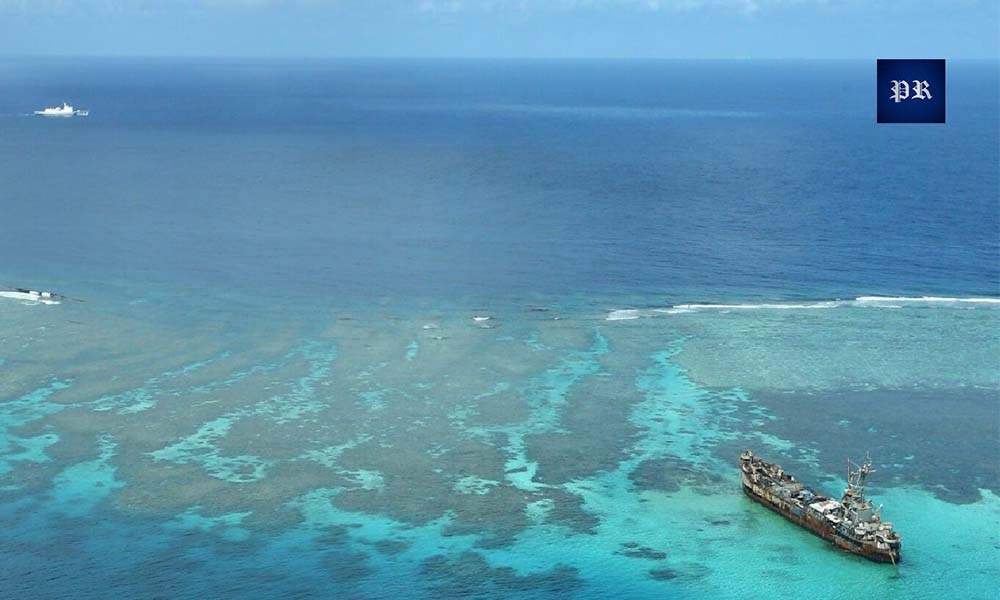
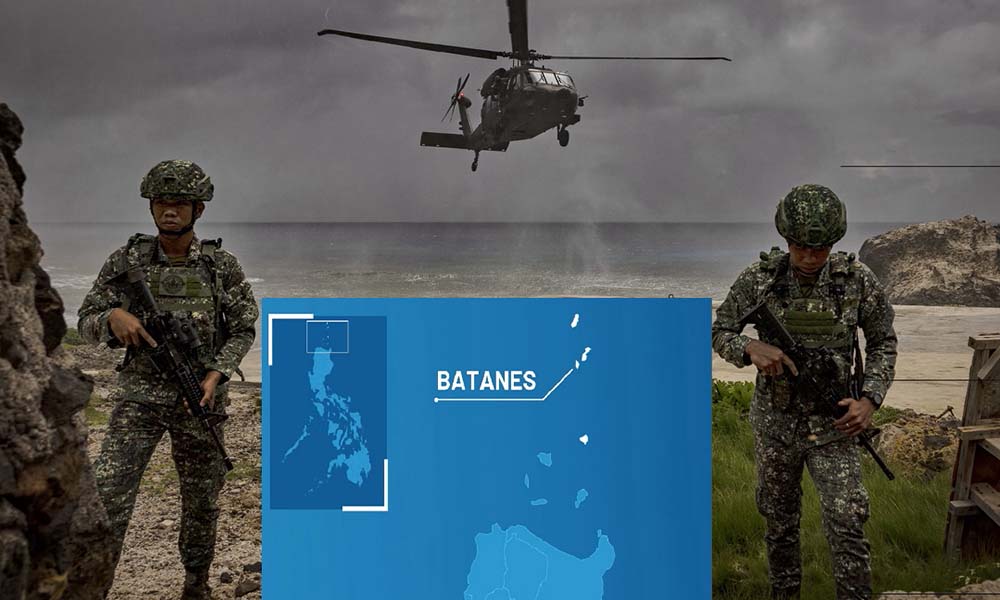
Once seen as the weakest link in the chain, the Philippines is fast becoming the strategic anchor of the Indo-Pacific. Its defense budget may be modest, but its value is sky-high, thanks to over $500 million in U.S. Foreign Military Financing (FMF) and its unmatched geographic location. In 2025, the Enhanced Defense Cooperation Agreement (EDCA) expanded U.S. access to nine key military sites, including Basa Air Base, Balabac Island, and Camp Melchor Dela Cruz—with three of them staring directly at Taiwan and the South China Sea. Translation: if tensions ignite, the Philippines is the front line. And it’s not just about bases, it’s about readiness. During the Salaknib 2025 exercises, the U.S. Marine Corps deployed mobile NMESIS anti-ship missile systems to the Batanes Islands, right at the chokepoint between China and Taiwan. At sea, the newly formed Task Force Ayungin is now operating unmanned surface vessels, yes, robot boats, supported by U.S. communications systems and even Starlink satellites. The Philippines is turning its geography into an advantage, modernizing not by building a massive army, but by fusing tech, U.S. support, and strategic access into a layered defense posture. For Filipinos, this isn’t just policy, it’s personal. With illegal Chinese incursions happening weekly, the nation has found its backbone. And the message from Manila is getting clearer: “We’re not backing down. We’re gearing up, with allies, with tech, and with a front-row seat to defend the Indo-Pacific.”
India: The Quad’s Iron Anchor in the Indian Ocean
India isn’t just watching China, it’s positioning itself to outmaneuver it. With a massive 2024–25 defense budget of ₹621,940 crore (around $78 billion), India is doubling down on maritime dominance, indigenous innovation, and alliance-building through the Quad. Its military might is no small force: 1.46 million personnel, a 150-ship navy including 2 aircraft carriers and 16 submarines, and an air fleet stacked with Su-30MKIs, Rafale fighters, and two homegrown stealth jet programs, Tejas and the futuristic AMCA. But the real game-changer? Firepower. Over 40 Indian warships are now fitted with the BrahMos cruise missile, capable of striking targets up to 290 miles away, hugging the sea at supersonic speeds. In the Indian Ocean Region (IOR), this means Chinese ships have to think twice before getting too close. But India isn’t just preparing to fight, it’s preparing to secure its own military supply chains. In 2025, the Indian government launched a nationwide intelligence and defense audit to remove all Chinese-origin components from critical systems, eliminating backdoors and vulnerabilities. It’s also leveraging the Quad Critical Minerals Initiative, making sure future tech, from jet engines to naval reactors, is free from Chinese bottlenecks. India’s message is clear: it’s no longer a balancing act between great powers, it is one. And in the Indo-Pacific chessboard, India is the unsinkable aircraft carrier controlling the western flank with the eyes, missiles, and willpower to hold the line.
Developing Rivalry: Strategic Flashpoints & Alliances — The Indo-Pacific’s Ticking Clock
If you think China is slowing down, think again. The People’s Liberation Army Navy (PLAN) has exploded in size, now fielding over 370 ships and submarines with a staggering 2 million tons of displacement, second only to the U.S. And it isn’t stopping there: by the end of 2025, Beijing could push that to 395 ships, with a jaw-dropping 435 by 2030. That’s a shipbuilding surge the U.S. Navy, which is capped at around 294–317 ships, simply cannot match in numbers alone. And look at China’s carrier dreams: the Shandong is active, the Fujian is finishing trials, a third carrier is about to go to sea, and a fourth, nuclear-powered giant is under construction. That is a navy designed to break through the island chains and keep pushing.
But ships aren’t enough; China is digging in. It’s running gray-zone patrols across the Taiwan Strait and South China Sea almost daily, staking claims with man-made islands on 3,200 acres of reclaimed reefs, and busting through the Taiwan median line with dozens of warplanes in January 2025 alone. Beijing is basically telling the world: “This is ours, try to stop us.”
That’s where alliances come roaring back. The Quad (U.S., Japan, Australia, India) is no longer just talk, it’s now meeting at the leader level, integrating supply chains and defense. AUKUS is reshaping submarine warfare too, giving Australia a nuclear sub future, even if delivery is delayed because the long-term UK/AU treaty guarantees a bigger production base that China can’t ignore. And it goes deeper: the Quad is actively building rare-earth supply alternatives so Beijing can’t cut off the world’s tech. Even India is scouring its entire military for Chinese-made parts to lock out any hidden supply vulnerabilities.
Meanwhile, Washington is rewriting its playbook. The U.S. is pumping $2 billion in Foreign Military Financing to partners across the Indo-Pacific, with record support to the Philippines, Vietnam, and even Papua New Guinea. This is no random charity, it’s about hardening the first island chain, the second island chain, and everything in between.
Beijing’s navy is growing like a beast, but its neighbors are no longer alone and the new alliances, the new hardware, and the new confidence across the Indo-Pacific are telling Xi Jinping one thing: “If you want to roll the dice, know that you are no longer rolling alone.”
The Philippines: Southeast Asia’s Hidden Economic Giant Set to Soar by 2039!
China’s Counterpunch: How Beijing Might Strike Back Without Firing a Shot
Beijing isn’t just going to sit still while the Indo-Pacific coalition tightens around it. Expect China to escalate on every front, military, economic, cyber, and diplomatic. First, the hardware: the PLA will double down on air and naval patrols around Taiwan, the East and South China Seas, pushing gray-zone pressure to the edge. Its infamous DF-21D and DF-26 “carrier killer” missiles, designed to keep U.S. ships far from Chinese shores, will anchor a growing A2/AD (Anti-Access/Area Denial) strategy, while the fleet expands with Type-055 stealth destroyers and brand-new Type-054B frigates, many of which were commissioned in 2025. Behind the scenes, China’s cyber and space warfare capabilities are rapidly expanding, don’t be surprised to see satellite jamming, digital disinformation, and cyberattacks on logistics hubs of its rivals.
But the battlefield doesn’t end with missiles, it stretches into wallets. China could hit back with rare earth export controls, like it hinted at in 2023, or targeted economic coercion, just ask Australia or Japan, both of which have faced sudden trade freezes, bans, or tariffs. At the same time, China is flooding the region with BRI loans, over $20 billion in new infrastructure investments and Digital Silk Road programs, embedding Chinese tech into the digital backbones of developing countries. It’s a power move disguised as partnership. And don’t underestimate Beijing’s influence on global narratives. Through its Global Security Initiative (GSI), China is offering an alternative to the U.S.-led order, pushing “multipolarity” and “non-intervention” to win over ASEAN states and the Global South. Its goal? Split the coalition, isolate Taiwan, and undermine Western credibility, all without ever launching a missile.
Conclusion: An Uneasy Balance in the Indo-Pacific
What’s happening now in the Indo-Pacific isn’t just about aircraft carriers or missile ranges, it’s about the future shape of the world. The stakes are immense: whoever sets the tone here, on trade, security, and alliances, will define global order for decades. But holding this uneasy balance won’t be easy. For the U.S., Japan, the Philippines, and their allies, the challenge is to invest consistently, not just in weapons but in trust, infrastructure, and people, to maintain unity even as domestic politics shift and to offer genuine economic alternatives that can compete with China’s Belt and Road. Because make no mistake, China still holds the economic edge, backed by a massive industrial engine, adaptable strategy, and a military that’s becoming more potent by the month. Yet Beijing’s rise is no longer unopposed. It now faces a network of increasingly militarized, coordinated, and motivated rivals, from India’s naval power to the Philippines’ geographic advantage to America’s global reach. The most realistic path forward isn’t war but it isn’t appeasement either. It’s competitive coexistence: deterrence through strength, backed by credible partnerships and smart diplomacy. The risk? One miscalculation could spiral into crisis. But if the coalition holds its line together, it may not stop China’s ambitions, but it can shape them. And that may be enough to keep peace in one of the most dangerous, and important, regions on Earth.