Introduction: A New Front in the West Philippine Sea Conflict
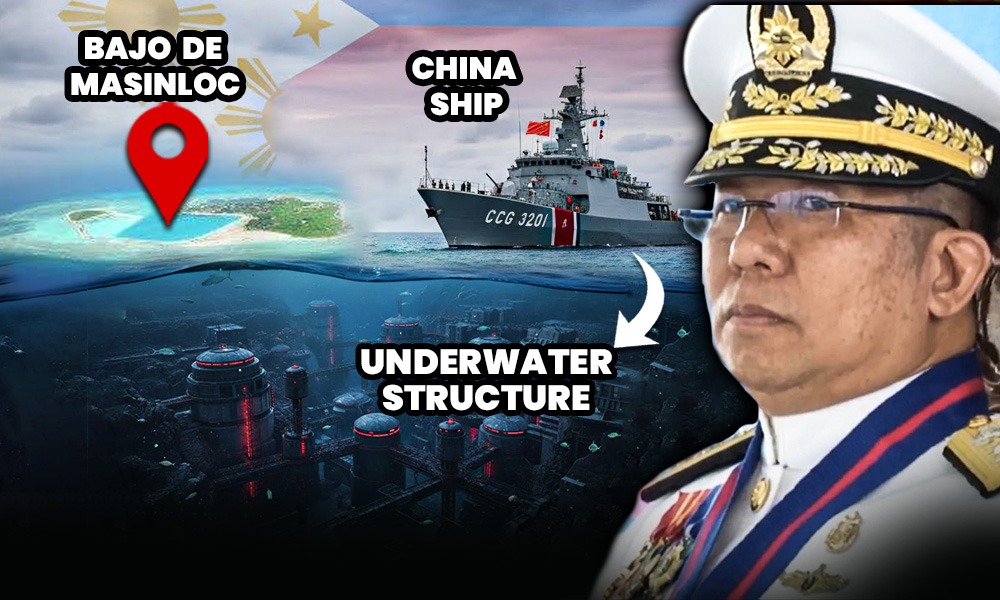
The Philippine Navy is investigating unidentified underwater structures near Bajo de Masinloc (Scarborough Shoal), a flashpoint in the West Philippine Sea (WPS) dispute. This development marks a dangerous escalation—shifting the conflict from surface confrontations to covert underwater encroachment, raising alarms over national security, sovereignty, and maritime law.
Located 124 nautical miles off Zambales, Bajo de Masinloc is a strategic maritime bastion critical to Philippine defense, fishing livelihoods, and regional stability. The discovery of possible submerged installations suggests China’s gray-zone tactics may now extend beneath the waves, testing Manila’s ability to defend its Exclusive Economic Zone (EEZ) under UNCLOS and the 2016 Arbitral Ruling.
This breaking development underscores a new phase in the South China Sea dispute—one where underwater dominance could redefine geopolitical power dynamics. As the Philippine military verifies these reports, the stakes couldn’t be higher: Will Manila expose a hidden Chinese expansion, or is this another false alarm in a decades-long standoff?
The Underwater Threat: What Has the Philippine Navy Discovered?
Mysterious Structures Detected in Routine Patrols
The Northern Luzon Command (NOLCOM) first flagged anomalies beneath Bajo de Masinloc during a Maritime Domain Awareness (MDA) operation. Rear Admiral Roy Vincent Trinidad, the Navy’s spokesperson for the WPS, confirmed:
“We have received reports of certain structures underwater, which we are verifying. Our goal is to determine whether these are new Chinese installations or remnants of older military infrastructure.”
The verification mission is crucial—past incidents have revealed both benign and hostile origins:
- 2000s: Investigations found concrete blocks and target markers from US-Philippine joint bombing exercises.
- 1997: The Philippine Navy dismantled a Chinese steel structure in Bajo de Masinloc, an early sign of Beijing’s territorial ambitions.
If confirmed as new constructions, these underwater structures could serve military, surveillance, or environmental control purposes, further eroding Philippine sovereignty.
Chinese Coast Guard Rams Philippine Vessel Near Pag-asa Island in South China Sea
Why Bajo de Masinloc? The Strategic Importance
Bajo de Masinloc is more than a fishing ground—it’s a geopolitical chokepoint:
Gateway to Luzon’s western flank – Critical for Philippine defense and trade routes.
Rich marine biodiversity – Supports thousands of Filipino fishermen.
Legal leverage – Falls within the Philippines’ EEZ, as affirmed by the 2016 Arbitral Ruling.
China’s 2012 seizure of the shoal marked a turning point, leading to blockades, harassment, and ecological destruction. Now, underwater encroachment could signal a new, harder-to-detect phase of expansion.
China’s Gray-Zone Warfare: From Surface Harassment to Subsurface Control
Escalating Aggression in the West Philippine Sea
The Philippine military has documented record-breaking Chinese activity in 2024-2025:
- 207 Chinese vessels (coast guard, navy, militia) swarmed the WPS in September 2024—the highest monthly count ever.
- Floating barriers, buoys, and ropes repeatedly blocked Filipino fishermen from Bajo de Masinloc.
- China declared a “Huangyan Dao Nature Reserve” (September 2025), an illegal administrative move to annex the shoal.
Violent Confrontations at Sea
On October 13, 2025, the China Coast Guard (CCG) fired water cannons at Philippine resupply vessels, damaging a Bureau of Fisheries (BFAR) ship. Rear Admiral Trinidad condemned the attack:
“Water cannons are not weapons—they’re for firefighting. Using them as tools of coercion is dangerous and unacceptable.”
These aggressive tactics reflect China’s three-pronged strategy:
- Physical exclusion (barriers, blockades).
- Legal manipulation (fake environmental reserves).
- Coercive enforcement (water cannons, ramming).
China-Malaysia Vs. Japan-Philippines Drills Expose Deepening Rivalries in South China Sea
The Underwater Dimension: A Hidden Battlefield
If the submerged structures are confirmed as Chinese-built, they could be part of:
- Subsea surveillance networks (sonar, sensors).
- Underwater drones or AUVs (Autonomous Underwater Vehicles).
- Permanent installations (like artificial reefs or military depots).
Defense analysts warn: “If surface control is about power projection, underwater infrastructure is about permanence.”
Legal & Economic Fallout: UNCLOS, Arbitral Ruling, and the Cost of Defiance
The 2016 Arbitral Ruling: A Legal Victory Under Siege
The Permanent Court of Arbitration (PCA) ruled in 2016 that:
China’s nine-dash line is illegal under UNCLOS.
Bajo de Masinloc is a traditional fishing ground within the Philippines’ EEZ.
China has no historic rights to the area.
Yet, Beijing rejected the ruling, calling it “shameless and radical.” Since then, China has:
Ignored international law.
Militarized reefs in the Spratlys.
Blocked Filipino fishermen from their own waters.
Philippines Reaffirms ‘Incontrovertible’ Sovereign Rights Over the West Philippine Sea
Ecological & Economic Devastation
China’s dredging, island-building, and giant clam harvesting have destroyed 16,535 acres of coral reefs, per UP Marine Science Institute (MSI). The economic loss? ₱33.1 billion ($681M) annually due to:
- Declining fish stocks.
- Restricted access to fishing grounds.
- Coastal community poverty.
Dr. Deo Florence Onda, marine scientist, warns:
“The reefs are dying, and with them, the livelihoods of 2 million Filipinos who depend on the sea.”
What’s Next? Philippines’ Response & International Support
A Whole-of-Government Approach
The Philippines must act on multiple fronts:
- Military & Coast Guard – Enhanced patrols, underwater drones, and sonar monitoring.
- Diplomacy – More protests, UNCLOS enforcement, and allied support.
- Legal Offense – Pursue China in international courts for violations.
Defense Secretary Gilberto Teodoro Jr. stated:
“Protests are not enough. We must back diplomacy with deterrence.”
Strengthening Alliances Against Chinese Expansion
The Philippines is not alone:
- US-Philippines Mutual Defense Treaty (MDT) covers armed attacks in the WPS.
- Japan & Australia have condemned China’s actions and joined joint patrols.
- ASEAN & EU must uphold the Arbitral Ruling to prevent regional instability.
Philippines’ Balabac Island to Light Up with 102kWh Solar Energy
The Underwater Challenge: Detect, Expose, Counter
If the underwater structures are confirmed, the Philippines must:
Deploy advanced subsea surveillance (AUVs, ROVs).
Share intelligence with allies (US, Japan, Australia).
File a new case at the ITLOS (International Tribunal for the Law of the Sea).
Former Supreme Court Justice Antonio Carpio advises:
“We must document every violation and hold China accountable under international law.
Conclusion: The Battle Beneath the Waves
The mystery of Bajo de Masinloc’s underwater structures is more than an intelligence puzzle—it’s a test of Philippine sovereignty, regional stability, and the rules-based order.
If China is building covert installations, it signals a new, more dangerous phase in the South China Sea conflict—one where the fight moves from ships to the seabed.
The Philippines must act decisively:
Verify, expose, and counter any illegal structures.
Strengthen alliances to deter further encroachment.
Uphold the Arbitral Ruling as the legal shield against expansionism.
The question now is: Will the world allow China to rewrite maritime law beneath the waves, or will the Philippines and its allies draw a line in the sand—and the sea?