US $2 Billion Defence Deal Could Change the Philippines’ Military Power Against China
The United States and the Philippines are moving towards a major expansion of their defence partnership, with Washington announcing plans to pursue a military financing package worth more than $2 billion to help Manila strengthen its armed forces. The announcement, made during US President Donald Trump’s November 18, 2026, visit to the Philippines, comes at a time when tensions in the South China Sea continue to shape security calculations across the Indo-Pacific. Alongside the proposed financing package, Washington has identified another $400 million in Foreign Military Financing (FMF) for strengthening Philippine military capabilities, particularly in areas that could improve the country’s ability to monitor and defend its maritime approaches. According to the White House fact sheet, the proposed financing arrangement will allow the Philippines to acquire critical defence and security equipment from American suppliers while supporting more than 7,000 jobs in the United States. The separate $400 million allocation is intended to support long-range fires, command-and-control systems, critical infrastructure and multi-domain drones. These priorities suggest that Washington is looking beyond conventional arms sales and focusing on the wider systems required to make a modern military effective.
For Manila, the announcement comes at a strategically important moment. China possesses a much larger navy, air force and coast guard, while its growing maritime presence has increased pressure on the Philippines in disputed areas of the South China Sea. The Philippine military has been working to move away from its traditional focus on internal security towards a more modern force capable of protecting national territory, maritime interests and important sea routes. However, the challenge is not simply to purchase more warships, aircraft or missiles. The Philippines needs the ability to identify potential threats, share information quickly, coordinate its military branches and respond effectively across a large maritime area. This is where the American financing proposal could become significant. If Manila successfully converts the announced financial support into operational capabilities, it could improve its ability to resist military pressure without attempting to match China’s overall military strength.
What Does the US $2 Billion Defence Financing Package Mean for the Philippines?
The proposed US-Philippines defence financing package represents a significant development in the military relationship between the two countries. According to the White House announcement of November 18, 2026, Washington and Manila will pursue a Foreign Military Financing loan package exceeding $2 billion. The purpose is to help the Philippines acquire essential defence and security equipment from American suppliers. The proposal is also connected to the Trump administration’s America First Arms Transfer Strategy, which seeks to expand American defence exports while strengthening the military capabilities of US partners and allies. For the Philippines, this arrangement could provide access to advanced military technology, equipment and support systems that might otherwise be difficult to finance through its regular defence budget. For Washington, it creates an opportunity to strengthen a treaty ally while expanding business for American defence manufacturers. The White House estimates that the proposed package will support more than 7,000 American jobs, demonstrating that the arrangement has both strategic and economic objectives.
However, the financial structure requires careful attention. Foreign Military Financing is a US security assistance mechanism, and the White House specifically described the proposed package exceeding $2 billion as a loan arrangement that the two countries will pursue. A loan is not the same as a grant or a direct cash payment. It can create repayment obligations and long-term financial responsibilities for the borrowing country. The final interest rate, repayment period, eligibility conditions and procurement arrangements have not been publicly established in the announcement. These details will be important for the Philippine government because defence modernization requires sustained spending over many years. Buying advanced military equipment is only one part of the cost. Training, maintenance, spare parts, software updates, infrastructure and future upgrades can place additional pressure on national budgets. Manila will therefore need to assess the overall financial impact before making major procurement decisions.
The separate $400 million commitment is another important part of the announcement. The White House says this funding will support the Philippine military’s operational reach and deterrence capabilities in the South China Sea. Its four identified priorities are long-range fires, command and control, critical infrastructure and multi-domain drones. These areas are closely connected because modern military operations depend on the ability to collect information, communicate securely, coordinate different forces and respond to threats. It is important, however, not to treat the $400 million as an automatically additional cash payment on top of the proposed loan package or to assume that its financing conditions are identical. The White House has not provided a complete breakdown of the final arrangements. What is clear is that Washington intends to support specific Philippine military capabilities while pursuing a wider financing relationship focused on American defence equipment.
Why Is the Philippines Strengthening Its Military Against China?
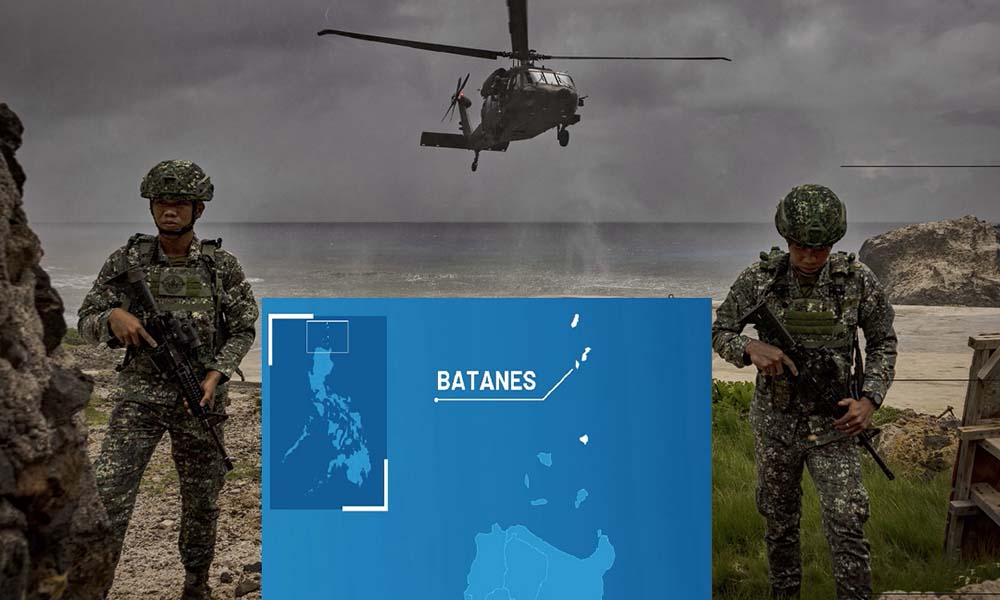
The Philippines faces a security challenge that is closely connected to its geography. As an archipelagic country consisting of thousands of islands, it has an extensive coastline and maritime territory that requires continuous monitoring and protection. Its western maritime approaches face the South China Sea, while its northern islands are positioned near the Luzon Strait, an important passage connecting the South China Sea with the Philippine Sea. This geographical position gives the Philippines considerable strategic importance, but it also creates serious defence difficulties. A limited number of naval vessels and military aircraft cannot maintain a permanent presence across every important maritime area. Manila therefore needs a defence system that combines coastal surveillance, maritime patrols, air capabilities, secure communications and rapid coordination between different military branches. Without these connected capabilities, even modern military equipment may not provide the level of protection the country requires.
China’s military advantage makes the situation particularly challenging for Manila. Beijing has a significantly larger navy and air force, alongside extensive coast guard capabilities and a growing network of military and logistical infrastructure across the wider South China Sea. Its maritime operations also involve more than conventional naval deployments. Coast guard vessels and maritime militia can operate in disputed areas, creating pressure through activities that may remain below the threshold of open military conflict. For the Philippines, this creates a difficult situation because responding to maritime pressure requires more than sending warships into contested waters. Manila also needs reliable information, the ability to document incidents, diplomatic coordination and military readiness. Its objective is not to match China ship for ship or aircraft for aircraft. Instead, the Philippines is seeking to make coercion more difficult, protect its sovereign interests and ensure that any attempt to use military force would carry greater risks.
How the Philippines Could Strengthen Its Coastal Defence
Long-range fires are among the most strategically important priorities identified in the American financing announcement. In military terminology, the term generally refers to weapons and systems capable of engaging targets at considerable distances. For a country such as the Philippines, this capability could strengthen coastal defence by extending the range at which an approaching military force might face a credible response. Traditionally, coastal defence has focused on protecting ports, islands and immediate maritime approaches. Modern precision weapons can expand that defensive area, creating additional uncertainty for hostile naval forces operating near strategically important locations. When these weapons are connected to reliable surveillance and targeting information, they can contribute to a wider coastal defence network rather than functioning as isolated military assets.
The new American financing announcement, however, does not identify a specific long-range missile system or confirm the purchase of additional BrahMos missiles, HIMARS launchers or any other particular weapon. Those possibilities should not be presented as confirmed procurement decisions. The White House has identified long-range fires as a priority area, but the final equipment selection will depend on Philippine defence requirements, procurement procedures and financing arrangements. Manila will also need to consider the compatibility of new weapons with its existing surveillance, communications and targeting systems. A missile system becomes more useful when military commanders can receive accurate information about potential threats and coordinate an appropriate response. Without reliable intelligence and communication, the effectiveness of long-range weapons can be limited. The broader strategic purpose of developing long-range fires is to strengthen deterrence rather than automatically prepare for confrontation. If an opposing military force understands that Philippine territory and important maritime approaches are protected by credible defensive capabilities, it may have to consider greater risks before attempting coercive action. This does not mean that the Philippines would become militarily equal to China. The difference in overall defence spending, naval strength and air power would remain substantial. However, a combination of coastal defence weapons, surveillance systems and improved military coordination could make certain operations more difficult and costly. For Manila, the objective is to improve its ability to protect its territory and maritime interests while reducing its dependence on a limited number of naval and air platforms.
Why Military Communication Could Be More Important Than Weapons
Command and control is another major priority in the American defence financing proposal, and it could become one of the most important parts of the Philippines’ military modernization. In simple terms, command and control refers to the systems, communication networks and procedures that allow military commanders to understand what is happening, make decisions and coordinate their forces. Modern military operations generate enormous amounts of information. Naval vessels report their positions, aircraft collect surveillance data, coastal radar systems monitor maritime activity and intelligence agencies assess potential threats. However, collecting information is not enough. Military commanders must be able to receive, analyse and share that information quickly enough to make effective decisions. If different branches of the armed forces operate disconnected systems, important information may not reach the right personnel at the right time. This can create delays, confusion and operational weaknesses, particularly during a fast-moving maritime crisis. For the Philippines, an integrated command-and-control network could improve coordination between the Philippine Navy, Air Force, Army, Marine Corps and other security agencies. For example, if a surveillance aircraft identifies an unfamiliar vessel approaching a sensitive maritime area, the information should be available to the relevant command centre and naval units without unnecessary delays.
How Unmanned Systems Could Improve Philippine Maritime Surveillance
Multi-domain drones are another priority identified by Washington, reflecting the growing importance of unmanned technology in modern military operations. For the Philippines, the main challenge is the size of the maritime area that needs to be monitored. Maintaining a continuous presence across thousands of islands and extensive sea approaches requires considerable resources. Naval ships need fuel, maintenance and personnel, while manned surveillance aircraft are expensive to operate and cannot remain airborne indefinitely. Unmanned systems could help reduce some of these limitations by providing additional surveillance capacity and collecting information over areas that would otherwise require frequent patrols. Aerial drones can observe vessel movements, monitor coastal areas and support maritime patrols, while surface and other unmanned platforms may provide additional information depending on their design and operational purpose. The importance of drones is not limited to their ability to fly over or move through a particular area. Their greatest value comes when they become part of a connected surveillance system. A drone can collect information about a vessel, but that information must be transmitted to a command centre, assessed alongside other intelligence and shared with the units responsible for responding. Without reliable communication and data integration, an unmanned platform may provide only limited operational benefits. For this reason, the Philippines needs to consider drones together with radar installations, satellite communications, coastal surveillance systems and command-and-control infrastructure. Connecting these technologies could help military personnel develop a more complete picture of maritime activity, especially in areas where maintaining a permanent naval presence is difficult.
Why Subic Bay and Basco Airport Matter to Philippine Defence
Military modernization is often discussed in terms of missiles, aircraft, ships and advanced technology, but infrastructure is equally important. A country may purchase sophisticated weapons and surveillance systems, yet struggle to use them effectively if it lacks suitable ports, airfields, fuel supplies, maintenance facilities and reliable communication networks. Military forces require continuous logistical support to remain operational. Naval vessels need fuel and maintenance, aircraft require suitable runways and technical facilities, and communication systems depend on secure power and network infrastructure. For the Philippines, these requirements are especially important because its geography makes transportation and supply distribution more complicated. Equipment and personnel may need to move between distant islands, while important maritime areas require reliable access to fuel, supplies and operational support. One of the infrastructure developments highlighted during the November 2026 announcement is a planned $40 million fuel storage depot at Subic Bay through Subic Grain. Subic has a long history of strategic and commercial importance because of its location and established port facilities. Its position provides access to the South China Sea and makes it relevant to shipping, logistics and regional trade. Additional fuel storage could improve the availability of supplies for commercial operations and potentially support wider logistical requirements. In a crisis, dependable fuel infrastructure can become particularly important because naval and air operations require continuous resupply. However, the project should be understood accurately. The announcement concerns a planned commercial fuel storage development, not the establishment of a new American military base. Its potential strategic relevance comes from its location and logistical capacity rather than any confirmed transfer of military control.
The wider lesson is that military strength depends on the ability to sustain operations, not simply on the number of weapons a country owns. Fuel storage, ports, airports, maintenance facilities and secure communication networks form the foundation of operational readiness. If the Philippines wants to operate more advanced aircraft, naval vessels and surveillance platforms, it must also invest in the infrastructure required to support them over time. These developments may receive less international attention than a missile purchase, but their long-term contribution could be equally important. A military force that cannot maintain its equipment, move supplies or communicate reliably will struggle to use its advanced weapons effectively. For Manila, infrastructure modernization is therefore an essential part of building a more capable and resilient defence system.
Why the United States Is Strengthening Its Military Partnership
The American decision to expand defence financing for the Philippines is closely connected to Washington’s wider Indo-Pacific strategy. The Philippines occupies a strategically important position along the First Island Chain, a geographical arc that extends from Japan through Taiwan and the Philippines towards Southeast Asia. This chain is important in regional security planning because it influences access between the western Pacific and the waters closer to mainland Asia. The Philippines sits near the South China Sea, the Luzon Strait and important maritime routes connecting the Pacific with Southeast Asian waters. Its geographical position makes it a significant partner for the United States as Washington seeks to maintain regional security cooperation and strengthen its network of alliances. A more capable Philippine military could improve surveillance, coastal defence and logistical resilience across an important part of the western Pacific. The relationship between Washington and Manila is also supported by a longstanding defence treaty. The two countries signed the Mutual Defense Treaty in 1951, establishing a framework for responding to an armed attack against either country. The agreement remains a central part of their security relationship. In May 2023, both governments issued updated Bilateral Defense Guidelines to clarify and strengthen defence cooperation. The guidelines reaffirmed that an armed attack in the Pacific, including anywhere in the South China Sea, against the armed forces, aircraft or public vessels of either country, including coast guard vessels, would invoke mutual defence commitments under the treaty. This clarification is important because maritime confrontations in the region do not always involve conventional naval forces. Coast guard vessels and other government ships also play a major role in disputes over maritime rights and access.s.
What Could China’s Response Be to Stronger Philippine
China is likely to view the expansion of American defence cooperation with the Philippines through the wider context of its strategic competition with the United States. Beijing has consistently opposed developments that it believes could increase American military influence near Chinese territory and maritime approaches. The Philippines, because of its geographical location and defence treaty with Washington, occupies an important position in this regional relationship. As Manila improves its coastal defence, surveillance and command capabilities, Chinese military planners may need to account for a more capable Philippine force when assessing operations near Philippine territory and disputed maritime areas. This does not mean that the Philippines will suddenly become a military match for China. The difference in military resources remains substantial. However, improvements in surveillance and defensive systems could make certain operations more complicated. One possible consequence is stronger Philippine maritime monitoring. If Manila develops a better network of coastal radar, aerial drones, naval surveillance and secure communications, it could become more effective at tracking vessel movements around important maritime areas. This would make it easier to identify unusual activity, coordinate patrols and document confrontations. Better information could also strengthen the Philippines’ diplomatic position by allowing its government to present more detailed evidence of incidents at sea. In disputes where both sides make competing claims about what happened, reliable surveillance information can be important. It can support diplomatic communication, public reporting and coordination with international partners. For China, a more closely monitored maritime environment could reduce the freedom to conduct certain activities without attracting attention.
AI, Satellite Communications, Energy and Trade
The November 2026 announcement also demonstrates that US-Philippines cooperation is expanding beyond traditional military equipment. Defence financing remains a central part of the agreement, but the wider package includes artificial intelligence, cloud infrastructure, satellite connectivity, energy cooperation, aviation and commercial investment. These areas are increasingly connected because modern national security depends on technology and economic infrastructure as much as conventional military strength. The White House highlighted a $37 million contract for AI-enabled mission support and a separate $63 million initiative to modernize the Philippine defence cloud infrastructure. These projects are intended to strengthen the technological foundation supporting defence operations. If implemented effectively, they could improve information management, coordination and the ability of military personnel to work with advanced digital systems. Satellite communications are another important part of the wider relationship. The announcement highlighted connectivity services through the American company’s AGILA satellite. For an archipelagic country such as the Philippines, reliable communications can be difficult to maintain across remote islands and maritime areas. Satellite connectivity may help improve communications coverage, particularly where conventional ground-based networks are limited. This can have civilian as well as security applications, including disaster response, transportation, government services and emergency communication. However, the exact operational arrangements and services will determine how much benefit the Philippines receives. Satellite connectivity should not automatically be interpreted as a complete military communications network. Its contribution will depend on coverage, security, technical integration and the needs of the organizations using it.
Civil nuclear cooperation and energy trade also featured in the wider discussions. According to the White House, both governments committed to exploring an intergovernmental agreement that could facilitate greater cooperation with American nuclear companies and support Philippine energy requirements. For Manila, energy security is an important economic issue because reliable and affordable electricity is essential for industrial growth, digital infrastructure and national development. Cooperation in nuclear technology could potentially create additional options for long-term electricity generation, although any future project would require regulatory approval, financing, technical assessments and public consultation. The two governments also discussed expanding trade in energy and agricultural products, linking economic cooperation with the wider strategic relationship.Commercial aviation was another major part of the announcement. The White House said Boeing and GE Aerospace finalized a $12 billion sale to Philippine Airlines for up to 20 Boeing 787 aircraft equipped with GE Aerospace engines. It also highlighted more than $17 billion in commercial deals and strategic investments involving American companies across Southeast Asia. These figures should be understood separately from the proposed Philippine defence financing because commercial aircraft purchases, infrastructure projects and military financing involve different arrangements. The wider message is that Washington is seeking to connect its regional engagement with trade, technology, industrial investment and security cooperation. For the Philippines, the important consideration will be whether these initiatives deliver sustainable economic benefits while supporting its long-term national development priorities.
Can the Philippines Turn American Financing Into Real Military Power?
The most important question surrounding the proposed US defence financing package is whether the Philippines can convert financial commitments into practical military capabilities. Announcing a large financing arrangement is relatively straightforward, but building a modern military requires years of planning, procurement, training and investment. Manila must first identify which capabilities are most important for its national defence. It then needs to negotiate contracts, select suitable equipment, establish delivery schedules and ensure that military personnel are properly trained. Even after the equipment arrives, the government must provide maintenance facilities, spare parts, technical support and sufficient operating budgets. Without these supporting arrangements, expensive military systems may remain underused or become difficult to maintain. The success of the American proposal will therefore depend less on the headline financial figure and more on the Philippines’ ability to implement a long-term modernization strategy. The proposed financing also raises questions about affordability. A loan exceeding $2 billion could provide access to important defence equipment, but it may create financial obligations that continue for many years. The Philippine government must balance defence spending with other national priorities, including education, healthcare, infrastructure, disaster preparedness and economic development. Military modernization is necessary for protecting national territory, but it must also remain financially sustainable. The purchase price of an aircraft, missile system or naval vessel represents only part of its total cost. Fuel, maintenance, training, software updates and replacement components can become major expenses throughout the equipment’s operational life. Manila will therefore need to examine the full financial implications before committing to expensive procurement programmes.
Another challenge is integrating equipment from different international suppliers. The Philippines already operates military systems obtained from countries including South Korea, Israel, India and the United States. Having several suppliers can provide access to different technologies, but it can also create logistical and technical difficulties. Different communication standards, maintenance requirements and training procedures may make it harder for military branches to operate together. The new American systems will need to work effectively with the equipment already in service. This is particularly important for surveillance and command-and-control capabilities, where information must move reliably between different platforms and military units. If Manila fails to address these compatibility issues, it could end up with an expensive collection of separate systems rather than a genuinely integrated defence network. Domestic defence-industrial development is another important consideration. The Philippines cannot depend indefinitely on foreign suppliers for every aspect of its military requirements. It needs to strengthen local technical expertise, maintenance capacity, research and development, and defence-related manufacturing. The country’s Self-Reliant Defense Posture Revitalization Act reflects an effort to develop greater domestic capacity and encourage industrial cooperation. Foreign partnerships can contribute technology, investment and technical knowledge, but the Philippines must ensure that these relationships also strengthen its own defence industry. Developing local maintenance and production capabilities could reduce long-term dependence on overseas suppliers and create additional skilled employment within the country.
The wider modernization programme provides an indication of the scale of Manila’s ambitions. The Philippines approved Re-Horizon 3 of its Armed Forces modernization programme in January 2024, with an estimated target of $35 billion over ten years. The programme covers major military requirements involving naval, air and land capabilities, including fighter aircraft, offshore patrol vessels, missile systems and other defence assets. However, the International Institute for Strategic Studies has highlighted continuing implementation and funding challenges within the country’s modernization efforts. This means the new American financing should be viewed as an opportunity to accelerate specific priorities rather than a guarantee that the Philippines will achieve all its military ambitions. Ultimately, Manila must turn financing into equipment, equipment into trained personnel and trained personnel into an effective force capable of protecting national interests.
The Philippines, the First Island Chain and the Future
The strengthening of Philippine military capabilities is part of a wider transformation in the Indo-Pacific security environment. The United States, Japan, Australia and the Philippines have expanded their defence cooperation through military exercises, information-sharing and maritime security activities. These partnerships are becoming increasingly important as regional governments seek to improve their ability to monitor maritime developments and protect important sea routes. The Philippines plays a central geographical role because of its location between the South China Sea and the wider Pacific. Its northern islands are particularly relevant to the Luzon Strait, while its western maritime approaches connect directly to some of the region’s most sensitive territorial disputes. A stronger Philippine military could therefore contribute to a wider regional security network by improving surveillance, communications and coastal defence. Japan and Australia are also important partners in this changing security environment. Japan has expanded defence cooperation with Manila, including assistance related to maritime surveillance and military equipment. Australia and the Philippines have increased joint defence activities, reflecting shared interests in regional stability and maritime security. The United States remains the Philippines’ principal treaty ally, but cooperation with other regional partners gives Manila additional opportunities to develop military expertise and access different technologies. These relationships can help the country diversify its defence partnerships rather than relying entirely on one supplier. However, cooperation between several countries does not automatically create a unified military command or a formal regional alliance. Each government continues to operate according to its own national interests, legal obligations and defence policies.
For the Philippines, the main objective should be to develop enough military capability to protect its territory and maritime interests while preserving its national sovereignty. Its geographical position gives it strategic importance, but that importance also brings responsibilities and security risks. The country must ensure that its military modernization serves Philippine national interests rather than becoming entirely dependent on the strategic priorities of larger powers. This requires careful decisions about procurement, defence agreements, military access and the management of sensitive infrastructure. Manila needs to maintain productive relationships with its allies while continuing diplomatic engagement with regional countries, including China. A capable military and active diplomacy are not necessarily competing approaches. Both can contribute to protecting national interests and reducing the possibility of coercion. The potential regional impact of the American financing proposal may therefore be gradual rather than immediate. Better surveillance could improve the Philippines’ understanding of maritime activity. More effective command systems could help military commanders respond more quickly. Improved infrastructure could make it easier to sustain operations, while defensive weapons could strengthen deterrence around important coastal areas. These developments would not transform the regional balance of power overnight, but they could gradually change the calculations of countries operating around Philippine territory. The future of Indo-Pacific security will depend not only on how much military equipment countries acquire, but also on how effectively they use technology, maintain communication and manage diplomatic relationships. The Philippines is attempting to strengthen its position within this changing environment without pursuing an unrealistic military competition with China.
The Real Strategic Value of America’s $2 Billion Defence Financing Offer
The proposed US financing package represents an important development in Philippine military modernization, but its real significance cannot be measured by the headline figure alone. Washington and Manila intend to pursue a Foreign Military Financing loan package exceeding $2 billion, while the White House has separately identified $400 million in military financing for strengthening Philippine operational reach and deterrence in the South China Sea. The priority areas include long-range fires, command and control, critical infrastructure and multi-domain drones. Additional initiatives involving artificial intelligence, defence cloud infrastructure and satellite connectivity could strengthen the technological systems that support military operations. Together, these developments indicate that Washington is interested in helping the Philippines build a more connected defence structure rather than focusing exclusively on individual weapons purchases. For China, the potential consequence is a Philippine military with improved surveillance, stronger coastal defence and better coordination between different military branches. Such developments could make operations near Philippine maritime approaches more complicated and increase the costs associated with military pressure. For the United States, a stronger Philippines could become a more capable treaty ally and a more effective partner in regional security cooperation. For Manila, the opportunity is to accelerate a long-delayed transformation of its armed forces and strengthen its ability to protect national territory, maritime interests and important sea routes. However, these possible benefits should not be confused with an immediate change in the regional balance of military power. China will continue to possess considerably greater overall military resources, and the Philippines will still face significant financial, technical and logistical limitations.
The biggest challenge for the Philippine government will be implementation. The financing conditions must be financially sustainable, procurement decisions must reflect genuine defence requirements, and equipment must arrive with the necessary training and maintenance support. Manila must also ensure that its new American systems can operate effectively alongside equipment obtained from other countries. Cybersecurity, personnel development and domestic defence-industrial capacity will remain essential. If these issues are not addressed, even a substantial financing arrangement may produce fewer practical benefits than expected. On the other hand, careful planning and effective implementation could allow the Philippines to improve its defensive capabilities over time without attempting to compete with China in every category of military power. The South China Sea will not become less contested simply because Washington has announced a major defence financing initiative. Maritime disputes, competing territorial claims and regional strategic competition will continue to shape relations between the countries involved. Nevertheless, the American proposal could become an important part of the Philippines’ effort to build a more credible defence posture. The country’s ability to monitor its maritime approaches, coordinate its forces and maintain operational readiness may gradually improve if the announced initiatives are implemented successfully. The central issue is therefore not whether the Philippines can become China’s military equal. It is whether Manila can develop sufficient defensive capability to protect its national interests and make military coercion more difficult.
About Indo-Pacific Report
For more geopolitical analysis, strategy coverage, and Indo-Pacific security reporting, visit Indo-Pacific Report:
Website
Facebook
YouTube
US $2 Billion Defence Deal Could Change the Philippines’ Military Power Against China