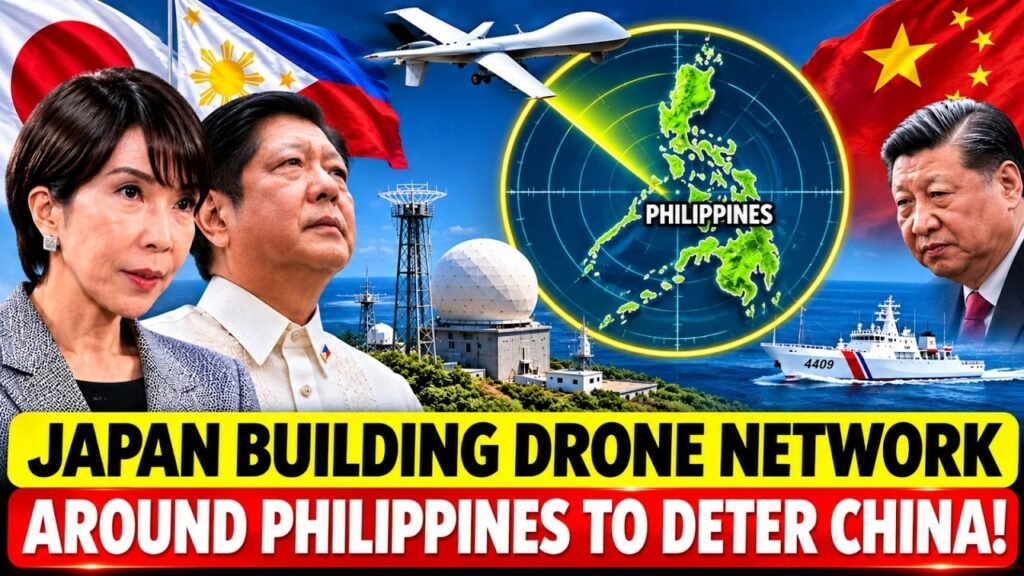
Japan Arms Philippines With New Radars and Drones to Deter China!
The ability to see what is happening at sea has become one of the most important elements of national security in the Indo-Pacific. For the Philippines, this challenge is particularly serious because its territory consists of thousands of islands surrounded by strategically important waterways. Every day, commercial ships, fishing vessels, coast guard patrols and military platforms operate across these waters. Distinguishing between ordinary maritime activity and developments that may affect national security requires reliable surveillance, accurate information and the ability to respond quickly. This is where Japan’s latest defence assistance to the Philippines becomes important. On November 9, 2026, Japan signed a security assistance agreement worth approximately ¥4.3 billion, equivalent to around PHP 1.72 billion, to provide coastal radar equipment to the Philippine Navy and unmanned aerial vehicles (UAVs) to the Philippine Air Force.
Coastal radar can help detect and track vessels, while unmanned aerial vehicles can provide additional observation from the air. Together, these capabilities could improve the information available to Philippine military authorities when assessing developments in nearby waters. The agreement also reflects the growing security relationship between Tokyo and Manila. Both countries have important interests in maintaining stability across the western Pacific and South China Sea. Japan depends heavily on regional maritime routes for trade and energy transportation, while the Philippines faces direct security challenges in its surrounding waters. Their cooperation is therefore based not only on diplomatic relations but also on shared concerns about maritime security, regional stability and the changing balance of power in the Indo-Pacific. For China, the development adds another dimension to the expanding defence relationships between countries that have concerns about its growing maritime presence. However, the Japanese assistance should be understood accurately. It is primarily focused on surveillance and maritime awareness,
What Radar Systems and Surveillance Drones
Japan’s ¥4.3 billion security assistance package focuses on two important capabilities: coastal radar equipment for the Philippine Navy and unmanned aerial vehicles for the Philippine Air Force. Although these systems serve different operational purposes, their potential value comes from the information they can provide when used together. Coastal radar installations can monitor maritime activity within their coverage areas, allowing operators to detect vessels and follow their movements near important coastlines and maritime approaches. For a country with such an extensive coastline and large maritime territory, continuous monitoring can provide an important advantage over relying entirely on occasional naval patrols. Radar systems are particularly useful because they can help authorities identify maritime activity that requires closer attention. When a vessel approaches a sensitive area, changes direction unexpectedly or remains in a particular location for an extended period, radar information can help military personnel assess the situation. This does not mean that radar can automatically identify every vessel or determine whether its intentions are hostile. Operators may need to compare radar information with vessel identification data, intelligence reports, visual observations and other available sources. Nevertheless, having a more consistent picture of maritime movements can make surveillance more organised and improve the ability to investigate unusual activity.
The second component of the agreement involves unmanned aerial vehicles for the Philippine Air Force. These platforms can potentially provide aerial observation over areas that are difficult to monitor from fixed coastal installations. Depending on their range, flight endurance and sensor equipment, UAVs may be used to collect images, observe vessel movements and investigate maritime activity that requires additional information. Their ability to operate without an onboard pilot can also make certain surveillance missions more flexible. However, their actual effectiveness will depend on the technical specifications of the systems Japan provides, including their cameras, communication equipment, operating range and endurance. It is important to recognise that the Japanese announcement does not establish the exact UAV model, quantity or operational specifications. Therefore, it would be premature to assume that these drones can monitor the entire South China Sea or provide uninterrupted surveillance across the Philippine maritime territory.
How the United States Helps Protect Philippine Energy Reserves from China
Their likely contribution should instead be understood as an additional layer of observation that could support existing Philippine military capabilities. Coastal radar can help detect activity, while aerial platforms may provide further information about selected vessels or locations. The combination of these systems could improve the Philippines’ maritime domain awareness, which refers to the ability to understand activities and developments across maritime areas. This capability is increasingly important because security challenges at sea do not always involve clearly identifiable military vessels. Coast guard ships, fishing fleets, commercial vessels and maritime militia can all operate in contested waters, sometimes creating complicated situations for regional authorities. Better surveillance does not automatically prevent these activities, but it can help the Philippines identify developments, assess their significance and maintain a more reliable record of maritime incidents.
Why Japan’s Latest Security Assistance Is Different
Japan’s latest assistance is also important because it reflects the gradual expansion of Tokyo’s defence cooperation with countries across Southeast Asia. In 2023, Japan introduced its Official Security Assistance (OSA) framework, creating a mechanism through which it can provide grants for defence-related equipment and infrastructure to eligible partner countries. The programme is intended to strengthen the security and deterrence capabilities of partner nations while supporting a stable regional environment. Unlike traditional development assistance, OSA specifically focuses on equipment and facilities that contribute to security-related objectives. The Philippines has become an important recipient of this programme because of its strategic geographical position and growing security cooperation with Japan. The two countries have increasingly recognised the importance of maritime security, particularly as competition and tensions have intensified across the South China Sea and western Pacific. Japan’s assistance also reflects a broader change in its regional approach. Rather than relying exclusively on diplomatic engagement and economic cooperation, Tokyo is becoming more active in supporting the practical defence capabilities of regional partners.
What makes the November 2026 agreement particularly significant is its combination of coastal radar equipment and surveillance UAVs under the expanding OSA framework. It indicates that Japan is broadening the types of security equipment it is prepared to provide to the Philippines. The relationship is moving towards a more practical defence partnership involving equipment, training, operational cooperation and information-sharing arrangements. This does not mean that Japan and the Philippines have established a formal military alliance, but it does show that their security relationship is becoming more substantial. For Manila, this assistance offers an opportunity to strengthen maritime monitoring without depending entirely on domestic procurement or existing military resources. For Tokyo, it provides a way to support a strategically important partner while contributing to regional stability. The larger significance is that Japan is increasingly using security assistance as an instrument of its Indo-Pacific policy, with the Philippines emerging as one of its important partners.
Philippines Is Strategically Important Along the First Island Chain
The geographical position of the Philippines explains why its growing defence cooperation with Japan has significance beyond bilateral relations. The country occupies a central position along the southern section of the First Island Chain, a strategic arc of islands stretching from Japan through Taiwan and the Philippines towards the western Pacific. This geographical formation is important in regional security planning because it includes major maritime passages through which commercial shipping and military forces move. For China, the First Island Chain is relevant to its access to the western Pacific. For the United States, Japan and other regional partners, it is an important part of their broader maritime security calculations.
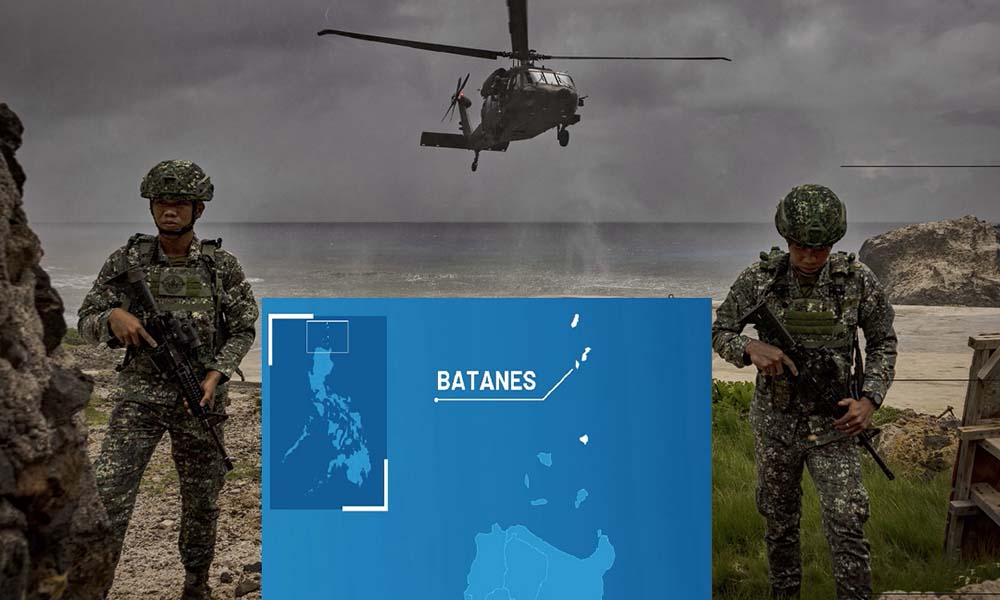
The Philippines occupies a particularly important position within this geography. Its western coastline faces the South China Sea, while its northern islands are located near Taiwan and the Luzon Strait. These two maritime areas have different but interconnected strategic importance. The South China Sea is one of the world’s major commercial waterways, connecting East Asian economies with international markets and important energy transportation routes. The Luzon Strait, meanwhile, connects the South China Sea with the Philippine Sea and the wider western Pacific. Its location makes it particularly significant for regional shipping and military movements, especially during periods of tension involving Taiwan.
For Manila, monitoring these waters is not simply a matter of military competition. Maritime activity directly affects fishing communities, offshore resources, commercial transportation and the country’s ability to protect its maritime rights. The Philippines must also monitor vessels operating around its western maritime approaches, including areas where competing territorial and maritime claims create frequent tensions. Without reliable information, authorities may struggle to determine what is happening, which vessels are involved and whether a particular development requires an official response.
The northern maritime approaches are equally important because of their proximity to Taiwan. Any major crisis around Taiwan could affect the security environment of the northern Philippines, particularly areas near the Bashi Channel and Luzon Strait. These waterways are important because they connect the South China Sea with the western Pacific and provide routes for commercial and military movement. Although the Japanese radar and UAV assistance is not specifically a Taiwan contingency arrangement, improved Philippine surveillance could strengthen the country’s ability to monitor activity around strategically important maritime areas. Japan also has a direct interest in maintaining stability across this geographical environment. Its economy depends heavily on maritime transportation, and disruptions across important sea routes in Southeast Asia could affect energy supplies, trade and regional economic activity. A more capable Philippines could therefore contribute to a stronger maritime security environment along an important section of the First Island Chain. This explains why Tokyo considers Philippine defence capabilities relevant to its own long-term national security interests.
Why China’s Growing Maritime Presence
China’s expanding maritime presence has become one of the major factors shaping security discussions across the South China Sea and western Pacific. The Chinese Navy, China Coast Guard and maritime militia operate in different roles, but their activities collectively influence the maritime environment surrounding several Southeast Asian countries. For the Philippines, the challenge is particularly important because Chinese vessels frequently operate in areas where Manila maintains maritime rights and interests. Monitoring these movements requires consistent observation rather than relying only on occasional military patrols. The China Coast Guard plays a prominent role in maritime disputes because its vessels regularly operate around contested maritime features and areas claimed by multiple countries. These ships are not conventional naval warships, but their presence can still create serious diplomatic and operational challenges. When coast guard vessels approach Philippine ships, monitor activities near disputed features or remain in sensitive maritime areas, Philippine authorities need accurate information to assess the situation. The ability to record vessel movements and maintain evidence of maritime incidents can strengthen Manila’s diplomatic position and support its public communication.
China’s maritime militia creates an additional surveillance challenge. These vessels may operate under civilian appearances while participating in activities that support broader maritime objectives. Their movements can sometimes be difficult to distinguish from ordinary fishing or commercial activity, particularly when large numbers of vessels operate together. Identifying patterns, tracking repeated movements and understanding the context of their presence requires a combination of radar information, aerial observation, intelligence and other monitoring capabilities.
The Philippines cannot rely entirely on naval vessels to maintain awareness across such a large maritime area. Warships have limited operating time, require maintenance and cannot remain at every important location simultaneously. Manned surveillance aircraft also involve significant operational costs and require careful planning. Coastal radar and UAVs can help address some of these limitations by providing additional monitoring capabilities. Radar installations can detect maritime contacts within their coverage, while drones may provide visual information about selected vessels and locations. However, surveillance technology should not be confused with a complete solution to maritime disputes. Radar cannot prevent a foreign vessel from entering a contested area, and drones cannot independently enforce maritime rights. Their importance lies in improving the quality and availability of information. When Philippine authorities can identify unusual movements earlier, they may have more time to assess developments, coordinate with relevant agencies and determine an appropriate response. Better documentation can also help Manila present clearer evidence when raising maritime incidents through diplomatic channels.
Why Japan Has a Strategic Interest in Strengthening Philippine Defence
Japan’s decision to provide radar equipment and surveillance drones to the Philippines is closely connected to its own economic and security priorities. As an island nation with limited domestic energy resources, Japan depends heavily on maritime transportation for imported oil, natural gas, industrial materials and other essential goods. Many of these supplies travel through important sea routes in Southeast Asia before reaching Japanese ports. Any prolonged disruption across these waterways could create serious economic consequences for Tokyo. Supporting maritime security in the region is therefore an important part of Japan’s wider national interest. China’s growing military capabilities and maritime activities have also influenced Japanese defence planning. Japan faces its own maritime security challenges in the East China Sea, particularly around the Senkaku Islands, which are administered by Japan but claimed by China as the Diaoyu Islands. Chinese government vessels regularly operate in the surrounding waters, creating an ongoing requirement for surveillance and maritime monitoring. These developments have encouraged Tokyo to strengthen its defence capabilities and expand security cooperation with countries that face similar regional challenges.
There is also a diplomatic dimension to Japan’s growing involvement. By providing defence-related equipment, supporting military training and developing institutional arrangements, Tokyo is building stronger relationships with regional partners. These partnerships can improve communication, create opportunities for joint exercises and increase confidence between defence organisations. For the Philippines, cooperation with Japan offers another source of support as it continues modernising its armed forces. For Japan, it strengthens ties with a strategically positioned country that shares an interest in maintaining stability across the Indo-Pacific. The relationship is not based on identical national priorities. The Philippines is primarily concerned with protecting its maritime rights and improving its ability to respond to developments around its territory. Japan is focused on protecting its maritime transportation routes, maintaining regional stability and responding to its own security challenges. However, these interests overlap sufficiently to create a strong foundation for practical defence cooperation. This is why Japan’s assistance should be viewed as part of a wider strategic relationship rather than an isolated equipment grant.
Wider First Island Chain Surveillance Network?
Japan’s growing defence cooperation with the Philippines raises an important regional question: could these developments eventually contribute to a more connected maritime surveillance environment across the First Island Chain? The idea is strategically significant because the First Island Chain includes several important maritime approaches where regional military and commercial activity takes place. Japan is positioned towards its northern section, while the Philippines occupies a major position in the south. Both countries have an interest in monitoring developments around their maritime territories and maintaining stability across nearby waterways. The United States and Australia also maintain important security relationships with Japan and the Philippines. Their cooperation creates opportunities for stronger coordination in areas such as maritime awareness, military exercises, logistics and defence planning. In November 2026, the four countries highlighted further cooperation following a meeting of their defence ministers in the Philippines. The proposed initiatives included establishing a Combined Coordination Center in the Philippines, improving coordination between defence organisations and expanding combined exercises and cooperative activities. These developments provide additional context for understanding the growing regional security network.
A more connected surveillance environment could involve several types of capabilities working together. Coastal radar installations could help detect maritime contacts near important coastlines and approaches. Surveillance drones could provide additional aerial observation, while naval vessels and manned aircraft could investigate developments that require further attention. Military communication systems could help relevant authorities exchange information, and joint exercises could improve their ability to coordinate activities. Each capability would perform a different function, but together they could support a more complete understanding of maritime activity. Such cooperation could be especially useful when several countries are monitoring developments in connected maritime areas. For example, activity in the Luzon Strait may have implications for the Philippines, Japan and the United States because of its geographical connection to Taiwan and the western Pacific. Similarly, developments in the South China Sea can affect the security calculations of countries that depend on regional maritime transportation. Better communication and more consistent monitoring could help these governments assess regional developments with greater accuracy. However, it is important not to exaggerate the current level of integration. Japan’s ¥4.3 billion assistance agreement does not establish a fully connected surveillance network across the First Island Chain. It does not automatically link every radar installation, drone, naval vessel and military command into a shared system. Building such an environment would require compatible communications, secure data-sharing arrangements, agreed operational procedures, technical investment and long-term political commitment.
How China May View Japan’s Expanding Role in Philippine Security
China is likely to pay close attention to the expanding defence relationship between Japan and the Philippines, particularly because both countries are strengthening their security cooperation with the United States. From Beijing’s perspective, greater Japanese involvement in Philippine defence modernisation could be interpreted as part of a wider regional effort to balance China’s growing influence. The transfer of radar equipment and surveillance drones may be defensive in nature, but it still contributes to the Philippines’ ability to monitor maritime movements in areas that are strategically important to China. The development also reflects a broader change in Japan’s regional security role. For many years, Japan’s defence engagement in Southeast Asia was largely associated with economic assistance, maritime capacity-building and diplomatic cooperation. Its expanding provision of defence equipment and participation in more complex military exercises indicate a more active approach. This does not mean Japan is abandoning its commitment to regional diplomacy. Rather, Tokyo increasingly views defence cooperation as an important part of maintaining a stable and predictable Indo-Pacific environment.
For Beijing, the concern may extend beyond the equipment itself. Radar systems and UAVs can improve the visibility of maritime movements, making it easier for Philippine authorities to observe activity around their maritime approaches. This could increase the amount of information Manila has available when responding to incidents involving Chinese coast guard vessels or other maritime platforms. However, the actual impact will depend on the systems’ capabilities, deployment locations and operational effectiveness. It would be inaccurate to suggest that this assistance alone will significantly change the balance of military power in the South China Sea. There is also a wider security dilemma involved. A country may describe its military modernisation as a defensive measure designed to protect its territory, while another country may interpret the same development as a challenge to its strategic interests. This difference in perception can contribute to regional tensions even when the equipment involved is primarily intended for surveillance. Japan and the Philippines therefore face the challenge of strengthening their security capabilities while avoiding unnecessary escalation.
What Japan’s Radar and Drone Assistance Means
Japan’s ¥4.3 billion security assistance agreement represents an important development in the Philippines’ efforts to strengthen maritime surveillance. By providing coastal radar equipment to the Philippine Navy and unmanned aerial vehicles to the Philippine Air Force, Tokyo is helping Manila improve its ability to monitor maritime activity around strategically important approaches. These capabilities could support the detection of vessel movements, the investigation of unusual activity and the documentation of maritime incidents. Their actual contribution, however, will depend on equipment specifications, training, maintenance and successful integration into Philippine military operations. For Japan, the agreement is part of a wider effort to strengthen security partnerships across the Indo-Pacific. Its economic interests are closely connected to regional maritime stability, and its cooperation with the Philippines supports a country positioned near important sea routes and strategic passages. Tokyo’s involvement also reflects the growing importance of its Free and Open Indo-Pacific vision, particularly its emphasis on international law, freedom of navigation and peaceful regional relations.
The wider regional implications are equally important. Japan, the Philippines, the United States and Australia are expanding cooperation through military exercises, logistics arrangements, defence consultations and discussions on information sharing. These relationships could eventually support a more connected regional maritime awareness environment. However, building such a system will require sustained investment, secure communications, compatible technology and political cooperation. Japan’s latest assistance is an important contribution to this direction, not evidence that a fully integrated surveillance network already exists. The agreement also highlights an important change in how countries approach security in the modern Indo-Pacific. Military strength is not determined only by the number of warships, aircraft or missiles a country possesses. The ability to detect developments, understand their significance and communicate reliable information can be equally important. In an environment where maritime competition increasingly involves coast guard vessels, civilian-looking ships and military platforms operating in close proximity, information can shape the decisions made by governments and armed forces.
About Indo-Pacific Report
For more geopolitical analysis, strategy coverage, and Indo-Pacific security reporting, visit Indo-Pacific Report:
Website
Facebook
YouTube