US Expands Basa Air Base to Strengthen Philippines Defense Against China
The United States is strengthening its military presence in the Philippines through a major infrastructure investment at Basa Air Base, one of the country’s strategically important military installations. The latest expansion includes a new aircraft parking apron covering approximately 625,000 square feet, designed to accommodate up to 20 aircraft, including 18 smaller aircraft and two larger ones. This project represents an important development in Washington’s wider effort to improve military infrastructure across the Indo-Pacific region. However, the aircraft parking expansion is only one part of a much larger modernization programme that has already included runway rehabilitation, fuel storage facilities, warehouses and other essential aviation infrastructure.
The strategic importance of this investment becomes clearer when Basa Air Base is considered within the wider security environment of the western Pacific. The Philippines occupies a significant geographical position between the South China Sea and the Philippine Sea, placing it near important maritime routes and regional security developments. For Washington, improving military facilities in the country provides additional flexibility for defense cooperation and authorized military activities. For Manila, the investment offers an opportunity to strengthen infrastructure that supports its own national defense requirements An important distinction, however, must be understood. Basa Air Base is a Philippine military installation, not a newly established American military base. The United States does not own the facility, and American access is governed by the Enhanced Defense Cooperation Agreement (EDCA), which allows authorized rotational activities and infrastructure development at designated Philippine military locations while respecting Philippine sovereignty. This arrangement makes Basa an important part of the growing US-Philippines defense partnership without changing its ownership.
Why Basa Air Base Matters to Washington
Cesar Basa Air Base, located in Floridablanca, Pampanga, approximately 40 miles northwest of Manila, is an important installation of the Philippine Air Force. Its location in central Luzon gives it considerable strategic value because it sits within reach of the Philippine capital while also providing access to areas connected with the country’s northern approaches and the South China Sea. In a region where maritime security and air-defense requirements are becoming increasingly important, the geographical position of an established military airfield can provide significant operational advantages. For the Philippines, Basa contributes to the country’s wider air-defense infrastructure. Protecting national airspace requires more than fighter aircraft or modern weapons systems. It also depends on military installations capable of receiving aircraft, providing fuel, supporting maintenance and coordinating operations. Basa’s established role within the Philippine Air Force makes it an important part of this infrastructure. Improvements at the base could help the country manage aircraft operations more efficiently and provide additional flexibility during military exercises, deployments and other authorized activities.
Its location also matters because of the Philippines’ continuing maritime challenges in the South China Sea. The country faces repeated tensions with China around disputed maritime areas, where the movement of coast guard vessels, naval ships and other government vessels has become an important security concern. Monitoring these developments requires reliable information, aerial surveillance and the ability to coordinate responses between different military and government agencies. An improved air base in central Luzon could contribute to these requirements by providing better facilities for aircraft that support surveillance and other military missions. For the United States, Basa offers access to an existing Philippine military installation in a strategically important geographical area. Rather than constructing an entirely new airfield, Washington can work with Manila to improve facilities that already serve Philippine defense requirements. This approach allows both countries to strengthen their military cooperation while making use of existing infrastructure. It also supports a broader American strategy of developing partnerships and improving logistical access across the Indo-Pacific without relying exclusively on a small number of major military installations.
US Plans More Missile Deployments in the Philippines to Deter China
The Nearly $100 Million US Investment: How Basa Became a Priority
The growing American investment at Basa Air Base reflects a gradual modernization effort rather than a single construction announcement. The latest aircraft parking expansion is valued at approximately $32.97 million, but the United States had already supported several infrastructure projects at the installation. These earlier improvements included runway rehabilitation, fuel storage facilities, warehouses and other aviation support infrastructure. Together, these projects have helped address some of the basic requirements needed to operate and sustain military aircraft more effectively. Previously reported figures placed American investment in Basa at approximately $66.57 million under earlier infrastructure programmes associated with the Enhanced Defense Cooperation Agreement. When this amount is combined with the newer $32.97 million aircraft apron contract, the total approaches $100 million. This is the basis of the nearly $100 million investment figure. It is important to clarify that this amount represents the combination of previously reported investments and the latest major construction contract, rather than a single new payment of $100 million specifically announced for the air base.
The earlier investments focused on improving the essential infrastructure required for military aviation. Runway rehabilitation was particularly important because the runway is the foundation of almost every aircraft operation. Without suitable runway conditions, even an air base with modern facilities cannot reliably support the aircraft it is designed to accommodate. Fuel storage was another important requirement because aircraft operations depend on a consistent supply of fuel, while warehouses provide space for storing equipment and supporting the logistical needs of military personnel. The major runway rehabilitation project at Basa was completed in November 2023, marking an important stage in the installation’s modernization. However, a functional runway is only one part of an effective military airfield. Aircraft also require suitable parking areas, connecting taxiways, lighting systems, maintenance support, communications facilities and ground services. These supporting elements determine how efficiently aircraft can move around the installation, receive necessary assistance and prepare for subsequent missions. Without sufficient parking and support infrastructure, an airfield may be capable of receiving aircraft but could face limitations when accommodating a larger number of them. This explains why American investment at Basa has developed through different stages. The earlier projects improved essential facilities, while the newer construction programme is intended to increase the airfield’s capacity and operational flexibility. The approach reflects a wider understanding that military readiness depends on the complete infrastructure supporting aircraft rather than the runway alone. Better parking capacity, improved movement areas and additional support facilities can help reduce logistical limitations and make the installation more useful during joint exercises and authorized deployments.
The $32.97 Million Expansion: What America Is Building
The most significant part of the latest modernization programme at Basa Air Base is a new aircraft parking apron valued at approximately $32.97 million. The project covers around 625,000 square feet and is designed to accommodate up to 20 aircraft, including 18 smaller aircraft and two larger aircraft. This additional space could significantly improve the airfield’s ability to receive, park and organize military aircraft during routine operations, joint exercises and authorized deployments. For an air force, aircraft parking capacity is an important part of operational readiness because aircraft need suitable space and supporting facilities before they can be prepared for their next mission. The construction contract was awarded to Acciona CMS Philippines LLC by the US Naval Facilities Engineering Systems Command Pacific on July 29, 2024. The contract was valued at $32,967,075 and included the construction of the aircraft parking apron, apron shoulders and connecting taxiway infrastructure. The original contract announcement identified July 2026 as the expected completion date. However, a scheduled completion date should not automatically be treated as confirmation that every part of the project has been completed and become operational.
The new apron is important because it will provide additional space for aircraft without placing unnecessary pressure on existing parking facilities. Military aircraft cannot simply be parked anywhere on an airfield. They require properly designed areas that allow safe movement, ground servicing and access to other parts of the installation. A larger parking apron can therefore improve the ability of military personnel to organize aircraft and manage different aviation activities at the same time. It may also provide greater flexibility when several aircraft arrive for exercises or other coordinated operations. Connecting taxiways are another important element of the project. These pathways allow aircraft to move between the runway and parking areas without creating unnecessary congestion. Efficient movement around an airfield is essential when multiple aircraft are operating within a limited space. Better taxiway infrastructure can help ground crews manage aircraft movements more effectively while improving the overall organization of the installation. Apron shoulders also contribute to the supporting structure of the aircraft parking area and help provide the space required for safe aircraft operations.
Beyond Fighter Aircraft: The Drone and Command Facilities
One of the most important aspects of Basa Air Base’s modernization is that its future role could extend beyond conventional fighter aircraft. In June 2026, USNI News reported additional approved projects involving hangars for unmanned aerial vehicles and a tactical operations center. A future apron dedicated to drone support has also been envisioned. These proposed developments suggest that the United States and the Philippines are interested in making Basa suitable for a wider range of aviation and military coordination activities. The growing importance of unmanned aerial vehicles reflects a major change in modern military operations. Air power is no longer measured only by the number of fighter jets a country possesses. Surveillance aircraft, drones, intelligence systems and command facilities have become increasingly important because they allow military forces to collect information and understand developments across large geographical areas. In maritime environments, where naval and coast guard vessels operate over extensive distances, aerial surveillance can provide valuable information that would otherwise be difficult to obtain.
Unmanned aircraft can also provide surveillance support without requiring a conventional fighter aircraft to perform every monitoring mission. This distinction is important because fighter aircraft and surveillance platforms have different purposes. Fighter jets are primarily designed for combat and air-defense missions, while unmanned surveillance aircraft can remain focused on collecting information and monitoring developments. Using different aircraft for different tasks can help military forces manage their resources more effectively. The proposed drone hangars and dedicated support apron could make Basa better equipped to accommodate unmanned aircraft activities in the future. However, it is important to distinguish between facilities that have already been used and those that remain planned or approved projects. The reported MQ-9A deployment in 2024 does not mean that every proposed hangar or dedicated drone-support facility has already been completed. Their eventual contribution will depend on construction progress, equipment availability and the operational decisions of both governments.
How the Expansion Strengthens Philippine Air Power
For the Philippines, one of the most important benefits of the Basa Air Base expansion is the opportunity to improve the infrastructure supporting its own air force. Developing military aviation capabilities requires more than purchasing modern aircraft. Fighter jets and other military platforms need suitable runways, aircraft parking areas, fuel supplies, maintenance facilities, trained ground crews and reliable logistical support. Without these basic requirements, even advanced aircraft may struggle to operate efficiently or remain available when they are needed. The additional aircraft parking capacity at Basa could help address some of these infrastructure limitations. A larger apron would provide more space to accommodate aircraft during routine operations, military exercises and authorized deployments. This could improve the management of aircraft movements and give ground personnel greater flexibility when supporting different aviation activities. Better connecting taxiways could also make it easier for aircraft to move between the runway and parking facilities, reducing pressure on existing infrastructure.
These improvements are relevant to the wider responsibilities of the Philippine Air Force. The country needs the ability to monitor its airspace, respond to potential security threats and support military operations across its archipelago. The Philippines consists of thousands of islands spread across strategically important maritime areas, making national defense a complex logistical challenge. Air bases that can accommodate and support military aircraft play an important role in addressing these geographical requirements. The expansion could also support the Philippines’ ability to improve maritime awareness. Surveillance aircraft and unmanned aerial vehicles can help monitor developments over the South China Sea, where the country faces continuing challenges involving disputed maritime areas. Better facilities for receiving and supporting surveillance aircraft could contribute to more consistent monitoring activities. This is important because reliable information helps government authorities understand maritime developments, assess potential risks and make informed decisions.
Another potential benefit is improved cooperation between Philippine and American military personnel. Joint exercises allow both countries to develop practical experience working together, understand each other’s procedures and improve coordination. Better airfield facilities can make it easier to accommodate visiting aircraft and support authorized training activities. Such cooperation can contribute to operational familiarity and help both militaries identify areas where additional training or infrastructure improvements may be necessary. Logistical support is equally important. Aircraft operations depend on a continuous supply of fuel, spare parts, maintenance equipment and trained personnel. Improvements to the supporting infrastructure at Basa could help make these activities more organized and efficient. This matters because military readiness is not determined only by how many aircraft a country owns. It also depends on how quickly those aircraft can be prepared, maintained and returned to operational service.
Why the United States Is Funding Basa Air Base
The American investment at Basa Air Base is closely connected to Washington’s wider defense strategy in the Indo-Pacific. As competition between the United States and China continues to influence regional security, Washington is placing greater importance on military partnerships, infrastructure development and logistical access across the western Pacific. The Philippines has become an important part of this strategy because of its geographical position near the South China Sea and the major maritime routes connecting Southeast Asia with the wider Pacific. Improving military infrastructure in the country allows the United States to strengthen cooperation with Manila while supporting its broader regional security objectives. Two important frameworks help explain the American investment: the Pacific Deterrence Initiative and the Enhanced Defense Cooperation Agreement. The Pacific Deterrence Initiative supports American efforts to improve military readiness, infrastructure and operational capabilities across the Indo-Pacific. Its wider purpose is to ensure that American forces have the facilities and logistical support required to operate effectively in a region where military competition is increasing. Investments in airfields, fuel storage, aircraft accommodation and other supporting facilities contribute to this objective by improving the infrastructure available to American forces and regional partners.
The Enhanced Defense Cooperation Agreement provides the legal framework for American access to designated Philippine military locations. Under this agreement, the United States can support infrastructure development, preposition agreed equipment and conduct authorized rotational activities. The arrangement is designed to strengthen defense cooperation while maintaining Philippine sovereignty over its military installations. Basa is among the nine agreed EDCA locations, making it an important part of the wider network through which both countries are developing their defense relationship. bThe February 16, 2026 bilateral strategic dialogue further demonstrated the importance both governments attach to this cooperation. During the dialogue, the United States and the Philippines confirmed an additional $144 million in US fiscal-year 2026 appropriations for EDCA infrastructure across the agreed locations. Both governments also reaffirmed their commitment to infrastructure development. However, this amount is allocated across the wider EDCA network and should not be presented as an additional $144 million specifically for Basa Air Base.
For Washington, these investments improve the facilities available to support military cooperation and provide greater flexibility for authorized operations in the region. For Manila, American financial and technical support can help improve infrastructure that also serves Philippine national defense requirements. Both governments therefore have practical reasons to continue developing their partnership, even though their wider strategic priorities may not always be identical. An important legal distinction must remain clear throughout this discussion. American investment does not transfer ownership of Basa Air Base to the United States. The installation remains under Philippine control, and EDCA does not establish a permanent American military base there. Instead, the agreement allows authorized American activities at designated Philippine locations under a bilateral framework. This distinction is particularly important because the Philippines must balance its security cooperation with the United States against its own sovereignty, national interests and regional diplomatic relationships. Ultimately, Washington’s investment in Basa reflects a broader approach to Indo-Pacific security. Rather than relying only on large American military installations, the United States is strengthening partnerships and improving access to facilities across strategically important countries. The Philippines is particularly valuable in this approach because its location provides access to important maritime and air routes. Basa’s modernization is therefore part of a wider effort to make regional defense cooperation more practical and sustainable.
Why China Is Watching Basa Air Base
The modernization of Basa Air Base is taking place during a period of continuing tension between the Philippines and China in the South China Sea. Disputes over maritime territory, competing claims and the presence of coast guard and naval vessels have made the region an important security concern for both countries. China has also developed extensive military infrastructure on artificial islands in disputed waters, including facilities that support aircraft and maritime operations. Against this background, improvements to Philippine military infrastructure are likely to attract attention from Beijing. One of the most important elements of the Basa expansion is its potential contribution to aerial surveillance. Maritime security depends heavily on knowing what is happening across large areas of water. Philippine authorities need reliable information about vessel movements, developments around disputed maritime features and activities that could affect national security. Conventional patrol aircraft and unmanned aerial vehicles can help collect this information and provide a clearer picture of the maritime environment.
The previously reported deployment of American MQ-9A Reaper aircraft at Basa is particularly relevant in this context. These unmanned aircraft can conduct extended surveillance missions and collect information through advanced sensors. Their capabilities can help monitor maritime activity and support intelligence-sharing between American and Philippine forces. Such information can be valuable when the Philippine government needs to assess developments at sea, document incidents or communicate its position to international partners. The new aircraft parking apron adds another dimension to the modernization effort. Greater aircraft accommodation capacity could improve the ability of Basa to receive and support different aircraft during military exercises and authorized deployments. Combined with improved taxiways and supporting infrastructure, the expansion could make aircraft operations more flexible. For Beijing, the significance is not simply the construction of a larger parking area. It is the gradual improvement of infrastructure that supports closer military cooperation between Washington and Manila.
Basa Is Only One Part of America’s Philippine Military Network
The strategic importance of Basa Air Base becomes clearer when it is examined alongside the other military locations covered by the Enhanced Defense Cooperation Agreement. The United States and the Philippines have developed a network of nine agreed EDCA locations across the country. These installations provide different geographical and operational advantages, allowing both countries to strengthen cooperation across several parts of the Philippine archipelago rather than depending on a single military facility. The original five EDCA locations included Cesar Basa Air Base, Antonio Bautista Air Base, Fort Magsaysay, Lumbia Airport and Mactan-Benito Ebuen Air Base. In 2023, four additional locations were announced: Naval Base Camilo Osias, Lal-lo Airport, Camp Melchor Dela Cruz and Balabac Island. The addition of these locations expanded the geographical reach of the defense cooperation framework and increased the opportunities for infrastructure development and military coordination.
Each location has a different strategic role. Basa Air Base supports aviation activities in central Luzon, while Antonio Bautista Air Base in Palawan is positioned closer to the South China Sea. Balabac provides access to the southern approaches near the Spratly Islands, making it relevant to the security environment in the southwestern Philippines. Meanwhile, Naval Base Camilo Osias and Lal-lo Airport are important because of their positions in northern Luzon, closer to the maritime approaches toward the Luzon Strait. Fort Magsaysay provides an important environment for ground-force training and related military activities. Other locations contribute to aviation access, logistical support and broader defense cooperation. Together, these installations create a more geographically distributed framework that can support different military requirements. This arrangement is particularly valuable for an archipelagic country such as the Philippines, where geographical distance can complicate the movement of military personnel and equipment.
The Taiwan Factor: Could Basa Support a Wider Regional Crisis?
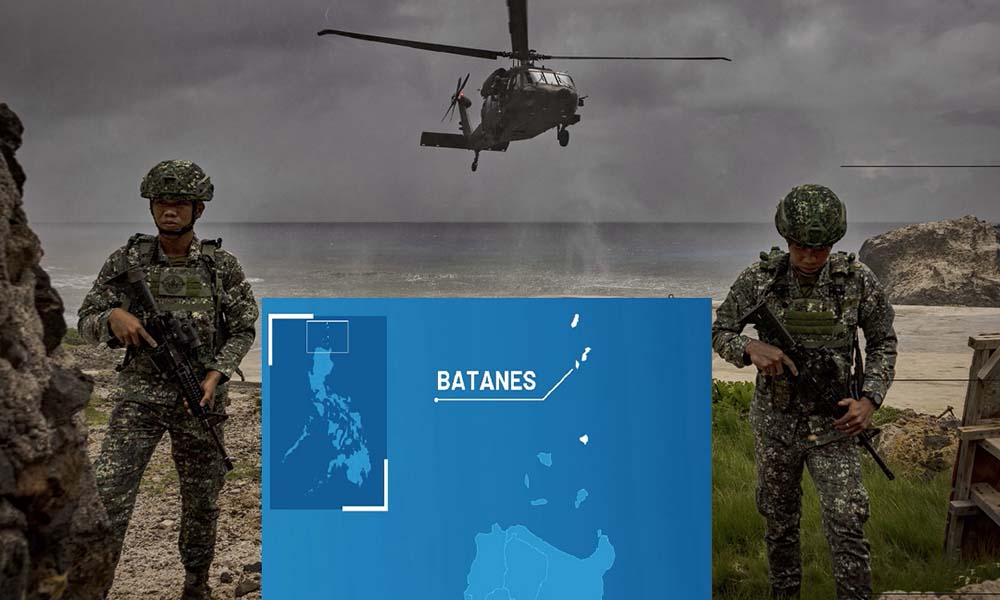
The Philippines occupies an important geographical position because of its proximity to Taiwan and the maritime routes connecting the South China Sea with the Philippine Sea. Northern Luzon and the Batanes Islands are located near the approaches between Taiwan and the Philippines, while the Luzon Strait and Bashi Channel serve as important passages in the western Pacific. These waterways are relevant to regional trade, commercial shipping and military movements, making the surrounding geography strategically significant for several countries. Any major crisis around Taiwan could have consequences beyond the island itself. Military movements, commercial shipping routes and regional air operations could all be affected. Because of its geographical proximity, the Philippines would face important security, economic and humanitarian challenges in such a situation. The country would also need to consider the protection of its territory, the safety of its citizens and the possible effects of regional instability on its maritime interests.
This geographical reality helps explain why American infrastructure development in the Philippines receives wider strategic attention. Military facilities do not necessarily need to be located directly beside a potential conflict area to contribute to regional planning. Some installations provide forward access, while others offer aircraft accommodation, maintenance, logistical support and communication facilities. A distributed network of military infrastructure can provide greater flexibility than relying on only a few facilities in the region. Basa Air Base could potentially contribute to this supporting role. Its position in central Luzon and its developing aviation infrastructure could allow it to accommodate aircraft and support surveillance or other authorized activities during a wider regional crisis. Improved parking capacity, supporting facilities and possible future drone infrastructure could increase its usefulness within the broader Philippine defense network.
However, it is important not to confuse strategic possibility with confirmed military policy. The available information does not establish that Basa has officially been designated as a launch base for a Taiwan conflict. Nor does the expansion automatically mean that the Philippines has agreed to participate in every possible American military operation involving Taiwan. The use of Philippine military facilities remains subject to the country’s laws, bilateral agreements and government decisions. For Manila, the Taiwan issue presents a difficult strategic challenge. The Philippines must maintain its defense cooperation with the United States while protecting its own national interests and avoiding unnecessary involvement in conflicts that could threaten its security. At the same time, its geographical position means that developments around Taiwan cannot be treated as distant or unrelated to Philippine national security.
The Real Significance of Basa Air Base for the Indo-Pacific
The nearly $100 million associated with previously reported investments and the latest major construction contract at Basa Air Base represents an important development in the evolving defense relationship between the United States and the Philippines. The investment reflects a gradual modernization process that includes runway rehabilitation, fuel storage, warehouse facilities, aircraft parking capacity and additional supporting infrastructure. Each project addresses a different requirement, but together they contribute to improving the overall usefulness of the installation. The new $32.97 million aircraft apron is a particularly important part of this effort because it is designed to increase the airfield’s capacity to accommodate up to 20 aircraft. Improved taxiways and supporting facilities could make aircraft movements more efficient, while proposed drone hangars and a tactical operations center point toward a wider future role involving surveillance and command coordination. These developments demonstrate how military infrastructure is evolving to meet the changing requirements of modern air power.

For the Philippines, Basa’s modernization provides an opportunity to improve the facilities supporting its air force and strengthen its ability to monitor surrounding maritime areas. The country faces significant geographical and security challenges, particularly in the South China Sea, where maintaining reliable information about maritime developments is increasingly important. Better aviation infrastructure and improved surveillance support could contribute to a more effective national defense system. For the United States, the investment strengthens an important defense partnership and improves the infrastructure available for authorized military activities in the western Pacific. Basa’s position in central Luzon makes it relevant to a wider network of Philippine military locations developed under EDCA. Combined with other facilities across the archipelago, the base contributes to a more geographically distributed framework for defense cooperation.
About Indo-Pacific Report
For more geopolitical analysis, strategy coverage, and Indo-Pacific security reporting, visit Indo-Pacific Report:
Website
Facebook
YouTube
US Expands Basa Air Base to Strengthen Philippines Defense Against China