China is a ‘SQUATTER’ in the West Philippines Sea! | Gilberto Teodoro Jr.
China has one of the world’s largest naval forces, a powerful coast guard and an expanding network of military installations across the South China Sea. Its growing maritime presence has created serious concerns among neighbouring countries, particularly the Philippines, which has repeatedly challenged Beijing’s actions in waters that fall within its maritime jurisdiction. However, the Philippines is not relying entirely on military strength to defend its position. It is also using international law, diplomatic pressure and public documentation to challenge China’s expanding claims.
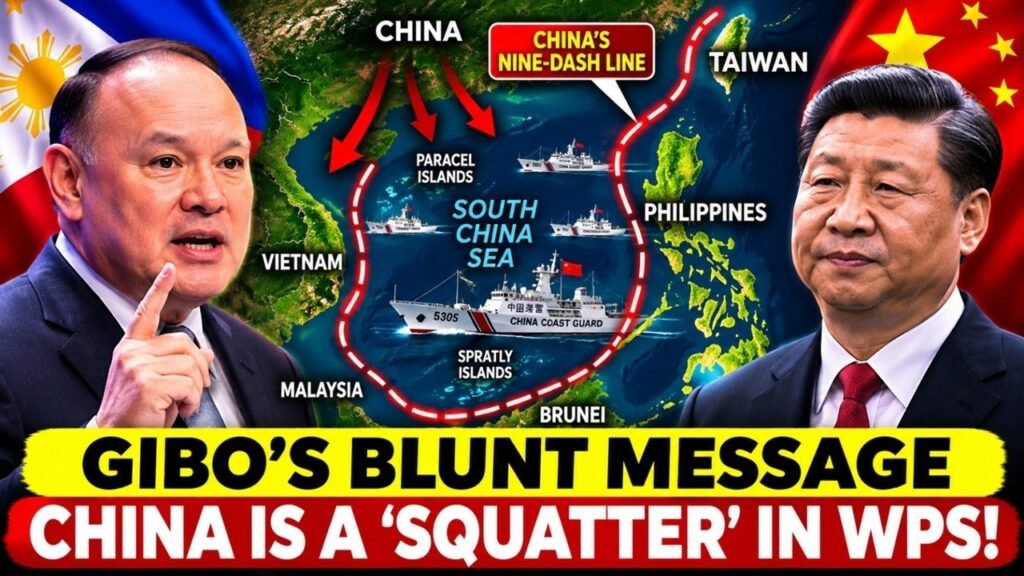
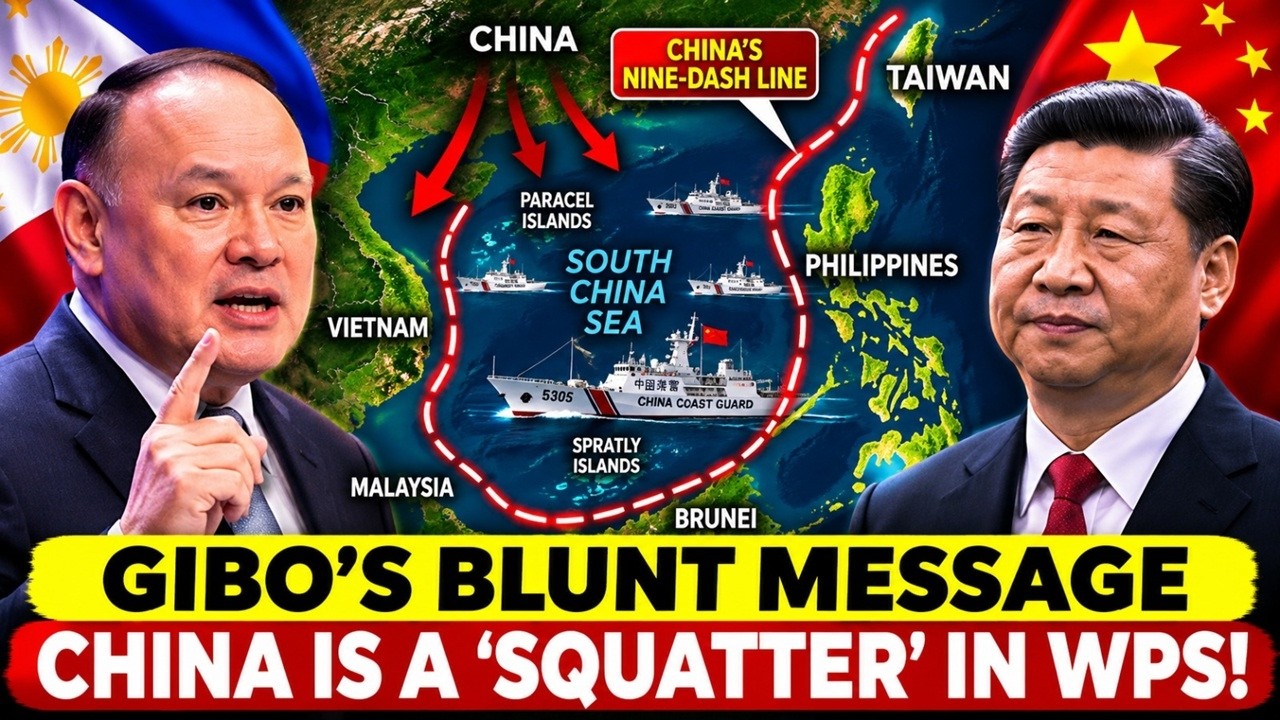
On October 19, 2023, Philippine Defense Secretary Gilberto “Gibo” Teodoro delivered a particularly strong message during a public forum in Manila. He described China as a “squatter” in the West Philippine Sea, responding to Beijing’s accusation that the Philippines was illegally occupying Pag-asa Island. Teodoro argued that China was the country maintaining an unlawful presence in areas within the Philippines’ 200-nautical-mile exclusive economic zone. His remarks directly challenged China’s attempt to portray Philippine activities as illegal while defending its own extensive maritime presence.
The statement attracted attention because it expressed a much larger disagreement between Manila and Beijing. China argues that its historical activities and claims give it extensive rights across the South China Sea. The Philippines, meanwhile, maintains that maritime rights must be determined under the United Nations Convention on the Law of the Sea (UNCLOS), which establishes internationally recognized rules for territorial seas, exclusive economic zones and continental shelves. The central issue is not simply which country has more ships, stronger weapons or larger military installations. It is whether a country can establish legal rights over maritime areas simply by maintaining a physical presence, constructing artificial islands or repeatedly deploying government vessels. The Philippines argues that physical control does not automatically create lawful maritime entitlement, and the 2016 South China Sea arbitration award provides an important legal foundation for that position Teodoro’s use of the word “squatter” was political rhetoric rather than a formal legal classification. Nevertheless, it highlighted a fundamental principle of international maritime law: a country’s military strength does not automatically give it legal ownership of waters or resources that belong to another country’s maritime jurisdiction. Understanding this distinction is essential to understanding the continuing West Philippine Sea dispute.
WHAT IS THE WEST PHILIPPINE SEA AND WHY IS IT IMPORTANT?
The West Philippine Sea is the name used by the Philippine government for maritime areas on the western side of the Philippine archipelago. These include the waters around and adjacent to the Kalayaan Island Group and Bajo de Masinloc, internationally known as Scarborough Shoal. These areas form part of the wider South China Sea, one of the most strategically important maritime regions in the world. The West Philippine Sea is important because it supports fishing communities, provides access to potentially valuable offshore energy resources and connects major international shipping routes. For the Philippines, protecting these waters is not simply a matter of national prestige. It directly affects economic security, food supplies, employment, energy independence and the country’s ability to exercise its rights under international law. The region also contains several important geographical features, including Palawan, Pag-asa Island, Ayungin Shoal, Scarborough Shoal and Mischief Reef. However, these features do not all have the same legal status. Some are naturally formed islands, others are reefs or low-tide elevations, and some have been extensively modified through artificial land reclamation. Their legal classification matters because it determines what maritime rights can be generated under UNCLOS. The Philippines’ geographical position makes the issue particularly significant. Its western coastline faces important maritime routes and fishing grounds, while the surrounding waters provide opportunities for offshore energy exploration. If the country cannot protect its lawful maritime rights, it could face long-term difficulties in developing natural resources and securing the livelihoods of communities that depend on the sea.
WHAT RIGHTS DOES THE PHILIPPINES HAVE UNDER UNCLOS?
The United Nations Convention on the Law of the Sea provides the legal framework for determining maritime boundaries and the rights of coastal countries. Under UNCLOS, a coastal state can exercise sovereignty over a territorial sea extending up to 12 nautical miles from its baselines. It can also establish an exclusive economic zone extending up to 200 nautical miles, subject to the Convention’s rules and any relevant geographical circumstances. The territorial sea and exclusive economic zone are legally different. Within its territorial sea, the Philippines exercises sovereignty over the waters, seabed, subsoil and airspace, although foreign vessels retain the right of innocent passage under international law. The exclusive economic zone does not provide complete territorial sovereignty. Instead, it gives the coastal state sovereign rights over natural resources and jurisdiction over specified activities. These rights include exploring, exploiting, conserving and managing living and non-living natural resources. The Philippines also has jurisdiction over marine scientific research, artificial islands and installations, and the protection of the marine environment. These provisions are particularly important in the West Philippine Sea because the region contains valuable fishing grounds and potential offshore petroleum resources. At the same time, other countries retain certain freedoms within another state’s exclusive economic zone, including navigation and overflight. This means that the presence of a foreign commercial vessel or warship does not automatically constitute a violation of Philippine rights. International law allows vessels to navigate through an exclusive economic zone, provided they respect the applicable legal framework. The real legal disagreement concerns activities that interfere with the Philippines’ sovereign rights. Unauthorized resource exploration, interference with lawful fishing and certain construction activities can raise serious legal issues. Therefore, the Philippines-China dispute must be understood through the distinction between freedom of navigation and the sovereign rights that UNCLOS grants to coastal states.
WHY THE WEST PHILIPPINE SEA MATTERS TO FILIPINO FISHERMEN
For ordinary Filipinos, the West Philippine Sea is not an abstract diplomatic disagreement. It is a source of food, income and economic survival. Fishing communities in coastal provinces, particularly those facing the South China Sea, have depended on these waters for generations. Access to traditional fishing grounds allows families to support themselves and contributes to the country’s domestic seafood supply. Scarborough Shoal, known in the Philippines as Bajo de Masinloc, is especially important because it has historically supported fishermen from different nationalities. When access to fishing areas becomes restricted through blockades, intimidation or confrontations involving maritime vessels, local communities can suffer direct financial losses. Smaller fishing boats are particularly vulnerable when facing much larger coast guard or maritime security vessels.
The problem extends beyond individual fishermen. Reduced access to productive fishing grounds can affect seafood availability, local markets, transportation businesses and families whose income depends on the fishing industry. For a country with millions of people relying on marine resources, protecting access to fishing areas is closely connected to food security and economic stability. The issue also involves offshore energy resources. Areas such as Reed Bank have attracted attention because of their potential oil and natural gas reserves. Developing domestic energy resources could help the Philippines reduce dependence on imported fuel, strengthen electricity security and create opportunities for investment. However, exploration requires a stable operating environment and respect for the Philippines’ sovereign rights under international law. The economic importance of the West Philippine Sea therefore reaches far beyond military installations and diplomatic statements. It concerns the daily lives of fishing communities, the country’s future energy supply and the ability of the Philippine government to manage resources within its maritime jurisdiction.
WHY THE PHILIPPINES CHALLENGES BEIJING’S CLAIMS
China’s expansive maritime claims are closely associated with the nine-dash line, a series of lines drawn around a large portion of the South China Sea. The line has been used by Beijing to illustrate the extent of its historical claims in the region. However, its geographical reach overlaps with maritime areas claimed by several Southeast Asian countries, including the Philippines, Vietnam, Malaysia and Brunei. The main disagreement concerns the legal basis of China’s claims. Beijing has repeatedly referred to historical activities and its longstanding presence in the South China Sea. The Philippines argues that historical references cannot override the maritime rights established under UNCLOS. Under the Convention, exclusive economic zones and continental shelves are determined through specific legal rules rather than through the simple drawing of a large historical boundary. The nine-dash line has created uncertainty because it covers areas that lie within the internationally recognized maritime entitlements of other coastal states. These overlapping claims have complicated regional relations and increased concerns about fishing access, offshore energy exploration and military activity. The issue became particularly significant when the Philippines initiated international arbitration proceedings against China in January 2013. Manila challenged the legal basis of China’s historic-rights claims and sought clarification about the status of several maritime features and the legality of particular Chinese activities. The tribunal delivered its award on July 12, 2016. The tribunal concluded that China’s historic-rights claims within the nine-dash line had no legal basis insofar as they exceeded the maritime entitlements permitted under UNCLOS. It also clarified the legal status of important features in the Spratly Islands and examined whether China’s actions had violated the Philippines’ sovereign rights. China rejected the ruling and continues to maintain its position. Nevertheless, the award remains a major development in international maritime law and an important part of the Philippines’ legal argument. It established that historical claims cannot simply replace the maritime framework provided by UNCLOS.
While the legal dispute continued, China expanded its physical presence across several parts of the South China Sea. One of the most significant developments was its large-scale land reclamation campaign, particularly at Mischief Reef, Subi Reef and Fiery Cross Reef. Through dredging and construction, China transformed naturally occurring maritime features into large artificial land areas equipped with extensive infrastructure.
These installations include airstrips, ports, radar systems, communication facilities and other military-related infrastructure. Such facilities improve China’s ability to monitor maritime activity, support aircraft operations and maintain a sustained presence far from the mainland. They also provide logistical advantages for naval and coast guard operations across the region. The construction campaign has changed the physical appearance of several reefs, but it has not automatically changed their legal status. UNCLOS makes an important distinction between naturally formed islands and artificial islands. Artificial islands do not acquire the same legal status as naturally formed islands and cannot generate their own territorial sea or exclusive economic zone. This distinction is particularly important in the case of Mischief Reef. The 2016 tribunal classified it as a low-tide elevation, meaning that it is naturally above water at low tide but submerged at high tide. The tribunal found that Mischief Reef lies within the Philippines’ exclusive economic zone and continental shelf. It also concluded that China’s unauthorized construction activities interfered with Philippine sovereign rights.
A TURNING POINT FOR THE PHILIPPINES
The legal confrontation between the Philippines and China reached a major turning point after the 2012 Scarborough Shoal standoff. During that confrontation, Chinese and Philippine vessels faced each other around the shoal, and the situation eventually resulted in a sustained Chinese presence in the area. The Philippines subsequently decided to pursue arbitration under UNCLOS to clarify its maritime rights.
On January 22, 2013, Manila initiated proceedings under Annex VII of UNCLOS. The Philippines was not asking the tribunal to decide sovereignty over every disputed island or determine the complete territorial boundaries of the South China Sea. Instead, it sought clarification on the validity of China’s historic-rights claims, the legal classification of certain maritime features and whether particular Chinese activities violated the Philippines’ rights under international law. On July 12, 2016, the tribunal issued its final award. It concluded that China’s historic-rights claims within the nine-dash line had no legal basis insofar as they exceeded the maritime zones permitted under UNCLOS. This was a significant legal development because it addressed the foundation of China’s expansive claims and reinforced the importance of the Convention’s maritime framework.
The tribunal also examined several features in the Spratly Islands. It classified Mischief Reef and Second Thomas Shoal, known in the Philippines as Ayungin Shoal, as low-tide elevations. Both were found within the Philippines’ exclusive economic zone and continental shelf. The tribunal also concluded that China’s activities had interfered with Philippine sovereign rights in relevant areas. Another important finding concerned Scarborough Shoal. The tribunal recognized traditional fishing rights for fishermen of different nationalities and found that China’s actions had unlawfully prevented Filipino fishermen from exercising their traditional fishing rights there. The award was significant, but it is important to describe it accurately. It did not give the Philippines sovereignty over every disputed island, nor did it settle every territorial dispute in the South China Sea. Its findings concerned the interpretation and application of UNCLOS and the specific legal questions submitted to the tribunal. Nevertheless, the decision gave Manila an important legal foundation for challenging China’s maritime activities. It demonstrated that even when a country has greater military and economic power, its maritime claims can still be examined under internationally recognized legal rules.
WHY CHINA CANNOT SIMPLY IGNORE THE 2016 ARBITRAL AWARD
China refused to participate in the arbitration proceedings and rejected the tribunal’s authority to decide the dispute. After the award was announced in July 2016, Beijing declared that it would neither accept nor recognize the decision. However, rejecting an international legal ruling does not automatically make that ruling legally invalid. The legal foundation of the award comes from UNCLOS, which both countries are parties to. Article 296 of the Convention establishes that decisions made by a court or tribunal with jurisdiction under UNCLOS are final and must be complied with by the parties to the dispute. Article 11 of Annex VII also confirms that an arbitral award is final and cannot be appealed through the arbitration process. The tribunal was permitted to continue proceedings even though China did not participate. Under Annex VII, a party’s absence does not automatically prevent arbitration from proceeding, provided the tribunal satisfies itself that it has jurisdiction and that the claims are well founded in fact and law. Therefore, China’s decision not to participate did not automatically cancel the proceedings or remove the legal effect of the award.
However, there is an important difference between legal authority and practical enforcement. International tribunals do not have their own military forces or police agencies capable of compelling a powerful country to withdraw ships, dismantle military installations or immediately change its maritime behaviour. The effectiveness of international law often depends on diplomatic pressure, international cooperation and the willingness of states to respect their legal obligations. This is where the Philippines faces its greatest challenge. Manila has a significant legal victory, but China has the military and economic resources to maintain its physical presence in disputed areas. The situation demonstrates that winning an international legal case and enforcing its outcome are two very different challenges. For the Philippines, the 2016 award remains an important diplomatic and legal instrument. It provides a recognized basis for challenging excessive maritime claims, presenting evidence to international partners and defending the country’s sovereign rights under UNCLOS.
AYUNGIN SHOAL: WHY THE BRP SIERRA MADRE MATTERS
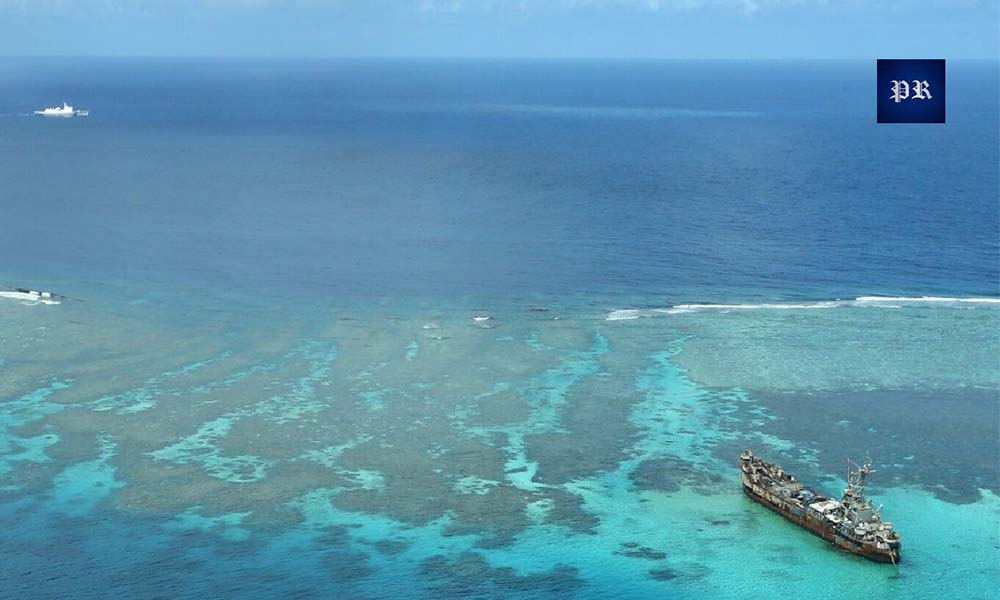
Ayungin Shoal, internationally known as Second Thomas Shoal, is one of the most sensitive locations in the West Philippine Sea dispute. It is particularly important because the Philippines maintains a small military presence there through the BRP Sierra Madre, an aging naval vessel deliberately grounded at the shoal in 1999. The ship serves as a Philippine outpost, with military personnel stationed aboard to maintain the country’s presence. Although the vessel is old and requires regular maintenance, its continued presence has significant strategic and political importance. Removing it would raise serious questions about the Philippines’ ability to maintain its position in the area. China has repeatedly challenged Philippine rotation and resupply missions to the BRP Sierra Madre. These confrontations have involved blocking manoeuvres, water cannon incidents and dangerous encounters between Chinese and Philippine vessels. Such incidents create risks not only for the personnel involved but also for wider regional stability. The dispute is about more than the continued presence of an old naval ship. It concerns whether the Philippines can safely maintain its outpost and exercise its rights in an area that the 2016 tribunal found within its exclusive economic zone and continental shelf. Regular resupply missions are necessary because the personnel aboard the vessel need food, drinking water, medical supplies and other essential materials.
In July 2024, Manila and Beijing reached a provisional arrangement intended to reduce tensions surrounding Philippine resupply missions to the BRP Sierra Madre. The arrangement was designed to facilitate humanitarian resupply while allowing both governments to maintain their respective positions on the underlying maritime dispute. It did not resolve the disagreement over sovereignty or maritime rights, but it demonstrated that limited practical agreements can help prevent dangerous confrontations. Ayungin Shoal remains a major test of Philippine maritime policy. If Manila cannot maintain a reliable presence and support its personnel, it could face increasing difficulties in protecting its interests. For this reason, the BRP Sierra Madre has become a powerful symbol of the country’s determination to defend its maritime position despite China’s much greater naval capabilities.
SCARBOROUGH SHOAL: THE STRUGGLE OVER FISHING RIGHTS
Bajo de Masinloc, internationally known as Scarborough Shoal, is another major centre of the Philippines-China maritime dispute. Located in the South China Sea, the shoal has historically been an important fishing ground for Filipino fishermen and other regional fishing communities. Its importance comes from both its geographical position and its traditional use by people who depend on the surrounding waters. The situation changed significantly after the 2012 standoff between Chinese and Philippine vessels. Following the confrontation, China maintained a strong coast guard presence around the shoal, while Filipino fishermen faced increasing difficulties accessing traditional fishing areas. This development became an important part of the Philippines’ decision to pursue international arbitration. The 2016 tribunal did not decide sovereignty over Scarborough Shoal. However, it recognized that fishermen from several countries had traditional fishing rights in the area. It also found that China’s actions had unlawfully prevented Filipino fishermen from exercising those traditional rights.
The distinction matters because maritime sovereignty and traditional fishing rights are not identical legal questions. A country may have a dispute over sovereignty while fishermen from different nationalities retain traditional rights recognized under international law. The tribunal’s findings therefore addressed an important aspect of the dispute without deciding which country owns the shoal. For Filipino fishing communities, the issue remains deeply practical. Restrictions on access can reduce income, increase operating costs and make fishing more dangerous. Small fishing boats have limited capacity to operate in difficult conditions, particularly when confronted by much larger coast guard vessels. Scarborough Shoal also has wider strategic importance because of its position in the South China Sea. Continued tensions around the area can affect maritime security and relations between Manila and Beijing. This is why protecting traditional fishing access remains an important part of the Philippines’ broader approach to the West Philippine Sea dispute.
CHINA’S ARTIFICIAL ISLANDS AND THE LIMITS
Mischief Reef, known in the Philippines as Panganiban Reef, is one of the clearest examples of the difference between physical construction and legal maritime rights. China has carried out extensive land reclamation there, creating a large artificial installation with runways, ports, surveillance systems and military-related infrastructure. The development has significantly strengthened Beijing’s ability to maintain a long-term presence in the region. The importance of Mischief Reef goes beyond its military facilities. Its legal classification was examined in detail during the 2016 South China Sea arbitration. The tribunal determined that Mischief Reef was a low-tide elevation and that it lay within the Philippines’ exclusive economic zone and continental shelf. It also found that China’s unauthorized construction activities had interfered with the Philippines’ sovereign rights. Under UNCLOS, artificial islands do not acquire the same legal status as naturally formed islands. They cannot independently generate a territorial sea or an exclusive economic zone. Therefore, creating new land through dredging and construction does not automatically give a country additional maritime entitlements.
This principle is particularly important because large-scale construction can create the impression that a country has established permanent ownership over a maritime feature. Buildings, runways and military installations may change the physical landscape, but they do not automatically change the legal classification of the original natural feature. The tribunal also examined environmental consequences associated with China’s reclamation activities in the Spratly Islands. Large-scale dredging and construction can damage coral reefs, destroy marine habitats and disrupt ecosystems that support regional fishing communities. Such environmental effects are an additional concern because the South China Sea supports a wide range of marine life and economic activity. Mischief Reef therefore represents two interconnected challenges for the Philippines. The first is China’s ability to establish a substantial physical and military presence. The second is the difficulty of enforcing legal findings when a much more powerful country refuses to accept them. The 2016 award clarified the legal position, but the infrastructure remains a major feature of the regional security environment.
GIBO TEODORO’S WARNING: THE BATTLE IS ABOUT MORE THAN SHIPS
When Philippine Defense Secretary Gilberto “Gibo” Teodoro described China as a squatter in the West Philippine Sea, he was challenging more than Beijing’s presence around a particular reef or maritime feature. His statement questioned the broader idea that a country can establish legal entitlement simply by deploying ships, constructing artificial islands and maintaining a physical presence over an extended period. The 2016 arbitral award gave the Philippines a significant legal foundation. It rejected China’s historic-rights claims insofar as they exceeded the maritime entitlements permitted under UNCLOS and identified specific Chinese activities that violated Philippine sovereign rights. However, the ruling did not remove Chinese ships from the region, dismantle artificial islands or settle every territorial dispute in the South China Sea. That reality explains why the West Philippine Sea remains such a difficult challenge for Manila. The Philippines has a strong legal argument, but it must also deal with China’s much greater military and economic capabilities. Protecting maritime rights requires more than international legal documents. It requires continuous monitoring, effective diplomacy, capable maritime forces and the ability to maintain a national presence in important areas. The dispute also has consequences beyond the Philippines and China. Other Southeast Asian countries have maritime interests in the South China Sea, while major international powers depend on its shipping routes for trade and economic activity. The stability of these waters is therefore important to the wider Indo-Pacific region.
For smaller maritime states, the central issue is whether international law can protect their rights when they face a significantly more powerful neighbour. If physical strength alone determines maritime entitlement, the rules established under UNCLOS could lose much of their practical importance. This is why the Philippines continues to emphasize the 2016 award and the importance of a rules-based maritime order.
Teodoro’s statement may have been provocative, but the underlying legal question is serious. A country’s military presence does not automatically establish sovereignty, and artificial construction cannot independently create maritime rights that international law does not recognize.
The future of the West Philippine Sea will depend on whether the Philippines can defend its legal position through diplomacy, national defense and international cooperation. The country does not need to match China in every military category, but it does need the ability to protect its people, maintain its maritime presence and exercise the rights recognized under international law. The question is no longer simply which country has more ships in the water. It is whether international law can remain meaningful when a smaller country challenges the actions of a much more powerful state. For the Philippines, the West Philippine Sea represents a test of national resilience, economic security and the credibility of the international maritime system. China may have the military strength to maintain a substantial physical presence across the South China Sea. But physical control and legal entitlement are not the same thing. That distinction remains at the heart of Teodoro’s warning and the Philippines’ continuing struggle to defend its maritime rights.