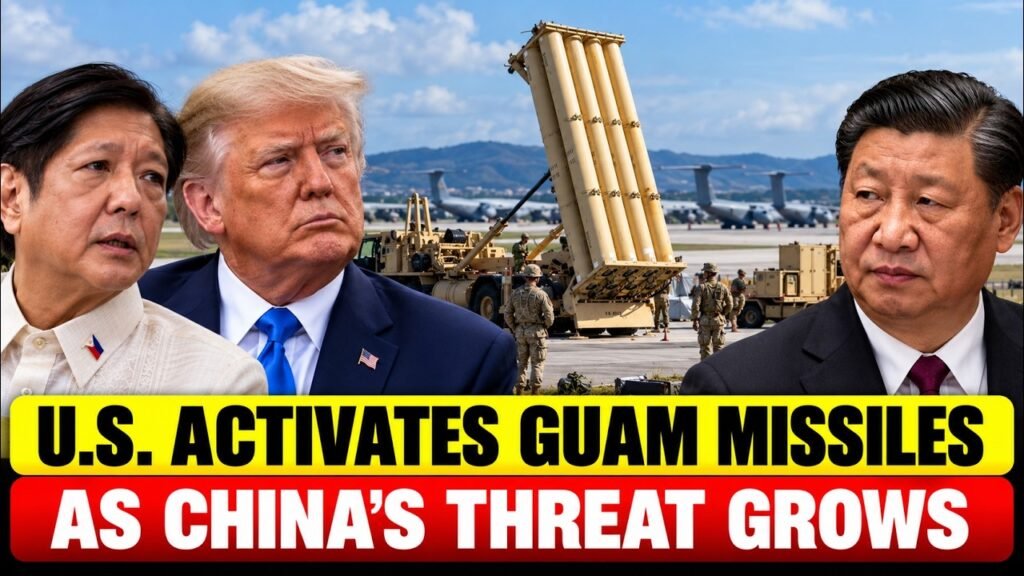
U.S. Activates Guam Missile Defense near Philippines as China’s Threat Grows
The United States has taken another step toward strengthening its military defenses in the western Pacific with the activation of a new Army air and missile defense battalion on Guam. The 3rd Battalion, 43rd Air Defense Artillery Regiment was activated at Andersen Air Force Base on October 16, 2026, continuing a mission previously carried out by Task Force Talon since 2013. The U.S. Army announced the activation in an official report published on October 20, 2026. The development comes as Washington continues to strengthen its ability to protect important military installations from increasingly complex missile and aerial threats in the Indo-Pacific region
Guam may appear to be a distant American territory in the Pacific, but its strategic importance extends far beyond the island itself. It supports U.S. military operations, logistics, aircraft movements and regional deployments. In a possible crisis involving Taiwan or the South China Sea, the ability to protect these supporting facilities could influence how effectively American forces sustain their activities across the region. However, the battalion’s activation should not be mistaken for the completion of Guam’s entire planned missile defense network. The United States is developing a much larger, integrated defense system that will require years of construction, testing, coordination and operational preparation.
Guam Is a Strategic Hub for U.S. Military Operations
Guam occupies an important position in the western Pacific because it gives the United States a supporting base between its main Pacific territories and the areas where regional military tensions could escalate. Its military facilities help support aircraft operations, logistics, communications and the movement of personnel and supplies. These functions are essential because modern military operations depend on more than combat aircraft, warships and long-range weapons. Forces also need fuel, maintenance, spare parts, secure communications and facilities where equipment can be prepared for further missions.
During a serious confrontation involving China and Taiwan, American forces operating across the Pacific could face significant logistical demands. Aircraft may require maintenance and fuel, naval forces need supplies, and military commanders must maintain communications across long distances. Guam can support these requirements while providing greater geographic depth than locations closer to a potential conflict zone. Its value therefore lies not only in the forces stationed on the island but also in the wider network of military activities that it helps sustain. This role also makes Guam an important consideration in American defense planning. An adversary seeking to disrupt U.S. military operations would not necessarily focus exclusively on forces operating near Taiwan. Military infrastructure supporting those forces could also become strategically significant during a major conflict. Strengthening Guam’s air and missile defenses is intended to reduce the vulnerability of this supporting network and improve the chances that essential operations can continue under pressure.
Why Guam Matters in a Potential Taiwan Conflict
Taiwan is one of the most important potential flashpoints in the Indo-Pacific because of its political status, strategic location and the possibility of a military confrontation involving China and the United States. Washington maintains unofficial relations with Taiwan and provides defensive support, while Beijing considers Taiwan part of China and has not ruled out the use of force to achieve unification. These competing positions have made stability across the Taiwan Strait a major regional security concern.
China’s South China Sea Strategy Faces a New Challenge From the Philippines and Its Allies
If a conflict erupted, American military operations would depend on a combination of forward-deployed forces and supporting facilities farther away from the immediate fighting. Guam could help support the movement of aircraft, personnel, equipment and supplies, although its precise role would depend on U.S. operational decisions and the circumstances of the crisis. Protecting the island could therefore help preserve military options without guaranteeing that Washington would intervene in a particular confrontation. The distinction is important because the activation of the 3rd Battalion, 43rd Air Defense Artillery Regiment does not prove that a Taiwan conflict is imminent. It also does not establish that China has decided to attack Guam. Instead, the development reflects a broader effort to prepare American military infrastructure for a range of possible threats. The United States is seeking to make its regional posture more resilient, particularly as long-range missile capabilities and other military technologies continue to develop.
Why the Philippines Should Pay Attention
The Philippines is geographically closer to Taiwan and the South China Sea than Guam, placing it in a different but connected position within the regional security environment. Its proximity to important maritime routes and potential conflict areas makes regional stability especially relevant to Philippine national security. At the same time, Guam provides the United States with a supporting position farther into the Pacific, helping connect military forces, logistics and infrastructure across a large geographic area.
These locations serve different purposes and cannot simply replace one another. Philippine facilities can support activities agreed under the country’s defense arrangements with the United States, subject to Philippine law, applicable agreements and the circumstances at the time. Guam, meanwhile, offers additional depth for supporting American forces operating across the region. If a crisis disrupted forward activities, the condition and availability of supporting infrastructure farther away could become increasingly important. For Manila, the significance is indirect but meaningful. A more resilient Guam could help preserve some of the support capabilities available to American forces during a regional emergency. However, it would not automatically protect Philippine territory, guarantee U.S. military intervention or remove the security challenges facing the Philippines in the South China Sea. The development should therefore be understood as one part of a wider regional defense posture rather than a direct change in the Philippines’ own military capabilities.
What the New U.S. Army Battalion Actually Changes
The newly activated battalion continues the air and missile defense mission previously associated with Task Force Talon, which began operations on Guam in 2013. According to the U.S. Army, the activation took place at Andersen Air Force Base on October 16, 2026, under the unit’s historic designation as the 3rd Battalion, 43rd Air Defense Artillery Regiment. The unit falls under the 38th Air Defense Artillery Brigade and the 94th Army Air and Missile Defense Command. The transition represents an organisational development in the Army’s approach to sustaining air and missile defense in the Indo-Pacific. A dedicated battalion structure provides an established framework for command, training, personnel management, readiness and coordination with other units. These functions may receive less public attention than the arrival of a new missile launcher, but they remain important to the operation of a complex military defense network. Equipment must be supported by trained personnel, clear responsibilities and procedures that allow different units to work together. The activation also reflects the long-term nature of the Guam mission. Instead of treating the island’s missile defense as a temporary response to a particular threat, the Army is establishing a more enduring organisational structure for its responsibilities. That does not mean every element of Guam’s planned defense architecture is already deployed or fully operational. The activation is a concrete step in the wider process, while the effectiveness of the overall system will depend on equipment availability, personnel, integration and continued investment.
The Army’s contribution to Guam’s wider air and missile defense architecture is expected to involve several systems designed to address different types of threats. These include Terminal High Altitude Area Defense, commonly known as THAAD, the Patriot air and missile defense system, and the developing Indirect Fire Protection Capability, or IFPC. Each has a distinct role, and their intended value comes from the way different capabilities can complement one another within a broader network. THAAD is designed to intercept certain ballistic missile threats during the terminal phase of their flight. Patriot provides another layer of defense against selected aircraft and missile threats, depending on the system configuration and interceptor employed. IFPC is being developed to help address additional threats, including cruise missiles and uncrewed aerial systems. The precise effectiveness of each system depends on the characteristics of the incoming target, the available interceptor and the conditions under which an engagement takes place.
These systems cannot be treated as interchangeable solutions. Ballistic missiles, cruise missiles and uncrewed aircraft may differ substantially in speed, altitude, flight profile and detection requirements. A defense network must receive reliable information from its sensors, establish a usable track, determine the nature of the threat and coordinate an appropriate response. Communications, command systems, trained operators and available interceptors all contribute to that process. The important point is that the battalion’s activation does not independently establish that all these systems are deployed together in their final planned configuration. Nor does it guarantee that every incoming weapon would be intercepted. Its contribution must be assessed within the larger effort to create a coordinated defense network capable of addressing different types of threats under varying operational conditions.
Why a Layered Missile Defense System Matters
A layered defense approach is intended to provide multiple capabilities against different categories of incoming threats. Instead of relying on a single interceptor or radar, a network can combine sensors, command systems and defensive weapons to improve the chances of detecting and responding to an attack. The concept is especially relevant to Guam because the island could face different types of missile and aerial threats in a major regional conflict. However, having multiple systems does not automatically make a location invulnerable. Every defensive capability has limitations, and performance depends on factors such as detection quality, engagement conditions, interceptor availability and coordination between units. A threat that is not detected or tracked in time may be difficult to engage, while a prolonged attack could place additional pressure on personnel, communications and ammunition supplies.
A layered network also needs to function as an integrated system rather than a collection of unrelated military assets. Sensors must deliver useful information to command authorities, and commanders must be able to coordinate responses across the relevant units. Maintenance, training and communications are therefore as important to sustained readiness as the interceptors themselves. The purpose of Guam’s planned missile defense architecture is to improve protection and resilience, not to promise that every possible attack can be defeated. The new battalion contributes to the organisational foundation of that effort, while the broader network is intended to bring together multiple capabilities as construction and integration progress.
Why the Ten-Year Construction Timeline Matters
The expected construction period highlights the practical difficulties involved in building a large, integrated defense system on an island that already hosts important military installations. Construction work must be coordinated with existing facilities, access requirements, environmental considerations and the operational needs of the military organisations involved. The agencies must also prepare the infrastructure necessary to support personnel and equipment over the long term. The Missile Defense Agency’s published project information indicates that capabilities will be brought online in phases. As individual sites are completed, their equipment must be tested and checked before it can contribute to the wider system. The transition from construction to an operational defense network therefore involves more than installing hardware. Systems must function correctly, personnel must be prepared, and the relevant organisations must establish reliable procedures for operating and sustaining their assigned components.
This phased approach also means that public announcements about individual units or systems should not be interpreted as evidence that the entire island is already protected by the final planned architecture. A new battalion can strengthen the Army’s organisational presence while other parts of the system remain under development. The overall level of capability will change as additional components become operational.
For regional observers, the timeline provides useful context. Guam’s defense is being developed as a continuing programme that requires sustained resources and coordination. Its long-term value will depend on whether the United States can complete the planned construction, integrate the relevant technologies and maintain the system once it enters service.
What the Government Accountability Office Says About the Challenges
These issues matter because a missile defense system cannot operate effectively through equipment alone. Personnel require appropriate facilities, maintenance support, spare parts, housing and other services that help sustain readiness. If staffing requirements and deployment schedules are unclear, the military may find it more difficult to plan the supporting infrastructure needed for new units. The GAO therefore highlighted the importance of resolving organisational and logistical questions alongside the development of the hardware.
The report also emphasised the need for clearer arrangements governing how responsibilities for operating and sustaining the system will be managed across the relevant organisations. This is particularly important because the project involves components associated with different military services and the Missile Defense Agency. Each part of the network must have clearly defined responsibilities and the resources required to fulfil them. These findings do not mean that Guam’s defense programme cannot succeed. They demonstrate that its effectiveness will depend on practical implementation as well as technological development. The activation of the new battalion is one step in a much larger process, and the long-term outcome will depend on whether the United States addresses the personnel, infrastructure and coordination challenges identified by its own oversight agency.
How China’s Missile Capabilities Affect the Strategic Picture
China’s growing military capabilities have become a major consideration in U.S. defense planning across the Indo-Pacific. Long-range missiles and other precision-strike systems could threaten military facilities that support American operations far from the immediate area of a confrontation. For Washington, protecting Guam is therefore connected to the wider question of whether its forces could continue operating if a major regional conflict placed pressure on Pacific infrastructure. An adversary seeking to disrupt military operations may attempt to affect airfields, logistics facilities, communications and other supporting infrastructure. Such a strategy would not necessarily require every American aircraft or warship to be defeated directly. Disrupting the facilities that enable forces to operate could also complicate the movement of supplies and the maintenance of military readiness.
This is one reason the United States is investing in a more comprehensive defense network on Guam. The objective is to improve the island’s ability to detect and respond to missile threats and to reduce the likelihood that an attack could prevent essential military functions from continuing. The planned system is designed around multiple components because no single sensor, interceptor or command system can address every possible threat on its own. Nevertheless, the existence of a threat does not establish that an attack is inevitable. China’s military development, U.S. defensive investment and regional tensions form part of a broader strategic environment in which governments prepare for possible contingencies. The battalion’s activation should be understood in that context, rather than treated as evidence that a specific conflict is about to begin.
Can Guam’s Missile Defense Deter a Chinese Attack?
A stronger defense network could affect the calculations of any government considering a military attack against Guam. If planners believe that an attack is less likely to achieve its intended objectives, they may need to reconsider the expected military costs and potential benefits. In this sense, missile defense can contribute to deterrence by making it more difficult to disrupt important military infrastructure. However, deterrence depends on more than the presence of interceptors. It can be affected by the number and types of weapons involved, the reliability of detection systems, the availability of defensive ammunition and the ability to sustain operations during a prolonged crisis. An attacker might also employ different methods intended to complicate detection or place pressure on defensive resources. The outcome would depend on the circumstances of a particular confrontation and cannot be established in advance.
It would therefore be inaccurate to claim that the new battalion makes Guam invulnerable or guarantees that every Chinese missile could be intercepted. The more realistic objective is to improve the island’s defenses, increase resilience and reduce the chances that a single attack could easily disrupt essential military functions. The wider strategic effect remains uncertain. A more capable defense network could complicate an adversary’s planning, but it would not remove the possibility of escalation or guarantee that leaders always make accurate assessments of each other’s intentions. Missile defense is one element of a broader military posture that also includes diplomacy, alliances, conventional forces and the ability to sustain operations.
The U.S.-Philippines Mutual Defense Treaty and EDCA
The Philippines has a formal defense relationship with the United States under the 1951 Mutual Defense Treaty. The two countries also cooperate through the Enhanced Defense Cooperation Agreement, commonly known as EDCA, which provides for agreed U.S. access to designated Philippine locations and supports activities such as construction, training and the prepositioning of equipment and supplies under the agreement’s terms.
EDCA does not transfer sovereignty over the designated locations to the United States, nor does it establish unrestricted American control over Philippine territory. Its implementation operates within the countries’ existing legal and bilateral arrangements. These details matter because discussions about regional military access can sometimes confuse agreed defense cooperation with permanent foreign ownership or an automatic commitment to participate in every possible conflict. The relationship gives Washington and Manila mechanisms for cooperation, but the exact activities undertaken during a crisis would depend on the circumstances, applicable agreements and decisions by both governments. The existence of defense arrangements does not remove the need for consultation, planning and national decision-making. Guam complements this regional relationship by providing a supporting position farther into the Pacific. Its military infrastructure can contribute to the wider network that sustains American forces, while agreed Philippine locations may support activities closer to the region’s maritime flashpoints. These roles are connected, but they are not identical, and neither should be treated as a substitute for the other.
If Guam becomes better able to withstand missile threats, it could help preserve some of the infrastructure used to sustain American military operations in the western Pacific. That may matter during a crisis involving Taiwan or the South China Sea, when the availability of bases, logistics and communications could influence the options available to U.S. commanders. However, the extent of that contribution would depend on the circumstances of the conflict and the condition of the wider support network. For the Philippines, the potential benefit is indirect. A more resilient American support hub could help maintain regional operational capacity, but it would not automatically prevent a confrontation or guarantee that U.S. forces would respond in a particular way. Defense treaties, military capabilities and political decisions all play distinct roles in determining how a crisis unfolds. Manila must therefore continue strengthening its own national defense, maritime awareness and capacity to respond to developments near its territory. These efforts are relevant regardless of progress on Guam’s missile defense programme. The Philippines faces its own geographic, operational and resource challenges, and those cannot be resolved simply by improving infrastructure elsewhere in the Pacific.
A balanced assessment recognises both sides of the issue. Guam’s defense can contribute to the broader regional security environment, but Philippine security ultimately requires national preparedness, effective partnerships and decisions grounded in the country’s own interests. The new battalion is relevant to that picture without being a direct guarantee of Philippine protection.
Why the South China Sea Remains a Separate Security Challenge
The South China Sea presents its own set of security challenges, including maritime disputes, competing territorial claims, fishing access, commercial shipping and interactions between coast guard and naval forces. The Philippines has been involved in recurring tensions with China in these waters, making maritime awareness and the protection of Philippine rights and interests important national priorities.
Guam’s missile defense system is not designed to resolve these disputes directly. Its primary purpose is to improve protection against air and missile threats to Guam. Although the island supports the wider U.S. military posture, its defensive systems do not replace the maritime capabilities required to monitor waters, protect vessels, support coast guard operations or respond to incidents at sea.
This distinction is important when evaluating the implications of U.S. military developments. Regional security involves different domains, and a capability designed to defend an island against missile attacks should not be confused with a system designed to manage maritime confrontations. The two can contribute to the broader strategic environment, but they address different operational requirements.
For Manila, the practical lesson is that cooperation with the United States and other partners should complement the development of Philippine capabilities. Better maritime awareness, reliable communications, trained personnel and resilient infrastructure remain important to managing risks in the South China Sea. Guam’s strengthening may affect the wider regional balance, but it does not remove the need to address challenges closer to Philippine waters.
The Limits of Guam’s Missile Shield
One of the most important questions for any missile defense network is whether it can continue functioning during a prolonged period of pressure. Interceptors are limited resources, and the number available at any given time affects how many engagements a system may be able to conduct. A demanding operational environment could also require equipment maintenance, replacement parts, additional personnel and continued logistical support. The outcome of a missile attack would depend on many factors, including the type and number of incoming threats, the performance of the detection network and the defensive systems available at the time. It would be misleading to assume that every incoming missile would be intercepted or that the same defensive performance could be guaranteed in every scenario. Maintenance and training are equally important. Sophisticated equipment requires regular servicing and personnel who understand how to operate it under pressure. Communications and command systems must also remain reliable so that information can be shared and decisions can be made in time. These requirements help explain why a military defense programme involves much more than purchasing and installing weapons. For Guam, the long-term challenge is to sustain the system after its components become operational. The new battalion provides an organisational structure for the Army’s mission, but continued readiness will require sufficient personnel, funding, maintenance and supporting infrastructure. Those practical requirements will help determine the system’s value during a real emergency.
Guam’s military facilities depend on infrastructure that extends beyond missile defense. Runways, fuel supplies, communications, power, maintenance facilities and logistics networks all help sustain military activities. A defense system may improve protection against particular threats, but the wider military posture can still face difficulties if supporting services are disrupted. The construction and operation of a larger defense network also create their own support requirements. Personnel need suitable facilities, equipment requires maintenance and different organisations must coordinate access, construction and daily operations. The GAO’s findings demonstrate why these requirements need to be addressed as part of the programme rather than treated as secondary concerns A resilient defense posture therefore combines active protection with the ability to sustain and recover operations. Interceptors and sensors are important, but so are trained personnel, reliable communications, spare parts and infrastructure capable of supporting long-term activity. These elements contribute to the overall readiness of the system. The Philippines can draw a similar general lesson for its own defense planning. Military capability depends not only on the equipment a country acquires but also on whether it can operate, maintain and support that equipment when conditions become difficult. Local infrastructure, personnel, logistics and national planning remain essential even when a country has strong defense partners.
What to Watch as Guam’s Defense System Develops
The next stage of Guam’s missile defense programme will be shaped by the progress of construction, the installation and testing of equipment, and the integration of capabilities across the relevant military organisations. Official updates from the U.S. Army and Missile Defense Agency can help distinguish between planned capabilities, systems being installed and capabilities that have completed the necessary operational checks.
Personnel and support arrangements will also remain important. The GAO’s May 2025 report identified unresolved questions about staffing, deployment schedules and coordination. Progress in these areas will help indicate whether the programme is developing the institutional foundation required for long-term operation and maintenance.
It is also important to track the difference between individual announcements and the status of the overall network. The activation of a battalion is a specific organisational milestone. The completion of the wider EIAMD programme is a separate objective involving multiple sites, systems and agencies. Treating these as the same event could create an inaccurate impression of how much of the planned defense capability is available.
For readers following security developments in the Indo-Pacific, the most useful approach is to focus on verifiable milestones and official reporting. Claims about a fully operational shield, an imminent attack or a guaranteed military outcome should be assessed carefully against the available evidence. Guam’s defense is a significant strategic project, but its effectiveness will be determined by implementation over time.
Final Analysis: A Significant Step, Not a Completed Shield
The activation of the 3rd Battalion, 43rd Air Defense Artillery Regiment on Guam marks an important organisational step in the United States’ effort to strengthen its air and missile defense posture in the Indo-Pacific. It continues the mission previously carried out by Task Force Talon and provides a dedicated Army structure for the island’s defense responsibilities. The development reflects the importance Washington places on protecting the infrastructure that supports American military operations across the western Pacific.
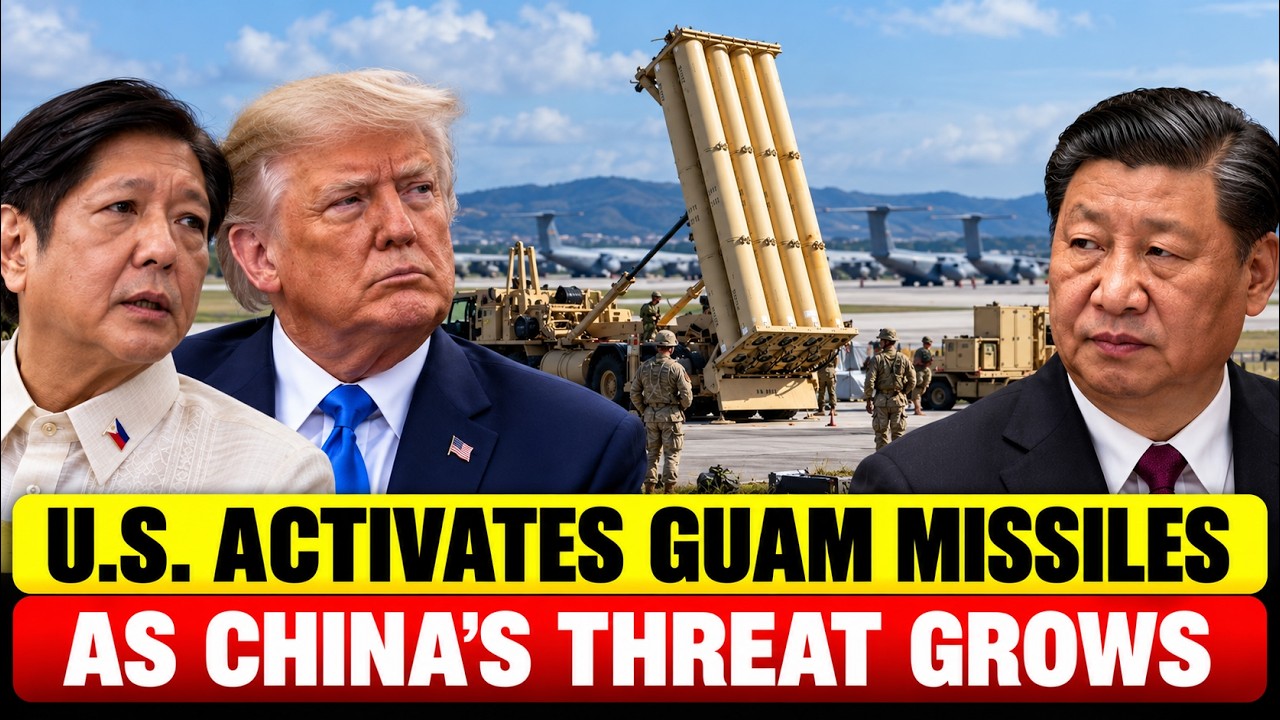
However, the activation should not be confused with the completion of Guam’s planned missile defense network. The Enhanced Integrated Air and Missile Defense programme involves multiple sites, sensors, radars, launchers, interceptors and command systems. Construction is expected to progress in phases over approximately ten years beginning in 2025, with operational capability introduced as individual components complete construction and testing. Personnel, logistics, maintenance and coordination will remain important to the programme’s success. For China, the development signals continued U.S. investment in protecting an important regional military hub. A stronger defense network could complicate efforts to disrupt American operations, but it does not make Guam invulnerable or eliminate the possibility of escalation. For the Philippines, the significance lies in the wider regional support network and the relationship between American military resilience and the security environment around Taiwan and the South China Sea.
About Indo-Pacific Report
For more geopolitical analysis, strategy coverage, and Indo-Pacific security reporting, visit Indo-Pacific Report:
Website
Facebook
YouTube
U.S. Activates Guam Missile Defense near Philippines as China’s Threat Grows