China’s South China Sea Strategy Faces a New Challenge From the Philippines and Its Allies
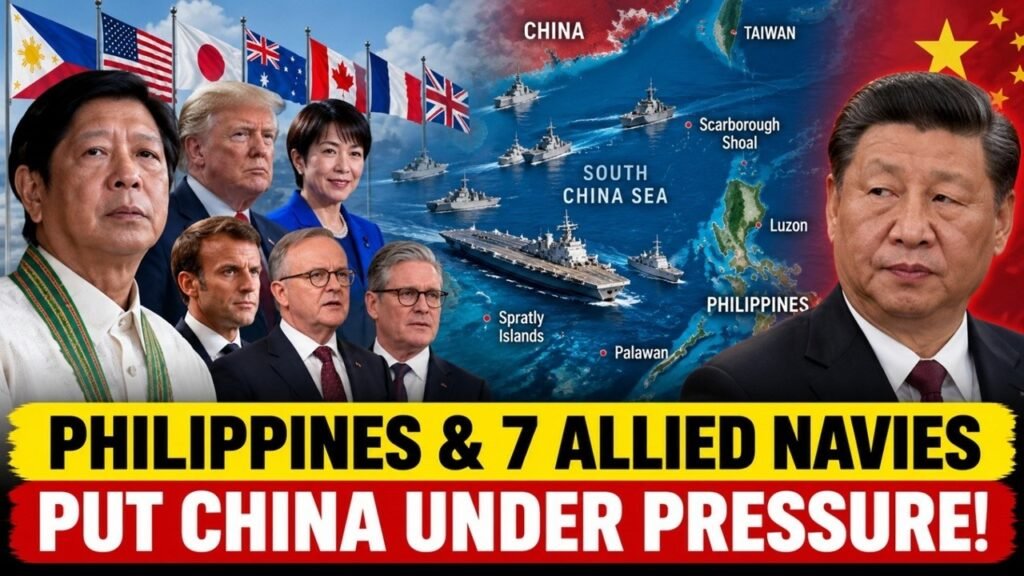
China has a powerful navy, an extensive coast guard, maritime militia vessels and military facilities across the South China Sea. These capabilities allow Beijing to maintain a regular presence in disputed waters and respond quickly to developments near its coastline. However, China’s growing maritime influence is also encouraging other countries to strengthen cooperation, improve surveillance and develop more effective ways to operate together. The United States, the Philippines, Japan, Australia, Canada, France and the United Kingdom are contributing to a wider network of maritime security cooperation in the Indo-Pacific. These countries are not operating as a single seven-nation fleet, nor do they have one unified command responsible for every confrontation at sea. Their cooperation instead involves military exercises, information-sharing, logistical support, defence agreements and diplomatic engagement.
The significance of this cooperation became clearer in 2026. From July 21 to 25, Japan, the Philippines and the United States conducted maritime activities that included anti-submarine warfare training, replenishment and maritime domain awareness. In August, Australia joined Philippine and American forces in another maritime cooperative activity. Canadian forces subsequently participated in activities with the Philippines and the United States in September. Official announcements from the participating governments document these separate exercises and their operational objectives. These developments raise an important question: can greater international cooperation make it more difficult for China to exert pressure in the South China Sea without attracting scrutiny or diplomatic consequences? The answer depends on how effectively the participating countries turn individual exercises into sustained cooperation. Their combined efforts could improve maritime awareness, strengthen coordination and help regional governments maintain their lawful maritime activities. However, they do not amount to a blockade of China, and they do not guarantee that Chinese vessels will be prevented from operating in disputed waters. The emerging strategic challenge for Beijing is therefore not a physical wall of warships. It is the possibility of facing more observers, better-coordinated partners and greater international attention whenever maritime tensions increase.
Why the South China Sea Is Strategically Important
The South China Sea is one of Asia’s most important maritime regions. It connects major economies, supports international shipping and provides access to important fishing grounds and potential energy resources. Its waters also connect with wider maritime routes leading towards the Indian Ocean and the Pacific, making stability in the region important to countries far beyond Southeast Asia. Several disputed locations have become focal points of tensions between China and the Philippines. These include Scarborough Shoal, Second Thomas Shoal and other features in the Spratly Islands. Maritime encounters in these areas can involve coast guard vessels, fishing boats, maritime militia and naval forces. Even when no shots are fired, close manoeuvres, obstruction and competing patrols can create serious risks. Geography gives the Philippines a particularly important position. Its western coastline faces the South China Sea, while Palawan lies near several contested maritime areas. Northern Philippine waters also provide access towards the Luzon Strait and the wider Philippine Sea. These locations make the country an important partner for governments seeking to improve maritime surveillance and regional coordination. China, however, has its own geographic advantages. Its mainland is close to much of the northern South China Sea, and its military infrastructure, coast guard, maritime militia and land-based capabilities can support sustained operations. Artificial-island facilities also provide infrastructure for Chinese activities in parts of the region.
The United States: The Main Source of High-End Military Capabilities
The United States provides many of the advanced military capabilities supporting maritime cooperation in the Indo-Pacific. Its navy operates destroyers, submarines, maritime patrol aircraft and other platforms that can support surveillance, logistics and operations over long distances. American forces also bring established communications systems and experience conducting exercises with regional partners. These capabilities matter because maritime cooperation involves much more than placing several ships in the same area. Participating forces need to communicate effectively, understand one another’s procedures, exchange relevant information and coordinate their movements. Exercises allow crews to practise these tasks before a real emergency creates additional pressure.
American freedom-of-navigation operations also form part of Washington’s broader approach to maritime security. These operations are intended to demonstrate navigational rights under international law and challenge maritime claims that the United States considers excessive. They are distinct from military exercises and do not automatically mean that the United States will intervene in every maritime confrontation. The US–Philippines Mutual Defense Treaty adds another important dimension. Washington has stated that an armed attack on Philippine armed forces, public vessels or aircraft, including coast guard vessels, in the South China Sea would engage the treaty’s commitments, subject to its terms and applicable constitutional processes. The precise circumstances of an incident remain important when assessing the obligations and possible responses of either government. A ship being shadowed, a coast guard vessel being obstructed and a public vessel suffering an armed attack are not identical situations. Each presents different legal and strategic questions. Treating every encounter as an automatic trigger for military intervention would therefore misrepresent the alliance.
The Philippines: The Frontline of Maritime Security Cooperation
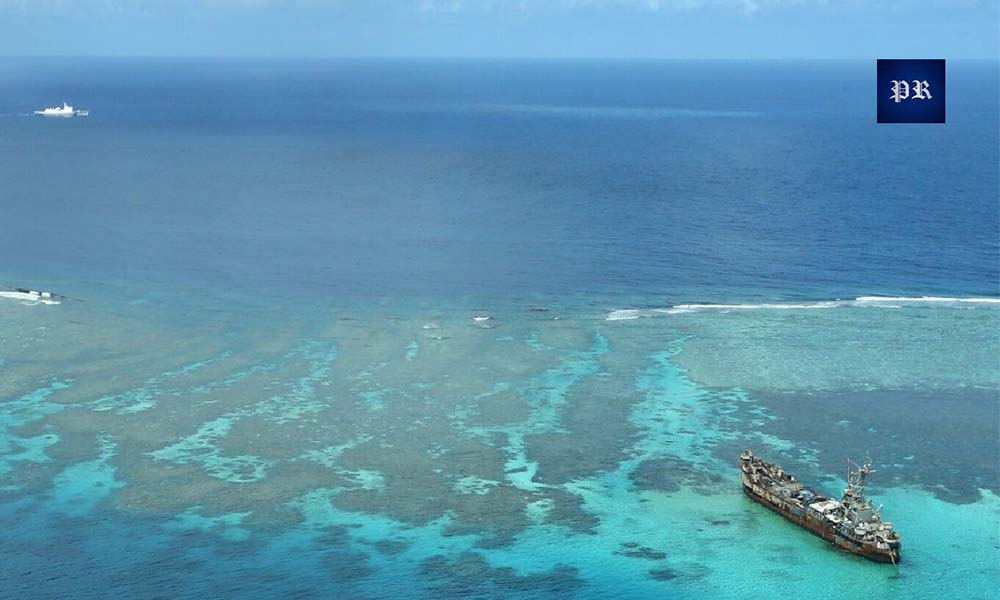
For the Philippines, the South China Sea dispute has direct consequences for maritime rights, fishing activities, resource development and national security. Encounters around Scarborough Shoal and Second Thomas Shoal demonstrate how persistent coast guard deployments and other non-warship activities can create pressure without producing a conventional naval battle. Maritime pressure does not always require the use of weapons. Repeated patrols, close manoeuvres, obstruction and the presence of larger numbers of vessels can make routine activities more difficult for a country with fewer maritime resources. Over time, such actions may also influence perceptions about which side can operate freely in a contested area. The Philippines cannot match every Chinese vessel with an equivalent ship. Instead, its practical priorities include maintaining a lawful presence, improving maritime domain awareness, strengthening its coast guard and navy, documenting incidents and cooperating with partners. Joint maritime activities can support these priorities by giving Philippine personnel opportunities to practise communications, navigation, replenishment and coordinated operations. Information gathered during encounters may also help authorities establish a clearer record of events and explain their positions to other governments.
International participation does not guarantee that Philippine vessels will avoid future confrontations. Its value lies in improving coordination and increasing the likelihood that incidents can be documented, assessed and discussed with partners. Legal accuracy is equally important. An exclusive economic zone gives a coastal state specific sovereign rights over natural resources and certain related jurisdictional powers under the United Nations Convention on the Law of the Sea. It is not the same as territorial sovereignty over all waters within the zone. Questions of sovereignty over land features and the maritime entitlements those features generate must be considered separately. For Manila, the central challenge is to protect its lawful maritime rights while reducing the risk that individual confrontations escalate into a wider military crisis. Cooperation with Japan, Australia, the United States and other partners offers additional options, although the effectiveness of those options depends on consistent implementation.
Japan: Strengthening Cooperation Across the Northern Approaches
Japan has a strong interest in Indo-Pacific maritime security because its economy depends heavily on international trade and reliable sea routes. Its geographic position near the East China Sea and Philippine Sea also gives it an important role in security discussions involving the northern approaches to the South China Sea. Japan contributes maritime surveillance capabilities, experienced naval personnel and expertise in anti-submarine warfare. These capabilities can support cooperation with the Philippines and the United States, particularly when participating forces need to improve their understanding of activity across a wider maritime area. Each of these activities serves a different purpose. Anti-submarine warfare training helps forces practise detecting and responding to underwater threats. Replenishment allows ships to receive supplies while remaining at sea, while maritime domain awareness supports a broader understanding of activity in a particular area.
Japan and the Philippines have also developed defence arrangements intended to facilitate cooperation. Their Reciprocal Access Agreement provides a framework for certain activities involving visiting forces, while their Acquisition and Cross-Servicing Agreement supports logistical cooperation. Such arrangements can make joint activities more practical, but they do not create an automatic obligation to participate in every future confrontation. Japan’s contribution should therefore be understood as part of a wider regional network rather than an independent effort to control the South China Sea. Its importance lies in strengthening connections between partner forces, improving operational familiarity and supporting cooperation across strategically important maritime approaches.
Australia: Why Logistics and Sustained Presence Matter
Naval power depends on more than the number or sophistication of warships a country owns. Ships need fuel, food, spare parts, maintenance and trained personnel. Aircraft require their own support systems, and vessels operating far from home need reliable arrangements for replenishment and repair. Australia’s participation in maritime cooperative activities demonstrates the importance of these practical requirements. From August 19 to 25, 2026, Australian, Philippine and American forces conducted an activity within the Philippines’ exclusive economic zone. Replenishment at sea can help ships remain deployed for longer periods without returning to port simply to receive essential supplies. Maritime patrol aircraft can observe activity across a wider area, while joint procedures help participating forces practise working together.
Repeated exercises can gradually improve familiarity between crews and reveal practical problems that might otherwise emerge during a crisis. These improvements can make cooperation more reliable, although they do not guarantee continuous surveillance or an uninterrupted allied presence. Australia also has geographic and operational constraints. Its forces may need to travel considerable distances to reach particular operating areas, and ships and aircraft require maintenance. The Australian military must also balance Indo-Pacific deployments with other national and regional responsibilities. The significance of Australia’s contribution is therefore not that it can keep every partner ship at sea indefinitely. It is that logistical support, maritime patrol capabilities and repeated cooperation can provide additional options for maintaining a presence and coordinating operations over time.
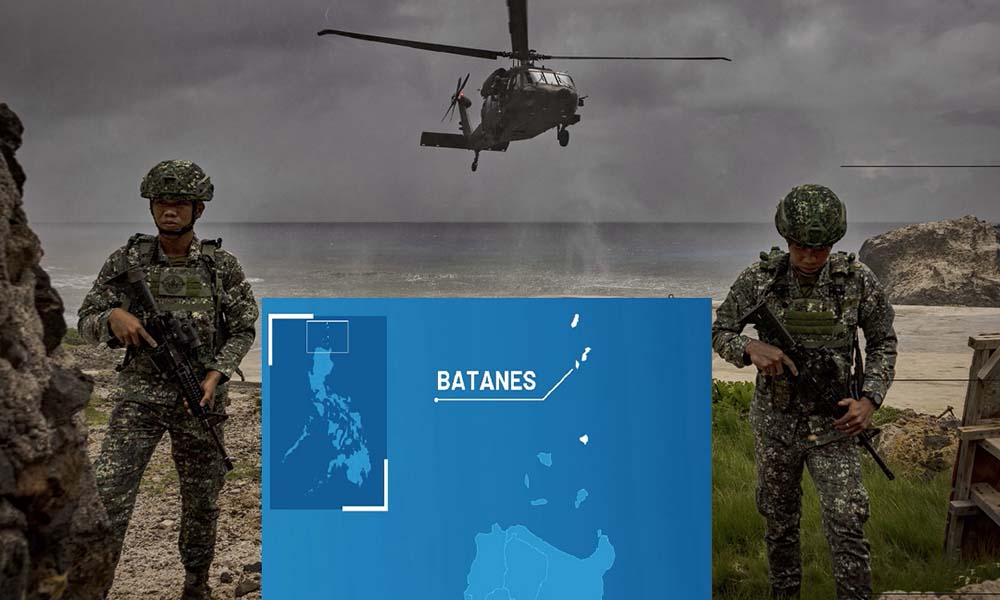
Philippines’ Two-Front Strategy at Palawan and Scarborough Shoal — China is watching
Canada: Expanding Participation and Maritime Awareness
Canada’s contribution to Indo-Pacific security is smaller in scale than that of the United States, but its participation can still have practical and diplomatic value. Maritime cooperation allows Canadian personnel to practise operating alongside regional partners while supporting a broader international interest in safe navigation and stability. Such exercises allow participating forces to practise communications, coordinate ship movements and improve their familiarity with one another’s procedures. These skills can reduce uncertainty when vessels from different navies operate together. Canada’s presence also demonstrates that maritime developments in the South China Sea attract attention beyond the immediate region.
The security of international sea routes, respect for maritime law and the prevention of dangerous encounters are concerns for countries that rely on global trade. However, participation in an exercise does not mean Canada will respond in the same way to every future incident. Canada has finite naval resources, long distances to cover and other defence commitments. Nor does its involvement establish a permanent role in a unified seven-nation command. Its contribution is best understood as a combination of practical cooperation and international engagement. The long-term significance will depend on whether such activities continue and produce lasting improvements in coordination rather than remaining occasional demonstrations of diplomatic support.
France and the United Kingdom: A Wider Indo-Pacific Dimension
France and the United Kingdom bring additional maritime experience and international relationships to the regional security environment, but their roles differ from those of countries located closer to the South China Sea. France has territories and enduring interests across the Indo-Pacific. This regional presence gives Paris a direct stake in maritime security, international trade and cooperation with regional governments. French naval deployments and defence partnerships can support regional engagement, although their scale and purpose vary according to the mission. France’s participation should not be interpreted as evidence that it has joined a permanent seven-nation naval force. Defence agreements, access arrangements and joint exercises have specific legal and operational terms. Their existence does not automatically establish that every facility is available for every mission or that France is committed to military intervention in every maritime dispute. The United Kingdom also has longstanding maritime relationships in the Indo-Pacific. Its participation in regional exercises and defence arrangements provides opportunities to work with partners and demonstrate an interest in maritime stability.
One example is the Five Power Defence Arrangements involving the United Kingdom, Australia, Malaysia, New Zealand and Singapore. These arrangements provide a framework for defence consultation and cooperation among their members. They are separate from the maritime activities involving the United States, Japan, the Philippines and Canada, and they should not be described as a unified seven-navy coalition. The broader point is that these countries approach Indo-Pacific security through different partnerships, deployments and national interests. Their participation can widen international engagement, but it does not remove political differences or guarantee that all seven governments will make identical decisions during a crisis.
How Seven Navies Could Create a Strategic Bottleneck for China
The idea of a strategic bottleneck is useful only if it is understood correctly. It does not mean that seven navies can physically seal off the South China Sea or stop every Chinese vessel from entering disputed waters. Instead, cooperation could make some forms of maritime pressure easier to monitor, more difficult to sustain without scrutiny and more costly in diplomatic terms. The first mechanism is improved maritime awareness. More patrols, aircraft and opportunities to share information can help participating countries build a clearer picture of activity at sea. If multiple observers document the same encounter, governments may be better positioned to compare accounts and assess what occurred.
This does not create perfect surveillance. Ships may not transmit identifying information, weather can limit observation, and surveillance systems have practical constraints. The benefit is an increased ability to detect and document relevant activity, not a guarantee that every movement will be observed. The second mechanism is interoperability. Joint exercises allow forces to practise communications, navigation, replenishment and other procedures together. The July activities involving Japan, the Philippines and the United States, followed by the August Australia–Philippines–US exercise and September activities involving Canada, illustrate how different combinations of partners can practise working together. The third mechanism is logistical flexibility. Replenishment vessels, access arrangements and repeated deployments can give participating countries more options for sustaining operations. Greater flexibility does not mean that ships will always be present at every disputed location, but it may make cooperation more practical over time.
The fourth mechanism is diplomatic visibility. When several governments document or observe a maritime incident, they may share evidence, issue statements or raise concerns through diplomatic channels. This can make it more difficult for any government to control the international narrative surrounding an encounter. Diplomatic pressure, however, does not automatically change a country’s behaviour. Governments may decide that their strategic objectives outweigh the reputational costs, or they may dispute the interpretation of an incident. The impact depends on the quality of the evidence, the response of other states and the circumstances involved. The fifth mechanism is more complicated strategic planning. Chinese decision-makers may need to consider a wider range of observers, potential responses and international reactions. That could affect how particular operations are planned, but it does not prove that China has been contained or that its military advantages have disappeared. These mechanisms reinforce one another. Surveillance is more useful when information can be shared. Information-sharing is more valuable when forces understand how to communicate. Cooperation becomes more sustainable when ships can be supplied, and documented encounters can carry greater diplomatic significance when several governments assess the available evidence.
China’s Advantages and the Limits of Allied Cooperation
Any assessment of the seven countries’ cooperation must also consider China’s continuing advantages. Beijing has substantial naval and coast guard capabilities, access to nearby facilities and the ability to support maritime operations from close to its mainland. These factors can give Chinese forces important logistical and geographic advantages in a specific confrontation. China also relies on more than conventional warships. Coast guard vessels and maritime militia can be used to maintain a presence or apply pressure without creating the appearance of a direct naval battle. This complicates decision-making for other governments, which must consider the nature of an incident before deciding how to respond.
Artificial-island facilities and supporting infrastructure can also help China maintain its regional presence. Joint exercises by other countries do not eliminate these facilities or automatically deny Chinese forces access to contested waters.
Political differences among the seven countries are another limitation. The United States, Japan, the Philippines, Australia, Canada, France and the United Kingdom do not share identical treaty obligations, threat perceptions or domestic priorities. They may agree on the importance of maritime stability but disagree about how to respond to a particular incident. Operational limits matter as well. Ships need maintenance, aircraft require support, and deployments compete with other national commitments. A country may participate in one exercise without having the resources or political intention to maintain a continuous presence in the same area. For these reasons, the absence of a unified seven-nation command is significant. Exercises can improve readiness and familiarity, but they do not guarantee a shared decision during a crisis. The value of cooperation should therefore be judged by what it achieves over time: better information-sharing, more effective coordination, reliable logistical support and clearer communication during maritime incidents.
What Would Show That the Strategy Is Working?
The success of maritime cooperation cannot be measured by the number of warships in a photograph or the publicity surrounding a single exercise. More useful evidence would emerge from consistent activities and observable improvements in how participating forces operate together. One indicator is the regularity and variety of joint exercises. If different combinations of partners continue to practise maritime awareness, communications, replenishment and other relevant tasks, that would suggest cooperation is becoming more routine. A second indicator is the quality of maritime information. Clearer incident records, better coordination between agencies and the ability to compare observations could improve the understanding of events at sea. Such developments would not prove that every vessel or activity is being detected, but they could improve the quality of the information available to decision-makers.
A third indicator is logistical cooperation. Repeated replenishment activities, practical access arrangements and sustained deployments could demonstrate that participating countries are developing more reliable ways to support operations. Claims of continuous presence would still need evidence of actual deployments. A fourth indicator is how governments respond when serious incidents occur. The willingness to share verified information, coordinate diplomatic engagement and explain the legal issues involved may reveal more about the strength of cooperation than routine exercise announcements. Finally, changes in China’s maritime behaviour must be assessed carefully. Patrol patterns, deployment durations and the conduct of encounters may provide useful evidence, but it would be difficult to attribute any particular change to allied cooperation alone without considering other political and strategic factors.
Conclusion: The Contest Is About Freedom of Action at Sea
The growing cooperation between the United States, the Philippines, Japan, Australia, Canada, France and the United Kingdom reflects a wider effort to strengthen maritime security in the Indo-Pacific. Their activities involve different capabilities, agreements and national priorities, so they should not be mistaken for a single allied fleet or a guaranteed military response to every confrontation. The United States contributes substantial military capabilities and operational experience. The Philippines provides a frontline presence and has direct interests in the disputed waters. Japan strengthens regional coordination, Australia contributes maritime and logistical capabilities, Canada expands practical cooperation, and France and the United Kingdom add further international engagement through their own regional relationships.
The combined value of these contributions lies in their connections. Better maritime awareness can support clearer reporting. Repeated exercises can improve communications. Logistical cooperation can help sustain deployments, while international engagement can make maritime incidents more visible to other governments. China retains significant military capabilities, geographic advantages and options for applying pressure below the threshold of open conflict. The participating countries also face resource limitations and political differences. The ultimate outcome is therefore uncertain and will depend on how consistently they translate cooperation into practical results.
About Indo-Pacific Report
For more geopolitical analysis, strategy coverage, and Indo-Pacific security reporting, visit Indo-Pacific Report:
Website
Facebook
YouTube
China’s South China Sea Strategy Faces a New Challenge From the Philippines and Its Allies