Philippines Finds Uranium — Can It Actually Influence Deterrence Against China?
The Philippines has identified uranium-bearing material in Camarines Norte at a time when Manila is already moving forward with plans to introduce nuclear power into the country’s long-term energy mix. The discovery is attracting attention because it connects two issues that are normally discussed separately: the Philippines’ growing interest in nuclear energy and its broader effort to strengthen national resilience amid continuing tensions in the South China Sea. But the most important point is also the easiest one to misunderstand. The discovery of uranium does not suddenly give the Philippines a new military deterrent against China. It does not create missiles, warships, fighter aircraft or nuclear weapons. What it could potentially provide, if future exploration proves that the resource is sufficiently large and economically viable, is another domestic energy option. Over the long term, a stronger and more diversified energy system could contribute to economic resilience, infrastructure resilience and the ability of the Philippine government to sustain essential national functions during a prolonged strategic crisis.
That connection is much more realistic than the idea that uranium itself can deter China. The Philippines is an archipelagic country whose economy depends heavily on reliable electricity, transportation, maritime trade, communications, ports, industry and fuel supplies. In a prolonged regional crisis, disruption to any of these systems could create pressure well beyond the military domain. Electricity supports communications networks, hospitals, water systems, ports, manufacturing, digital infrastructure and logistics. Military forces also depend on this wider civilian and industrial ecosystem. For that reason, energy security can become part of national security without becoming a weapon itself. The Camarines Norte discovery is therefore best understood as an early-stage resource and scientific development that could eventually contribute to a wider energy-security story.
The timing is particularly important because the Philippines was already developing its nuclear-energy program before this latest uranium research attracted international attention. The Philippine Energy Plan 2023–2050 includes a scenario with at least 1,200 megawatts of nuclear capacity targeted for entry by 2032, followed by additional nuclear capacity later in the planning period. At the same time, the Department of Energy has been working on regulation, site assessment, financing preparations, international cooperation, nuclear safety, safeguards, emergency preparedness, workforce development, fuel-cycle planning and radioactive-waste management. In September 2026, the DOE also sought final comments on proposed guidelines for a nuclear-power generation capacity tender.
What Did the Philippines Actually Find in Camarines Norte?
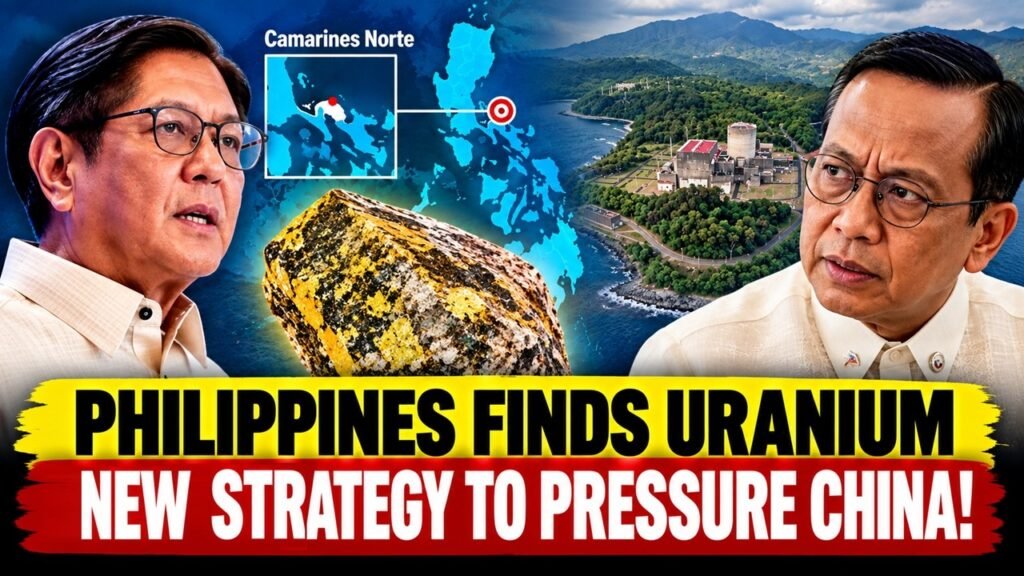
The research focuses on the Bessemer area of Larap in Jose Panganiban, Camarines Norte. Researchers from the Department of Science and Technology–Philippine Nuclear Research Institute, the University of the Philippines Diliman and Japan’s Akita University studied mineralized material collected from the area. Their research identified uraninite as the principal uranium-bearing mineral in the sample. The study was published in the 2026 special issue of SciEnggJ and examined an integrated flotation and magnetic-separation process for uranium preconcentration. The researchers collected approximately 180 kilograms of mineralized material from a zone roughly half a metre wide for laboratory testing. The material was not pure uranium ore. It contained several other minerals and metals, including copper, molybdenum and iron. Laboratory analysis found approximately 244 parts per million of uranium in the original sample, alongside about 0.57 percent copper, 0.49 percent molybdenum and 13.5 percent iron. Microscopic examination and X-ray diffraction analysis identified uraninite among the principal mineral phases.
This is important because uranium-bearing material is not automatically the same thing as a commercially mineable uranium deposit. Finding uraninite demonstrates that uranium mineralization exists in the area that was studied. It does not establish how much uranium exists underground, how far the mineralization extends, how thick the mineralized zones are or whether the material could be mined profitably. Those questions require much more extensive exploration, including geological surveys, radiometric work, geophysical investigations and drilling. That distinction is essential when interpreting headlines about the Philippines “finding uranium.” The country has identified uranium mineralization and demonstrated that uranium can be concentrated from the material examined. It has not yet established a proven commercial uranium reserve. It has not announced a commercial uranium mine. It has not produced nuclear fuel from the material. The discovery is therefore significant primarily because it gives Philippine scientists more information about a domestic uranium occurrence and provides a basis for deciding whether additional exploration is justified.
From 244 PPM to 305 PPM: What Happened in the Laboratory?
The most interesting technical result of the research was the ability to increase the uranium concentration of the processed material. The original sample contained about 244 ppm uranium. Researchers first used flotation to separate copper- and molybdenum-bearing sulphide minerals. The remaining material was then processed through magnetic separation, which removed magnetite, an iron-rich magnetic mineral. This left a non-magnetic fraction in which the uranium became more concentrated. The integrated process increased the uranium concentration to approximately 305 ppm, while recovering roughly 73–74 percent of the uranium in the relevant final fraction. The scientific paper reports a concentration ratio of 1.7 and an enrichment ratio of 1.25. Microscopic examination also showed that some uraninite grains had been separated from the surrounding mineral matrix. The researchers concluded that the process could produce a suitable feed for further leaching and purification toward yellowcake production.
But there is an important point that should not be lost in the numbers. The 305-ppm figure does not mean that the Philippines has discovered an underground uranium deposit grading 305 ppm across a large area. It is the uranium concentration achieved after laboratory processing of the particular material that was sampled. In other words, the experiment demonstrated a processing method, not the size of the resource. The resulting material is also not yellowcake and certainly not nuclear fuel. Further processing would be necessary, including leaching and purification, before uranium could reach the yellowcake stage. After that, a nuclear fuel cycle involves additional steps depending on the reactor and fuel system, including conversion, enrichment where required and fuel fabrication. The researchers therefore demonstrated an early-stage processing capability rather than a complete domestic nuclear-fuel chain.
A Uranium Occurrence Is Not the Same as a Commercial Reserve
This is perhaps the most important distinction in the entire story. In mining terminology, an occurrence of uranium is very different from a measured and economically mineable resource. A surface sample can show that uranium-bearing minerals exist, but it cannot reveal the full size of the underground deposit. It cannot establish how deep the mineralization extends, how continuous it is or whether sufficient quantities exist to justify the cost of mining and processing.
The latest research itself points toward the need for additional investigation. The current work examined surface material, meaning the researchers still do not have enough information to determine the depth, thickness or wider distribution of the uranium-bearing zones. BusinessMirror, reporting the DOST-PNRI findings, likewise noted that the current study does not establish how much uranium exists underground or whether the occurrence is commercially viable.
That means the next stage is geological rather than political. More detailed mapping can identify mineralized structures. Radiometric surveys can help locate uranium-related signatures. Geophysical methods can provide information about subsurface structures. Most importantly, drilling can provide cores from different depths and allow scientists to examine whether the mineralization continues underground. Only after sufficient drilling and geological analysis can the Philippines begin to establish the scale and continuity of the resource. Even then, a geological resource estimate would not automatically mean that a mine should be developed. Economic feasibility, environmental considerations, infrastructure requirements, regulatory approvals, processing costs and market conditions would all matter.
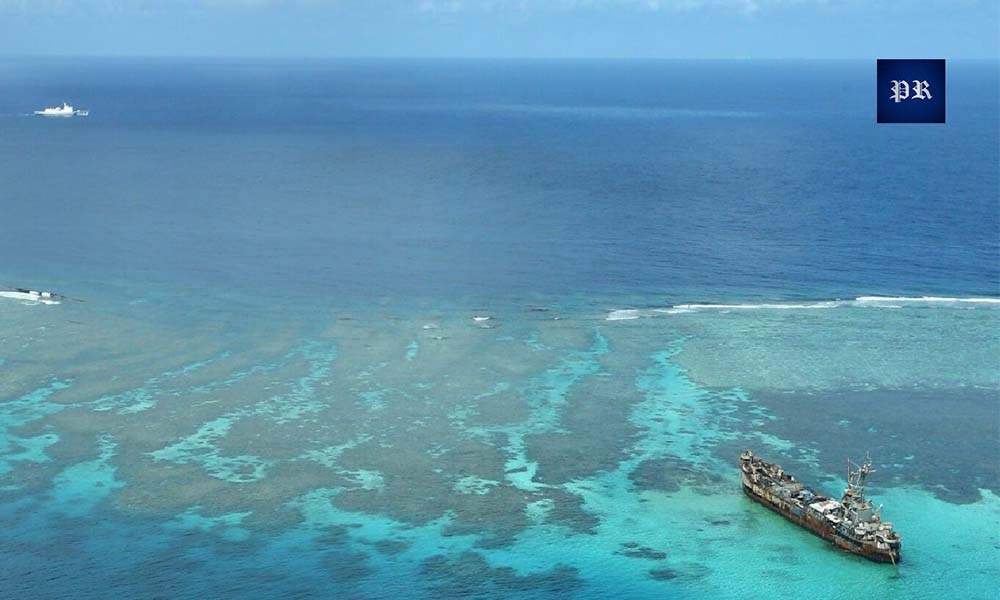
Maintaining a Deterrence Strategy for the Philippines in the Scarborough Shoal
Why the Uranium Discovery Is Arriving at an Interesting Time
The Camarines Norte research is taking place while the Philippines is simultaneously building the institutional foundation for nuclear power. The Department of Energy said in August 2026 that the country had been making progress in policy, regulation, international cooperation, site assessment, financing preparations and public acceptance. The DOE also said that potential nuclear-power sites in Bataan, Palawan, Masbate, Pangasinan and Camarines Norte had undergone initial assessment. The Philippines is also working through the International Atomic Energy Agency’s Milestones Approach. The process requires far more than simply selecting a reactor. It involves developing institutions, regulatory structures, technical expertise, financing arrangements, emergency preparedness, nuclear security and safeguards, workforce capability, grid readiness and radioactive-waste management. The DOE specifically identified nuclear fuel-cycle and waste management among the areas that still require continuing work.
That is why the uranium discovery should not be described as the reason the Philippines is going nuclear. Manila’s nuclear-energy program was already underway. The Philippine Energy Plan had already incorporated nuclear power into its long-term clean-energy scenarios, with at least 1,200 MW targeted by 2032 and additional capacity envisioned afterward. What the new research does is add another question to that existing nuclear program. If further exploration proves that Camarines Norte contains a sufficiently large and economically viable uranium resource, could that domestic material eventually contribute to the country’s nuclear-resource strategy? At this stage, the answer is unknown.
The Philippines’ Nuclear Program Is Bigger Than the Uranium Discovery
The Philippines’ nuclear ambitions are not dependent on whether Camarines Norte becomes a commercial uranium mine. Nuclear power plants can operate using fuel sourced through international markets. A country does not have to produce all of its own uranium in order to operate nuclear reactors. For the Philippines, therefore, domestic uranium would represent an additional resource option rather than an automatic route to fuel independence. The Philippine Energy Plan’s nuclear scenario provides for 1,200 MW of nuclear capacity by 2032, another 1,200 MW by 2035 and 2,400 MW by 2050 in the relevant planning scenario. The DOE has also developed a framework for integrating nuclear energy into the country’s generation mix.
At the same time, the practical timeline for nuclear deployment remains dependent on regulatory, financial and technical progress. In August 2026, the DOE described the country as continuing to build the institutional, technical, financial and regulatory foundations necessary for nuclear power. In September 2026, it requested comments on revised guidelines for conducting a nuclear-power generation capacity tender for the first plant and subsequent plants. This means the nuclear story and the uranium story are connected, but they are not the same project. The Philippines can continue preparing for nuclear power even if the Camarines Norte resource eventually proves too small or too expensive to develop. Likewise, Philippine research into uranium characterization and processing can remain valuable even if no commercial uranium mine is eventually established.
Could Domestic Uranium Strengthen Philippine Energy Security?
This is where the strategic argument becomes much more interesting. The most credible connection between Philippine uranium and deterrence is not military power. It is energy resilience. The Philippines relies on energy to keep virtually every part of its modern economy functioning. Electricity supports telecommunications, ports, manufacturing, hospitals, water systems, data networks, transportation and public services. Military capabilities also depend on civilian infrastructure and industrial capacity. A country cannot sustain modern defense operations for a prolonged period if its wider economy and infrastructure are severely disrupted. That does not mean nuclear power would make the Philippines energy independent. Nuclear reactors themselves require fuel, maintenance, spare parts, specialist workers, security systems and international supply chains. A nuclear plant is therefore not a self-contained shield against economic pressure.
The potential value is diversification. If the Philippines eventually develops a larger and more diversified electricity system, it could become less dependent on any single source or supply route. If a domestic uranium resource were eventually established, it could potentially add another layer of resource security. The effect would be indirect but potentially meaningful. The chain is therefore long. Uranium mineralization could lead to further exploration. Exploration could establish a resource. A resource could potentially support mining. Mining could potentially support domestic or regional processing. Nuclear power could add electricity-generation capacity. A more diversified energy system could strengthen resilience. Greater resilience could help the Philippine economy and essential services continue operating during prolonged external pressure. Every one of those steps is conditional. That is why the strategic argument should be presented carefully rather than as a dramatic military breakthrough.
Why Energy Resilience Matters in the South China Sea
Imagine a prolonged regional crisis without assuming that it becomes a full-scale war. Maritime shipping could become more expensive. Insurance costs could increase. Supply chains could slow down. Fuel prices could rise. Some imported energy supplies could become harder to secure. For an archipelagic economy, those pressures could spread quickly through transportation, industry and consumer markets. Electricity would become particularly important under such circumstances. Ports require power. Communications networks require power. Hospitals require power. Water systems require power. Manufacturing requires power. Digital services require power. Government operations require power. Military facilities also require power and logistics support. A country that can maintain these systems under pressure has more room to sustain its economic and national-security policies. That is the sense in which energy resilience can become strategically important.
But nuclear power does not make a country immune to coercion. A reactor still depends on a functioning industrial ecosystem. Fuel has to come from somewhere. Maintenance has to be performed. Specialist personnel have to be available. Equipment and components may involve international supply chains. Nuclear facilities also require high levels of physical security, safety and regulatory oversight. The value therefore lies in reducing vulnerability rather than eliminating it. Domestic uranium could potentially contribute to that process if it becomes economically viable, but it would only be one element in a much larger energy strategy.
Philippine Uranium Is Not a New Military Deterrent Against China
The phrase “uranium discovery” can easily lead to a misunderstanding about deterrence. Uranium is associated in the public imagination with nuclear weapons, but the discovery described in the Camarines Norte research does not create a weapons capability. The research identifies uranium-bearing material and demonstrates laboratory-scale preconcentration. It does not establish uranium enrichment, weapons production, nuclear warhead development or any military nuclear program. The Philippines’ nuclear-energy preparations are focused on peaceful nuclear power and the institutional requirements needed to operate such a program safely and responsibly.
That distinction is particularly important when discussing the South China Sea. A uranium deposit does not suddenly change the military balance between the Philippines and China. It does not increase the range of Philippine missiles. It does not add naval vessels to the Philippine fleet. It does not provide additional aircraft or surveillance systems. It does not create a new military base. The possible strategic relevance comes much later and through a different mechanism: national resilience. If successful nuclear development eventually strengthens the reliability and diversity of Philippine electricity generation, that could support economic and infrastructure resilience. Stronger resilience can contribute to the ability of a government to sustain policies under prolonged pressure. But that is not the same as a direct military deterrent.
The Philippines Is Already Building a Wider Deterrence Architecture
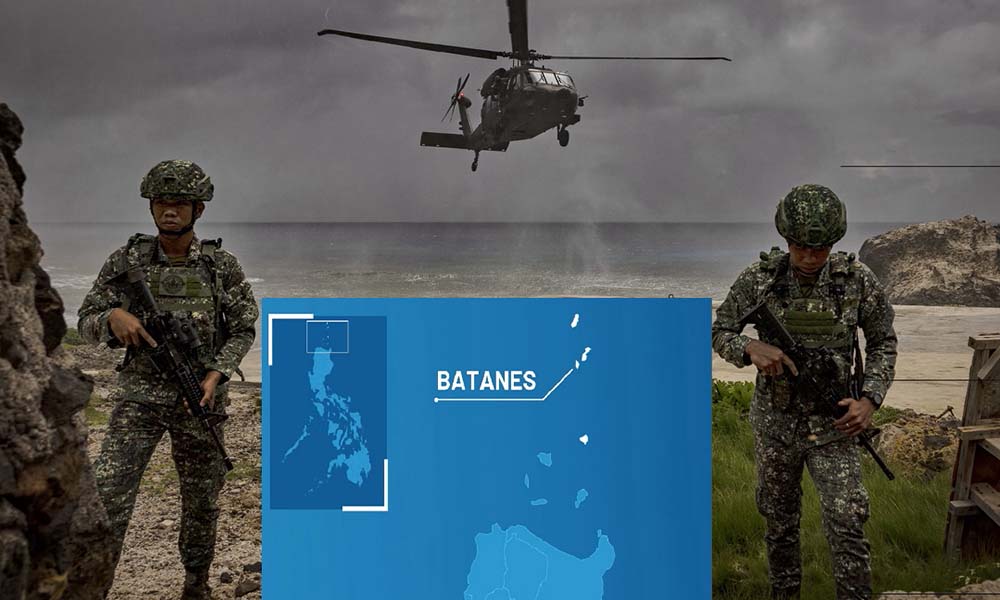
The uranium story makes more sense when viewed alongside the Philippines’ broader defense strategy. The National Defense College of the Philippines has examined the Comprehensive Archipelagic Defense Concept, or CADC, in relation to Philippine deterrence. The concept is part of Manila’s broader effort to protect Philippine territory, maritime interests and sovereign rights across an archipelagic environment. NDCP research describes deterrence in terms of convincing an adversary that the costs of a particular action could outweigh its potential benefits. It discusses the importance of capabilities, presence, defense and retaliation, while also highlighting the role of alliances and collective security. That framework makes clear why energy infrastructure should not be confused with military capability. A nuclear power plant is not a missile battery. A uranium deposit is not a warship. An electricity grid is not a fighter squadron. However, the systems are connected at the national level. Military forces require fuel, electricity, communications, transportation, maintenance and industrial support. Ports and airports support military logistics. The civilian economy provides the tax base and industrial capacity that sustain defense programs over time. Energy resilience therefore belongs underneath the wider national-security structure rather than replacing military deterrence.
The Philippines is not relying on energy development alone to improve its strategic resilience. Manila is simultaneously deepening defense cooperation with partners, particularly Australia and the United States. From August 19 to 25, 2026, Australia, the Philippines and the United States conducted a Maritime Cooperative Activity within the Philippine exclusive economic zone. The exercise involved Australian, Philippine and U.S. naval and air assets, including the Australian HMAS Supply, Philippine Navy frigate BRP Diego Silang, Philippine Air Force aircraft, Philippine Coast Guard vessel BRP Teresa Magbanua and U.S. Navy assets. Australia said the activity was intended to strengthen cooperation and interoperability and support freedom of navigation and overflight under international law. Australia and the Philippines also reaffirmed in August 2026 their commitment to deeper defense cooperation. Their discussions included interoperability, information sharing, defense cooperation and maritime cooperative activities, while the two governments expressed concern about dangerous and destabilizing conduct in the South China Sea. These developments demonstrate that Philippine strategic resilience has multiple layers. There is the military layer, the alliance and partnership layer, maritime awareness, infrastructure, industrial capability and energy security. The Camarines Norte uranium research belongs primarily to that final category. Its possible future contribution would therefore complement rather than replace defense modernization, maritime operations or international partnerships.
The Biggest Challenge Is the Nuclear Fuel Cycle
Finding uranium is only the beginning of a much longer process. A simplified nuclear fuel cycle can involve exploration, mining, milling, conversion, enrichment where required, fuel fabrication, reactor operation and management of spent fuel and radioactive waste. The current Camarines Norte research concerns an early stage of that chain. It examines how uranium-bearing material can be characterized and preconcentrated. It does not establish commercial uranium mining. It does not establish yellowcake production. It does not establish conversion, enrichment or fuel fabrication. This is why domestic uranium and domestic nuclear-fuel independence should never be treated as the same thing. Even if the Philippines eventually confirms a commercial uranium resource, Manila could still choose to rely on international suppliers for some or many stages of the nuclear fuel cycle. The DOE itself identifies nuclear fuel-cycle and waste management among the areas that require continuing development as the Philippines prepares its nuclear program. For that reason, the immediate value of the Camarines Norte study is scientific and technological. It provides Philippine researchers with more knowledge about domestic uranium mineralization and possible processing techniques. If the resource turns out to be significant, that knowledge could become more strategically relevant over time.
This remains the central unanswered question. The researchers have demonstrated that uranium-bearing material exists at the surface in the area studied. They have also demonstrated that laboratory processing can increase the uranium concentration in the processed fraction. But the study cannot determine the total amount of uranium underground. To answer that question, the Philippines would need much more extensive exploration. Researchers would need to determine how far the mineralized zones extend, how deep they go, how thick they are, how continuous they are and how the uranium grade changes across the deposit. Drilling would be particularly important because it would provide direct evidence from below the surface. Drill cores could help establish the geological structure of the mineralized zones and provide samples for detailed chemical and mineralogical analysis. Only after enough information has been collected could the country begin developing a meaningful resource estimate. Even then, a resource estimate would not automatically become a commercial mine. Economic feasibility, environmental requirements, infrastructure, permitting, processing technology and financing would all remain major considerations. This is why the 305-ppm result should be understood as a laboratory processing result rather than a declaration of a large Philippine uranium reserve.
What Happens Next for the Camarines Norte Uranium Discovery?
The next phase should focus on geology. Additional mapping and sampling can help identify the boundaries of the mineralized area. Radiometric surveys can help detect uranium-related signatures. Geophysical studies can help interpret subsurface structures. Drilling can then test whether the mineralization continues at depth. If exploration finds only a relatively small occurrence, the project could still be scientifically valuable. Philippine researchers would gain experience in uranium geology, mineral characterization and processing. That knowledge could be applied to future exploration projects or other domestic mineral resources. If exploration reveals a larger resource, the economic conversation would become more serious. The government and potential investors would then have to consider mining methods, processing technology, infrastructure, environmental safeguards, regulatory requirements and the potential role of uranium in the country’s wider nuclear-energy strategy. A third possibility would be the discovery of a resource large enough and accessible enough to justify detailed feasibility studies. Even then, years could separate the geological discovery from actual commercial production. The nuclear-power program would continue on its own timeline. The Philippines can develop nuclear electricity using internationally sourced fuel regardless of whether Camarines Norte eventually becomes a commercial uranium mine.
The most defensible answer is that any connection would be indirect. The current discovery does not create a new military deterrent against China. It does not create a nuclear weapons capability and does not fundamentally alter the military balance in the South China Sea. What it does is provide evidence of uranium mineralization and demonstrate a laboratory process for increasing uranium concentration. That is scientifically meaningful. If further exploration confirms a commercially viable resource, it could potentially become part of a broader domestic-resource and nuclear-energy strategy. If nuclear power is successfully deployed, it could become one component of a diversified electricity system. If domestic uranium eventually supports part of the fuel chain, it could provide an additional resource option. If the resulting energy system becomes more resilient, that resilience could support economic activity and essential infrastructure during prolonged external pressure. That is where the connection to national security begins. But the distinction matters. The uranium itself would not be the deterrent. The potential strategic value would come from what successful resource development, energy diversification and industrial capability could allow the country to sustain over time.
The Camarines Norte uranium discovery is therefore better understood as a story about resilience than as a story about military power. The sequence is long. Geological exploration has to establish whether a meaningful resource exists. Resource definition has to establish its size and quality. Feasibility studies have to determine whether it can be extracted economically and responsibly. Processing technology has to be developed. Regulation has to be followed. Infrastructure and financing have to be secured. At the same time, the Philippines is developing its nuclear-energy institutions, workforce, regulatory framework, site assessments, safety systems, financing mechanisms and tendering procedures. The DOE’s September 2026 call for comments on nuclear-power generation capacity tender guidelines shows that this institutional process is continuing. If these different efforts eventually converge, domestic uranium could become one piece of a much larger national energy strategy. But it would remain only one piece. The Philippines would still need maritime forces. It would still need aircraft and surveillance. It would still need resilient infrastructure. It would still need industrial capacity. It would still need diplomatic partnerships and defense cooperation. And it would still need an economy capable of sustaining those capabilities.
The Next Move Is Underground
For now, the most important development may not be a nuclear reactor. It may be the next drilling campaign in Camarines Norte. The laboratory research has answered one important question: uranium-bearing material exists in the surface deposits studied, and researchers have demonstrated a process that can increase uranium concentration in the processed fraction. But the much bigger question remains unanswered: how much uranium is actually underground? That answer cannot be obtained from the 305-ppm laboratory result alone. It cannot be inferred from the Philippines’ nuclear ambitions. And it cannot be established simply because uranium has been identified at the surface.
If further exploration shows that the resource is small, the story will remain primarily one of scientific and technological development. If exploration identifies a significant resource, Camarines Norte could become a more important domestic mineral asset. If that resource eventually proves economically viable and can be responsibly developed, the conversation could expand into mining, processing, nuclear fuel strategy, energy security, industrial development and national resilience. Even in that scenario, the connection to China would remain indirect. Uranium would not replace Philippine ships, aircraft, surveillance systems, infrastructure, alliances or defense capabilities. It would simply become another potential component of the country’s broader national-power base. The Philippines has not discovered a new weapon. It has identified uranium mineralization and demonstrated a promising laboratory processing route. The real strategic question is what happens next. If the geology supports further development, the long-term importance of Camarines Norte may ultimately lie not in what the uranium can do by itself, but in what a more energy-secure and resilient Philippines could eventually sustain.
About Indo-Pacific Report
For more geopolitical analysis, strategy coverage, and Indo-Pacific security reporting, visit Indo-Pacific Report:
Website
Facebook
YouTube
Philippines Finds Uranium — Can It Actually Influence Deterrence Against China?