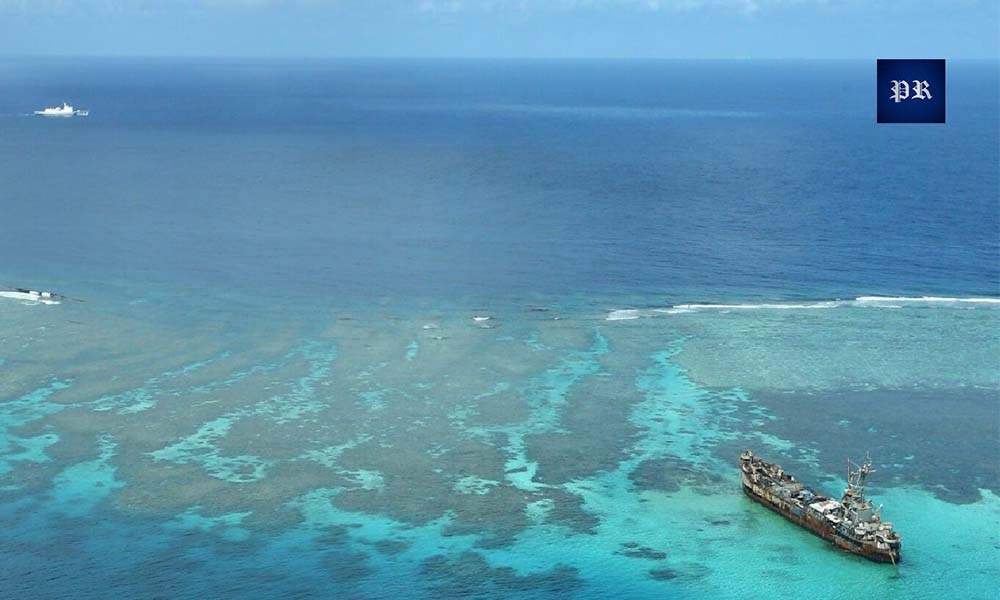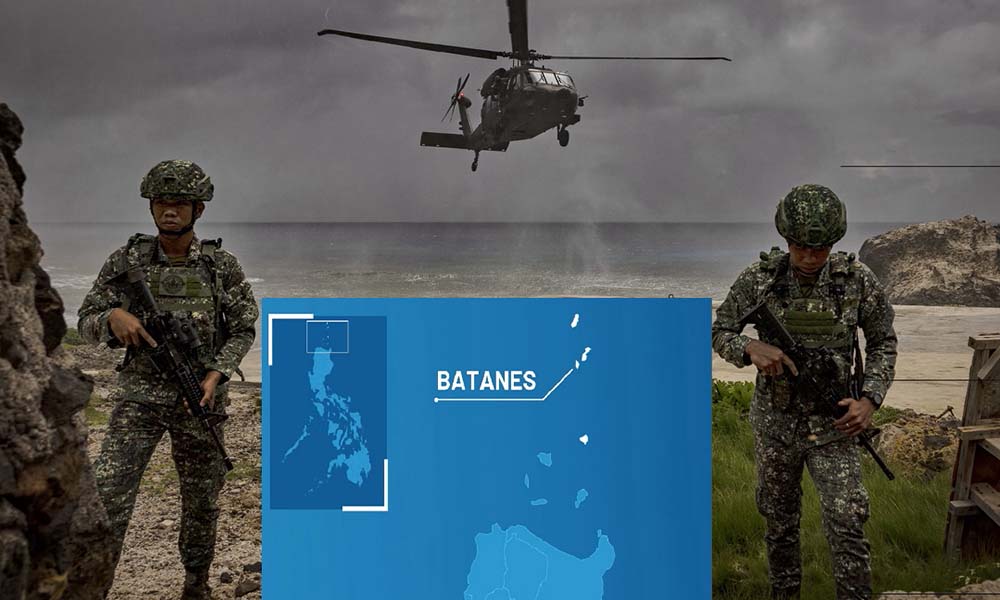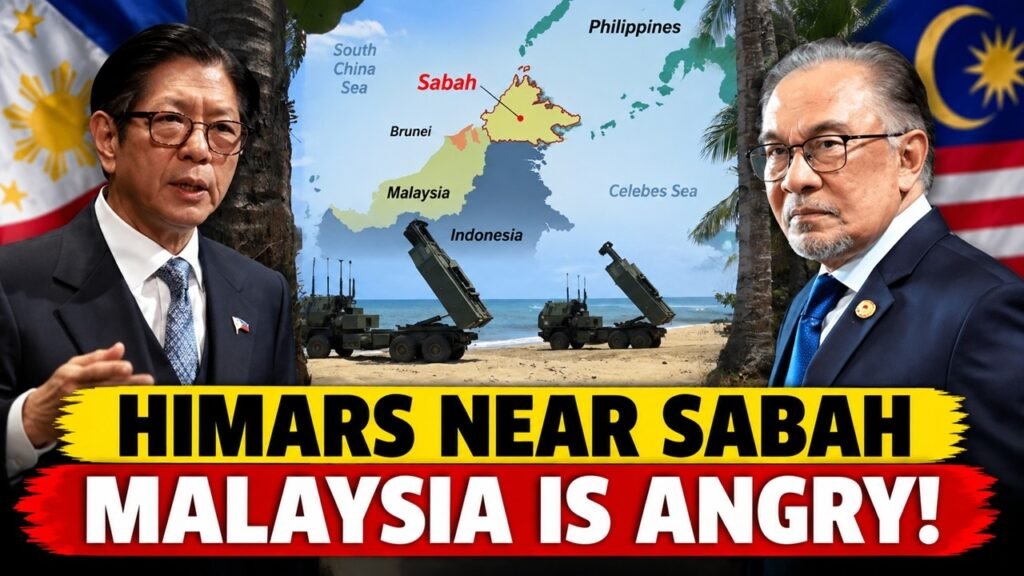
Balabac is located in southern Palawan, close to the Balabac Strait and within a maritime environment connecting the South China Sea, the Sulu Sea and the Celebes Sea. The island is also relatively close to Sabah, making any major military development there a matter of interest for Malaysia. The geographical position of Balabac means that its military value is not simply determined by the size of the island itself. Its importance comes from where it sits and how easily forces and equipment can potentially be moved into and out of the area.
It is important, however, to distinguish between a military exercise and a permanent deployment. The HIMARS exercise does not establish that the United States has created a permanent missile base on Balabac. There is also no public evidence establishing that Washington or Manila is preparing to attack Sabah. What the exercise does demonstrate is that U.S. and Philippine forces can move a mobile fires system into a remote Philippine island environment, operate it there and then extract it again.That distinction is central to understanding why the Philippines HIMARS deployment on Balabac matters. The story is not simply about one launcher firing one training rocket. It is about the combination of geography, military mobility, infrastructure and U.S.-Philippine defense cooperation. As these elements develop together, Balabac could become a more useful operating location within the wider Philippine defense network.
The May 2 HIMARS Exercise on Balabac
The key event took place on May 2, 2026, during Balikatan. U.S. soldiers transported an M142 HIMARS launcher onto Balabac using Army watercraft. Once the launcher reached the island, it was positioned for the exercise and fired an M28A1 Reduced Range Practice Rocket. The launcher was then moved out of the area. The exercise therefore demonstrated more than the ability to fire a weapon system from Philippine territory. It demonstrated the ability to move that system through a maritime environment and employ it from a remote island. This is significant because the Indo-Pacific is dominated by maritime geography. The region contains thousands of islands, narrow straits and large bodies of water separating military facilities from potential operating areas. A military force that depends only on large fixed bases can face logistical and operational limitations. A mobile system such as HIMARS provides a different approach because it can be transported by road, aircraft, ships or other platforms depending on the operational environment.
The Balabac exercise showed how this mobility can be applied in an island setting. The launcher did not need to remain permanently stationed on the island to demonstrate military value. It arrived, operated and departed. This type of temporary deployment can make a military presence less dependent on large permanent installations and can allow forces to use different locations when required. The exercise also demonstrated the importance of logistics. Moving a HIMARS launcher onto a remote island requires transportation, planning, communications, personnel and support. The ability to conduct such an operation during an exercise gives U.S. and Philippine forces an opportunity to test procedures that could become useful in future operations. The military significance therefore lies not only in the rocket that was fired but also in the movement of the launcher and the coordination required to support it. Another important point is the type of rocket used. The U.S. Army reported that the exercise involved an M28A1 Reduced Range Practice Rocket. This means the event should not be described as a demonstration of an operational ATACMS or PrSM strike from Balabac. The confirmed information is that HIMARS was brought to the island and used for a training activity. Claims that an operational long-range missile arsenal has already been permanently positioned there go beyond what the available information establishes.
Why Balabac’s Location Matters
Balabac’s strategic importance comes primarily from geography. Located at the southern end of Palawan, the island sits near the Balabac Strait and close to the maritime routes connecting the South China Sea with the waters farther south. The Sulu Sea and Celebes Sea are also part of this broader geographical environment. This gives Balabac a position that can matter for maritime security, surveillance, logistics and military mobility. The island’s proximity to Sabah makes the situation even more sensitive. Recent Malaysian reporting has placed the distance between Balabac and parts of Sabah at roughly 50 kilometres. That is a relatively short distance in strategic terms. It means that developments on Balabac can attract attention in Malaysia even when those developments are primarily connected to Philippine territorial defense or U.S.-Philippine exercises.
But proximity alone does not mean that Balabac is being prepared for an attack against Sabah. Military geography is more complicated than that. An island can be strategically valuable because of its position without being specifically designed to target a neighboring territory. Its location can support maritime awareness, territorial defense, logistics and broader military operations without automatically indicating offensive intentions. This is particularly important in the case of Balabac because the Philippines is strengthening its ability to defend its territory. Philippine military planners have to consider the country’s long coastline, large number of islands and exposure to several important maritime areas. A southern location such as Balabac can therefore contribute to the country’s wider defense posture. The combination of location and mobility is what makes the island more interesting. Balabac was already geographically important before HIMARS arrived. The exercise demonstrated that mobile military systems can potentially take advantage of that geography. A launcher does not necessarily need to remain on the island permanently to make the location useful.
Balabac’s Growing Military Infrastructure
Perhaps the most important long-term issue is not the temporary HIMARS deployment but the development of military infrastructure on Balabac. Philippine authorities have discussed and developed facilities including an airstrip and naval infrastructure, along with logistics, access, accommodation and command-and-control capabilities. These developments can gradually reduce the logistical difficulty of operating from a remote island. Infrastructure has a different strategic character from a temporary weapons deployment. A mobile launcher can arrive for an exercise and leave afterward, but a runway, pier, communications facility or logistics network remains available for future use. Once such infrastructure becomes functional, it can make repeated military activities easier and potentially faster.
An improved airstrip can support the movement of personnel and equipment. Naval facilities can improve maritime access. Logistics infrastructure can make it easier to supply units operating on the island. Communications and command systems can improve coordination between Balabac and other Philippine military locations. Together, these facilities can transform the practical value of a remote island. It is important not to describe every planned facility as already fully operational. Some infrastructure exists, some is under development and some has been announced or planned. The future military use of individual facilities can also change. However, the broader direction is significant because better infrastructure increases the ability to use Balabac repeatedly. This creates a difference between temporary access and repeatable access. A military exercise demonstrates that something can be done. Infrastructure can make it easier to do the same thing again. That is why the development of Balabac deserves attention even after the HIMARS launcher has left the island.
EDCA and the U.S.-Philippines Military Partnership
The Enhanced Defense Cooperation Agreement, or EDCA, is another important part of the Balabac story. The United States and the Philippines expanded their agreed EDCA locations in 2023, and Balabac became one of the additional locations covered by the arrangement. EDCA provides a framework for greater military cooperation, including exercises, logistics, infrastructure development, humanitarian assistance and interoperability. EDCA should not be confused with the establishment of a traditional American overseas base. Philippine territory remains under Philippine sovereignty. The agreement instead provides an established framework through which U.S. forces can access agreed locations and work alongside Philippine forces.
This distinction explains why the United States does not need to own Balabac for the island to become strategically useful. Philippine territory provides the geographic position. EDCA provides an agreed framework for U.S. access. Infrastructure makes that access more practical, while systems such as HIMARS provide mobile military capability. The combination of these factors reflects a wider change in how military forces can operate in the Indo-Pacific. Instead of depending entirely on a small number of enormous fixed bases, forces can potentially operate from a network of locations. Different sites can support different functions, and mobile systems can move between them when required. Balabac is therefore better understood as one possible node within a larger network rather than as an isolated American military base. Its importance comes from its connection to the wider Philippine archipelago and from its position near strategically important maritime areas.
Why Malaysia Is Watching Balabac
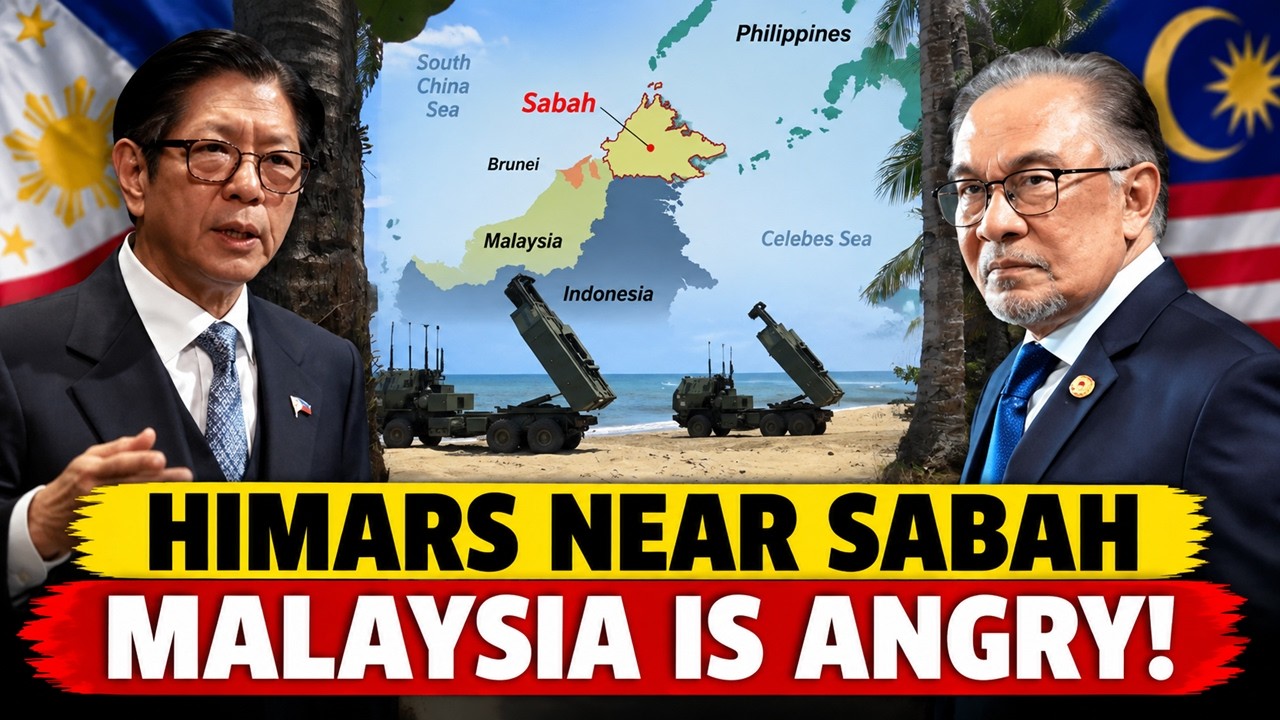
For Malaysia, the development of Balabac naturally attracts attention because of its proximity to Sabah. Any major increase in military activity close to a country’s territory can influence defense planning, even if there is no immediate threat. The issue becomes particularly sensitive because the Philippines has a longstanding claim involving Sabah. However, it would be misleading to reduce the entire issue to the statement that “America is putting missiles near Sabah.” The available information does not support such a simple conclusion. There is no public evidence establishing that the United States or the Philippines is preparing an attack on Sabah, nor does the May HIMARS exercise prove that a permanent American missile deployment has been established on Balabac.
The reaction from Malaysian officials is also important. Sabah Chief Minister Hajiji Noor said on August 31 that Balabac’s development should not be a cause for concern and emphasized that Balabac is Philippine territory. This indicates that the regional response has not simply been one of treating the island’s development as an imminent military threat. At the same time, strategic relevance and immediate threat are two different things. Malaysia can have an interest in monitoring developments around Balabac without believing that an attack is imminent. Military planners routinely examine the capabilities that could exist near their territory and consider how those capabilities might affect future scenarios.
This is where geography, military capability and political sensitivity overlap. Balabac is physically close to Sabah, the Philippines has a historical claim involving Sabah, and U.S.-Philippine forces have demonstrated the ability to move mobile fires systems into the area. These factors make the island worth watching even if the current activity remains focused on training and territorial defense.
The Real Pressure Point Is Uncertainty
The most important strategic issue may be uncertainty rather than immediate military confrontation. A country does not need to believe that an attack is coming to consider the capabilities of a neighboring military force. Defense planners must also think about what could happen if circumstances change. For Malaysian planners focused on Sabah, this means monitoring not only what U.S. and Philippine forces are doing today but also what they may be able to do in the future. Aircraft movements, naval activity, exercises, logistics infrastructure, surveillance capabilities and mobile missile systems can all influence the overall security calculation. None of these developments automatically indicates offensive intent. The distinction between intent and capability is extremely important. Intent can change quickly depending on political circumstances, while military capabilities and infrastructure often take years to develop. A capability can therefore affect strategic planning even when there is no current intention to use it against a neighboring country.
Balabac can become a pressure point in this sense. It does not have to be an offensive base directed at Sabah. Its strategic significance can come from the uncertainty surrounding how it might be used during a future crisis. That future crisis might not involve Sabah directly. It could emerge from tensions in the South China Sea, a wider confrontation between major powers or a Taiwan-related contingency. In such circumstances, the importance of Balabac could increase because of its location and because infrastructure could allow forces to move into the area more quickly.
HIMARS Does Not Mean a Permanent Missile Base
The presence of HIMARS on Balabac should not automatically be interpreted as proof of a permanent American missile base. HIMARS is a mobile launcher capable of employing different types of munitions, but the particular May 2 exercise involved an M28A1 Reduced Range Practice Rocket. That detail is important because it separates what was actually demonstrated from what might theoretically be possible. The exercise confirmed that a HIMARS launcher could be moved onto Balabac, positioned, fired and extracted. It did not confirm that operational ATACMS or PrSM missiles were permanently stored on the island.
There is also no public confirmation of a permanent American missile stockpile or permanent missile magazine on Balabac. Similarly, there is no public evidence establishing a specific U.S.-Philippine strike plan against Sabah. The more accurate interpretation is therefore about operational flexibility. The exercise demonstrated that mobile fires can be introduced into a remote island environment when needed. That capability could become more significant if the island’s infrastructure continues to improve. This distinction is important for responsible reporting. Military analysis becomes less useful when training activity is presented as evidence of an imminent attack. The available evidence supports a more measured conclusion: Balabac is becoming more useful as a location from which Philippine and U.S. forces can conduct exercises and potentially support broader regional defense operations.
Balabac in the U.S.-China Competition
Balabac also needs to be understood within the wider U.S.-China strategic competition. The Philippines has been strengthening its territorial defense while expanding military cooperation with the United States. Washington, meanwhile, has increasingly emphasized distributed access and the ability to operate across the Indo-Pacific rather than relying only on a limited number of major fixed installations. Balikatan 2026 demonstrated this broader approach. U.S. forces operated different systems from different locations in the Philippines, showing how mobile fires, air defense and other capabilities can be integrated across an island environment.
This creates a different kind of military geography. Instead of thinking only in terms of one large American base or one permanent missile battery, it is more useful to think about a network. One location may support logistics, another may provide air access, another may support naval operations and another may temporarily host mobile fires. The advantage of such a network is flexibility. Forces can potentially move between locations depending on the situation. It can also make military planning more complicated because an adversary has to monitor multiple possible operating locations rather than a single fixed installation.
China is therefore likely to view developments in the Philippine defense environment as part of a broader regional trend. At the same time, it would be an overstatement to claim that every Chinese military movement is a direct response to Balabac or to the HIMARS exercise. The regional environment contains many overlapping disputes and strategic calculations. Balabac is best understood as one element of this wider competition. Its importance comes from its geography and from the growing ability of Philippine and U.S. forces to use Philippine territory in a more distributed way.
What Could Balabac Become?
There are several possible futures for Balabac. The least dramatic possibility is that HIMARS and other systems continue to appear during major military exercises and then leave. In this scenario, Balabac remains primarily a Philippine military facility while U.S. forces use it periodically under existing defense cooperation arrangements. A second possibility is that improvements to the island’s runway, naval facilities, logistics infrastructure and communications systems make repeated deployments increasingly practical. Aircraft, ships, personnel and mobile weapons could then operate from Balabac more frequently because the logistical burden would be lower. This would not necessarily mean that American forces were permanently stationed there. A military node can be important even when forces rotate through it. The strategic value can come from the ability to access the location quickly when required.
A third possibility would emerge during a major regional crisis. If tensions in the South China Sea increased sharply or a wider confrontation affected the Indo-Pacific, infrastructure that appears relatively ordinary during peacetime could become strategically valuable. A functioning runway is more useful during a crisis if it already exists. A working pier is more useful if it has already been tested. A logistics system that has been used during exercises is more useful than one that has never been tested. Similarly, a military unit that has already practiced moving HIMARS by watercraft into an island environment has experience that would be valuable during a real contingency. This is why the May 2 exercise deserves attention. It tested a military concept before that concept might actually be required under operational pressure.
The New Military Value of Balabac
The significance of Philippines HIMARS on Balabac is not simply that one launcher fired one training rocket on May 2, 2026. The larger significance is the combination of mobile firepower, island geography, military infrastructure and U.S.-Philippine defense cooperation. The exercise demonstrated that mobile firepower can be transported into Balabac, used temporarily and then removed. At the same time, permanent infrastructure on the island is developing. These two developments can reinforce each other because infrastructure makes repeated deployments easier while mobile systems make the infrastructure more strategically useful. For Malaysia, the important question is not whether Balabac has already become a permanent missile base. The available information does not establish that. The more relevant question is what Balabac could become as its infrastructure and military access mature.
For the Philippines, the island provides another strategically located part of its territory from which its armed forces can improve their ability to monitor and defend the country’s southern approaches. For the United States, Balabac demonstrates how military capabilities can be distributed across an archipelago instead of being concentrated entirely at a few major installations. For China, the development is another indication that the Philippine military environment is becoming more closely connected with U.S. forces. That does not mean Balabac alone will transform the regional balance, but it contributes to a broader network that is changing the strategic geography of the Philippines. For Sabah, the development creates an additional factor that Malaysian planners may need to monitor. There is no evidence of an imminent attack, and the HIMARS exercise itself was a training demonstration. But military strategy is not only about what exists today. It is also about what geography, infrastructure and access make possible tomorrow.
About Indo-Pacific Report
For more geopolitical analysis, strategy coverage, and Indo-Pacific security reporting, visit Indo-Pacific Report:
Website
Facebook
YouTube