China Warns Manila as Turkey Supplies the Philippines With ANKA & ATAK
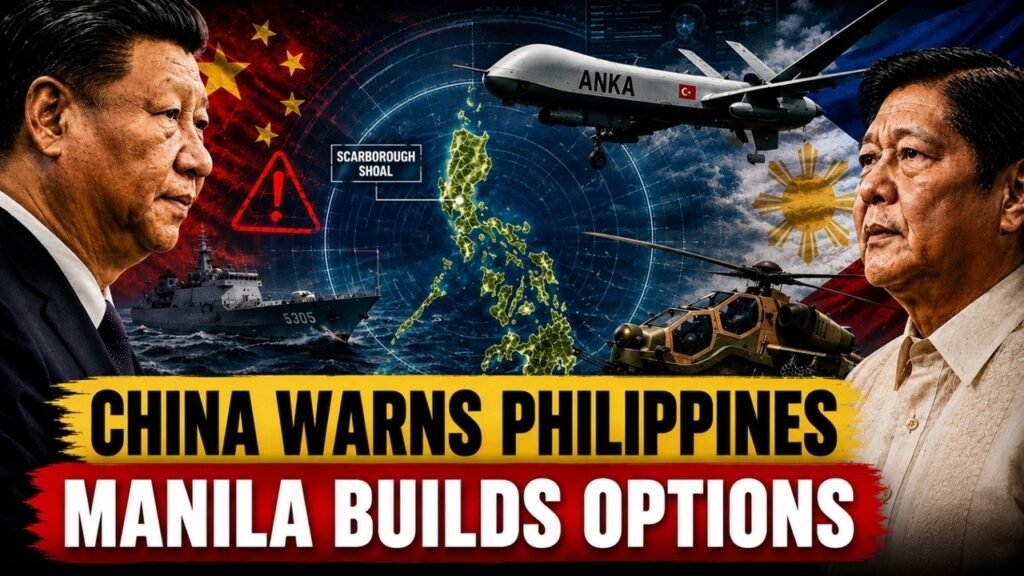
China’s latest warning to Philippine aircraft over Scarborough Shoal has highlighted a growing challenge for Manila: how to maintain awareness across vast maritime spaces while avoiding dangerous encounters. On August 21, China accused three Philippine aircraft of entering what Beijing described as Chinese airspace over Huangyan Dao, its name for Scarborough Shoal. Chinese forces said they tracked the aircraft and issued verbal warnings, while Beijing warned that such activity could lead to misunderstanding and miscalculation.Just four days later, Philippine Defense Secretary Gilberto Teodoro told lawmakers that Manila wants to expand its military drone capabilities, develop more unmanned systems and build the networks required to use them effectively. The timing is significant, although there is no evidence that the drone announcement was directly caused by the August 21 incident.
The Philippines’ modernization program was already underway, but the two developments highlight the same strategic problem: Manila needs better ways to see, understand and respond to developments across an enormous maritime environment. Türkiye has also emerged as an important part of this discussion because the Philippines already operates Turkish T129 ATAK attack helicopters and has an established defense relationship with Ankara. Turkish Aerospace also produces the ANKA unmanned aircraft, a long-endurance system designed for intelligence, surveillance and reconnaissance missions. However, Manila has not confirmed that it is purchasing ANKA, and Teodoro has kept the specific UAV systems under consideration classified. The bigger story, therefore, is not that the Philippines has secretly ordered a Turkish drone. The bigger story is that Manila is trying to build a military capable of maintaining persistent awareness in an increasingly contested South China Sea.
What Happened Over Scarborough Shoal?
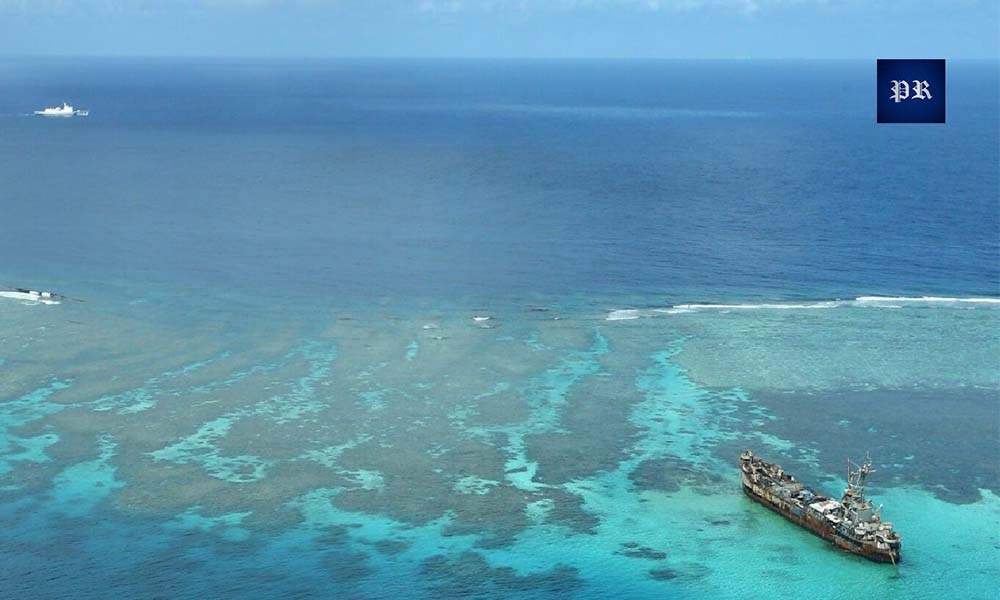
The August 21 incident shows why Scarborough Shoal remains one of the most sensitive flashpoints between China and the Philippines. China’s Southern Theater Command said that three Philippine aircraft, identified as an Islander, a C-208 and a PA-31T, entered what Beijing described as Chinese territorial airspace over Huangyan Dao. Chinese naval and air forces said they tracked and monitored the aircraft before issuing verbal warnings. Beijing subsequently accused the Philippines of violating Chinese sovereignty and warned that such activities could create misunderstanding and miscalculation. The language is important because encounters around Scarborough Shoal are becoming part of a broader pattern of military, coast guard and air activity in the South China Sea. What happens around the shoal is no longer simply a question of fishing access. It is increasingly about which side can maintain a presence, monitor activity and establish its interpretation of events.
Air encounters can also be particularly sensitive because aircraft have less time to react than ships. A vessel can slow down, change course or communicate with another ship over a longer period. Aircraft operate at much greater speeds, and a small misunderstanding or unexpected maneuver can quickly create a dangerous situation. That makes accurate surveillance and communication increasingly important for both sides, particularly as Chinese and Philippine forces operate in closer proximity. Scarborough Shoal occupies an important position in the Philippines’ maritime security concerns because it has become a symbol of the wider dispute in the South China Sea. For Manila, maintaining access and presence around contested maritime areas is connected to sovereignty, fishing rights, maritime security and the broader question of how Philippine forces can operate within waters that China also claims.
The strategic importance of the shoal goes beyond the physical size of the feature itself. What matters is the ability to monitor activity around it and maintain a regular presence. If one side can operate continuously while the other side has limited information about what is happening, the balance of practical control can gradually shift even without a conventional military confrontation. That is why surveillance has become increasingly important. Manila needs to know what Chinese naval vessels, coast guard ships and aircraft are doing around sensitive areas. It also needs reliable records of encounters so that incidents can be documented and assessed. Persistent surveillance can provide commanders with more time to understand developments and potentially reduce the risk of decisions being made on incomplete information.
225 Chinese Ships Swarm Philippines Near Scarborough Shoal — What Is China Planning?
Manila Is Expanding Its Military Drone Capabilities
On August 25, Philippine Defense Secretary Gilberto Teodoro told lawmakers that the Philippines wants to expand its unmanned capabilities through both development and acquisition. The Philippine military already uses drones for intelligence, surveillance and reconnaissance, but Manila now appears to be thinking about unmanned systems as part of a much broader military architecture. The proposed 2027 modernization program includes ₱50 billion, approximately $810 million according to the source material, representing a 25 percent increase over the current allocation. But the most significant part of Teodoro’s comments was not simply the amount of money being allocated. He emphasized the importance of integration, secure communications, networking and operational knowledge.
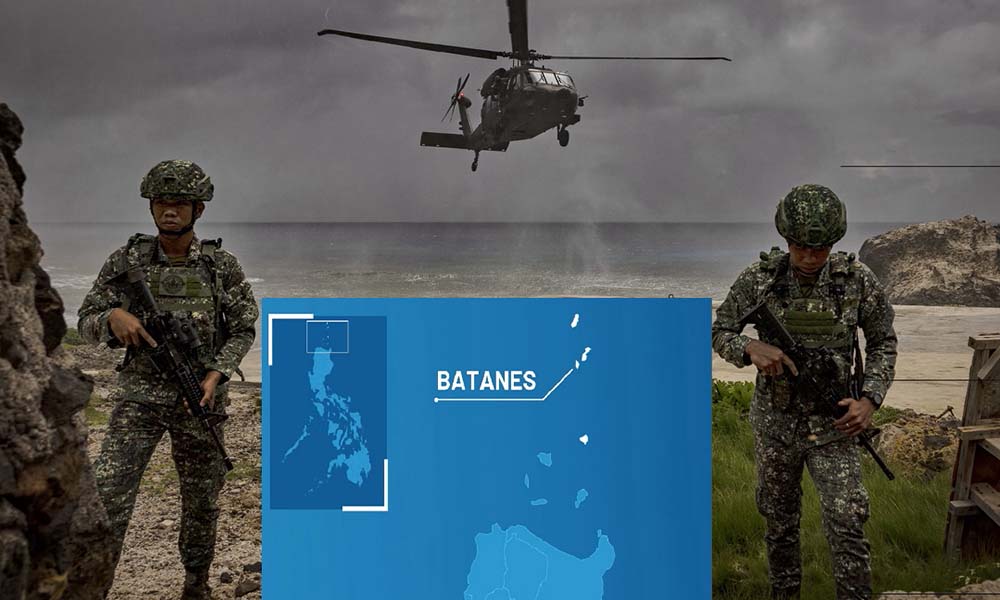
That distinction is critical because buying a drone is only the first step. A UAV can collect information, but that information has to reach the right people. Operators have to understand what the sensors are detecting. Commanders need to receive the information quickly and securely. Other systems, including radars, ships and aircraft, may need to contribute additional information. The real objective is therefore not simply to own more drones but to build a system that can turn surveillance data into useful decisions. The geography of the Philippines makes persistent surveillance especially important. The country is an archipelago consisting of thousands of islands spread across a huge maritime area. Its security interests extend across the South China Sea, the Philippine Sea and the northern approaches toward Taiwan.
This creates a difficult military problem. Philippine forces cannot concentrate everything in one location because there is no single border that defines the country’s security environment. The sea itself is a major part of the country’s strategic frontier, and monitoring such a large area requires aircraft, ships, radar systems, satellites and unmanned platforms working together. Long-endurance UAVs can help fill part of this gap. A frigate can patrol a particular section of ocean, but it cannot remain everywhere at once. A fighter aircraft can respond rapidly, but it cannot stay airborne for extremely long periods. A helicopter can conduct useful surveillance, but its range and endurance are generally more limited. A long-endurance unmanned aircraft offers Manila another option by allowing surveillance aircraft to remain over an area for many hours.
Why the Turkish ANKA Drone Is Getting Attention
This is where Türkiye becomes relevant. Turkish Aerospace produces the ANKA unmanned aircraft, which is designed for long-endurance intelligence, surveillance and reconnaissance missions. According to the source material, the aircraft can remain airborne for up to 30 hours, operate at an altitude of up to 30,000 feet and carry more than 350 kilograms of payload. ANKA’s listed capabilities include electro-optical and infrared sensors, synthetic aperture radar and ground-moving-target-indicator radar, encrypted datalinks and satellite communications. These capabilities are important because they allow an unmanned aircraft to function as a persistent sensor rather than simply as another aircraft in the inventory.
For the Philippines, such capabilities could potentially be useful in monitoring large areas of the South China Sea and the West Philippine Sea. A long-endurance UAV could observe maritime activity for extended periods, collect information from different sensors and potentially transmit that information to commanders over long distances. However, these are capabilities of the platform itself and should not be interpreted as confirmation that Manila has selected ANKA. One of the most important points in this story is the difference between what is known and what is speculation. The Philippine government has not publicly announced that it is buying ANKA. Teodoro has deliberately avoided identifying the specific UAV systems under consideration, describing the information as classified and sensitive.
The source material also indicates that Manila has been talking with several countries that have expertise in drone technology. This means there is a wider procurement process underway, rather than evidence that one particular foreign system has already been selected. Therefore, it would be inaccurate to report that the Philippines has ordered Turkish ANKA drones unless Manila officially confirms such a purchase. The more accurate interpretation is that ANKA is a potentially relevant platform as the Philippines expands its unmanned capabilities. Türkiye’s existing relationship with Manila makes the country particularly interesting, but the final decision remains unconfirmed.
What the T129 ATAK Experience Shows
Türkiye’s importance to the Philippines does not begin with drones. The two countries already have an established defense relationship. According to the source material, they signed a memorandum on defense-industry cooperation in December 2018, followed by an implementing agreement in February 2019. That relationship became more concrete when the Philippines acquired Turkish T129 ATAK attack helicopters. Turkish Aerospace confirmed that all six helicopters ordered by Manila had been delivered by May 2024. The existing relationship means Philippine personnel already have experience operating Turkish defense equipment, while the two countries have established channels for defense-industrial cooperation.
This existing relationship can matter when a country considers additional purchases. A new supplier may offer an attractive platform, but introducing completely new equipment can require new training, maintenance procedures, spare-parts arrangements and logistical systems. An existing relationship can potentially reduce some of those barriers, although it does not eliminate the broader challenges of defense procurement.
What the T129 ATAK Experience Shows
The T129 ATAK is an important example of how the Philippine-Turkish defense relationship has developed. Manila acquired six helicopters under a contract worth approximately $269 million, with the aircraft operated by the Philippine Air Force’s 15th Strike Wing. The helicopters support missions including territorial defense, aerial surveillance and reconnaissance, counterinsurgency and combat support. Their acquisition formed part of the Philippines’ broader effort to strengthen its military capabilities as external defense became increasingly important alongside traditional internal-security missions. Turkish Aerospace has also confirmed discussions concerning a possible second batch of T129 helicopters. However, the future of that potential purchase has been complicated by concerns about long-term export availability. The Philippines has sought assurances from Türkiye regarding the continued availability of the platform before proceeding with another acquisition.
Why Defense Supply Chains Matter to Manila
The T129 experience highlights a major issue that is sometimes overlooked when countries discuss military procurement. Buying a weapons system is not simply about acquiring the aircraft, helicopter or missile. It also means becoming dependent on a broader supply chain. A military needs spare parts, maintenance support, technical assistance, upgrades and continued access to important components. Export restrictions or changes in international political relationships can affect whether a platform remains available. Even a capable weapon can become less useful if the country operating it cannot reliably obtain the components required to keep it functioning. This is why Manila has to consider questions that go beyond the headline specifications of a system. The Philippines needs to know whether a platform can be sustained for decades, whether upgrades will remain available and whether it can continue operating during a period of political or military crisis. These considerations become particularly important when investing in rapidly developing technologies such as unmanned aircraft.
The Philippines’ relationship with Türkiye is part of a wider strategy of defense diversification. The United States remains Manila’s treaty ally and one of its most important defense partners, while South Korea, Japan, Israel, Türkiye and other countries have contributed to different areas of Philippine military modernization. This does not necessarily mean that Manila is trying to reduce the importance of its relationship with Washington. Instead, diversification can give the Philippines more options. Different suppliers can provide different technologies, create alternative supply chains and reduce the risks associated with relying too heavily on a single defense ecosystem. For the Philippines, this approach makes strategic sense because the country is trying to modernize while facing a much larger military power nearby. Manila cannot realistically attempt to match China platform for platform. Instead, it needs to maximize the value of its limited resources by combining partnerships, technology, training and information.
The Real Advantage Is the Network
The most important part of the Philippine drone story may ultimately be the network surrounding the aircraft. Imagine a Philippine UAV detecting a Chinese vessel operating near a contested maritime area. The drone’s sensor is only the beginning of the process. The information could potentially be combined with radar data, information from Philippine naval vessels, aircraft observations and other intelligence. That information could then be sent through secure communications networks to command centers where personnel analyze the situation and determine what action, if any, is necessary. The real chain is therefore sensor, network, decision and response. If the sensor works but the communications system fails, the advantage is reduced. If the information arrives too slowly, commanders may lose valuable time. If the information cannot be integrated with other sources, the overall picture may remain incomplete. This is why Teodoro’s emphasis on networking and integration is so important.
At first glance, expanding military surveillance might appear to increase tensions. But better surveillance can also help reduce the risk of dangerous misunderstandings. When commanders have more accurate information, they have a stronger basis for assessing what another military force is doing. A Philippine UAV monitoring a maritime area could potentially provide information about the location and movement of ships and aircraft. This can help distinguish routine activity from something more concerning. It can also provide records of encounters that may later become important in diplomatic discussions or public disputes. The ability to document events has become increasingly important in the South China Sea. Maritime confrontations are not only military events; they are also information events. Each side wants to establish its own version of what happened. Better surveillance gives Manila a greater ability to document encounters and communicate its assessment to its own forces, government officials and international partners.
The Philippines Does Not Simply Need More Drones
Scarborough Shoal demonstrates the value of persistent surveillance particularly well. Chinese and Philippine forces have operated around the feature for years, and the level of activity can change rapidly. Naval ships, coast guard vessels and aircraft can appear in the area, creating situations where accurate information becomes essential. The source material notes that China conducted naval and air exercises around the shoal on August 1 while Chinese and Philippine forces continued operating in close proximity. As the frequency of these encounters increases, the ability to monitor developments continuously becomes more valuable. A long-endurance UAV cannot solve the wider dispute by itself. It cannot determine sovereignty, replace diplomatic negotiations or eliminate the possibility of confrontation. What it can potentially do is provide Manila with a more consistent picture of what is happening around sensitive areas. In a gray-zone competition, that information can be strategically valuable.
It may sound contradictory, but the Philippines does not necessarily need to focus only on acquiring the largest possible number of drones. The more important challenge is building an effective unmanned surveillance system. A fleet of aircraft is only useful if trained personnel can operate them, sensors can collect reliable information, communications networks can transmit that information and commanders can act on it. Without these supporting elements, additional aircraft may produce less value than expected. This is why modernization has become a more complicated task for Manila. The Philippines needs aircraft, but it also needs secure networks, trained operators, data-processing capabilities, command-and-control systems and reliable maintenance. The country also needs to ensure that systems purchased from different suppliers can work together effectively.
The Philippine experience with the T129 also shows why procurement decisions must consider long-term sustainability. The helicopter uses the LHTEC CTS800-4A engine, which has American origins, and export restrictions have complicated T129 programs for other countries in the past. For Manila, this means that even when a platform is operational and capable, questions about future availability remain important. A military cannot afford to purchase expensive equipment only to discover later that political or supply-chain restrictions make it difficult to maintain or upgrade. This lesson applies directly to drones. Unmanned technology is developing rapidly, and today’s leading platform may face much stronger competition in only a few years. The Philippines therefore needs systems that are not only capable today but can also be supported, upgraded and integrated into a broader defense network over time.
China Will Be Watching the Philippine Drone Program
Any major expansion of Philippine surveillance capabilities in the West Philippine Sea is likely to attract China’s attention. Beijing may respond by increasing patrols, expanding aircraft activity, deploying more Coast Guard vessels or developing new methods to challenge Philippine surveillance. This does not necessarily mean that every new Philippine drone will produce a direct military confrontation. But the competition could become more sophisticated. As one side improves its ability to observe, the other side may attempt to make its activities more difficult to monitor. That could increase the importance of electronic warfare, counter-surveillance and more aggressive interception tactics. The South China Sea competition could therefore develop beyond traditional ship and aircraft encounters into a broader contest over sensors, communications and information.
The first major development to watch is the Philippines’ eventual drone decision. Manila has not publicly identified all the systems under consideration, so it remains too early to say which aircraft will ultimately be selected. If ANKA is chosen, Türkiye’s role in Philippine aerospace cooperation would become significantly more important. Until that happens, ANKA should remain described as a possibility rather than a confirmed acquisition. The second development is the future of the T129 relationship. If Manila proceeds with another batch of Turkish helicopters, it would demonstrate that the existing relationship has developed into a deeper long-term defense partnership. If the Philippines chooses another helicopter platform, that could indicate that supply-chain and export concerns are playing a larger role in procurement decisions. The third development is China’s response to expanding Philippine surveillance. Increased Philippine ability to monitor the West Philippine Sea could encourage Beijing to increase its own patrols or challenge Philippine surveillance operations more directly. The interaction between these two trends could determine how the next phase of South China Sea competition develops.
The Bigger Story Is the Philippines’ Military Transformation
Türkiye is an important part of this story, but it is not the entire story. The Philippines is undergoing a much broader transformation in its approach to national defense. For many years, the Armed Forces of the Philippines placed significant emphasis on internal security, counterinsurgency, terrorism and disaster response. External defense is now becoming increasingly important. That requires a different type of military, one capable of operating across large maritime spaces and maintaining awareness far from its traditional bases. It requires ships, aircraft, radars, missiles, intelligence systems and communications networks that can work together.
Drones fit naturally into this transformation because they can provide persistent surveillance without placing pilots at risk during every mission. They cannot replace fighter aircraft, frigates or missiles, but they can fill an important gap between occasional observation and continuous monitoring. China possesses a much larger military than the Philippines, including more ships, aircraft, missiles, satellites and industrial capacity. Manila cannot realistically compete with Beijing by attempting to build a smaller version of China’s military. Instead, the Philippines is pursuing a different approach. It is strengthening partnerships, diversifying suppliers, improving surveillance, modernizing its naval and air forces and investing in unmanned systems. The objective is to build a military that can make better use of limited resources by connecting different capabilities together.
Conclusion
The August 21 warning over Scarborough Shoal and the August 25 announcement about expanded unmanned capabilities happened only days apart. One highlighted the pressure Manila faces in the South China Sea, while the other revealed the direction of the Philippines’ military modernization. The drone announcement should not be presented as a direct reaction to the aircraft incident because the modernization effort was already underway. But the timing illustrates a clear strategic trend. The competition in the South China Sea is increasingly about who can maintain awareness, collect information, document encounters and make decisions quickly. Türkiye could become an important part of that effort. The T129 has already established a Turkish defense presence within the Philippine military, while ANKA is a platform worth watching as Manila considers its next generation of unmanned capabilities. However, ANKA remains unconfirmed, and the Philippines is clearly considering a broader range of suppliers and technologies. The United States remains central to Manila’s security relationship, while South Korea, Japan, Israel, Türkiye and other partners can contribute different capabilities. The ultimate objective is not simply to own more weapons. It is to build a more resilient military system in which sensors, communications, personnel and decision-makers work together.
About Indo-Pacific Report
For more geopolitical analysis, strategy coverage, and Indo-Pacific security reporting, visit Indo-Pacific Report:
Website
Facebook
YouTube
China Warns Manila as Turkey Supplies the Philippines With ANKA & ATAK