Does NATO Have a Different Plan For The Philippines Than the U.S. For SCS?
The Philippines is becoming one of the most important strategic locations in the Indo-Pacific, but that does not mean NATO is preparing to defend Manila under Article 5. The Philippines is not a NATO member, and the alliance has no treaty obligation to defend it. The more important development is different: the Philippines is becoming increasingly connected to a wider security network involving the United States, Japan, Australia, South Korea and European NATO members.
This matters because China is steadily increasing its military and maritime presence in the South China Sea, while Washington is strengthening its position along the First Island Chain. At the same time, European governments are paying closer attention to Indo-Pacific security because a major conflict in Asia could affect European trade, technology, supply chains and U.S. military commitments. The real question, therefore, is not whether NATO will suddenly become an Asian alliance. It is whether NATO member states, working with regional partners, will help build a security network in which the Philippines becomes an important link between the Indo-Pacific and Euro-Atlantic theaters.
Why the Philippines Matters So Much on the Map
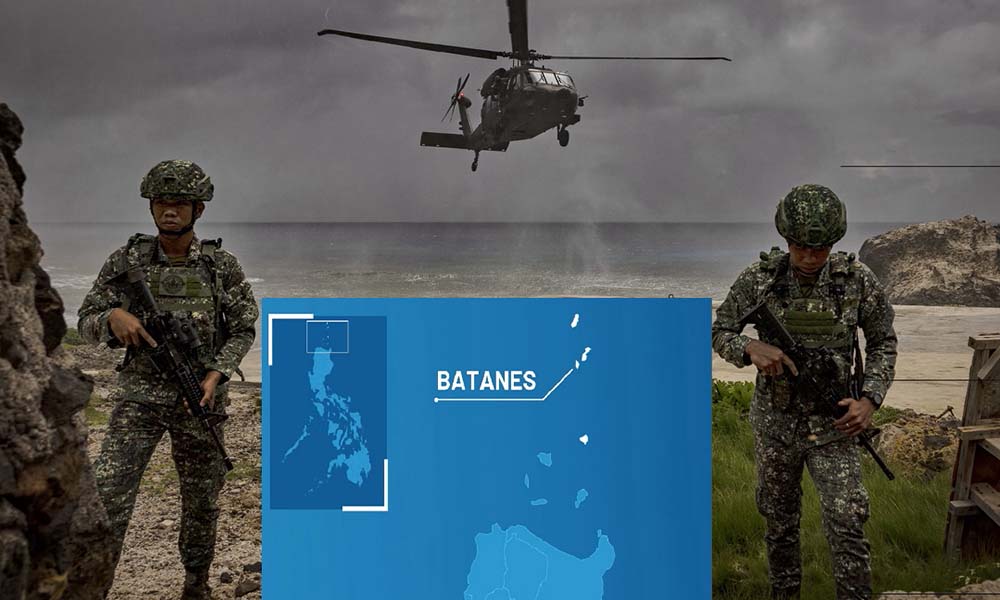
Geography is the starting point. The Philippine archipelago sits between the South China Sea and the western Pacific, with Taiwan immediately to the north and the Bashi Channel linking the Philippine Sea to the waters around Taiwan. Palawan also faces the contested areas of the South China Sea. This location gives Manila strategic value that cannot simply be replicated by moving a military unit somewhere else. The Philippines can provide access, logistics, surveillance opportunities and operating options across two major maritime theaters. For the United States and its partners, that makes Philippine territory important to deterrence. For China, it makes the country a significant part of the regional strategic equation.
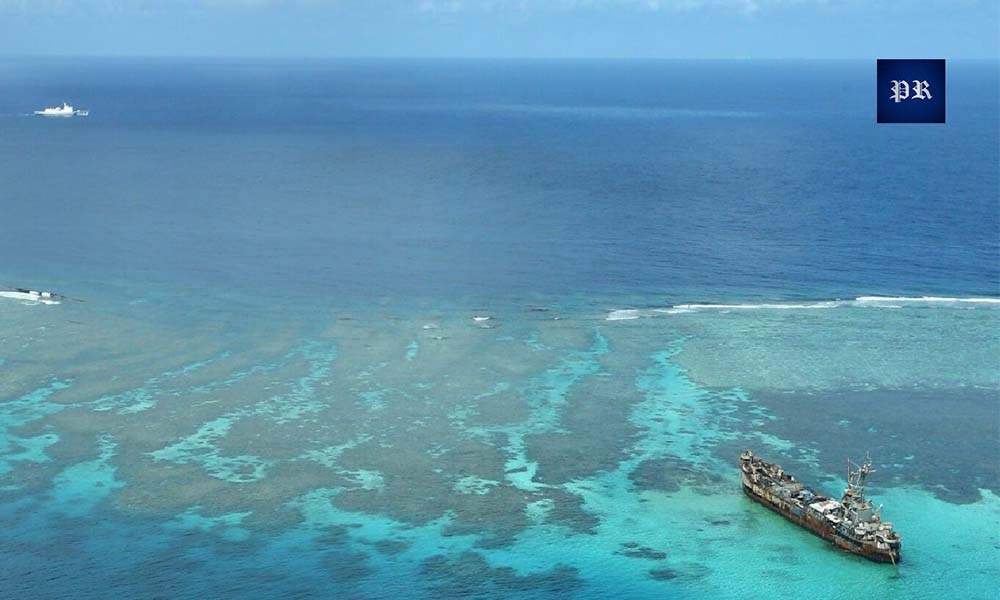
The Philippines also has a strong legal position in the South China Sea. The 2016 arbitral award rejected several of China’s expansive maritime claims under the framework of the United Nations Convention on the Law of the Sea. But a legal ruling does not automatically change the balance of power at sea. Chinese coast guard and other maritime forces continue to operate in disputed areas, keeping the South China Sea at the center of regional security debates.
China Can Change the Status Quo Without Starting a War
One of the hardest problems for the Philippines is that competition with China does not have to begin with a conventional military attack. A state can change conditions gradually through persistent coast guard patrols, maritime militia activity, surveillance systems, infrastructure and pressure on other countries’ access to disputed waters. This is often described as gray-zone competition. These are actions that can be coercive or strategically significant while remaining below the threshold of open war. The advantage for the country using such tactics is that they can create new realities without triggering the same response that a major military attack might produce.
China has also built and expanded major facilities on several South China Sea features. These installations can support surveillance, logistics and military operations, strengthening China’s ability to maintain a persistent presence. The strategic effect is larger than any individual facility because sustained presence can gradually normalize a country’s influence over contested areas. That is why the competition is not simply about who would win a naval battle. It is also about who can shape everyday activity at sea. For the Philippines and its partners, the challenge is to prevent gradual coercion from becoming an accepted new normal.
The U.S.-Philippines alliance is the most important external security relationship in this equation. Washington’s interest, however, goes beyond treaty language. The Philippines provides access to areas that are strategically important for the South China Sea and the defense of the wider western Pacific. Under the Enhanced Defense Cooperation Agreement, the United States has access to nine agreed locations in the Philippines. These locations should not simply be treated as traditional large permanent American bases.
America Wants Allies to Carry More of the Defense Burden
The broader concept is distributed access, where facilities can support exercises, logistics, humanitarian assistance, surveillance and other defense-related activities. Distributed access also has a military advantage. A network of locations can be more resilient than relying on a single major installation. It can make it harder for an adversary to disrupt an entire force structure with a limited number of attacks. For Washington, the Philippines therefore offers strategic flexibility as well as geographic access.
This is where the European and Philippine stories begin to connect. The United States increasingly wants allies and partners to strengthen their own defense capabilities rather than assuming Washington will provide the overwhelming share of military power in every crisis. This approach is especially visible in debates over European defense spending and burden-sharing, but the underlying logic also matters in the Indo-Pacific. Washington wants regional partners to improve their forces, interoperability, logistics, surveillance and ability to contribute to deterrence.
A stronger Philippines fits that model. Manila does not need to replace the United States. Instead, the goal is for Philippine forces to become more capable of defending Philippine territory and maritime interests while working effectively with partners. The result is a more distributed security network in which responsibility is shared rather than concentrated in one country.
NATO’s Indo-Pacific Interest Is Real — But Limited
NATO’s role needs to be described carefully. The Philippines is not a NATO member and does not have an Article 5 guarantee. NATO’s formal Indo-Pacific partners are Australia, Japan, South Korea and New Zealand. Nevertheless, NATO increasingly recognizes that European and Indo-Pacific security are connected. A major conflict involving China could affect global trade, technology supply chains, cyber security and the availability of U.S. military resources. It could also deepen strategic coordination between China and Russia at a time when Europe is already dealing with major security challenges.
This means NATO does not need to defend Philippine territory directly to have an interest in what happens there. European governments can contribute through their own national capabilities, while NATO can provide political consultation and a framework for discussing the broader security environment. The distinction is important. “NATO in Asia” is not the same thing as NATO becoming an Asian alliance. A more realistic scenario is greater involvement by individual NATO members alongside existing Indo-Pacific partnerships.
The Philippines May Need NATO
The most realistic path may involve individual European countries rather than a formal NATO deployment. Britain and France already maintain Indo-Pacific interests and naval capabilities. Other European countries can contribute through defense technology, maritime surveillance, cybersecurity, intelligence, training and industrial cooperation. European involvement does not have to mean permanent military deployments. Joint exercises, port visits, information sharing, defense procurement and maritime cooperation can all increase the resilience of the regional security network. For Manila, that can be valuable because diversification reduces dependence on a single partner. The Philippines can deepen its alliance with the United States while simultaneously expanding defense relationships with Japan, Australia, South Korea and European states. This gives Manila more strategic options without requiring the creation of a new Asian NATO.
Japan and Australia already have deeper institutional relationships with NATO as Indo-Pacific partners, and both possess substantial military capabilities and strategic depth. The Philippines occupies a different position. It is much closer to the immediate pressure points of the South China Sea and Taiwan. Its northern territory sits near important maritime approaches, while its western coastline faces disputed waters where Chinese forces operate regularly. At the same time, the Philippines is working to modernize its military and strengthen its focus on external defense. That combination makes Manila especially important to any regional deterrence strategy. A more capable Philippines can improve its own ability to respond to coercion while making the broader network of partners more credible.
Manila Does Not Want to Depend on One Power
It would be too simple to describe the Philippines as merely moving into the American camp. Manila has strong reasons to deepen U.S. security cooperation, but it also has incentives to expand relationships with other countries. Strategic diversification gives the Philippines more choices. Cooperation with Japan can add economic and security support. Australia can contribute regional defense expertise. South Korea can offer industrial and technological capabilities. European countries can provide additional defense, maritime and cyber partnerships.
The objective is not necessarily to choose between the United States and China in every area of foreign policy. It is to ensure that the Philippines has enough partners and capabilities to protect its interests when pressure increases. The South China Sea is increasingly becoming a contest between different security architectures. China is building a system based on persistent maritime presence, coast guard operations, surveillance, infrastructure, military modernization and economic influence. The United States and its partners are building a different model based on alliances, distributed access, exercises, intelligence cooperation, maritime awareness and deterrence. The Philippines is becoming a central part of that network while also developing its own defense capabilities. European involvement would add another layer through naval deployments, defense technology, cyber cooperation and political coordination. The result would not necessarily be a single alliance. It would be a network of overlapping relationships.
What If a Taiwan Conflict Breaks Out?
A Taiwan crisis would make the Philippines even more strategically important. Northern Luzon and the maritime routes around the Bashi Channel could become critical to military planning. U.S. forces operating from Philippine locations could become more relevant, while Manila would face difficult decisions about its own security and treaty commitments. The effects would not stop in Asia. If the United States committed large numbers of forces to a conflict with China, Washington’s ability to manage simultaneous security demands elsewhere could become a major issue. European allies might then face greater pressure to carry more responsibility for European defense. This is one reason Indo-Pacific and Euro-Atlantic security are increasingly connected. A crisis in Asia could change the distribution of American military power worldwide, even if European forces never directly enter the conflict.
Three Possible Futures for the Philippines
The first possibility is that U.S.-led deterrence remains dominant. The United States provides the main external military weight, while the Philippines strengthens its own forces and Japan and Australia provide additional support. European involvement remains limited. The second possibility is that more NATO members become active in the Indo-Pacific. European countries could expand naval deployments, exercises, defense cooperation and maritime security partnerships without turning NATO itself into an Asian alliance. The third possibility is that a broad, informal security network develops. The United States, Philippines, Japan, Australia, South Korea and European powers could become more connected through intelligence, logistics, cyber systems, defense industries, exercises and maritime surveillance. No new “Asian NATO” would be created, but the network could become increasingly difficult to separate into regional compartments.
The Real Question Is Not Whether NATO Will Defend Manila
There is no current basis for saying that NATO has a secret plan to defend the Philippines, and the alliance has no Article 5 obligation to do so. The more significant trend is the gradual integration of the Philippines into a broader network of U.S., Asian and European security relationships. China is strengthening its position in the South China Sea. The United States is expanding distributed access and alliance cooperation. The Philippines is modernizing its military and widening its partnerships. Japan and Australia are playing larger regional roles. European governments are increasingly aware that a major Indo-Pacific crisis could have direct consequences for European security.
Taken together, these developments could make the Philippines a bridge between two strategic theaters. Not because NATO is about to become an Asian alliance, but because NATO members may increasingly recognize that protecting their own interests can require supporting stability in the Indo-Pacific. The central issue, therefore, is not whether NATO will send troops to Manila. It is whether European countries will eventually decide that helping sustain the security architecture around the Philippines is part of protecting the wider international system on which European security depends. If that trend continues, the Philippines could become one of the places where American power, European capabilities and Indo-Pacific security interests meet. That would make Manila more than a frontline state in the South China Sea. It could make the Philippines one of the key connecting points in the emerging global security network.
About Indo-Pacific Report
For more geopolitical analysis, strategy coverage, and Indo-Pacific security reporting, visit Indo-Pacific Report:
Website
Facebook
YouTube