Why Malaysia Fears the Philippines More Than China?
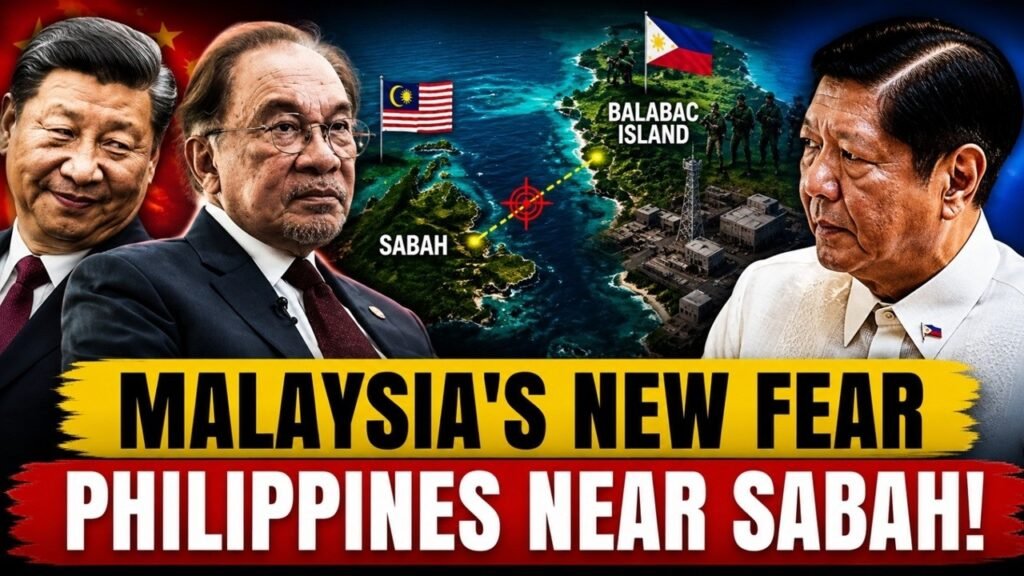
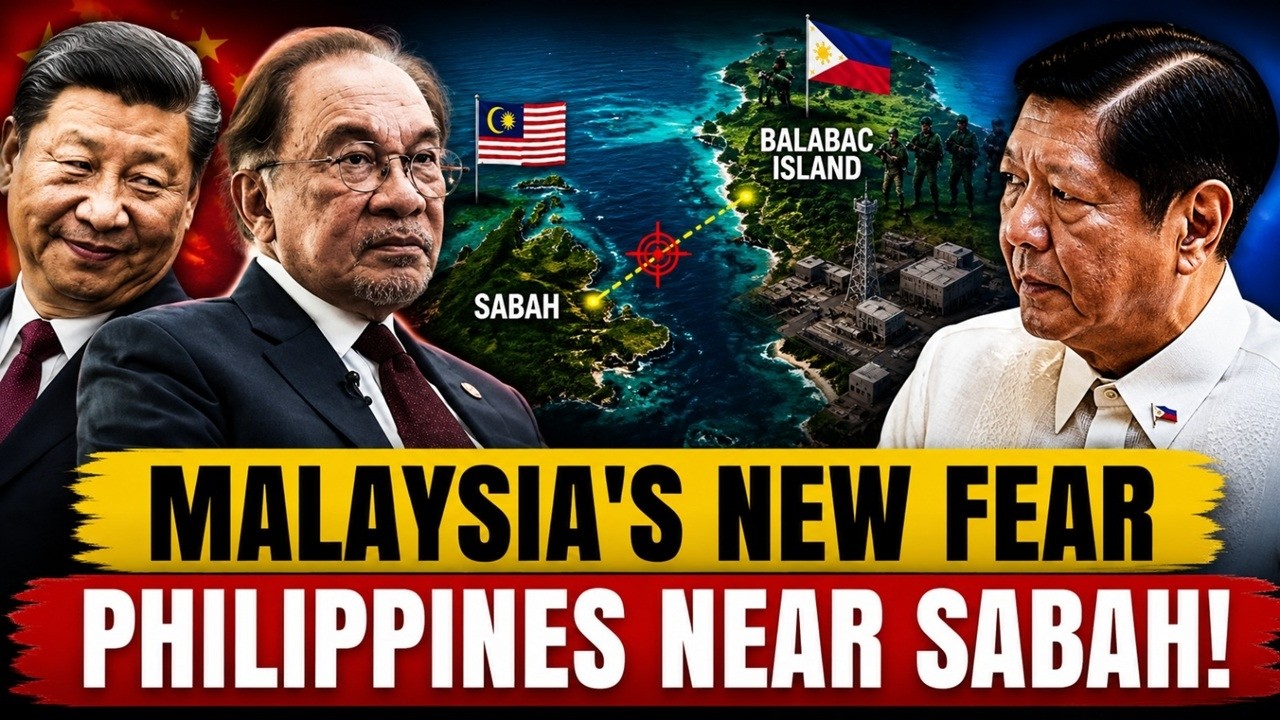
Malaysia’s growing concern about the Philippines can be understood largely through geography. Balabac is located in the southern Philippines, immediately north of Sabah and near the maritime space connecting the Sulu Sea with the South China Sea. Although Balabac is relatively small, its location gives it considerable strategic importance. For Kuala Lumpur, any major military development there is not happening somewhere far away in the Philippine archipelago; it is taking place close to Malaysian territory, particularly the state of Sabah. This geographical proximity means that Malaysia naturally pays close attention to developments on and around the island.
The location of Balabac also places it within an increasingly important security environment. The southern Philippines, Sabah and the surrounding maritime areas are connected through important sea routes and security corridors. As military surveillance, naval patrols and defense cooperation increase across the region, islands such as Balabac can become more strategically valuable. Malaysia therefore has to consider not only what the Philippines is doing today, but also how military infrastructure in Balabac could be used in the future. The island could become part of a wider network supporting maritime surveillance, logistics and military operations.
Prime Minister Anwar Ibrahim’s comments in August 2026 about the need to strengthen Malaysia’s defense capabilities reflect this changing regional environment. Kuala Lumpur is facing a security landscape in which developments involving the Philippines, China and the United States increasingly overlap. Malaysia does not necessarily view every Philippine military activity as hostile, but it cannot ignore developments taking place so close to Sabah. Strengthening defense capabilities allows Malaysia to better monitor its surrounding waters and territory while maintaining the ability to respond to unexpected developments without immediately taking sides in the wider US-China rivalry.
Why Balabac Matters Beyond Its Size
The strategic importance of Balabac comes from its position rather than its physical size. Military geography has always shown that a relatively small island can become important when it is located near major sea routes, disputed territories or potential military operating areas. Balabac provides the Philippines with a useful location for maritime surveillance, monitoring movements at sea and supporting military personnel and equipment. Its proximity to Sabah means that developments there are naturally relevant to Malaysia’s own security calculations.
Another important factor is the growing defense relationship between the Philippines and the United States. Philippine military facilities and access locations can become more significant when they are connected to broader cooperation with Washington. From the Philippine perspective, improving military infrastructure and maritime awareness is a response to the country’s security concerns. However, from Malaysia’s perspective, increased foreign military activity close to Sabah creates additional uncertainty. Kuala Lumpur has to consider how such facilities might function during a major regional crisis, particularly if tensions involving China, the United States and the Philippines increase.
225 Chinese Ships Swarm Philippines Near Scarborough Shoal — What Is China Planning?
Malaysia Is Not Saying the Philippines Will Attack Sabah
It is important to distinguish between security concerns and an expectation of war. Malaysia’s attention to Philippine military activity near Sabah does not mean Kuala Lumpur believes Manila is preparing to launch an attack on Malaysian territory. There is a long history of cooperation between Malaysia and the Philippines, including diplomatic, economic and security relations. Both countries have strong reasons to prevent tensions from developing into an armed confrontation. The concern is instead that increased military activity near a sensitive border can create new risks that did not previously exist at the same level.
One of those risks is miscalculation. When more aircraft, naval vessels, surveillance platforms and military exercises operate around a sensitive area, the possibility of an incident increases. A patrol aircraft could misunderstand another aircraft’s intentions, a naval vessel could enter a sensitive area, or an exercise could be interpreted as something more threatening than intended. Such incidents do not necessarily lead to conflict, but they can create diplomatic crises, especially when regional tensions are already high.
The wider US-China rivalry makes this concern even more important. If tensions between Washington and Beijing were to rise significantly, military activity throughout the South China Sea and surrounding waters could increase. The Philippines could become more strategically important because of its location and defense relationship with the United States, while Sabah would remain directly adjacent to this security environment. Malaysia therefore wants to ensure that it has enough surveillance and defensive capability to protect its territory and maintain freedom of decision-making. Its objective is not to prepare for war with the Philippines, but to prevent Sabah from becoming exposed to an unexpected regional crisis.
The Sabah Dispute Has Never Fully Disappeared
The most important reason Malaysia reacts differently to the Philippines than it does to China is the long-standing Sabah issue. The Philippines continues to maintain a position involving a claim to Sabah, while Malaysia regards Sabah as an integral and settled part of the Malaysian federation. Although the two countries maintain diplomatic relations and cooperate on many regional issues, the existence of this territorial disagreement means that developments near Sabah are viewed with particular sensitivity in Kuala Lumpur.
The Sabah question has historical roots and has remained part of the political and diplomatic relationship between Malaysia and the Philippines for decades. For Malaysia, the sovereignty of Sabah is closely connected to national territorial integrity. Any development that appears to have a connection with the Philippines’ territorial position can therefore attract greater attention than an ordinary regional security issue. This sensitivity does not automatically mean that Malaysia expects military conflict, but it does mean that Kuala Lumpur carefully monitors Philippine political and military developments in areas close to Sabah.
.
The Maritime Dispute Adds Another Layer
The Sabah issue is not limited to the question of land sovereignty. Maritime areas surrounding Sabah are also strategically important because they involve questions about maritime rights, seabed resources and jurisdiction. Malaysia and the Philippines have overlapping interests in parts of the surrounding waters, making developments involving maritime boundaries and continental shelf claims particularly sensitive. These disagreements are generally handled through diplomatic and international legal mechanisms, but they demonstrate that differences between Kuala Lumpur and Manila remain active.
In July 2026, Malaysia protested concerns relating to the Philippines’ extended continental shelf submission involving waters off Sabah. The Philippines subsequently proceeded with an oral submission to the United Nations Commission on the Limits of the Continental Shelf. An extended continental shelf submission is a legal and scientific process through which a coastal state may seek recognition of rights over seabed and subsoil areas beyond the normal 200-nautical-mile limit when the relevant geographical and legal conditions are met.
It is important to understand that the UN continental shelf process does not automatically decide which country owns disputed land territory. It deals with specific maritime entitlements under international law and does not by itself settle every sovereignty dispute between states. Nevertheless, competing submissions can demonstrate how seriously countries view their maritime interests. For Malaysia, developments involving waters near Sabah therefore have both legal and strategic importance, particularly because the area is already surrounded by wider South China Sea security tensions.
Why Sovereignty Is More Sensitive Than a Maritime Dispute
There is a major political difference between a disagreement over maritime rights and a territorial dispute involving land that a government considers part of its national territory. Maritime disputes can often be managed through diplomatic protests, negotiations, international law and technical discussions. Governments can disagree strongly over maritime boundaries while continuing economic and diplomatic relations. Territorial sovereignty, however, tends to carry a much stronger emotional and political dimension because it directly involves the integrity of the state. This distinction helps explain why Malaysia can maintain a complicated but relatively stable relationship with China despite serious disagreements in the South China Sea. Kuala Lumpur can protest Chinese activities, reject maritime claims it considers excessive and defend its own rights while continuing diplomatic and economic engagement. With the Philippines, however, the Sabah question is directly connected to Malaysian territory. As a result, any Philippine military development close to Sabah can receive a more sensitive response.
The key point is that Malaysia’s concern about the Philippines should not automatically be interpreted as hostility toward Manila. Malaysia and the Philippines have shared interests in regional stability, trade, maritime security and combating transnational crime. However, the Sabah issue creates an additional layer of strategic caution. When territorial questions, maritime claims and military modernization appear in the same geographical area, Kuala Lumpur has strong incentives to remain alert and ensure that its sovereignty and security interests are protected.
Strategic Management Rather Than Strategic Alignment
Malaysia’s policy toward China is better understood as strategic management rather than strategic alignment. China is one of the most important economic and strategic powers in Southeast Asia and is deeply connected to Malaysia through trade, investment and regional relationships. Because China is geographically close and economically important, Kuala Lumpur has strong incentives to keep communication channels open. Cutting ties or adopting an openly confrontational approach would carry significant economic and strategic costs. At the same time, Malaysia does not want its economic relationship with China to mean that it must accept every Chinese position. Kuala Lumpur can cooperate with Beijing in areas of mutual interest while maintaining disagreement over maritime issues. This type of diplomacy gives Malaysia greater room to protect its national interests without unnecessarily escalating tensions. It is part of a broader Southeast Asian approach in which countries try to avoid being forced into a simple choice between China and the United States.
Calculation
The Philippines presents Malaysia with a different strategic calculation because several sensitive factors come together at the same time. Manila is geographically close to Sabah, has a longstanding position concerning Sabah, has overlapping maritime interests in surrounding waters and is strengthening its defense relationship with the United States. These factors make Philippine military developments near Sabah more directly relevant to Malaysia’s immediate security environment.
China, despite being a much larger military power, is geographically farther from Sabah and is primarily managed by Malaysia through a combination of diplomacy, economic engagement and calibrated resistance. Kuala Lumpur has developed established methods for dealing with disagreements with Beijing. With the Philippines, the territorial issue is much closer to home. Any increase in military activity near Sabah therefore has the potential to affect Malaysian perceptions of its own territorial security more immediately.
About Indo-Pacific Report
For more geopolitical analysis, strategy coverage, and Indo-Pacific security reporting, visit Indo-Pacific Report:
Website
Facebook
YouTube