What does China changing its tactics mean for the Philippines?
The South China Sea is entering a new phase of strategic competition, and the biggest change may not be the number of warships operating in the region. Instead, the more important development is the growing role of China’s Coast Guard in maintaining pressure on the Philippines. During the first six months of 2026, Philippine authorities tracked 77 different Chinese Coast Guard vessels operating across the West Philippine Sea, compared with 68 during the same period a year earlier. At the same time, reported Chinese Navy deployments declined from 100 to 78, while maritime militia vessels fell from 999 to 850.
These figures are important because they suggest that China’s maritime strategy may be relying increasingly on law-enforcement vessels rather than putting naval warships at the center of every confrontation. For Beijing, this approach offers an important strategic advantage. A Chinese Coast Guard vessel can patrol disputed waters, challenge Philippine ships, escort Chinese vessels, issue warnings and maintain a visible presence while China describes the activity as law enforcement. From the Philippine perspective, however, the pressure can still be very real.Why 77 Chinese Coast Guard Vessels Matter
When a Chinese warship enters a disputed area, the military meaning of the deployment is immediately clear. When a Chinese Coast Guard ship does the same thing, Beijing can frame its actions as the enforcement of Chinese maritime claims. This gives China greater political flexibility while still allowing it to establish a physical presence. For the Philippines, however, every encounter requires a response. Philippine authorities have to detect the vessel, identify its movements, monitor its behavior, communicate with it when necessary and determine whether Philippine ships or aircraft should be deployed.
How Gray-Zone Tactics Change the Maritime Balance
Gray-zone tactics are changing the nature of the South China Sea dispute because they allow China to apply pressure without necessarily creating a clear moment of military escalation. A typical confrontation may involve a Chinese Coast Guard vessel approaching a Philippine ship, issuing warnings, blocking a route, escorting another vessel or conducting patrols around a disputed feature. The encounter may be tense and physically dangerous, but neither side necessarily wants it to become a shooting conflict. China can therefore continue testing Philippine reactions while maintaining the argument that its vessels are carrying out normal maritime law-enforcement activities. The strength of this strategy comes from repetition. A single patrol can be dismissed as an isolated incident, but repeated patrols create a pattern. Once the pattern continues for months or years, the other side must spend increasing amounts of time and resources responding to it. This can gradually change the practical situation on the water even without a formal change in sovereignty.
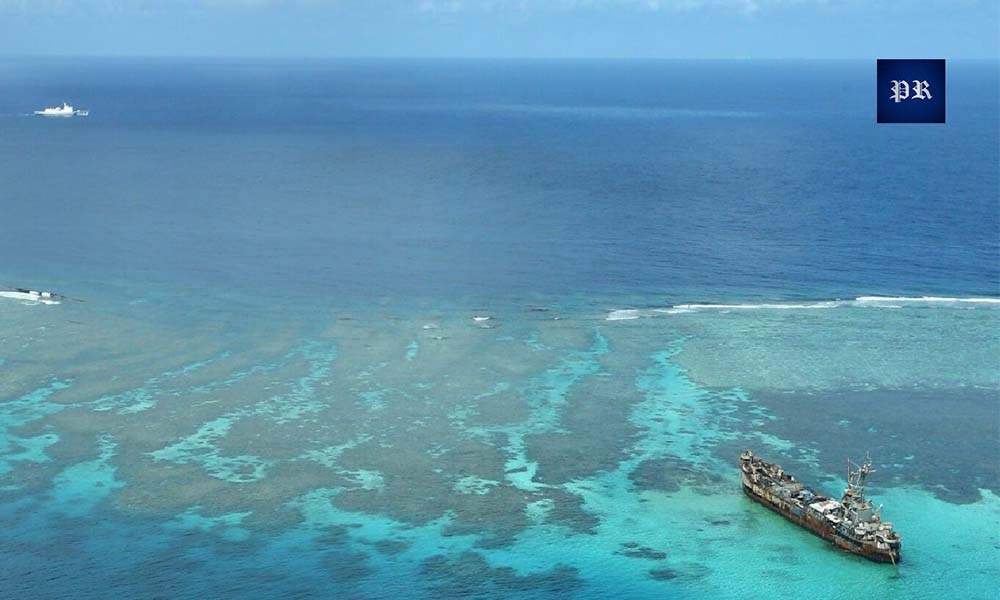
Marcos Rejects China’s Permission Demand Philippines to Resupply Sierra Madre
The Philippines may still maintain its legal position, but its vessels could find themselves operating in an environment where Chinese ships are constantly present and increasingly confident. That is the real danger of gray-zone competition. The objective does not have to be a dramatic military victory. It can instead be to influence behavior, establish routine presence, test the limits of the other side’s response and slowly make an expanded presence appear normal. Over time, what was once considered an extraordinary Chinese operation can become an expected part of daily maritime activity. That is why the South China Sea should not be viewed only through the lens of naval power. The competition is also about persistence, presence, pressure and the ability to shape the normal operating environment without triggering a full-scale conflict.
Scarborough Shoal: Where Presence Becomes Routine
Scarborough Shoal is one of the clearest examples of how persistent maritime presence can gradually change the strategic environment in the South China Sea. The shoal has long been a major point of tension between China and the Philippines, but the bigger issue today is not simply whether Chinese vessels appear there. It is how frequently they return and how that repeated presence affects Philippine operations. When a Chinese Coast Guard vessel patrols the area, Philippine authorities have to monitor its movements and decide whether to send their own vessels or aircraft. When the same activity happens repeatedly, the Philippines must continue dedicating resources to the area simply to maintain awareness and protect its operations.
This creates a long-term pressure mechanism. China does not necessarily need one dramatic confrontation to achieve a strategic effect. Repeated patrols can gradually make Chinese vessels a permanent feature of the maritime environment. That matters because maritime influence is often built through routine rather than through one decisive event. A vessel that appears once can be described as an incident, but a vessel that returns repeatedly begins to establish a pattern. Over time, that pattern can influence how other vessels operate, where they travel and how much effort they need to spend monitoring the area. Scarborough Shoal therefore illustrates the broader challenge facing the Philippines: the country must not only respond to individual encounters but also prevent repeated Chinese activity from becoming an accepted normal feature of the waters around strategically important areas.
Why Batanes and the Bashi Channel Matter
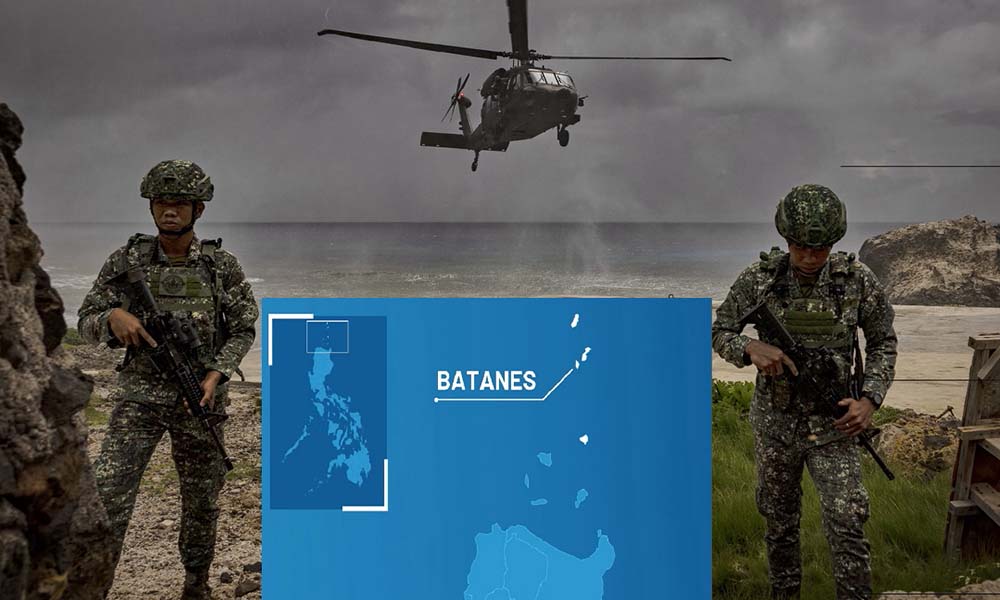
The strategic picture becomes even more important when attention moves north toward the Philippine island province of Batanes and the Bashi Channel. Batanes is located close to Taiwan and sits near one of the important maritime routes connecting the South China Sea with the Philippine Sea and the wider Western Pacific. The Bashi Channel is therefore significant not only because of its geography but also because of the movement of commercial vessels, military forces and other maritime activity through the broader area.
Chinese Coast Guard operations around Batanes deserve attention because they demonstrate that China’s maritime activity is not limited to the better-known areas of confrontation farther south. This does not mean that every Chinese vessel operating near Batanes is evidence of preparations for war. Such a conclusion would go beyond the available evidence. The more important point is that China is demonstrating the ability and willingness to operate farther north, in an area that is strategically important to the Philippines and closely connected to the wider security environment around Taiwan. For Manila, this creates an additional surveillance challenge. Philippine authorities have to maintain awareness not only around the traditional flashpoints in the West Philippine Sea but also around northern maritime approaches that could become increasingly important during a regional crisis.
Chinese Research Vessels Add Another Layer
China’s maritime activity is not limited to Coast Guard patrols, and the growing attention around Chinese research vessels adds another important dimension to the South China Sea dispute. In May 2026, Philippine authorities reported detecting four Chinese research vessels operating in Philippine waters and responding with ships and aircraft. One of the cases involved the Chinese research vessel Xiang Yang Hong 33, which Philippine authorities said was conducting unauthorized maritime research near Iroquois Reef.
Presence Plus Information Is the Bigger Strategy
China has several maritime tools, and the importance of its current strategy lies in how these different tools can work together. The China Coast Guard can provide a persistent and highly visible presence in contested waters while operating under a law-enforcement narrative. Research vessels can collect information about the physical characteristics of the maritime environment. Maritime militia vessels can add numbers and create additional ambiguity, while the People’s Liberation Army Navy remains the country’s conventional military force and provides the hard-power capability behind China’s broader maritime strategy. The reported decline in Chinese Navy and maritime militia deployments should therefore not automatically be interpreted as a sign that Beijing is becoming less interested in the South China Sea. A more useful interpretation is that China may be increasingly comfortable using lower-profile instruments for routine competition while keeping its conventional military capabilities available in the background.
This approach creates a complicated problem for the Philippines because the visible face of Chinese pressure does not always look like traditional military coercion. A Coast Guard ship can remain in an area for long periods, interact with Philippine vessels and reinforce China’s claims without creating the same immediate political reaction as a major naval warship. At the same time, research activity can help China develop a deeper understanding of the maritime environment. The combination of presence and information can therefore be more important than the number of warships visible on any particular day. China’s strategy appears increasingly focused on maintaining access, gathering knowledge, testing responses and creating a sustained presence in areas that Beijing considers strategically important. For the Philippines and other regional countries, this means that measuring Chinese power only by counting destroyers and frigates can miss a significant part of the competition.
Why the Philippines Has a Persistence Problem
The Philippines faces a difficult persistence problem because maintaining maritime awareness across a large area requires continuous resources. Detecting a Chinese vessel is only the first step. Philippine authorities also need to track its movements, determine what it is doing, document the encounter and decide whether a Coast Guard ship, Navy vessel, aircraft or another platform should respond. This becomes increasingly demanding when Chinese activity occurs repeatedly in several locations at the same time. Satellites, aircraft, radar, automatic identification systems, Coast Guard vessels and naval assets can all contribute to maritime-domain awareness, but none of them can operate without personnel, funding, maintenance and coordination.
This means that China’s persistent presence can create pressure even when it does not result in a direct confrontation. Every patrol requires the Philippines to maintain some level of attention and readiness. Manila therefore has to solve two problems at the same time: it must demonstrate that Chinese activity is being monitored while also avoiding unnecessary escalation. Responding too aggressively to every encounter could increase the risk of an accident or miscalculation, particularly when vessels operate close to one another. But responding too weakly could allow repeated activity to become increasingly routine and may encourage China to test the limits of Philippine reactions further. This is the central dilemma of gray-zone competition. The Philippines must be firm enough to protect its interests and maintain its presence, but careful enough to prevent individual maritime encounters from turning into a larger crisis.
The Real Battle Is Over the New Normal
The most important question in the South China Sea may not be whether China will launch a conventional attack on the Philippines. The more immediate question is whether repeated Chinese activity can gradually change what is considered normal in the region. China does not need to defeat the Philippine Navy in a traditional naval battle to make Philippine operations more difficult. It can maintain Coast Guard patrols, conduct maritime research, challenge Philippine vessels, monitor strategically important areas and repeatedly test how Manila responds. Each individual action may remain below the threshold of open warfare, but the cumulative effect can still be significant. 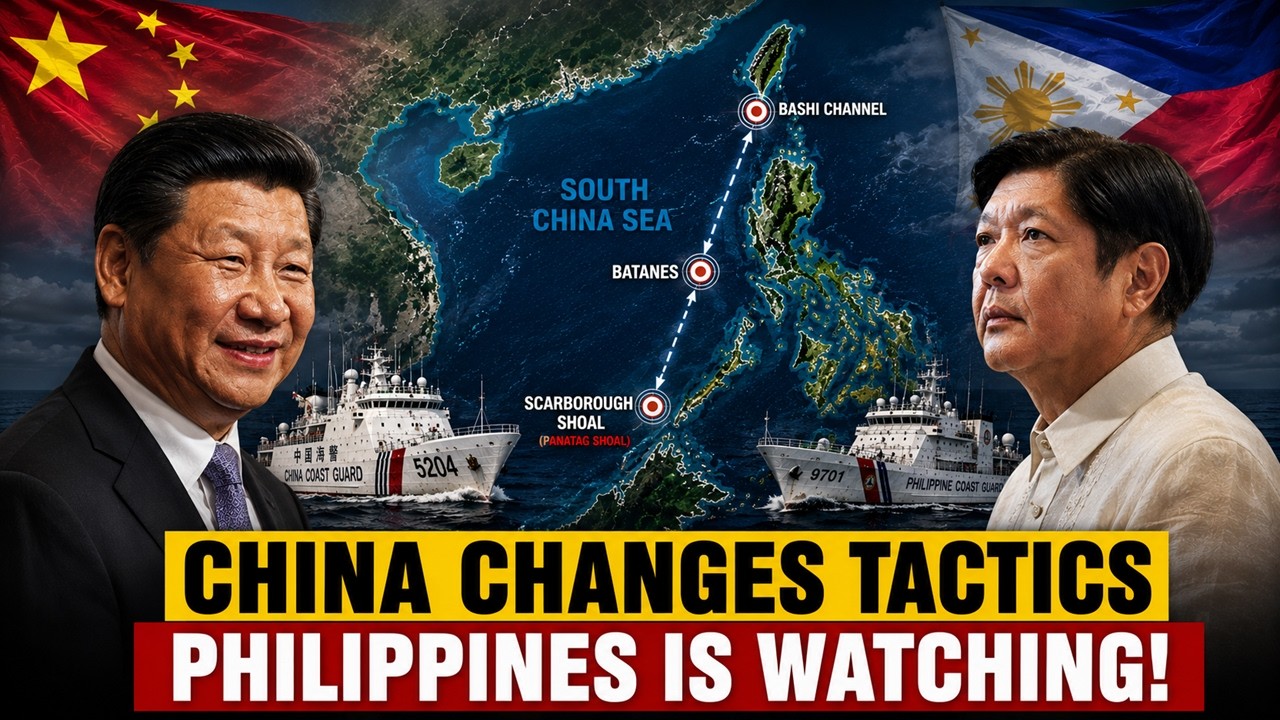
The wider maritime environment is becoming increasingly connected, with developments in the West Philippine Sea potentially linked to activity farther north and to the broader security situation around Taiwan and the Western Pacific. For the Philippines, the objective is therefore not simply to prevent one dramatic incident. It is to make sure that repeated Chinese activity does not gradually become accepted as the normal operating condition. Scarborough Shoal, the West Philippine Sea, Batanes and the Bashi Channel all illustrate the same underlying issue: who can remain present, operate consistently and shape the maritime environment over time? The answer will depend not only on naval strength but also on maritime awareness, Coast Guard capacity, diplomacy, international partnerships and the ability to respond calmly and consistently.
About Indo-Pacific Report
For more geopolitical analysis, strategy coverage, and Indo-Pacific security reporting, visit Indo-Pacific Report:
Website
Facebook
YouTube
What does China changing its tactics mean for the Philippines?